Hello. I’m Dr. Jo Hyun-woo of Ibichung Plastic Surgery.
One of the biggest concerns for people considering facial contouring surgery is cheek sagging.
There are many firsthand accounts in various communities about faces looking saggy after contouring surgery, so quite a few people worry about this more than the surgery itself.
In actual consultations, the changes patients feel do not necessarily mean sagging.
As swelling goes down, the facial line can look different, and volume changes can create shadows that make the face appear saggy.
It is also common for the impression to look different because of weight loss or changes in shooting conditions.
There are many reasons for changes that feel like cheek sagging after contouring surgery, but many of them naturally settle over time.
Today, I’ll organize the representative causes that patients often mistake for cheek sagging.
The period when the face looks different as swelling subsides
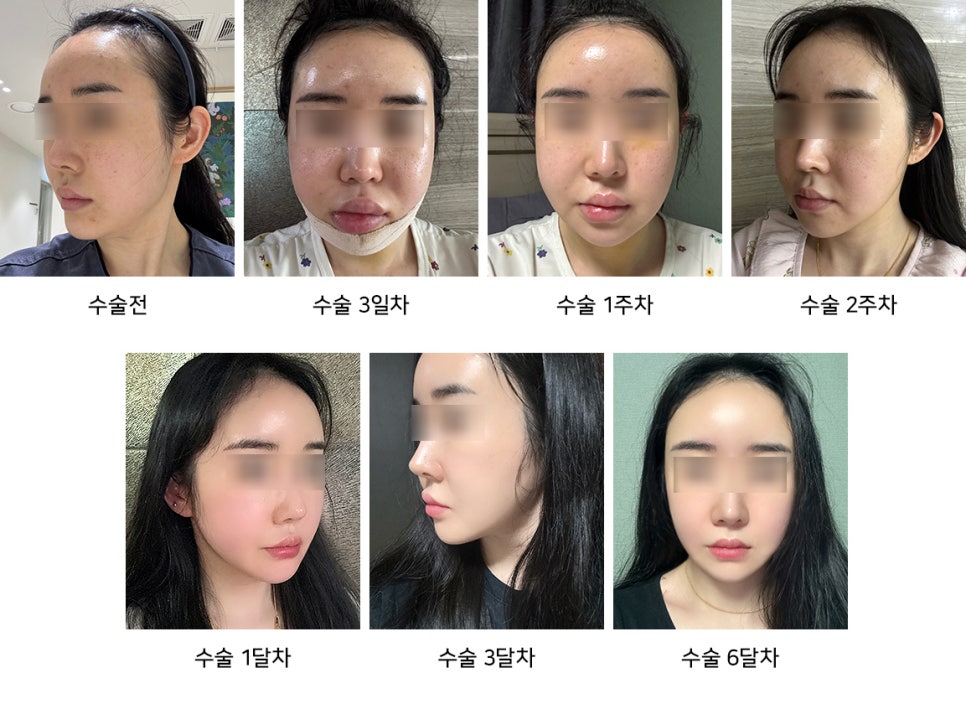
Actual patient who underwent 3-part contouring surgery
Right after surgery, the entire face is swollen, so the cheeks look full and tight.
When you become used to that face and then swelling starts to go down, the cheeks may seem hollowed or lowered by comparison. In particular, between 2 and 6 months, swelling resolves at different speeds in different areas, so the facial line may temporarily look awkward.
However, this is a common change during recovery, and as the tissue settles and the soft tissue adapts, the face gradually becomes more natural.
Hollowing under the cheekbone and shadows
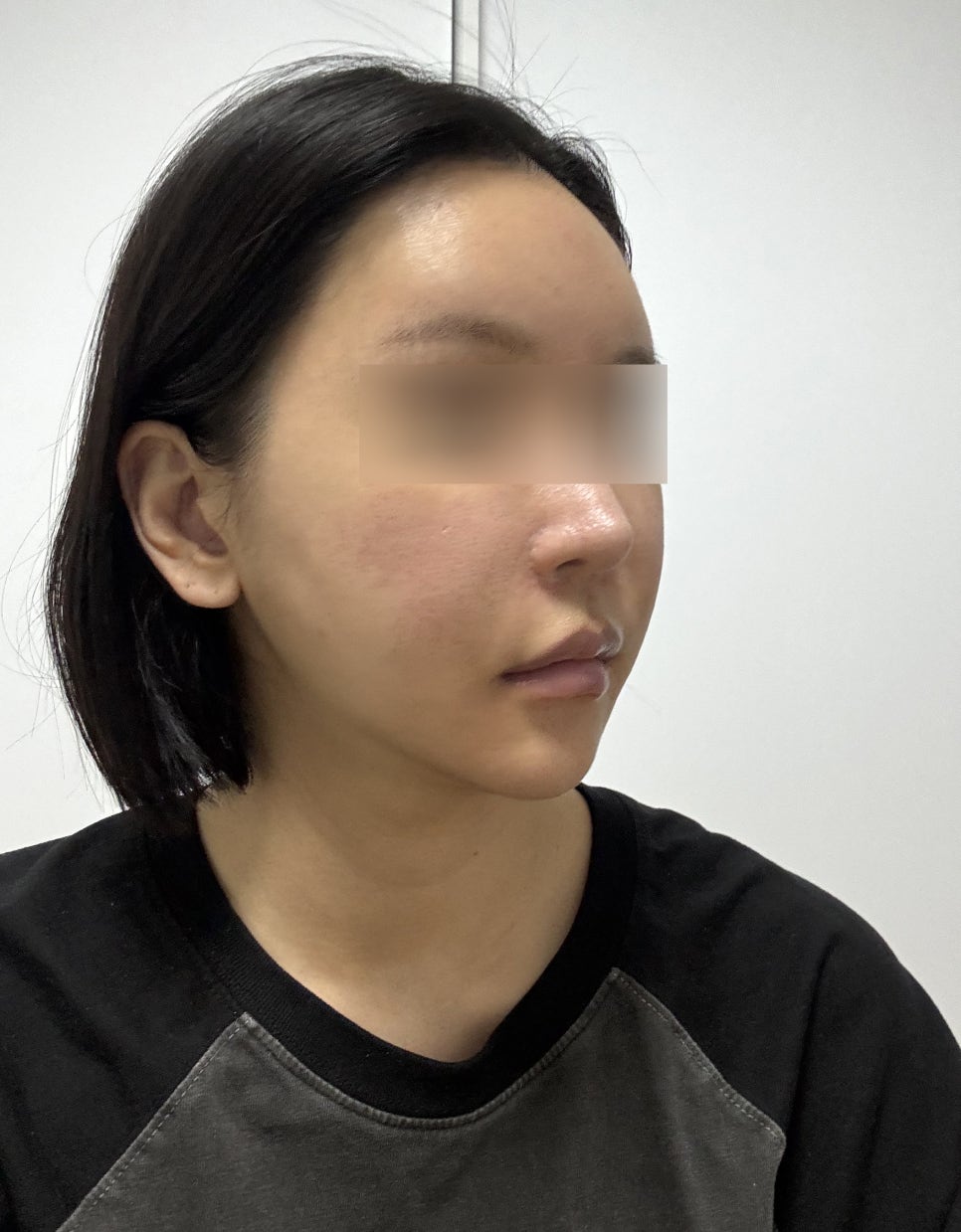
2 months after cheekbone reduction surgery
After cheekbone reduction surgery, the area below the cheekbones may look darker than usual. When shadows form in this area, the cheeks can appear hollow or saggy. However, this is often the result of changes in facial contours and the way shadows shift.
When comparing before-and-after photos, shadows on the deep cheek and jawline can be emphasized depending on the camera position, face angle, expression, and direction of lighting.
In particular, photos taken from below can make the lower face look heavier.
Therefore, for an accurate comparison, it is important to review photos taken under the same conditions.
Differences in skin elasticity and soft tissue
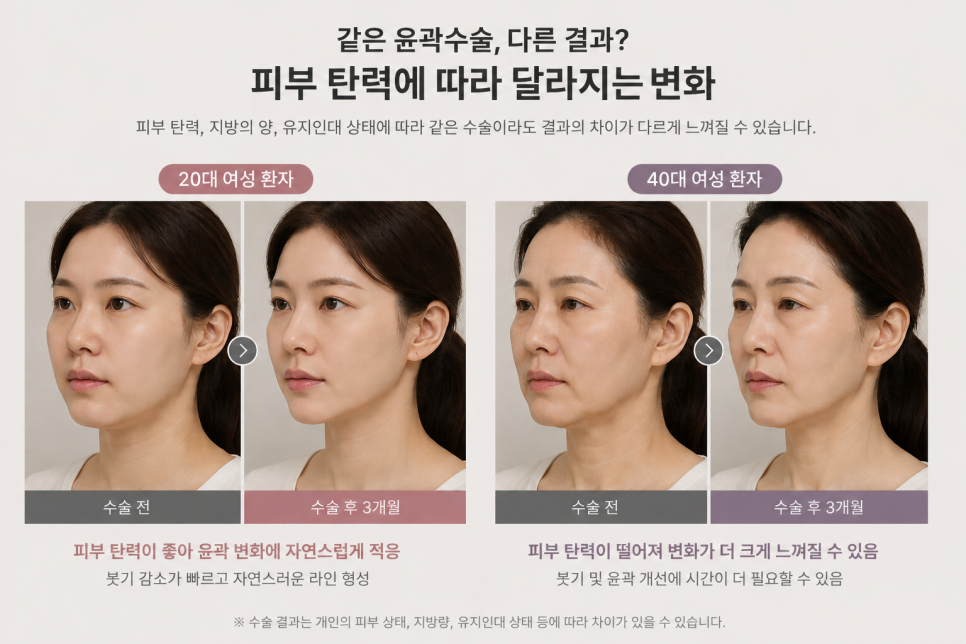
One of the biggest reasons the same contouring surgery can feel different is skin elasticity.
The skin of someone in their 20s and someone in their 40s has different abilities to contract, and the amount of facial fat and the condition of the retaining ligaments also vary from person to person.
Therefore, when skin elasticity is good, the face adapts to contour changes naturally, but if elasticity is reduced, the changes may feel more pronounced.
For this reason, it is important in the surgical planning stage to consider skin condition and soft tissue characteristics together.
Actual cases where true cheek sagging should be suspected
If nasolabial folds and marionette lines deepen together, if reduced skin elasticity is clearly visible, or if the deep cheek continues to stand out, and these changes persist even after 6 months, a professional evaluation may be helpful.
The most important thing is not how much was reduced, but how it was left behind. The key is to maintain structural balance in the face so that the skin and fat can adapt naturally while the bone is reduced. If the proper angle near the ear, cheekbone volume, and chin harmony are considered, a nice facial shape can be expected even as time passes.
There are various reasons for changes that feel like cheek sagging after contouring surgery.
The process of swelling going down, hollowing in the cheeks, skin elasticity, weight changes, and other factors all combine to influence the result.
Therefore, if you are worried about cheek sagging after surgery, it is important to analyze the current recovery stage and facial structure together rather than judging only by a single photo or a temporary feeling.
The goal of facial contouring surgery is not simply to make the face smaller, but to create a natural and balanced facial line that remains harmonious over time.
Thank you.