Hello, I am Director Jo Hyun-woo of Ipte Plastic Surgery.
One of the questions patients ask most often during consultations for chin surgery is:
“Other hospitals call it OO surgery, so why is the name of the surgery different here?”
In fact, the chin surgery procedure most familiar to many people is the T-osteotomy.
However, chin surgery is not limited to T-osteotomy. There are many different techniques, with more than 10 commonly used procedures alone.
Today, I will explain the different types of chin surgery and the situations in which each may be used in an easy-to-understand way.
The reason there are so many different types of chin surgery is that every patient has a different chin shape and different concerns.
There are many different chin shapes, including a protruding chin, a recessed chin, a long chin, a short chin, and a wide chin. Even when the concern appears to be the same, the underlying cause is often different.
Therefore, the most important thing is to accurately analyze the patient’s chin shape and the proportions of the entire face, then select the surgical technique that best suits them.
T-Osteotomy
I have explained T-osteotomy in detail several times in previous columns.
For more information, please refer to the column below.
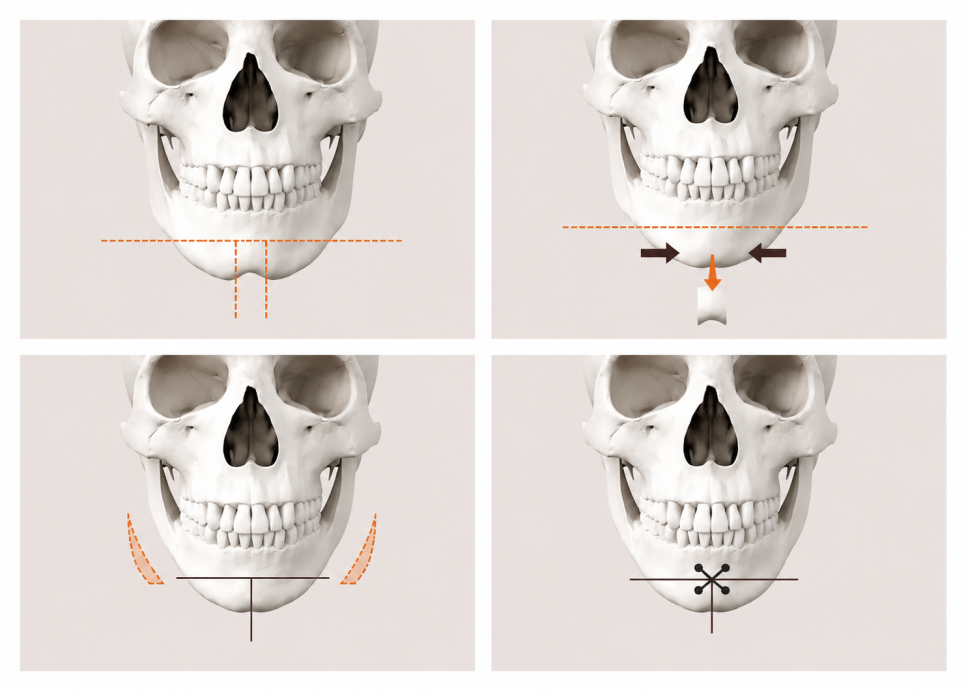
T-Osteotomy Surgical Technique
T-osteotomy is a surgical technique that reduces the width of the chin while allowing the chin to be advanced or set back as needed.
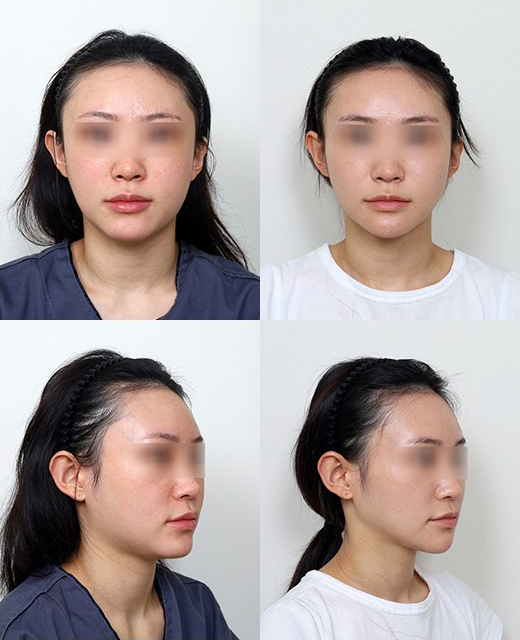
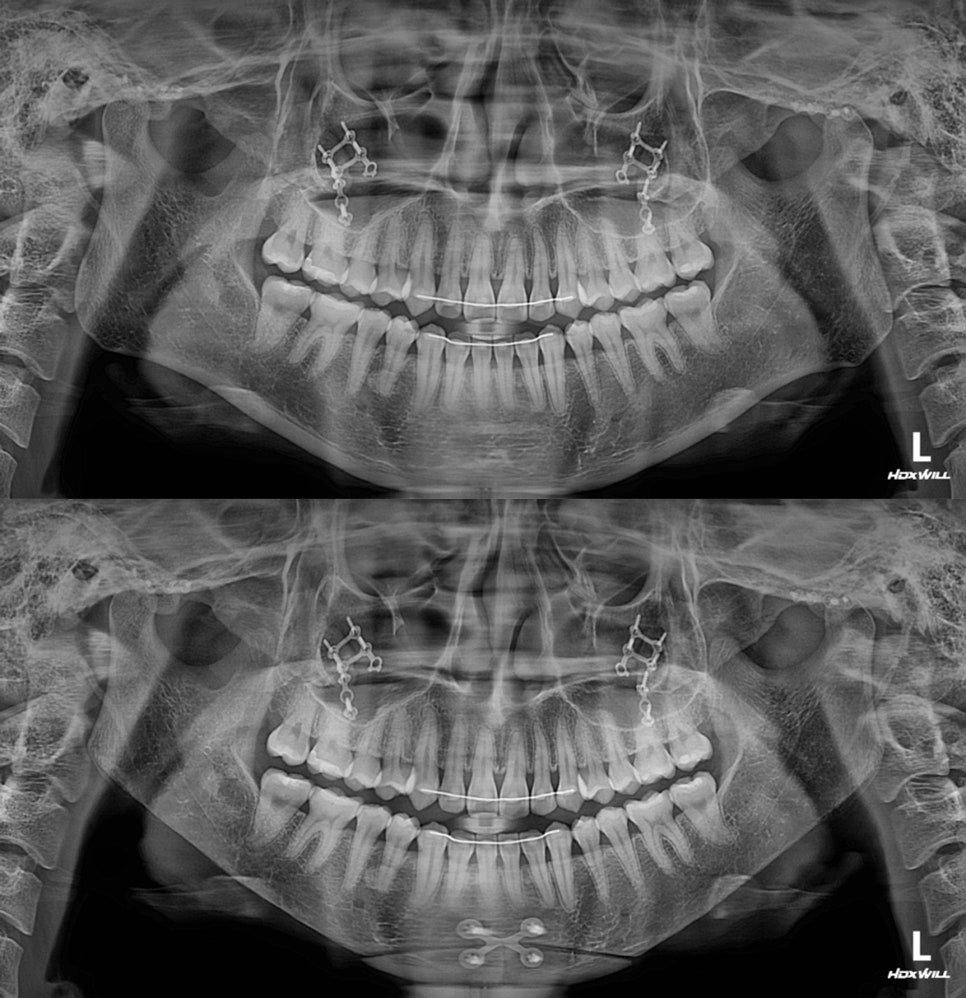
This is a case in which the chin was made slimmer through T-osteotomy.
V-Osteotomy (Inferior Border Resection of the Chin)
When there is no need to advance or set back the chin, this procedure involves cutting the bone from the square jaw area to the tip of the chin, together with square jaw surgery, to create a smoother jawline.
If there is no need to move the position of the chin, the surgical outcome can be considered nearly identical to that of T-osteotomy.
Another advantage is that fixation pins are not required, making this a suitable surgical technique for those who do not want fixation pins inserted.
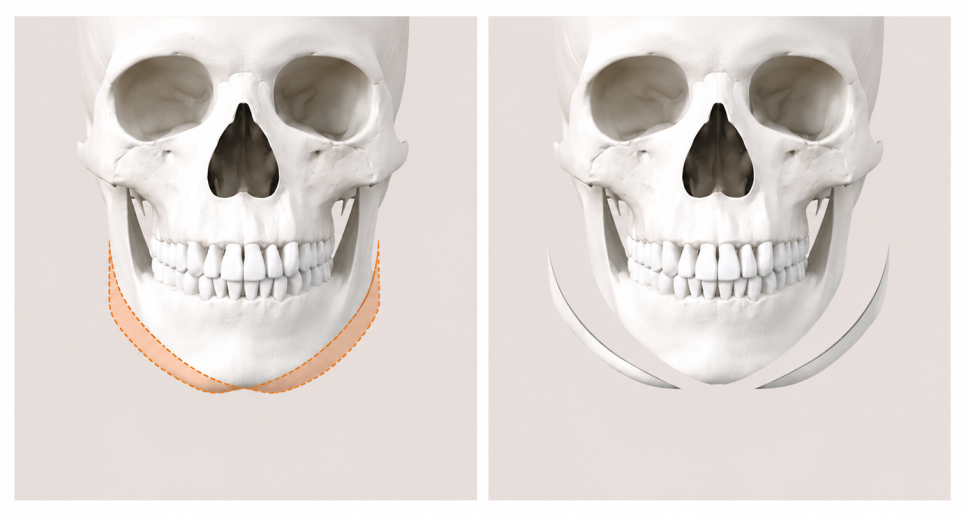
Inferior Border Resection of the Chin Technique
This is generally known as “wraparound shaving,” a procedure in which the bone is cut continuously from the square jaw to the tip of the chin.
One disadvantage of this procedure is that temporary double-chin formation may occur after surgery because dissection extends beneath the chin. However, if the periosteum and soft tissue separated during surgery are accurately sutured back into their original positions, the actual surgical result can be considered not significantly different from that of T-osteotomy.
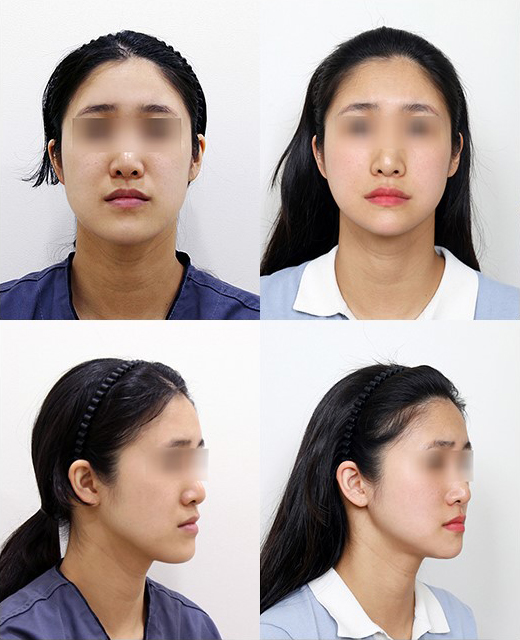
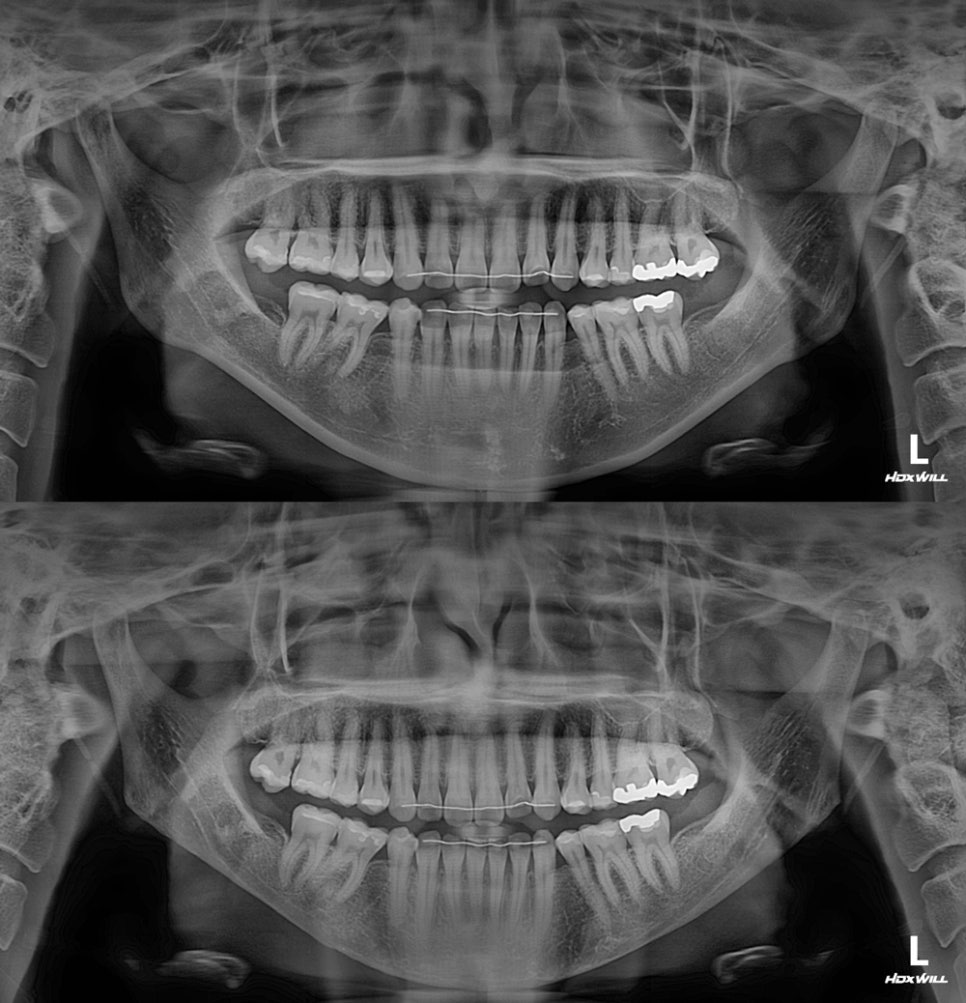
This is a case in which a long chin was corrected through inferior border resection of the chin.
I have introduced the two surgical techniques described above several times through my columns and YouTube videos, so I believe many people are already familiar with them.
Chin Advancement and Setback
This surgical technique was widely used before T-osteotomy became common.
It is suitable when there is no need to reduce the width of the chin but the position of the chin needs to be adjusted. It is mainly performed for patients with a protruding chin or a recessed chin.
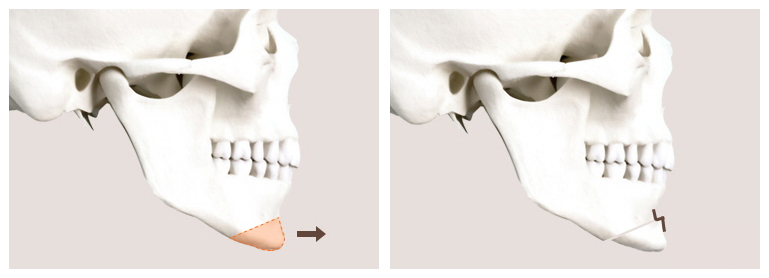
Chin Advancement Technique
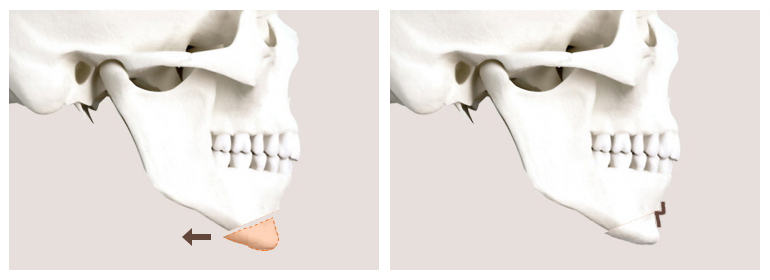
Chin Setback Technique
As shown in the illustrations, the bone is cut into a shape suited to the patient’s condition, such as a straight, T-shaped, or V-shaped cut. The chin is then moved forward or backward as needed to an ideal position and firmly secured with fixation pins.
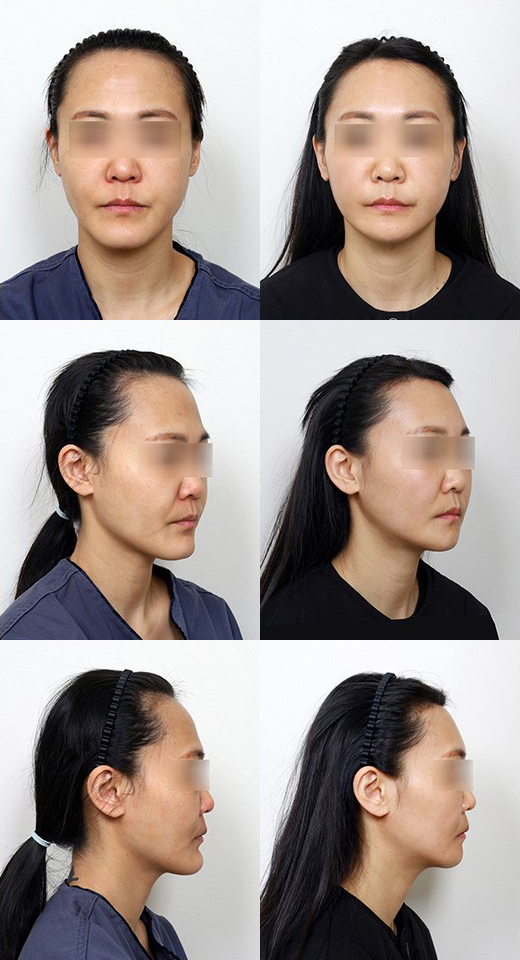
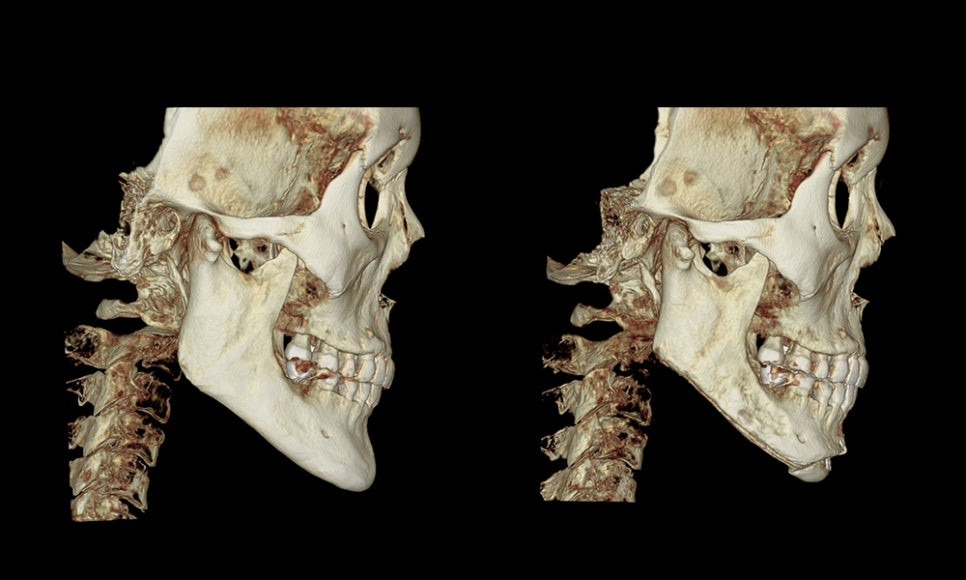
This is a case in which a long chin and a protruding chin were corrected after osteotomy.
Chin Lengthening
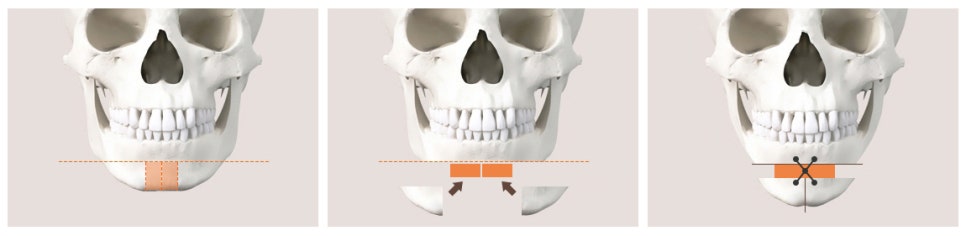
Chin Lengthening with Bone Grafting after T-Osteotomy
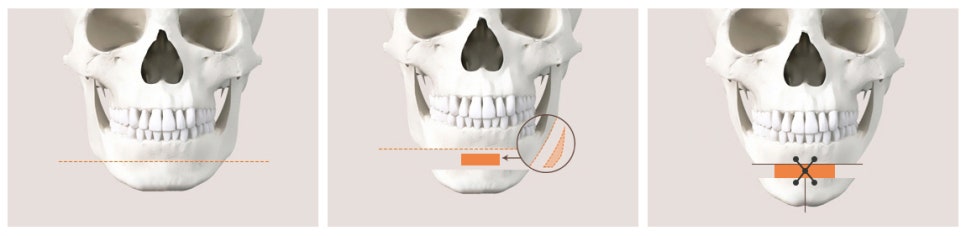
Chin Lengthening with Bone Grafting from the Square Jaw
When the chin appears short, surgery can be performed to lengthen the chin using an autologous bone graft.
In this procedure, bone obtained from the T-osteotomy may be used, or bone removed during square jaw resection may be grafted into the areas where it is needed.
Because this is an autologous bone graft using the patient’s own bone, it does not require artificial implants or other foreign materials. It offers good biocompatibility and is a surgical technique that may provide a natural and stable result.
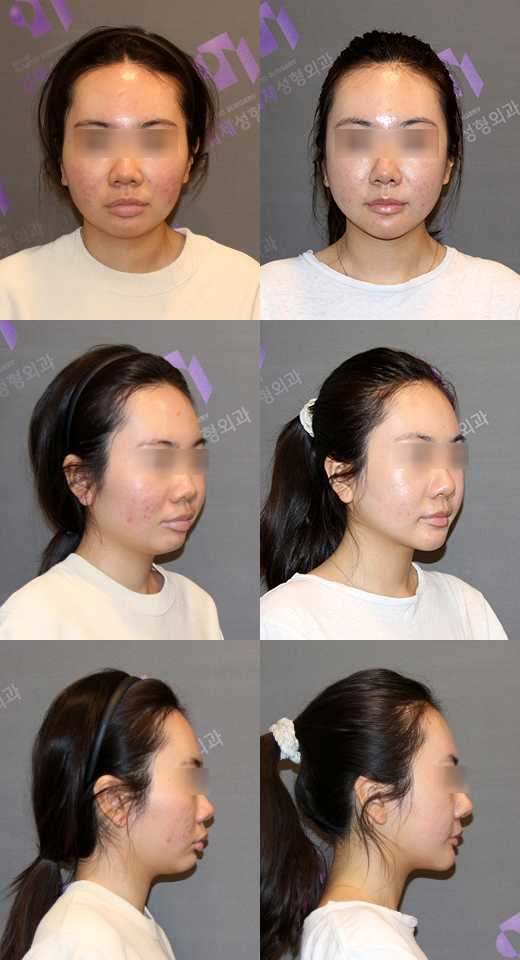
This is a case in which the chin was lengthened using a bone graft from the square jaw.
So far, I have explained the main types of chin surgery.
Of course, various other chin surgery techniques also exist, but most are modifications or applications based on the procedures explained today, and often differ only slightly in name or osteotomy method.
What is important is not which surgical technique is considered the best, but selecting the technique that is most suitable for the patient’s facial shape and chin structure.
Rather than making a decision based only on the name of the surgery, please consult thoroughly with an experienced board-certified plastic surgeon and choose the surgical technique that is right for you.
Thank you.