Hello, I’m Jo Hyun-woo, director of Ipche Plastic Surgery.
One of the questions patients ask most often when they come in for a consultation is, “Will I become prettier if I undergo facial contouring surgery?”
I don’t answer this question definitively by saying, “Of course you will.” That’s because everyone has different standards for what they consider a beautiful face.
These days, many people believe that a beautiful face is one without angles, bumps, or unevenness—a rounded face.
However, in my case, I believe a face looks more attractive when it has a certain degree of angularity and some prominent features.
For example, there is an actress named Ha-young.
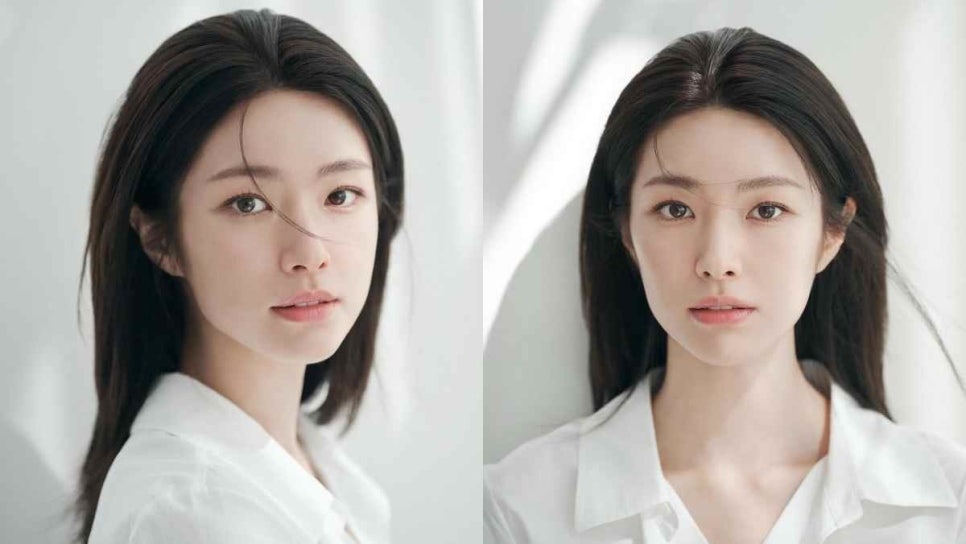
Ha-young
In my opinion, this actress has large eyes and a high nose, but her facial shape itself has cheekbones and a jawline that are proportionate to her features.
Some people may have a different opinion if they believe that an absolutely small, featureless face is beautiful, but I think this is truly a matter of personal aesthetic preference. So, what kind of surgery should be performed to become more attractive through facial contouring surgery?
Reducing something as much as possible does not necessarily make a person more attractive.
If you are concerned about your cheekbones and come in for surgery, you may think, “I want my cheekbones to be reduced as much as possible.” If you are concerned about a square jaw, you may think, “I want the angularity to disappear completely.”
However, when I perform facial contouring surgery, what I consider important is not how much can be reduced, but how far it should be reduced to create the most attractive facial appearance.
These two approaches differ more than you might expect.
For example, for people with very prominent cheekbones, reducing them can make the face narrower and the overall impression much softer.
However, the cheekbones are not simply bones that make the face look wider. They are also an important structure that creates dimension in the face.
If the only goal is to move the cheekbones as far inward as possible, the face may become smaller, but its original dimension may disappear as well.
As a result, the face may become smaller but look rather flat.
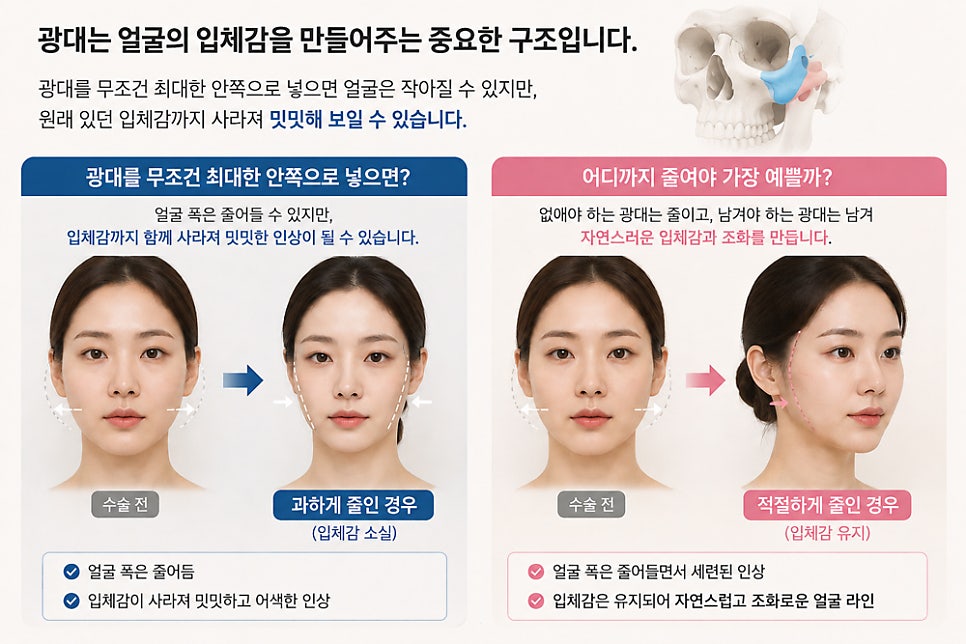
The same applies to a square jaw.
When people hear “square jaw surgery,” they generally imagine a jawline that connects as smoothly as possible from the angle beneath the ear to the tip of the chin.
Of course, if the angle beneath the ear is very pronounced and extends significantly outward, reducing it sufficiently may be appropriate.
However, a face without any angle beneath the ear does not suit everyone.
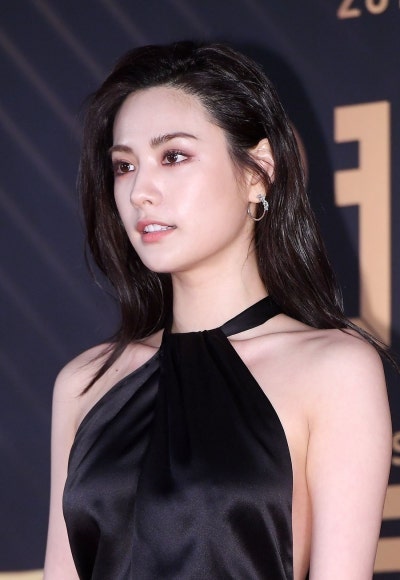
Nana
For example, for people with somewhat longer faces and clearly defined features, leaving a certain amount of the angle beneath the ear can actually help balance the overall face.
Conversely, removing too much of this angle can make the jawline excessively round and cause the face to appear even longer.
That is why I do not think angularity itself is a bad thing.
What matters is determining whether the angles stand out too much in relation to the entire face, or whether they instead highlight the face’s strengths and individuality.
You can easily see this difference when looking at celebrities’ photos.

Park Bo-young
Actress Park Bo-young has a very small face, with almost no visible cheekbones or square jaw, and a soft oval-shaped face.
This type of face looks very feminine, neat, and attractive.
On the other hand, some celebrities have a certain degree of cheekbone prominence and angularity in their jawlines.
Actress Ha-young, whom I mentioned earlier, is one example, and I think a face like Nana’s is also closer to this type.

Nana
This is one of the facial types I personally find attractive.
Rather than simply being small and round, the face has very clearly defined features, along with a certain degree of skeletal presence that suits those features.
If the cheekbones or jawline were completely removed from a face like this, would it really become more attractive than it is now?
I don’t necessarily think so. What matters is the harmony between the facial features and the facial shape.
This is what I consider most important in facial contouring surgery.
We should not look only at how prominent the cheekbones are or how large the square jaw is. We also need to consider how the person’s eyes, nose, and mouth harmonize with their facial shape.
I often see cases like this during actual consultations.
For example, let’s say a patient comes in because of their cheekbones.
Because the patient sees only their cheekbones every time they look in the mirror, they may say, “Doctor, please move my cheekbones inward as much as possible.”
However, when looking at the face as a whole, the cheekbones may not be particularly prominent. Instead, the patient may have large eyes and a high nose, meaning that the existing cheekbones are contributing to the dimension of the face.
For such patients, I speak honestly:
“Rather than trying to eliminate your cheekbones completely, I think you would look better if we reduced only the parts that appear excessively prominent from the side.” In fact, for these patients, the result is often much more natural when a certain amount of cheekbone structure is preserved and only the excessive portions are refined.
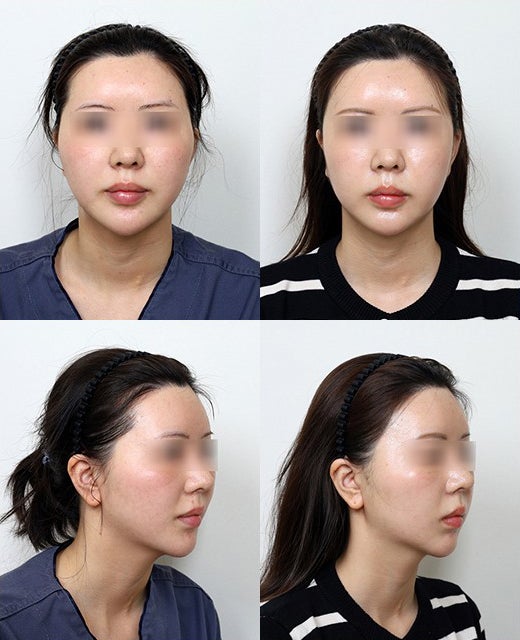
230-Degree 3D Cheekbone Reduction Surgery
Conversely, some people truly have large cheekbones and a very wide face. In such cases, reducing them only slightly will not produce a noticeable change.
Even if patients ask for a natural result, faces that require substantial reduction need to be reduced sufficiently.
What matters is not whether less or more is reduced, but reducing it by the amount that face requires.
The same applies to a square jaw.
Some people have short, wide faces and relatively soft overall features.
For these people, smoothing the jaw more gently from the angle beneath the ear to the tip of the chin can make the entire face look smaller and more feminine.
Conversely, if the face is somewhat long, the nose is high, and the facial features have strong lines, leaving a certain amount of the angle beneath the ear may be more attractive.
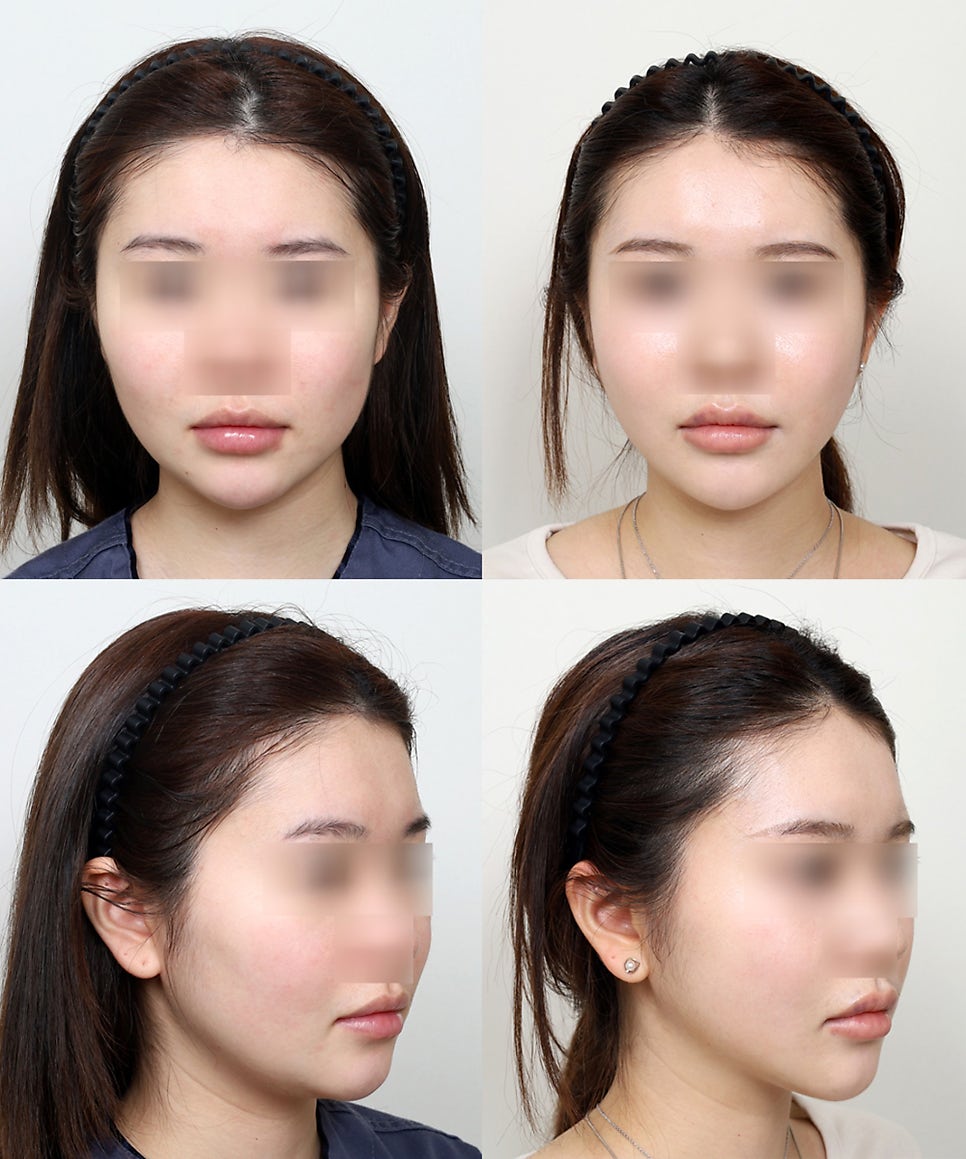
Cheekbone Reduction Surgery, Square Jaw Surgery
This is something I often explain during consultations as well.
Problems can arise if the goal of facial contouring surgery is considered simply to be the smallest possible face.
Up to a certain point, reducing the face’s shortcomings can make it more attractive, but once a certain line is crossed, its strengths also begin to disappear.
I would like to emphasize that although I personally find faces like Ha-young’s or Nana’s attractive and prefer faces with a certain degree of skeletal definition, this does not mean that they represent the definitive standard of beauty. The beauty each patient envisions may be different.
That is why, during contouring consultations, I sometimes ask patients to show me photos of the face they want, and I try to listen carefully to which types of faces they like and dislike.
I believe the process should not involve unilaterally creating the beautiful face the doctor has in mind. Instead, it is necessary to align the patient’s desired direction with the direction that actually suits them. These judgments are extremely important to the surgical outcome.
Facial contouring surgery is not a procedure that makes everyone’s face uniformly small and smooth. It is a procedure that creates overall harmony by reducing what is excessive in a person’s face while preserving its attractive features. I believe that is the best way to become more attractive through facial contouring surgery.
I hope today’s post was helpful to you as well.
Thank you.