
It is easy to think that scars will naturally fade over time,
but keloids are an exception.
This is because they are a progressive skin condition in which a hard, red scar gradually grows larger and thicker,
even protruding beyond the skin.
In particular, if they appear on visible or highly mobile areas such as the face, neck, or shoulders,
they can cause not only cosmetic concerns but also pain and psychological stress,
so early treatment is essential.
What is a keloid?
Unlike a regular scar,
a keloid is a condition in which connective tissue overgrows even after a wound has healed,
becoming much larger and thicker than the original wound.
Main symptoms
Smooth, firm raised skin
Redness or brown discoloration
Itching, stinging, pain
Restricted movement depending on the area
5 reasons keloids should be treated
- They do not go away on their own
Over time, they can gradually spread, become harder,
and even invade surrounding normal tissue.
- They can limit physical function
If they develop on the neck, shoulders, or joints,
they can cause discomfort with movement
and affect daily life.
- Psychological distress
Keloids on visible areas can lead to appearance-related stress,
lower self-esteem, and social avoidance.
- Secondary infection and complications
If the wound is touched or squeezed,
the risk of skin necrosis, infection, and delayed wound healing increases.
- Delayed treatment makes them harder to treat
The response to a single procedure may be limited,
and the recurrence rate can rise to 80–100%,
so combination treatment and long-term management are essential.
⏰ Why early treatment matters
| Early treatment | If left untreated |
|---|
| The tissue is still soft and responds quickly | The scar hardens, reducing treatment effectiveness ↓ |
| Shorter treatment period and fewer sessions | Combination treatment needed + longer treatment period ↑ |
| Minimizes pain and discomfort before symptoms worsen | Itching and pain worsen, limiting activity |
| Lower recurrence rate | Higher recurrence rate, possibly requiring surgery |
Keloids are a condition that responds better the sooner they are treated.
Early diagnosis and individualized treatment are more important than anything else.
Human Dermatology Seoul National University Branch's
Keloid treatment solution
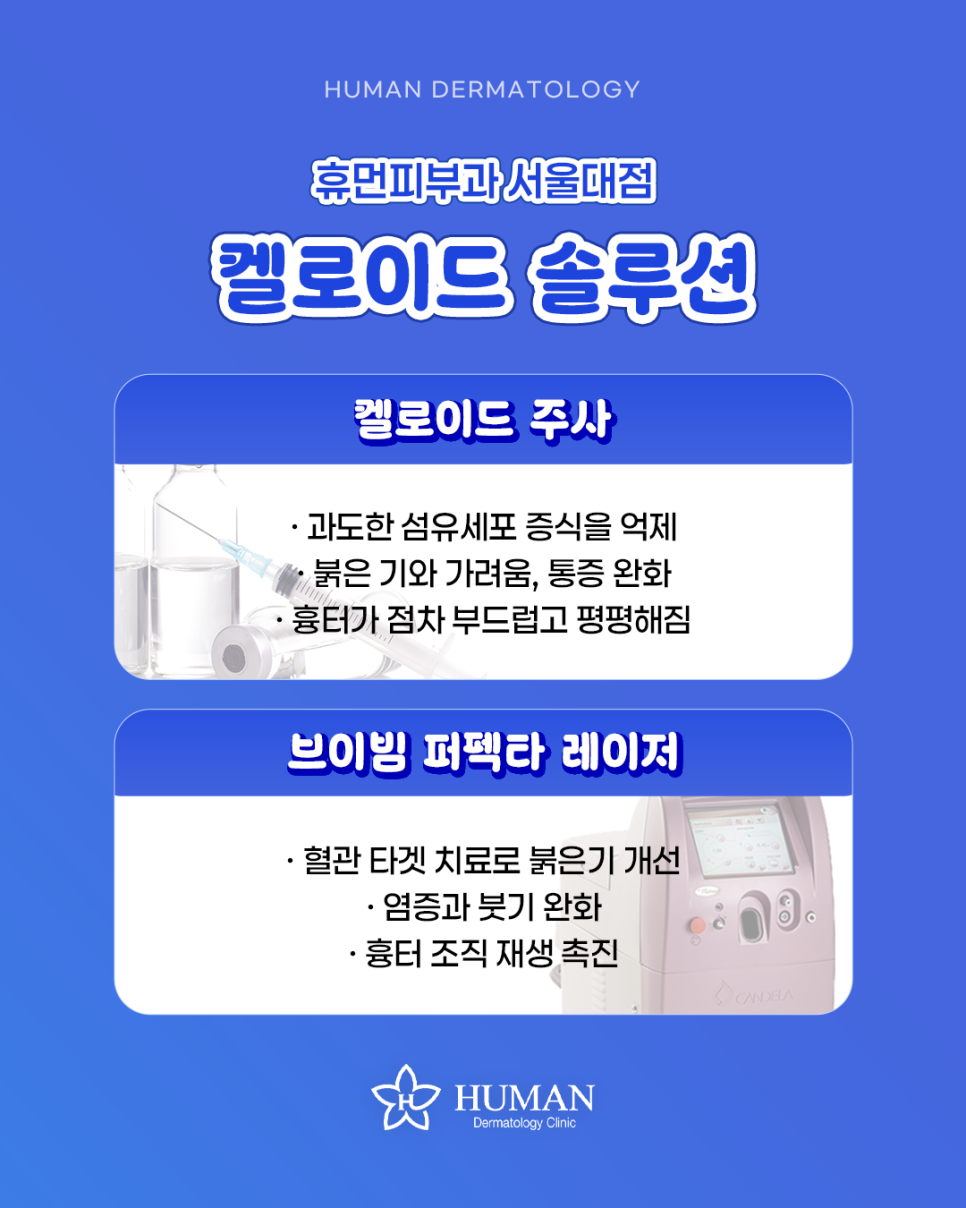
- Keloid injections (local steroid injections)
Effect: suppress inflammation and block collagen overgrowth
→ Relieves redness, size, and itching
Treatment method: performed at 2- to 4-week intervals, with continuous management for 4 to 5 months
Advantage: newly developed keloids tend to respond better
- Vbeam Perfecta laser
Effect: removes microvessels → improves redness, inflammation, and pigmentation
Device feature: a premium vascular laser with low pain and fast recovery
Additional benefits: improves skin tone and minimizes damage to surrounding tissue
- Customized combination treatment strategy
Injections suppress internal inflammation and growth
Laser improves external cosmetic concerns
→ Helps prevent recurrence + increases cosmetic satisfaction
Careful follow-up after treatment!
Even after the procedure, Human Dermatology Seoul National University Branch provides regular progress checks and home care guidance.
To reduce the risk of recurrence and until the scar stabilizes,
a 1:1 monitoring system is in place.
Keloids
Frequently asked questions!
Q1. How can I tell whether it is a keloid or just a simple scar?
A. A regular scar tends to fade or flatten over time,
whereas a keloid is characterized by growing larger and thicker,
with more redness over time.
If the scar area is gradually enlarging, itching,
and becoming firm, you may suspect a keloid.
An accurate distinction requires diagnosis by a dermatologist.
Q2. How often do keloids need to be treated?
A. Treatment is usually repeated every 2 to 4 weeks,
and consistent procedures are needed for an average of 4 to 5 months.
The treatment interval and number of sessions may vary depending on the individual’s skin condition,
the size or location of the keloid,
and the speed of skin response.
Because treatment response is faster in the early stages,
early visits are important.
Q3. Can I return to daily life immediately after treatment?
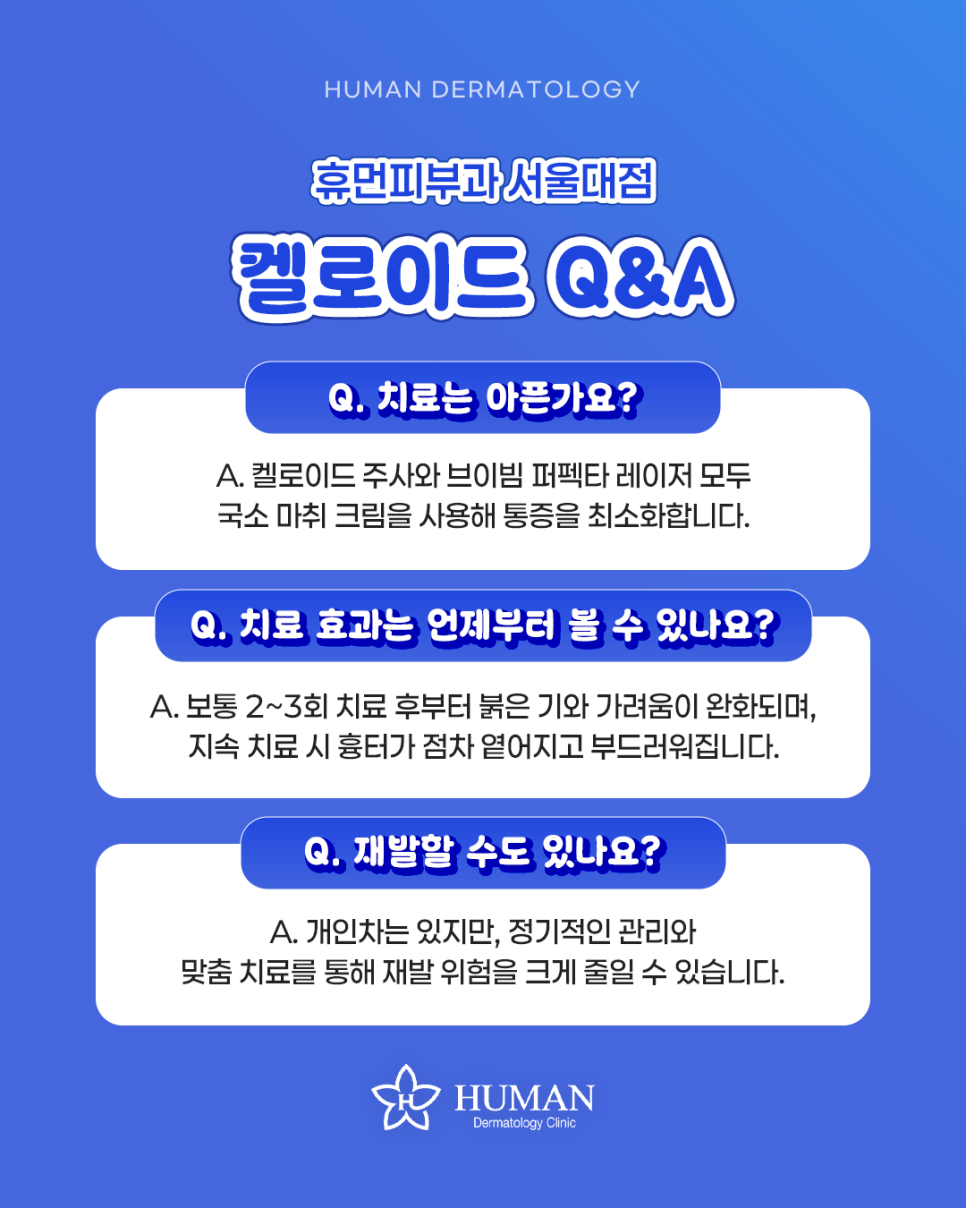
A. Since keloid injections and Vbeam Perfecta laser are non-surgical procedures,
in most cases, daily life is possible right after treatment.
However, redness or slight stinging at the treated area may occur,
so it is best to follow the specialist’s guidance and carefully protect the skin with sunscreen and moisturizing care.

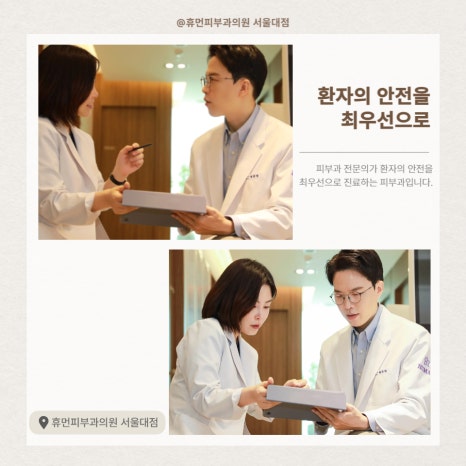
Keloids are not just unsightly scars,
but a condition that can reduce quality of life both physically and mentally.
At Human Dermatology Seoul National University Branch,
meet healthier and more confident skin than you have now
with an accurate diagnosis and systematic customized treatment!