
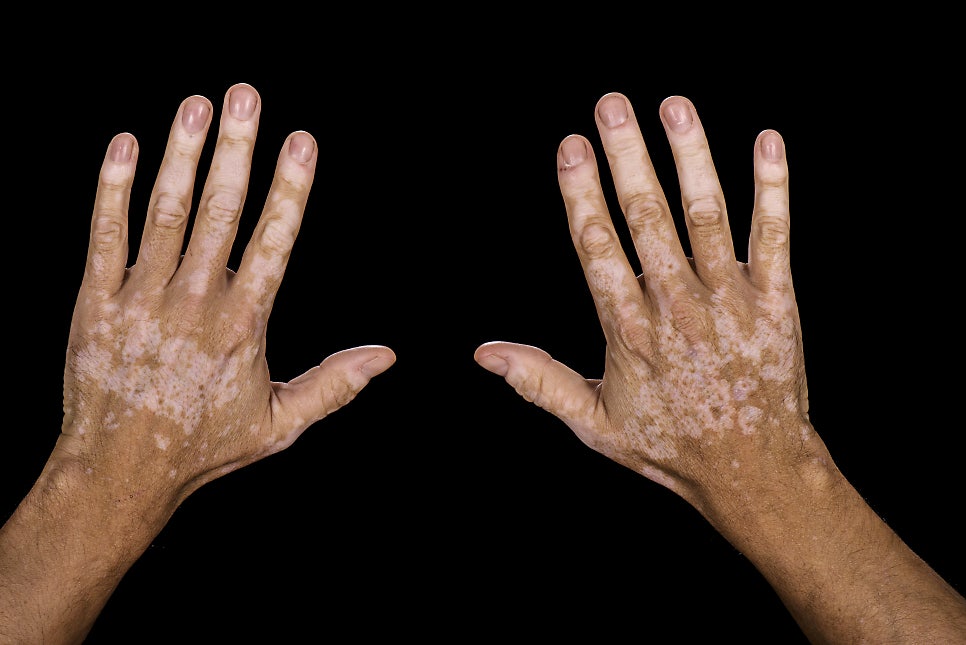
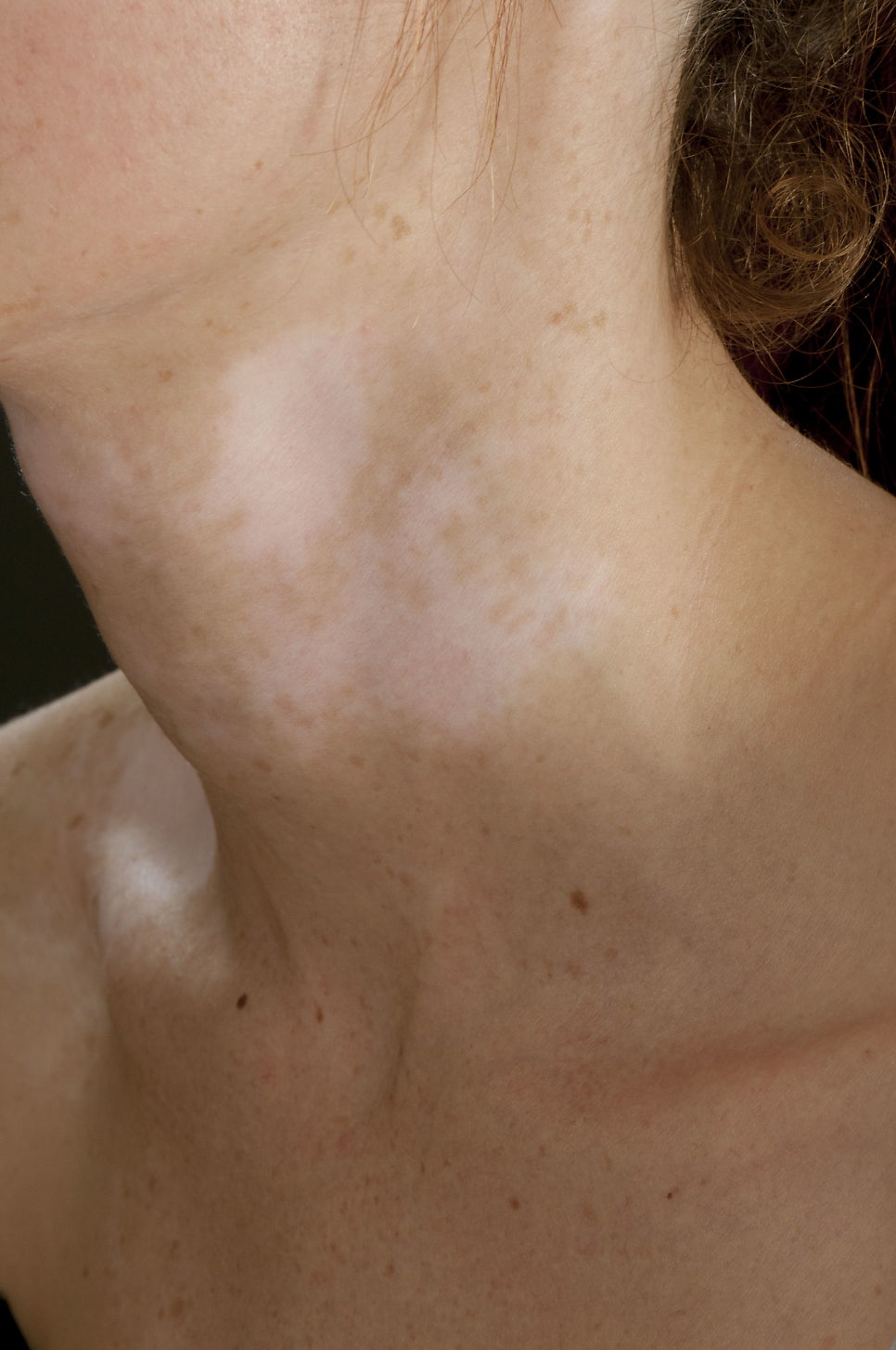
Vitiligo is a representative skin condition in which white spots appear on the skin.
As melanocytes are lost,
skin color partially disappears,
creating a clear contrast with the surrounding area.
Because it is visible on the outside,
psychological and social difficulties
may also accompany it,
so treatment and management are needed.

What is vitiligo?
Vitiligo is a chronic condition
in which cells that produce melanin pigment
are destroyed,
causing white patches to appear on the skin.
It can occur at any age,
and there is little difference between men and women.
It usually tends to occur more easily in exposed areas such as
the face, hands, feet, and joints.
The speed of progression varies greatly from person to person,
and in some cases it can spread suddenly.
Causes of vitiligo
First, it is an autoimmune abnormality.
It is known that the main cause is
the immune system attacking and destroying melanocytes.
Second, there are genetic factors.
If there is a patient in the family,
the likelihood of developing it increases.
Third, there are environmental factors.
Severe stress, exposure to chemicals,
and skin trauma can be factors
that promote the onset of the condition.
In this way, it appears through the combined action
of various causes.

Treatment methods
Vitiligo is not easy to cure completely,
so long-term management is necessary.
For drug treatment, steroids
and immunomodulators are used.
Phototherapy uses ultraviolet light
to help reactivate melanocytes.
Recently, laser treatment
and grafting therapy
have also been performed.
Since treatment effectiveness varies greatly from person to person,
after consulting a specialist,
you should choose an appropriate method.

Vitiligo: How to manage it in daily life
First, sun protection.
Exposure to sunlight can make the lesions
stand out more, so
it is necessary to consistently use sunscreen.
Second, avoid skin irritation.
Cuts and exposure to chemicals
can worsen symptoms,
so caution is needed.
Third, maintain a balanced lifestyle.
Enough sleep and nutrition,
and stress management are important.
Fourth, regular medical checkups.
You need to check treatment response
and manage changes in symptoms.
Vitiligo is not just a simple skin change,
but a chronic disease associated with autoimmunity.
It does not end with appearance-related concerns alone,
but also comes with psychological burden,
so active treatment and management are necessary.
If you receive an early professional diagnosis
and establish a treatment plan suited to you,
improvement in symptoms and quality of life
is fully possible.
What matters most is to consistently practice
proper management and lifestyle correction.