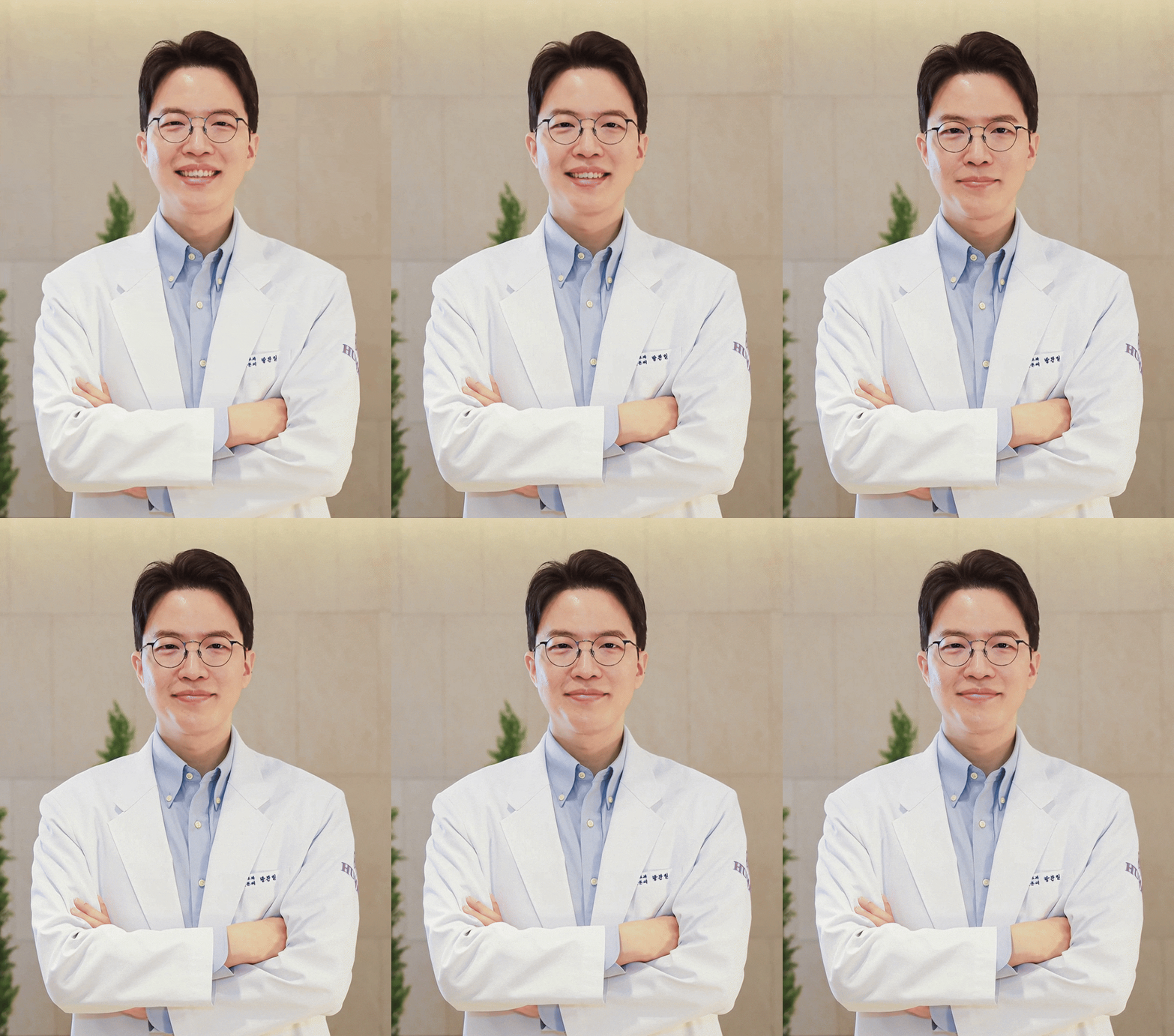
Bang Chan-il, Chief Director of Human Dermatology Seoul National University Branch
Hello,
This is Human Dermatology Seoul National University Branch.
At some point, when you look in the mirror, there are times when you feel you look a little different from before. The facial contours in photos are less defined, and fine lines around the eyes or mouth start to show a little. In your 20s, your skin could bounce back quickly with just one moisturizing cream, but after your 30s, it often feels like your skin loses firmness and makeup does not sit as well.
At first, you may try changing your cosmetics or increasing your layering routine, but as time goes by, you may start to wonder, “Should I start caring for what’s underneath, not just the surface?” That is why many people these days are considering procedures that help revive the skin’s inner environment. Among them, Thermage at Isu Station is often chosen as a way to naturally restore firmness.
Value beyond skin | Human Dermatology Clinic Seoul National University Branch
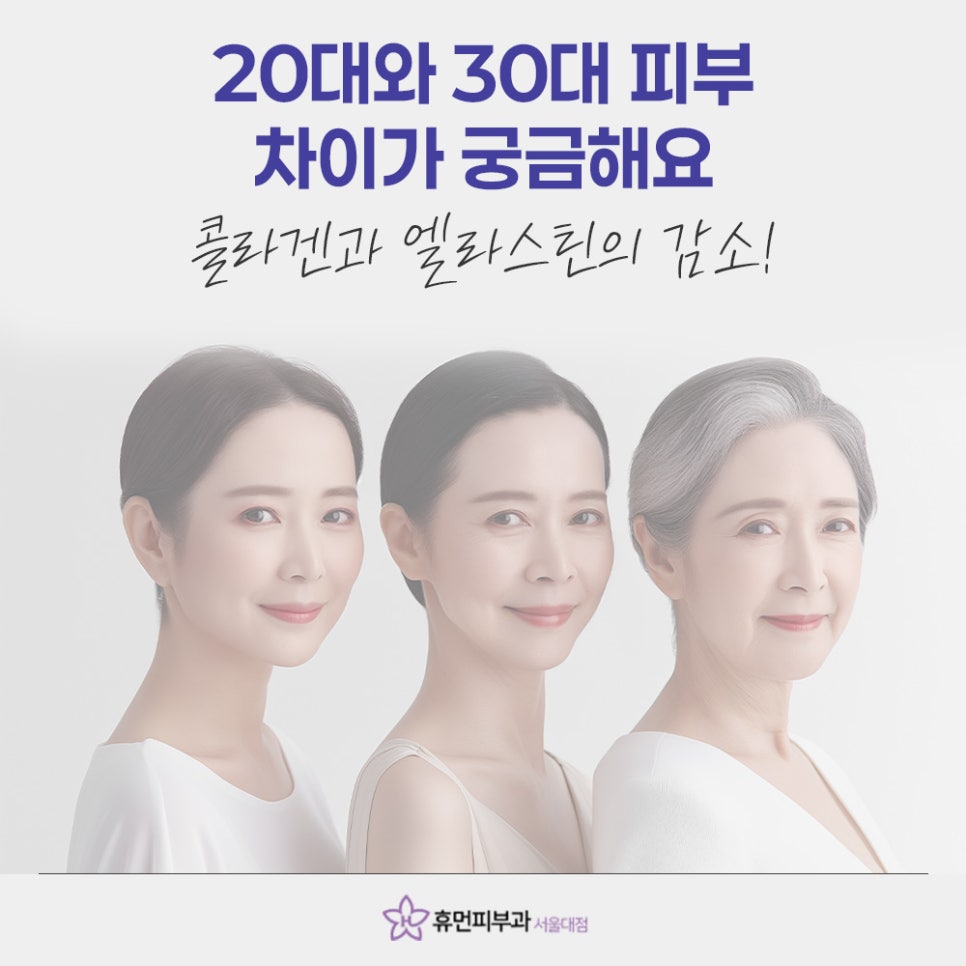
Why do skin in your 20s and 30s feel so different?
The biggest difference between skin in your 20s and 30s is actually the decrease in collagen and elastin. Collagen acts as the framework of the skin, while elastin supports that structure with elasticity. Starting in the mid- to late 20s, these components gradually decrease, and the skin begins to loosen.
That is why in your 20s, skin could recover quickly with moisture-focused care alone, but after your 30s, care that can help “rebuild collagen” becomes more important. It is natural that people begin to consider skin boosters or lifting procedures from that point on.

Concerned about fine lines or loss of firmness? → Thermage!
“Thermage” is a procedure that has been recognized by many people over a long period of time. It is a radiofrequency wrinkle treatment that has been certified for both safety and effectiveness by the U.S. FDA. It works by delivering heat energy into the deeper layers of the skin, causing collagen fibers to contract and encouraging regeneration.
In this process, the skin gradually regains firmness, and one characteristic of Thermage is that it creates changes that continue to improve over time.
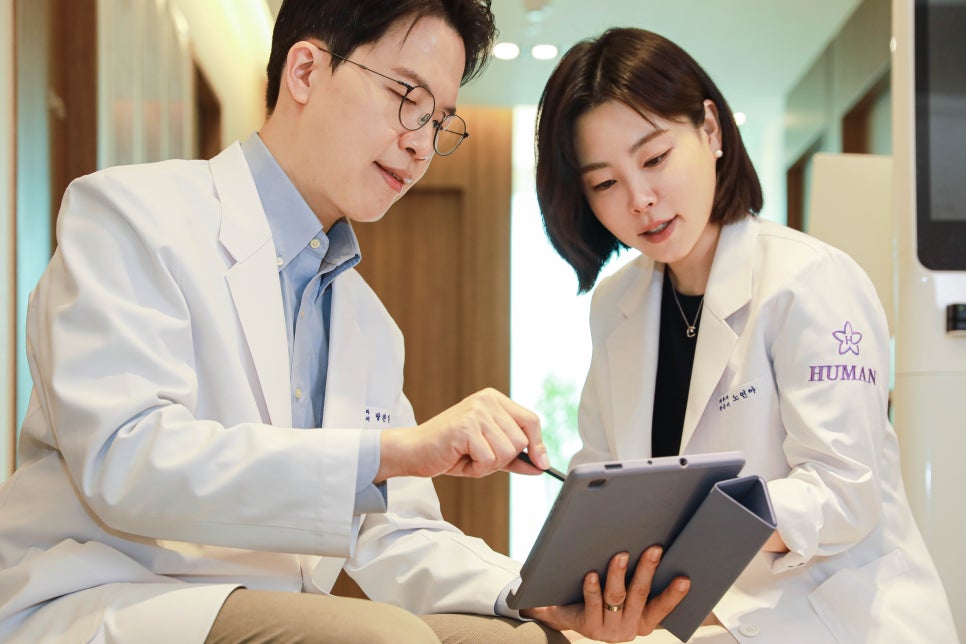
✔ Stimulates collagen in the skin with radiofrequency energy
✔ Restores firmness while rebuilding the skin structure
✔ Improves skin texture + softens fine lines
✔ Natural and long-lasting lifting effect
In other words, Thermage is not simply a procedure that tightens or fills; it is easier to understand as a treatment that stimulates the skin to change on its own.

What are Thermage’s features and benefits?
Thermage is especially suitable for thin, dry skin or skin that easily develops fine lines. When volume-increasing methods like skin boosters feel burdensome, Thermage can be a very good alternative.
Consider Thermage in these cases!
✅ Fine lines have increased and skin texture has become rough
✅ You have less cheek volume and your firmness tends to drop easily
✅ You want a natural, gentle lifting effect
✅ You are looking for a procedure with a short recovery time
✅ If your skin looks dull when you apply makeup
You can apply makeup right after the procedure and return to daily life quickly, so Thermage at Isu Station is especially popular among busy office workers.

Why is Thermage FLX popular at Human Dermatology Seoul National University Branch?
At Human Dermatology Seoul National University Branch, we use the upgraded Thermage FLX. This device delivers radiofrequency energy more precisely, and the procedure time is shorter, which leads to high satisfaction. Because we provide a carefully designed treatment tailored to each patient’s skin condition, you can expect a natural lift that does not look obvious.
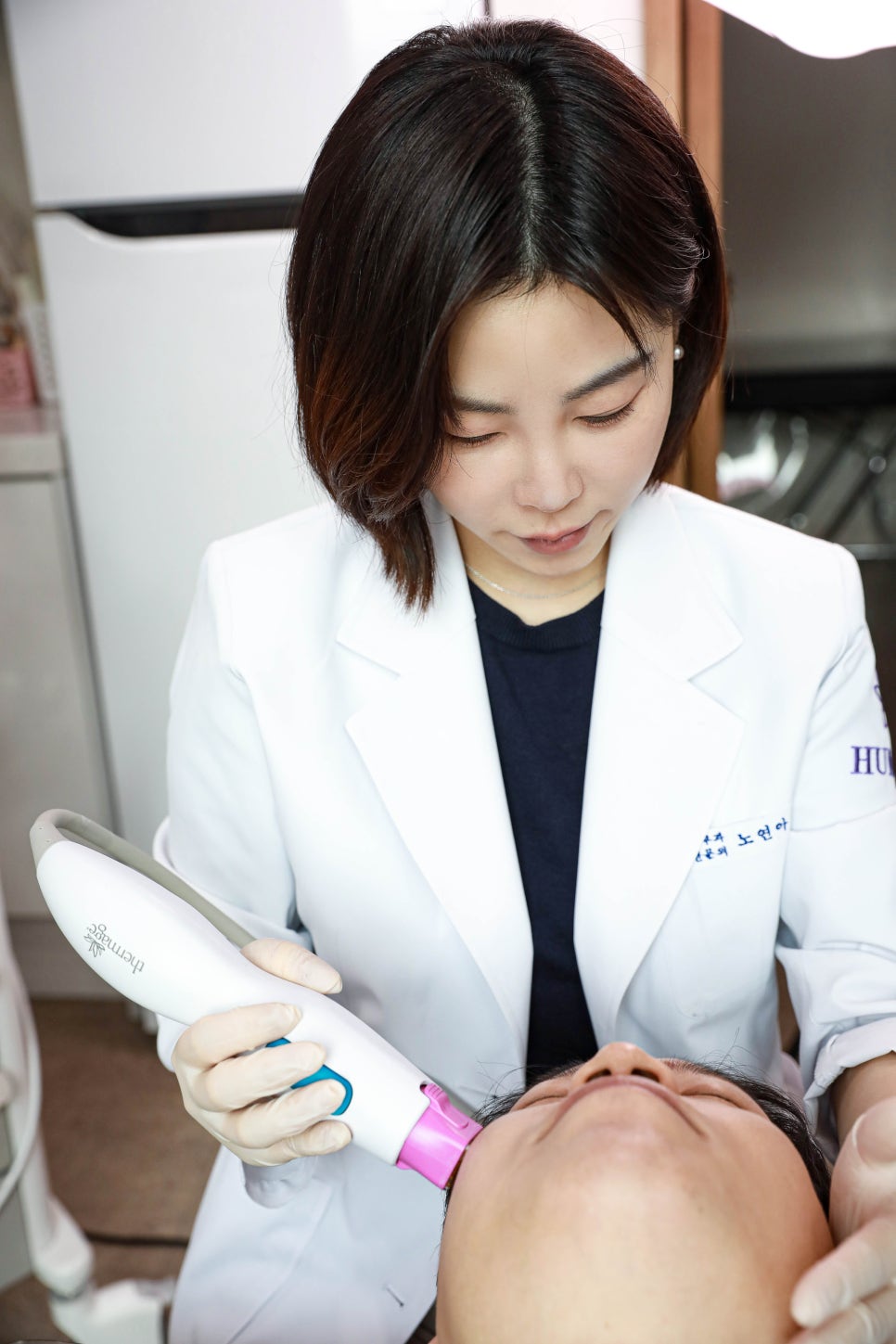
Main effects of Thermage FLX
✔ Improved skin firmness
It encourages collagen regeneration within the skin to restore firmness.
✔ Collagen regeneration
Heat from radiofrequency causes fiber contraction → promotes collagen production
✔ Wrinkle improvement
It is highly effective for wrinkles around the eyes, forehead, and mouth.
Thermage at Isu Station
In particular, it is a major advantage that even sensitive areas such as the jawline or hairline can be treated safely according to the design of a dermatologist.

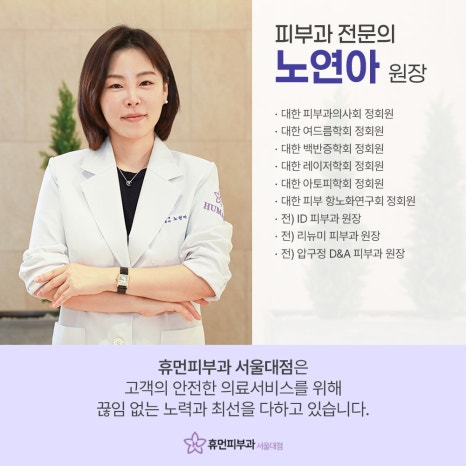
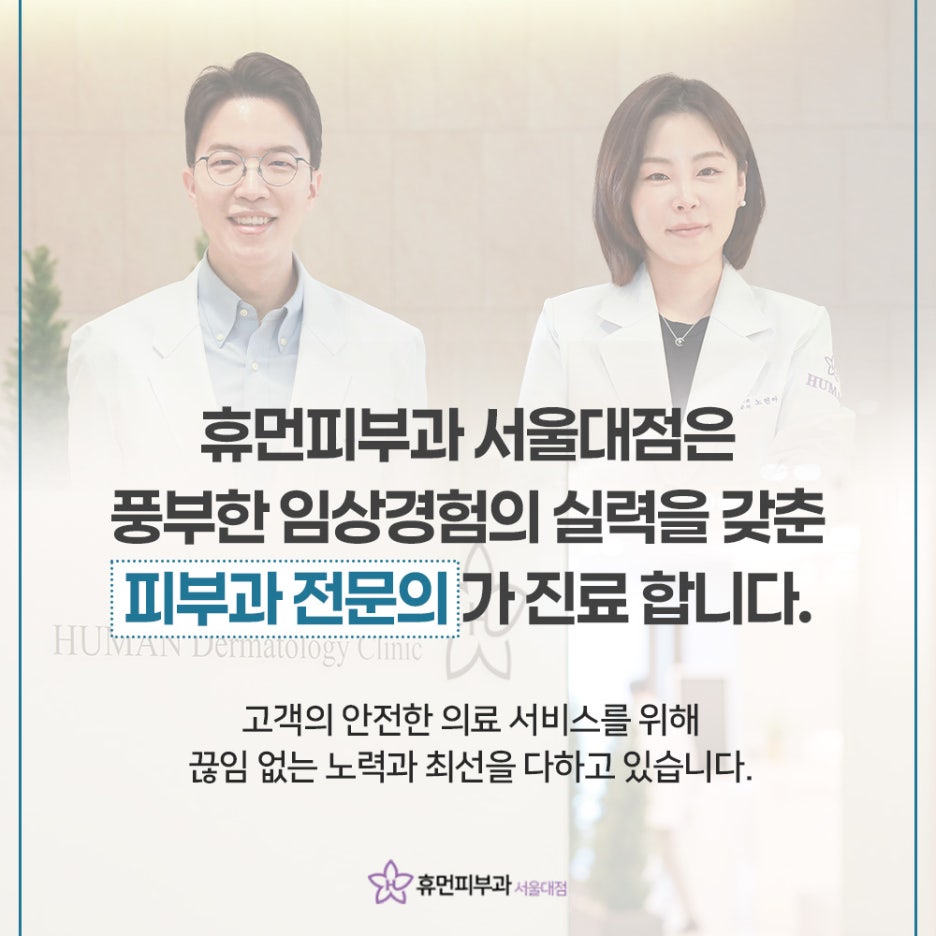
Why should you receive treatment from a dermatologist?
Thermage is a procedure where the energy level and treatment depth are important, so the dermatologist’s design and judgment are truly crucial. Even when the same device is used, results can vary depending on the practitioner, which is why it is safer to receive treatment from a medical team with experience and know-how.
👨⚕️ Analysis of skin thickness and firmness is needed
👩⚕️ The energy level must be adjusted differently for each area
👨⚕️ A strategy to minimize skin damage is important
👩⚕️ When combining with other procedures, a combination plan is needed
Thermage requires such a detailed approach that it can be said to be a procedure that “designs the entire face.” That is why consulting with a dermatologist who has both expertise and delicacy is the most important thing. Thermage at Isu Station
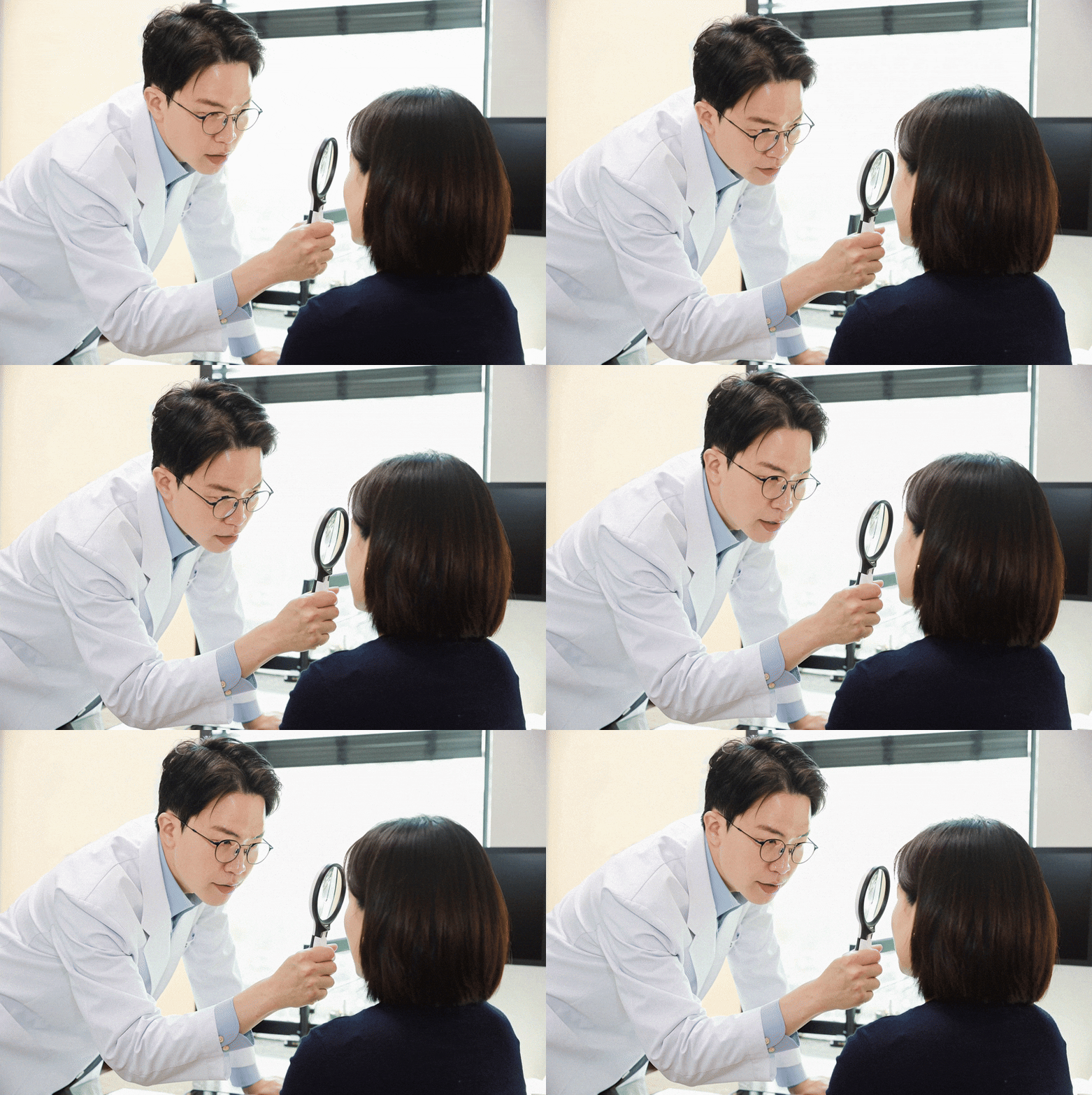
Even as skin ages, it still has the ability to recover on its own. What matters is knowing how to awaken that power. Thermage is not a method that forces major changes on the skin; it is a procedure that helps it recover gradually, but clearly.
If you have noticed fine lines and feel that your skin has lost firmness, that may be a signal from your skin. If you do not miss that signal and care for it properly, there may come a moment when the face in the mirror looks good again.
Wondering about your current skin condition?
Thermage at Isu Station
An accurate diagnosis from a dermatologist is the fastest solution. If you are curious about your current skin firmness or whether you are a suitable candidate for the procedure, Human Dermatology Seoul National University Branch will accurately analyze your skin condition and help consult on the appropriate treatment direction, so we hope you visit and receive proper care.
Your skin is changing quietly today as well. Thermage can be a good starting point so that this change becomes “recovery” rather than “aging.”