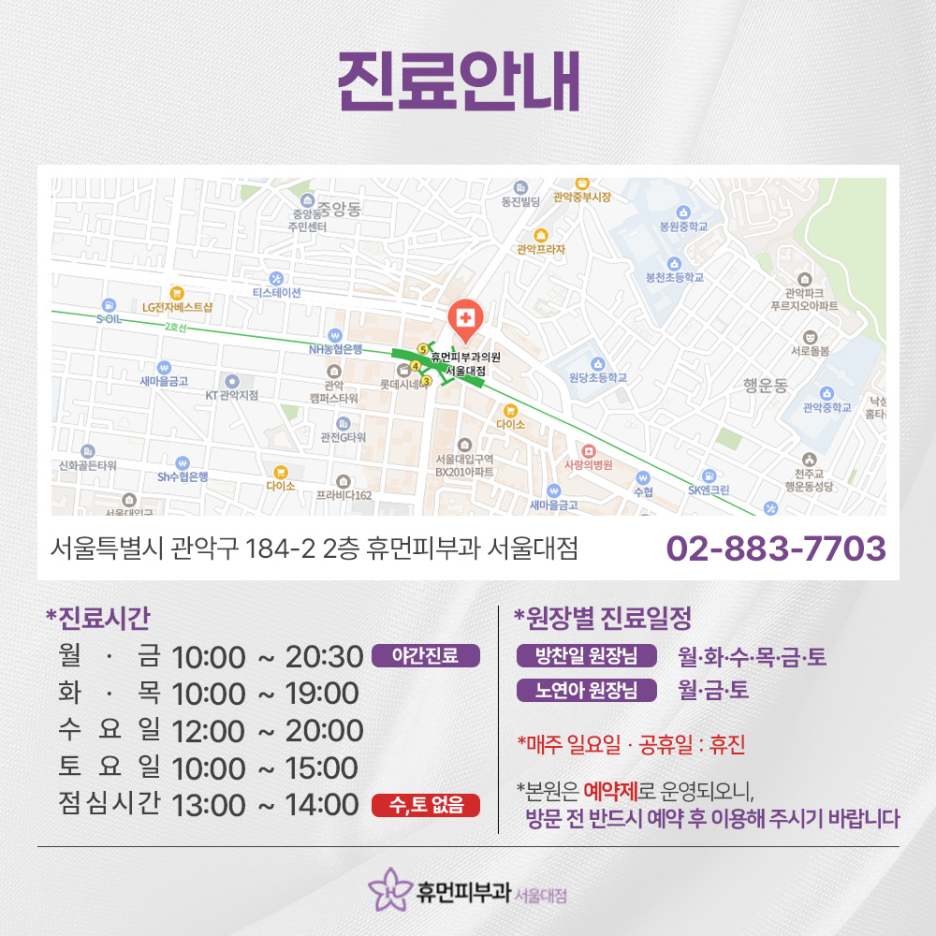
Human Dermatology Clinic Seoul National University Branch
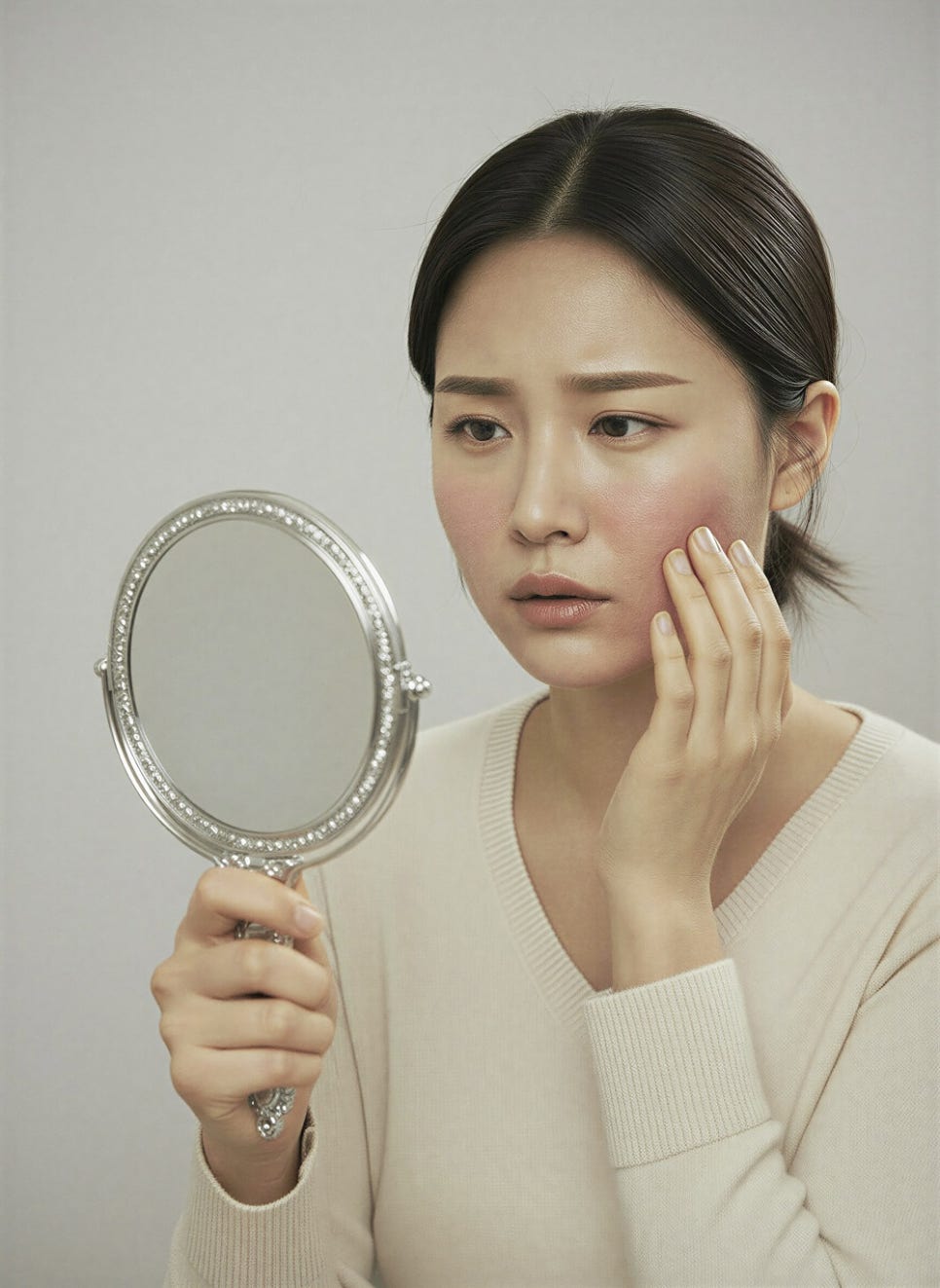
Have you ever looked in the mirror and noticed your face
turning red easily,
at least once?
Especially when the weather changes even a little,
your face may become red,
or after washing your face, the redness may
not go down for a while.
Some people also find that when they feel nervous,
or eat hot food,
or when there is a big difference between indoor and outdoor temperatures,
their face easily feels hot.
When these symptoms keep happening,
a concern naturally arises:
“Why is my skin like this?”
Skin redness is often thought of as a problem caused simply by
sensitive skin, but in reality,
the blood vessel response within the skin and the condition of the skin barrier
often affect it together.
So in some cases, it can be difficult to resolve with skincare products alone.
Today, we’ll talk about the reasons why skin redness occurs,
how to manage it in daily life,
and skin booster procedures that a dermatology clinic
may be able to help with.
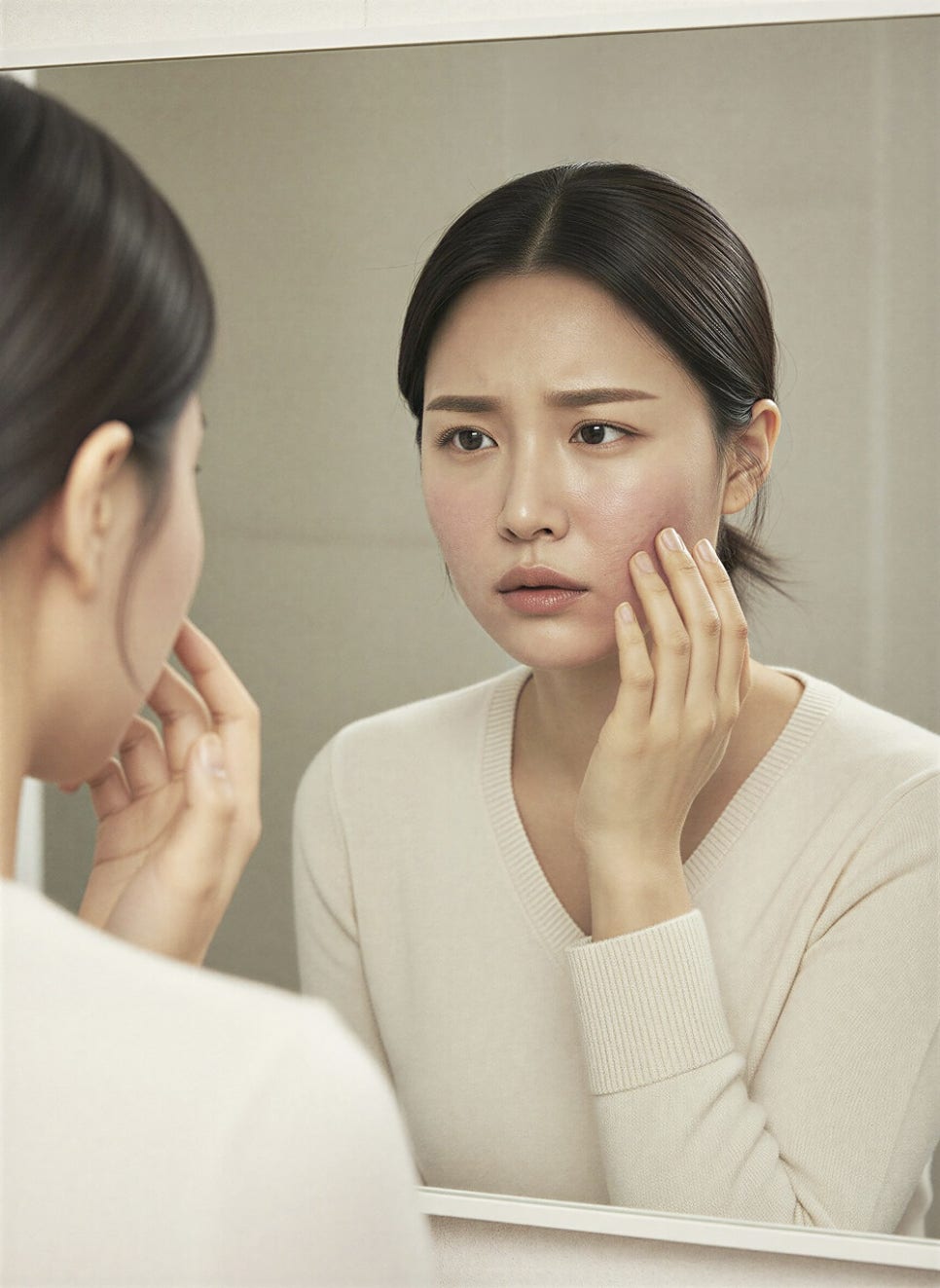
Why does skin redness occur
Skin redness can appear for a variety of reasons.
One of the main causes is when the capillaries in the skin
easily expand.
When exposed to temperature changes or irritation,
the blood vessels expand,
making the face appear red.
In particular, when the skin is thin or sensitive,
this reaction can appear more easily.
Another important cause is a weakened skin barrier.
When the skin barrier is weakened,
the skin becomes more sensitive to external irritation,
and redness can appear even with small triggers.
Frequent exfoliation, strong cleansing,
and using cosmetics that do not suit your skin
can also weaken the skin barrier.
That is why, for redness-prone skin, it is important to reduce irritation
and maintain a healthy skin barrier.

Characteristics of skin redness
Redness does not simply mean that the face turns red.
Some people only become red in certain situations, while others
keep their face red all the time.
In particular, redness often persists around the cheeks or nose.
Redness-prone skin is also often accompanied by discomfort such as dryness or stinging.
After washing the face, it may feel hot,
or applying skincare products may cause a stinging sensation.
If these symptoms repeat,
the skin can gradually become even more sensitive, so it is important
to reduce skin irritation from the beginning and provide proper care.

How to manage skin redness
When managing skin redness,
the most important thing is to minimize skin irritation.
When washing your face, it is better to use lukewarm water
rather than very hot water.
Also, it can help to avoid exfoliating products used excessively
or strong peeling products.
Moisturizing the skin is also one of the most important
management methods.
When the skin barrier is weakened,
redness can appear more easily, so it is necessary to
stabilize the skin through sufficient hydration.
Also, ultraviolet rays can worsen skin redness,
so making sunscreen use a regular habit when going out
can also be helpful.
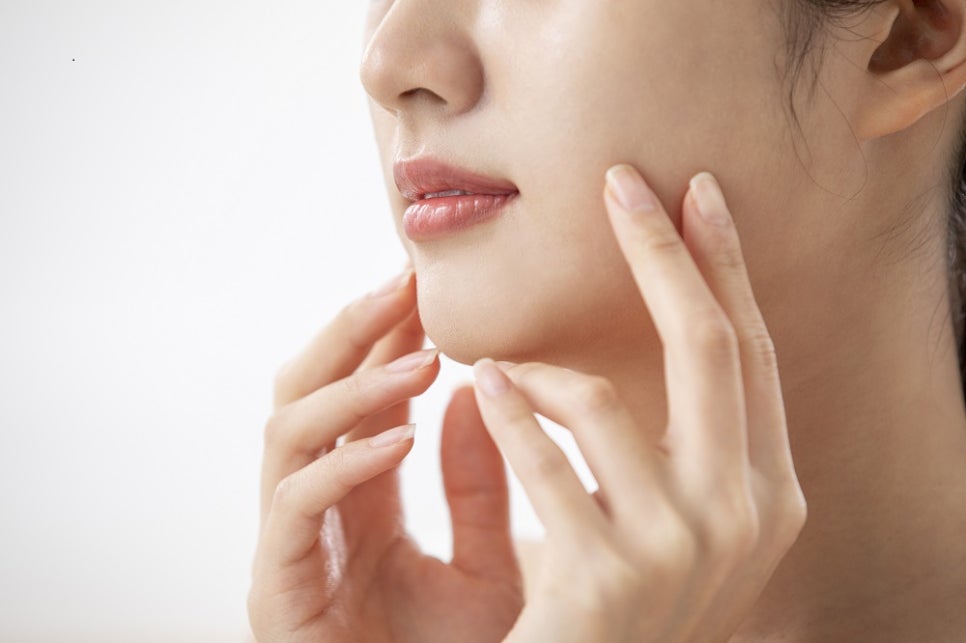
Dermatology procedure – skin booster
One method that may help with managing skin redness
is a skin booster procedure.
A skin booster is a procedure that injects ingredients that may help skin regeneration and hydration
into the dermal layer of the skin,
with the goal of improving the skin environment.
Because it can help strengthen the skin barrier
and stabilize the skin condition,
it is sometimes used for redness-prone skin care as well.
A skin booster is not simply about caring for the skin surface;
it is a procedure focused on improving the environment within the skin.
It can help relieve dryness
and sensitivity,
and may play a role in supporting skin regeneration.
However, the appropriate procedure may vary depending on the individual’s skin condition,
so it is important to check the skin condition
after professional consultation before proceeding.

Skin redness is one of the skin concerns that many people
worry about more than they expect.
However, if care suited to your skin condition is combined
with treatment, you can still expect your skin to improve
into a more stable condition.
The important thing is to reduce skin irritation
and build lifestyle habits that keep the skin barrier healthy.
Also, if skin redness lasts for a long time
or becomes bothersome in daily life,
it is a good idea to seek help from a dermatologist to check your skin condition.
If care and procedures suited to your individual skin condition are carried out together,
it may help maintain a more comfortable and healthy skin condition.
Human Dermatology Clinic Seoul National University Branch
Articles you may also like