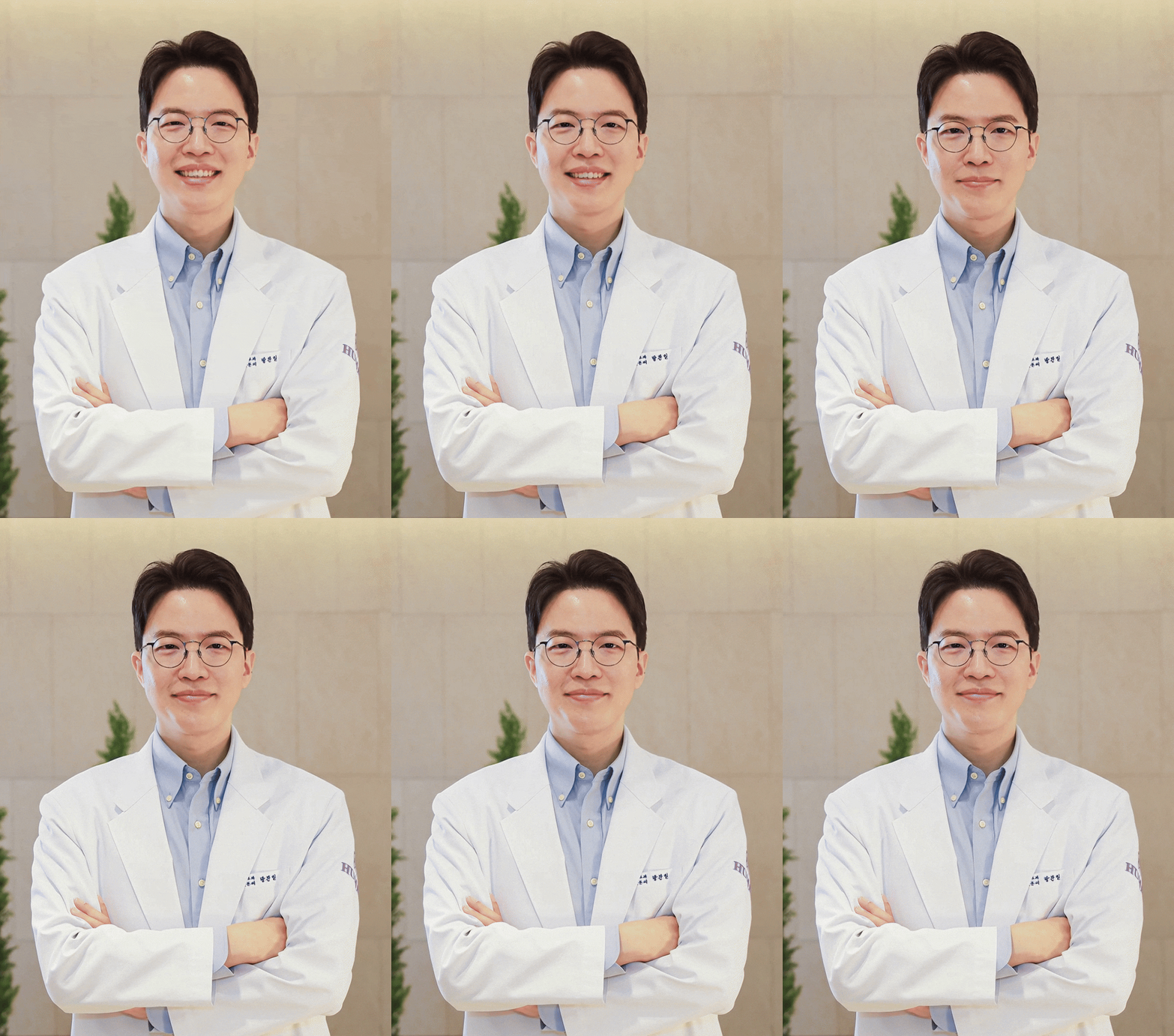
Human Dermatology Seoul Nat'l University Branch, CEO Dr. Bang Chan-il
Hello,
This is Human Dermatology Seoul Nat'l University Branch.
When you look in the mirror and notice faint brown patches or blemishes spreading across your face, it is hard not to pay attention. At first, you may brush it off lightly, thinking, “Did I just get too much sun?” But as time goes on and the color seems darker or the area feels wider, it naturally leads you to consider treatment at a Sillim melasma dermatology clinic.
In particular, melasma may look like simple blemishes on the skin surface, but in reality it is a pigment disorder influenced by multiple factors, including an individual’s skin type, ultraviolet exposure, hormonal changes, and the condition of the skin barrier. That is why it is not enough to simply receive a strong laser at a Sillim melasma dermatology clinic and expect improvement. It is important to examine how deep the pigment is, how sensitive the skin is, and whether redness or inflammatory reactions are present nearby.

Customized Diagnosis You Must Check at a Sillim Melasma Dermatology Clinic
Human Dermatology Clinic Seoul National University Branch
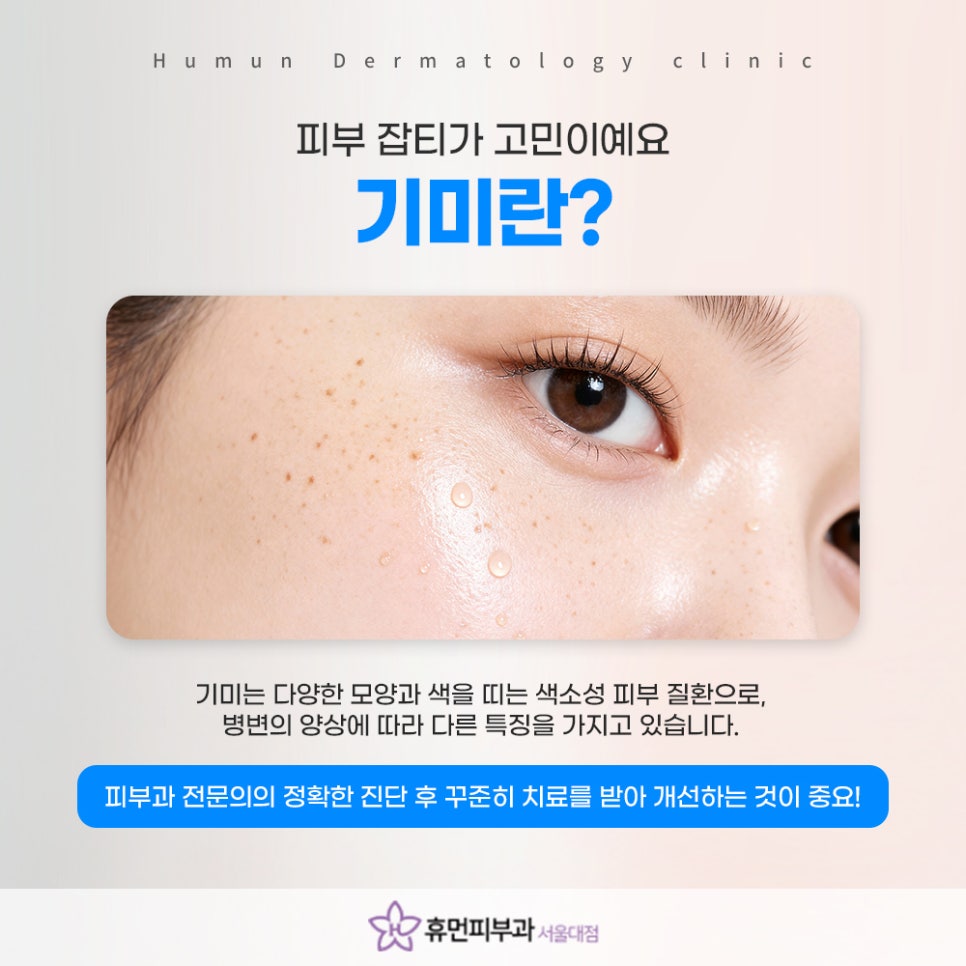
What exactly is melasma?
Melasma is a pigmented skin condition that appears on the face in various shapes and colors. It often develops symmetrically on both cheeks, the cheekbones, the forehead, and around the jawline, and it may appear light brown, dark brown, or grayish-brown. Although it may look like a similar blemish on the surface, it actually needs to be distinguished from freckles, lentigines, Ota nevus, and post-inflammatory hyperpigmentation, which is why the initial diagnosis is very important.
Depending on the characteristics of the lesion, melasma can present differently. Some pigment may lie relatively shallow in the epidermis, while in other cases pigment distributed deeper into the dermis may also be present, which can make the treatment response seem slower. For that reason, rather than approaching it as simple “blemish removal,” it is important to establish a treatment plan suited to your skin through an accurate diagnosis by a Sillim melasma dermatology specialist and to continue managing it consistently.
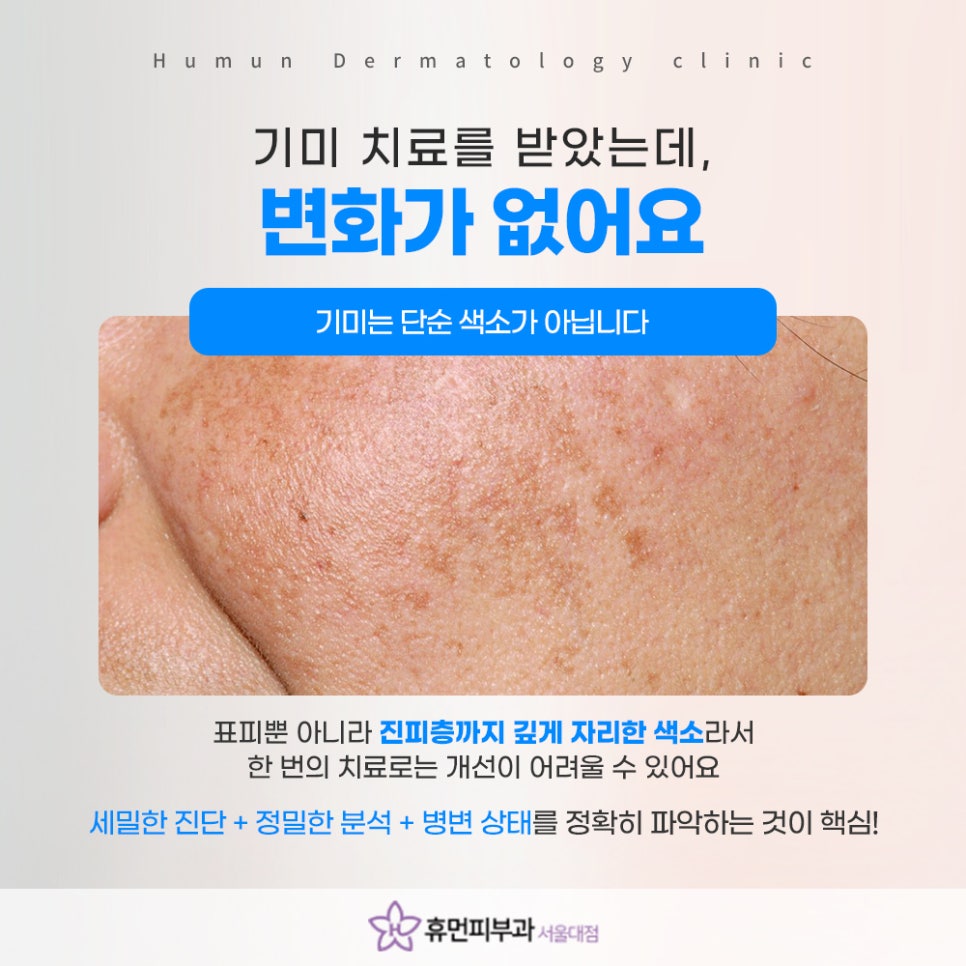
I received melasma treatment, but I don’t see any change.
Among those who have undergone melasma treatment, some say, “I had laser treatment, but why doesn’t it feel much different?” In such cases, it is necessary to understand that melasma is not just simple pigmentation. Melasma is often not limited to shallow pigment on the skin surface and may be present in both the epidermis and dermis in a complex way, so it can be difficult to expect noticeable changes from a single treatment.
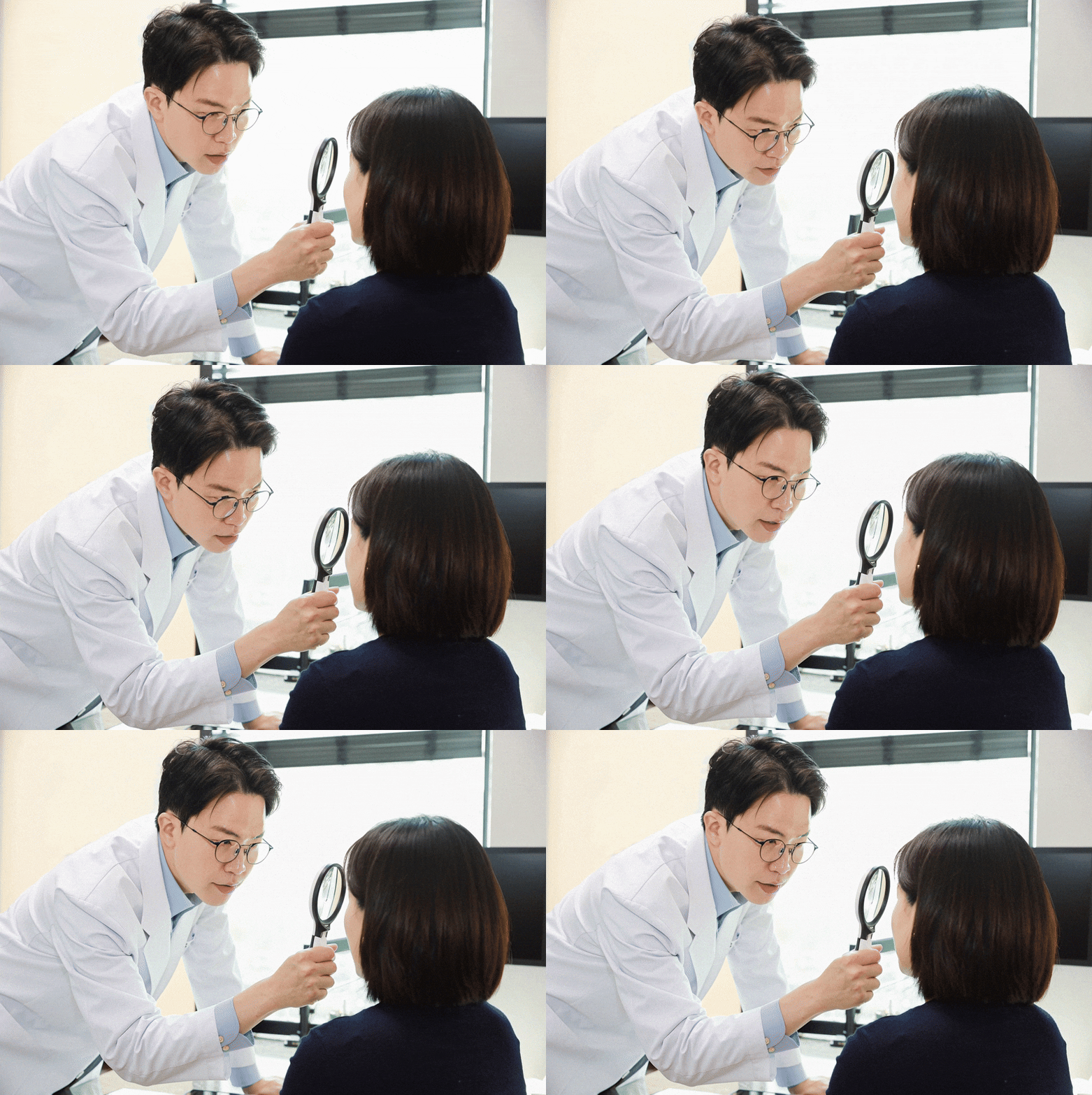
Melasma is also highly sensitive to irritation. If treatment is performed only with strong energy without considering the skin condition, the pigment may appear darker or the skin may become more sensitive. That is why it is important to carefully identify the depth and extent of the pigment, skin sensitivity, and whether redness is present through detailed diagnosis and precise analysis before treatment. Melasma treatment is closer to a process that helps the skin gradually lighten without overburdening it, rather than a treatment that removes it quickly.
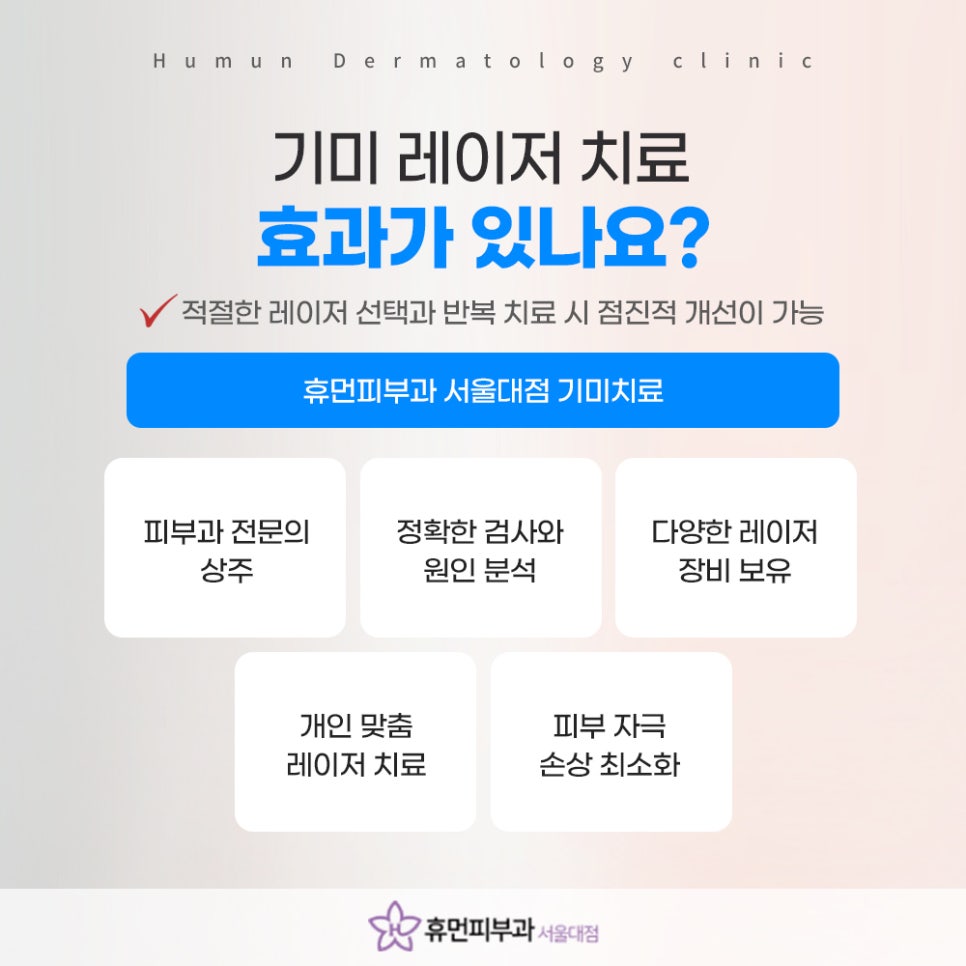
Is melasma laser treatment effective?
Melasma laser treatment can be expected to bring gradual improvement when the appropriate device is selected and repeated treatment is carried out together. However, the same laser is not applied to all melasma cases. The treatment approach may vary depending on whether the pigment is shallow or deep, whether the skin is thin and sensitive, and whether vascular redness is also present. Therefore, with melasma skin clinic laser procedures, it is more important than the type of device whether the treatment is carried out in a way that suits your skin.
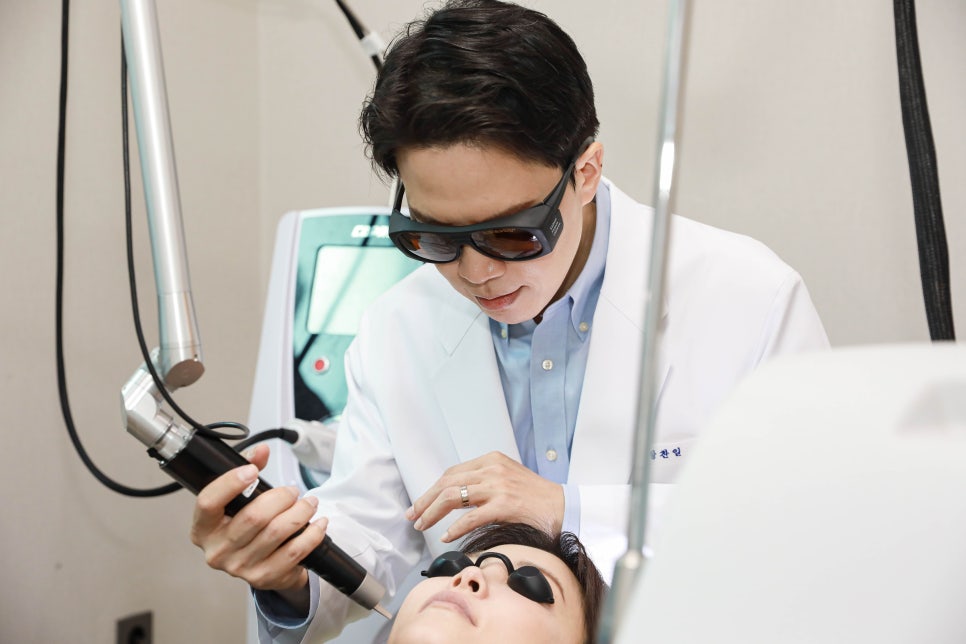
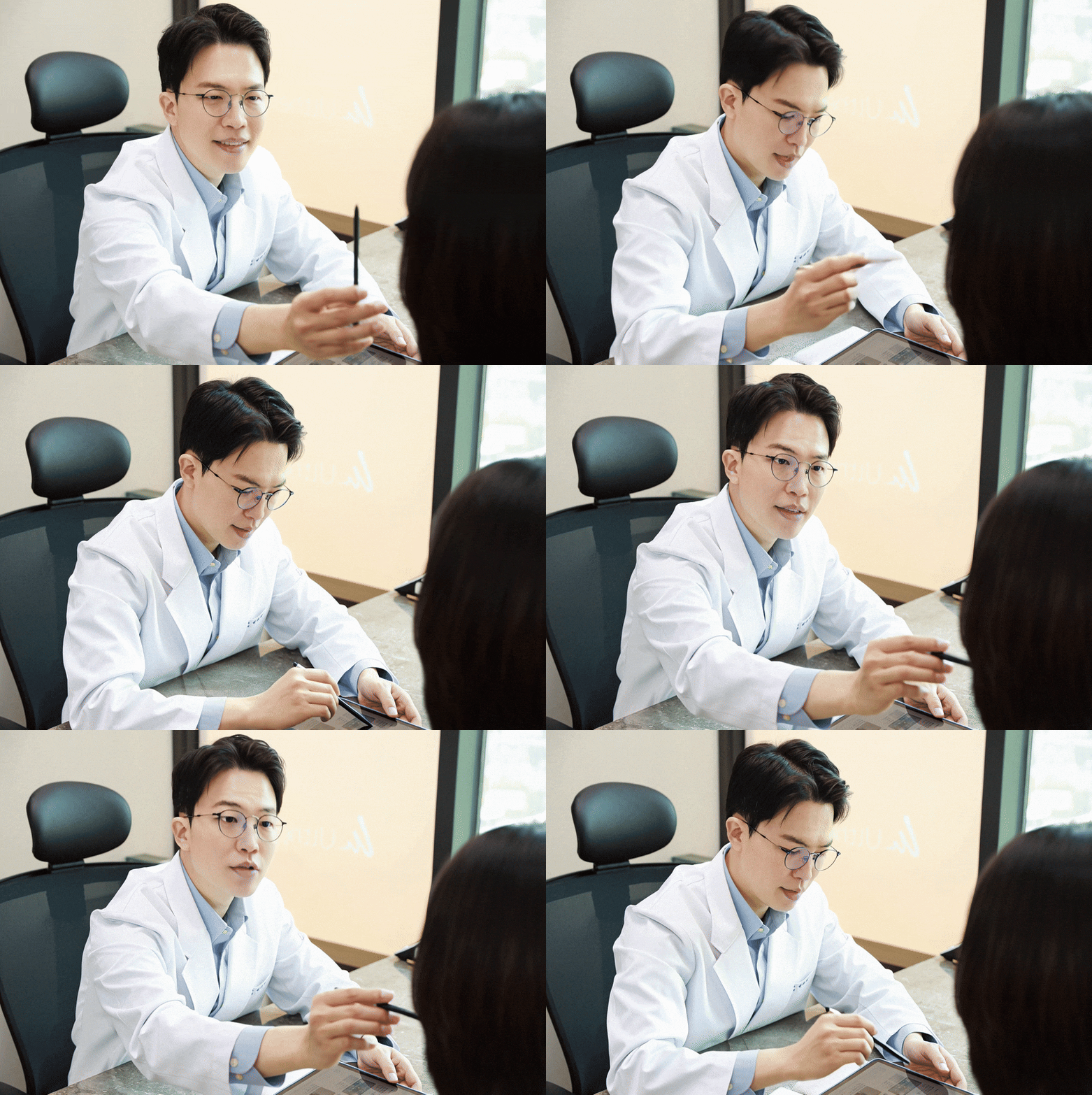
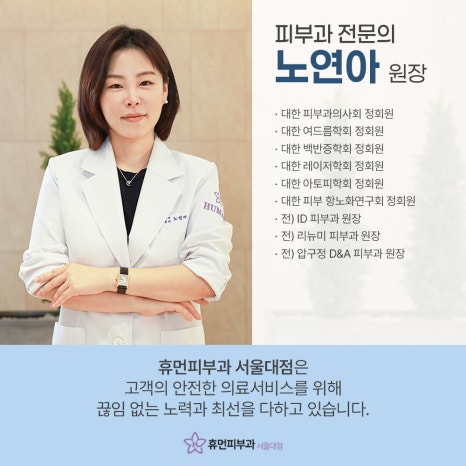
At Human Dermatology Seoul Nat'l University Branch, a board-certified dermatologist is on site to accurately examine the patient’s skin condition, analyze the cause of the pigmentation, and then provide personalized laser treatment. With a variety of laser devices available, we can create a more detailed treatment plan based on the form and depth of the melasma, and we approach treatment in a way that minimizes skin irritation and damage. In Sillim melasma dermatology treatment, it is important not to raise the intensity excessively, but to encourage steady improvement within a range that allows the skin to recover.
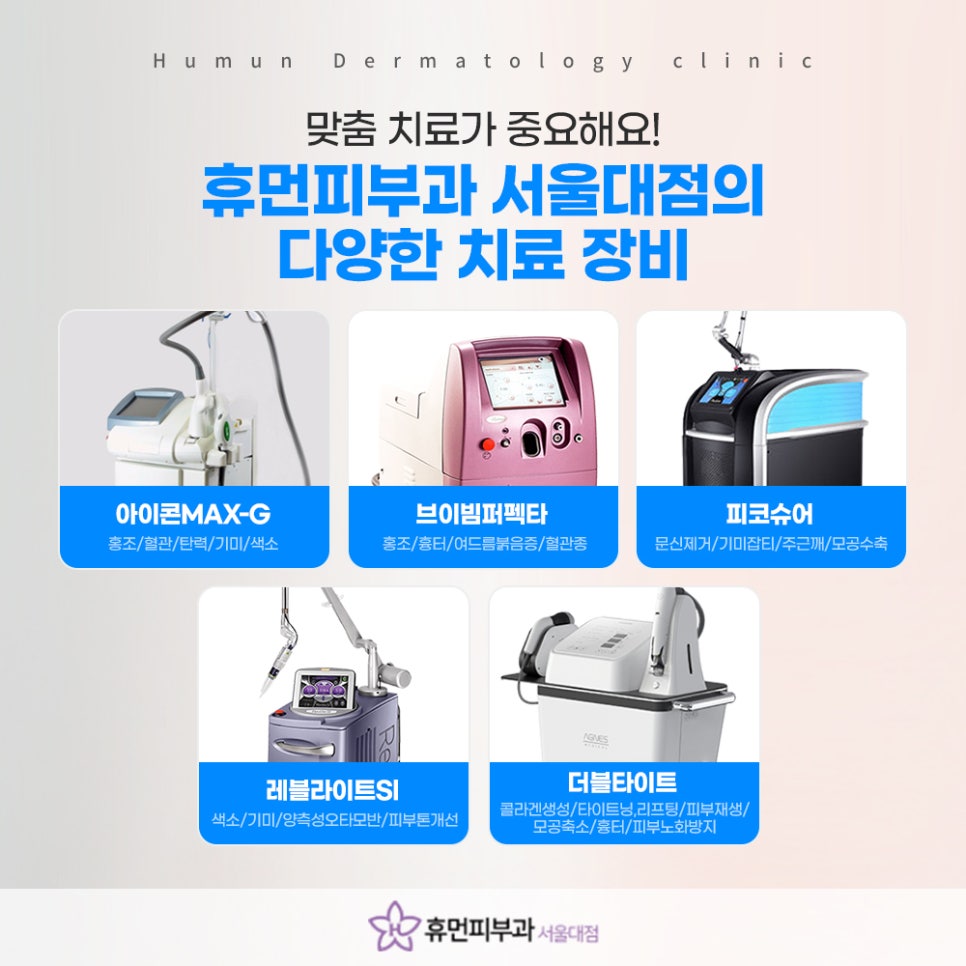
Customized treatment is important!
Because the causes and patterns of melasma differ from person to person, customized treatment is essential. In some people, pigmentation may have darkened after sun exposure, while in others, hormonal changes or a weakened skin barrier may also be contributing factors. There are also cases where what appears to be melasma is actually a mixture of blemishes, lentigines, and redness-related pigmentation. In such complex situations, rather than relying on a single device, combining several treatments according to the skin condition may be helpful.
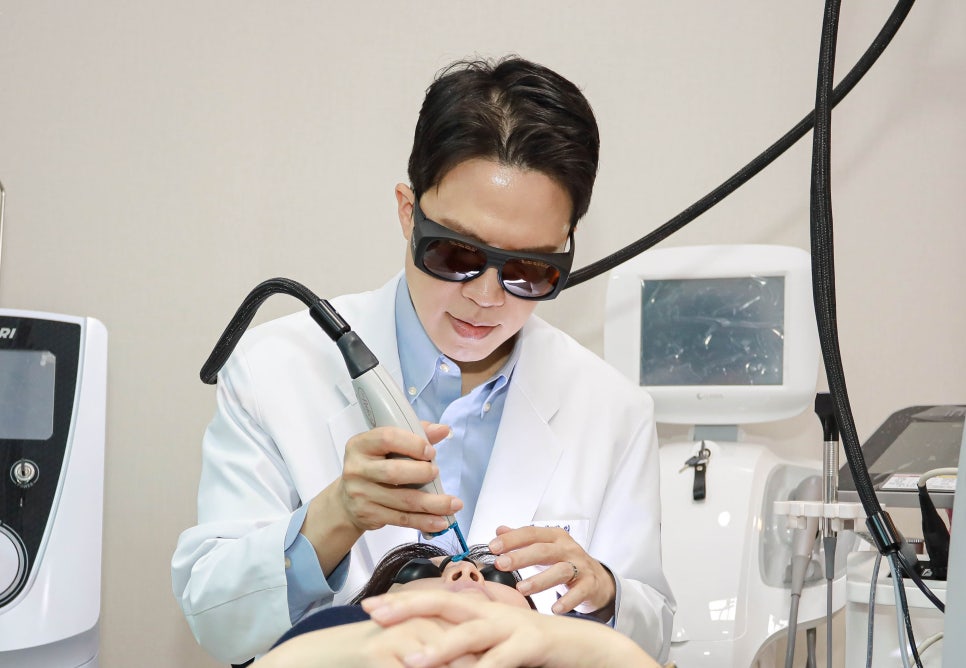
At Human Dermatology Seoul Nat'l University Branch, we use a variety of treatment devices such as ICON MAX-G, Vbeam Perfecta, PicoSure, Revlite SI, and Double Tite to provide treatment tailored to the skin condition. We select devices by considering the depth and form of the pigment, the skin’s irritation response, and whether accompanying redness is present, and if necessary, we adjust the treatment plan step by step. In Sillim melasma dermatology treatment, what matters is not simply removing the color, but also improving the overall skin environment so the skin can be managed stably and the pigment does not darken again.

Even if melasma improves, it can become darker again due to ultraviolet exposure, heat stimulation, hormonal changes, or improper home care. That is why post-treatment care is also very important. It is good to apply sunscreen carefully when going বাইরে, reduce excessive friction or irritation to the skin, and also focus on moisturizing and barrier care. It is not enough to simply receive laser treatment at a Sillim melasma dermatology clinic; stable changes can be expected more effectively when treatment and daily care are done together.

Above all, melasma is an area where accurate diagnosis and customized treatment by a dermatologist are important. Even if it looks like the same melasma, the depth and cause of the pigment in the skin, as well as skin sensitivity, all differ, so repeating treatments that do not suit your skin may actually lower satisfaction. At a Sillim melasma dermatology clinic, we carefully examine each patient’s skin condition and help promote more stable improvement through a laser treatment plan tailored to individual skin conditions. If you are struggling with melasma and blemishes, it is better to check the direction that suits your current skin through a professional diagnosis rather than deciding on your own.