The Value Beyond Skin | Human Dermatology Clinic Seoul National University Branch
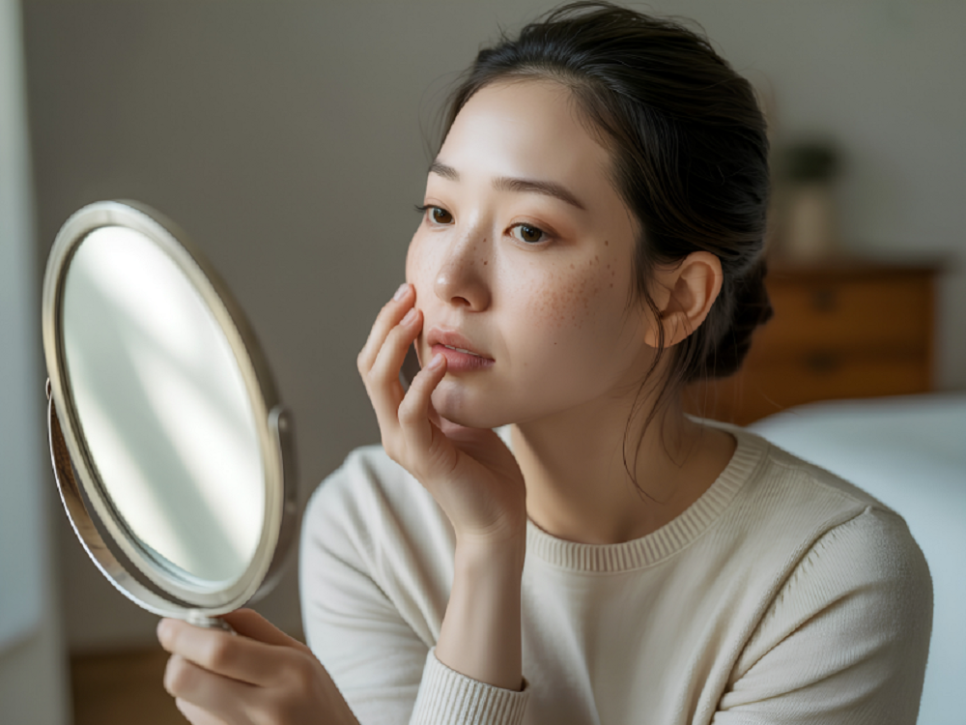
When people notice brown spots or patches on their face, they often wonder, “Has melasma developed?” However, not all pigmentary lesions that appear on the skin have the same cause, and melasma and dark spots may differ in their patterns of development and treatment approaches.
In particular, pigmentary disorders may look similar on the surface, but management methods can vary depending on the depth of the pigment in the skin, its distribution, the cause, and the likelihood of recurrence. For this reason, rather than simply managing them with whitening cosmetics, it is important to accurately assess the current condition of the skin and establish an appropriate treatment plan.

Are Melasma and Dark Spots the Same Pigmentary Disorder?
Both melasma and dark spots are pigmentary disorders that make the skin appear more deeply pigmented, but strictly speaking, they are not the same condition. Melasma often appears as broad, irregular brown patches, mainly on both cheeks, the cheekbones, forehead, and around the chin. It can develop through the combined effects of hormonal changes, ultraviolet exposure, genetic factors, and skin irritation.
Dark spots, on the other hand, often refer to localized pigmentary lesions that develop after ultraviolet exposure, aging, or skin damage. They may look like small spots or appear as light brown patches. Their borders are often relatively more defined than those of melasma, but depending on the individual’s skin condition, melasma and dark spots may occur together.

Why Does Melasma Recur So Easily?
Melasma is not simply a problem involving pigment on the skin’s surface. Ultraviolet exposure, changes in female hormones, stress, lack of sleep, and a weakened skin barrier may all affect the process by which melanin is produced excessively. Therefore, even when the pigmentation appears to have faded once, it may darken again if ultraviolet exposure or skin irritation recurs.
In addition, pigment may be distributed across both the deeper and more superficial layers of the skin in cases of melasma, making it difficult to complete treatment and management in a single session. Accordingly, melasma care should focus not on removing the color in the short term, but on reducing skin irritation and consistently managing the skin to help prevent the pigmentation from returning.

How Should Dark Spots Be Managed?
Dark spots often develop on areas that have been exposed to ultraviolet light for a long time. They are particularly common on areas that receive a lot of sunlight, such as the cheeks, cheekbones, and around the nose, and they may become darker or increase in number over time. Since dark spots are often relatively localized pigmentary lesions, laser treatment or brightening care may be considered depending on their condition.
However, lesions that look like dark spots may include other pigmentary disorders, such as age spots, freckles, or acquired bilateral nevus of Ota-like macules. Rather than judging them yourself based only on their visible color, it is best to have the type and depth of the lesions examined at a dermatology clinic before establishing a treatment plan.

Both melasma and dark spots can make the face look dull and dark, but the treatment approach may vary depending on the cause, the depth of the pigment within the skin, and the type of lesion. Although they may look similar on the surface, melasma, dark spots, freckles, age spots, and nevus of Ota-like macules may sometimes be present together, so accurate differentiation is needed first.

What is important at this point is to establish a treatment plan suited to your skin condition based on a diagnosis by a board-certified dermatologist. A dermatologist can comprehensively assess the type and depth of the pigmentation, skin sensitivity, and likelihood of recurrence, and guide you toward a stable treatment approach rather than excessive procedures. If you are concerned about melasma and dark spots, rather than relying solely on self-care, it is best to consult thoroughly with a dermatologist and continue consistent treatment together with sun protection.