Bang Chan-il, Medical Director of Human Dermatology Clinic Seoul National University Branch
Hello,
This is Human Dermatology Clinic Seoul National University Branch.
Melasma often becomes noticeable seemingly overnight. At first, it may look like a faint shadow around the cheeks, but over time, you may find that it is difficult to cover even with makeup or that your face looks dull overall. Melasma can appear to be a simple blemish on the skin's surface, but in reality, it often involves pigment reactions beneath the skin along with multiple contributing factors. It is therefore a pigmentation condition that should not be taken lightly.
When consulting with patients, we often hear comments such as, “I thought it was just a blemish, but it seems to be spreading,” or “I’m worried it will come back even after laser treatment.” Because melasma can vary depending on skin type, ultraviolet exposure, hormonal changes, and the degree of skin irritation, an accurate diagnosis is needed first. If you are considering melasma treatment in Bongcheon-dong, it is important to look beyond simply removing pigmentation and also assess your skin condition and the factors that may worsen it.
Bongcheon-dong Melasma Treatment: A Plan Tailored to Your Skin Condition Is Important
Human Dermatology Clinic Seoul National University Branch


Melasma may differ from a simple “surface blemish”
Unlike ordinary blemishes, melasma does not appear only as clearly defined spots. It often spreads symmetrically across both cheeks or around the cheekbones. Rather than having distinct borders, it may appear blurry or diffuse, and it can take the form of brown or grayish-brown pigmentation, making the entire face look dull. For this reason, some people initially mistake it for blemishes or post-inflammatory pigmentation and only later learn that it is melasma.
Melasma can also become darker with ultraviolet exposure. During periods of increased sun exposure, the color may look deeper or the affected area may seem larger. An important point is that melasma is not limited to the superficial layers of the skin; pigment may be distributed at various depths. When planning melasma treatment in Bongcheon-dong, it is necessary to assess not only the visible color but also the depth of the pigmentation and the condition of the skin.

There are multiple reasons melasma may recur
Melasma often recurs because several factors act together rather than because of a single cause. The most representative cause is ultraviolet exposure. Ultraviolet rays can stimulate melanocytes, increase pigment production, and make existing melasma appear darker. Therefore, people with melasma should consistently protect their skin from ultraviolet exposure regardless of the season.
Hormonal changes are also closely associated with melasma. Hormonal changes related to pregnancy, childbirth, taking oral contraceptives, or menopause may cause melasma to appear or existing pigmentation to become darker. In addition, skin inflammation, repeated friction, irritation after intensive procedures, genetic factors, and lifestyle factors such as insufficient sleep and stress may also have an effect. For melasma treatment in Bongcheon-dong, it is important to identify the factors that worsen melasma and continue treatment and daily care together.

Melasma treatment should be planned according to the condition of the skin
Melasma treatment should not be viewed simply as a process of removing pigmentation with a strong laser. Because melasma is a pigmentation condition in which the skin may react sensitively, the depth and extent of the pigmentation, skin sensitivity, presence of accompanying redness, and previous treatment history should all be assessed comprehensively. Even when pigmentation appears to be the same type of melasma, some people may have more prominent pigmentation in the epidermis, while others may have dermal pigmentation or an accompanying inflammatory response.

Treatment may involve laser therapy depending on the condition of the skin, and brightening or restorative care may be provided when necessary. However, repeatedly using unnecessarily intensive treatment may instead increase skin irritation and make the pigmentation more reactive. It is therefore important to adjust the energy level and treatment intervals while monitoring the skin's response. If you are considering melasma treatment in Bongcheon-dong, it is advisable to first determine which types of irritation your skin is vulnerable to and which treatment is appropriate.
Daily care after melasma treatment is also important
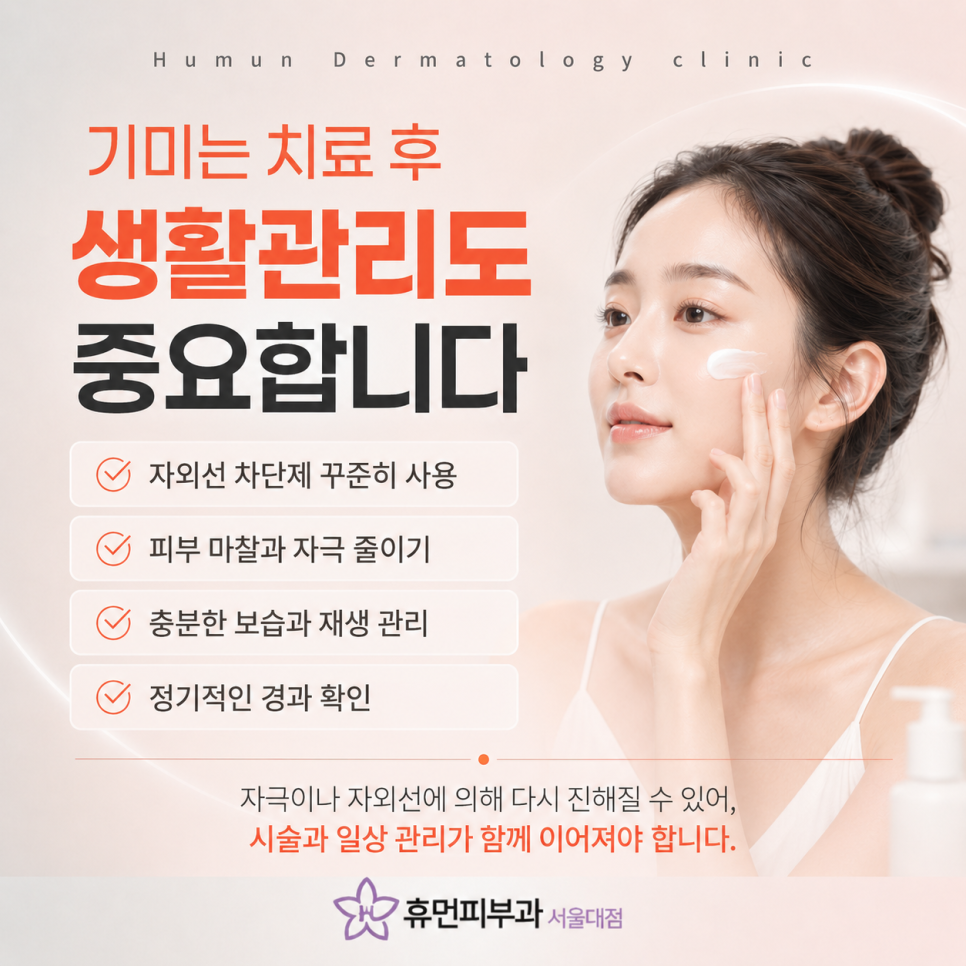
Melasma is a pigmentation condition that requires continued daily care even after treatment. In particular, it is advisable to use sunscreen consistently every day. Ultraviolet rays can affect the skin even on cloudy days or when you are indoors, so people whose melasma darkens easily should make sun protection part of their daily routine. When spending extended periods outdoors, using a hat, parasol, or sunglasses along with sunscreen may also be helpful.
It is also important to reduce skin friction and irritation. Habits such as rubbing vigorously while cleansing, exfoliating frequently, or repeatedly using irritating cosmetics may worsen melasma. After treatment, it is advisable to maintain the skin barrier steadily through sufficient moisturization and restorative care, and to monitor the skin's response through regular follow-up. Melasma treatment in Bongcheon-dong does not end with the procedure itself; areas that may darken again due to irritation and ultraviolet exposure also need to be managed.


What is important in melasma treatment is not to focus solely on making the pigmentation lighter. The treatment approach may vary depending on what types of irritation the skin reacts sensitively to, how deeply the pigmentation is located, and whether redness or inflammation is also present. Therefore, before treatment, it is necessary to examine the skin carefully and distinguish melasma from other pigmentation conditions that may look similar.
At our clinic, we believe it is important not to view a patient's melasma merely as a pigmentation problem, but to also assess their skin type, sun exposure habits, previous treatment history, and skin barrier condition. If you are looking into melasma treatment in Bongcheon-dong, rather than expecting rapid changes, it is advisable to choose an approach that can help the skin improve steadily while minimizing irritation. If recurring melasma and a dull skin tone are concerns, we recommend consulting a board-certified dermatologist and gradually establishing a treatment plan suited to your skin.