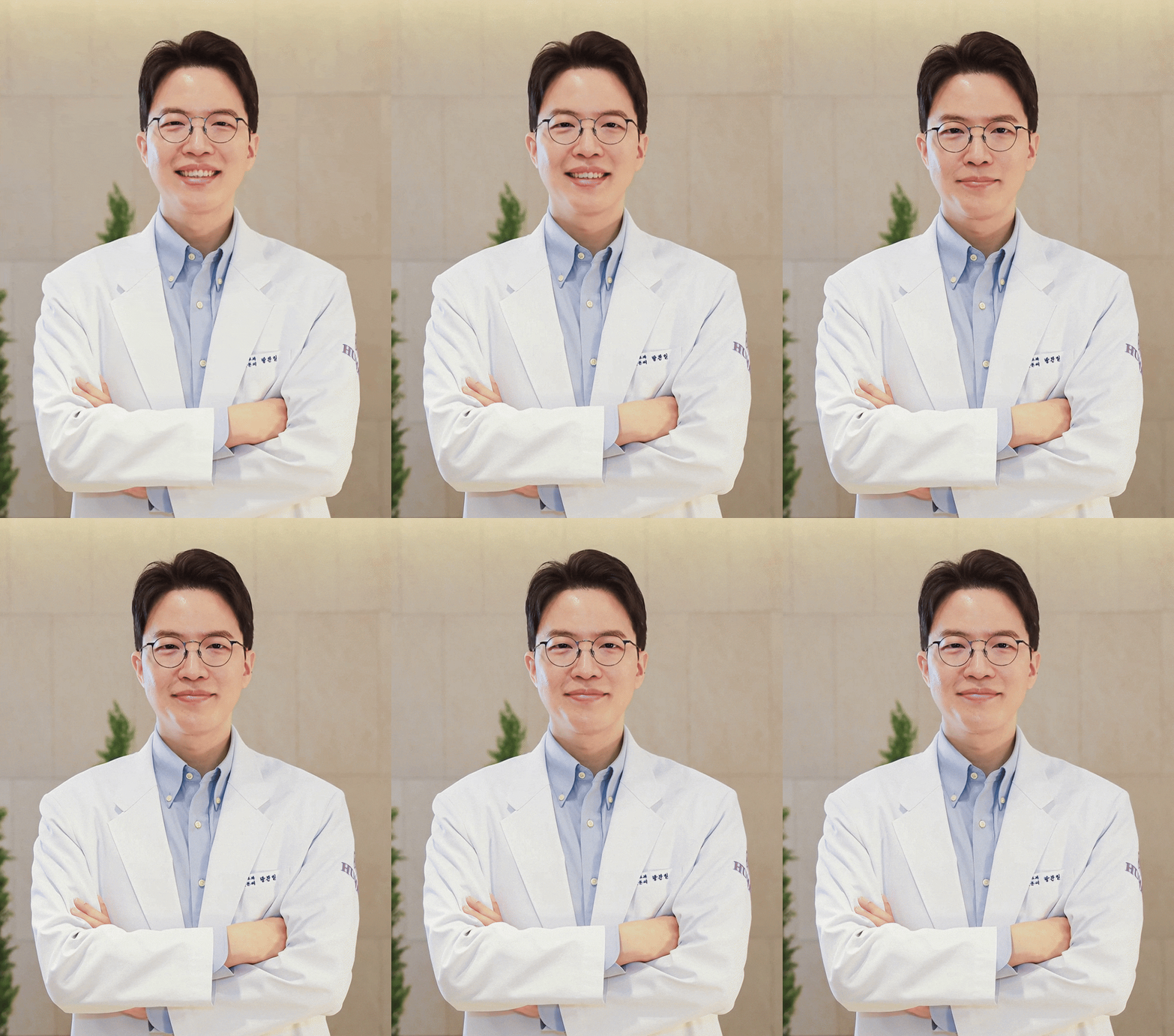
Dr. Chan-il Bang, Director of Human Dermatology Seoul National University Branch
Hello.
This is Human Dermatology Seoul National University Branch.
�0
Scars are a skin concern that can remain after a wound has healed and continue to bother you for a long time. Although they may initially look like small marks, they can become more noticeable over time as redness persists, brown hyperpigmentation develops, or the skin surface appears uneven. Scars on the face or other frequently exposed areas are often difficult to completely conceal with makeup, which can lead to stress in everyday life.
�0
When meeting patients in the consultation room, we often hear them say, “I thought it would disappear over time, but it is still there,” or “It looks more prominent than before.” A scar is not simply a mark left on the surface of the skin; it is the result of the skin’s healing process after damage, so the treatment approach may vary depending on its condition. Therefore, if you are looking for a scar treatment dermatology clinic near Seoul National University Station, it is important to first accurately assess the scar’s shape, color, depth, and the condition of the skin’s recovery.
�0
�0
�0
Scar Treatment Dermatology Clinic Near Seoul National University Station: Why a Type-Specific Approach Matters
Human Dermatology Clinic, Seoul National University Branch
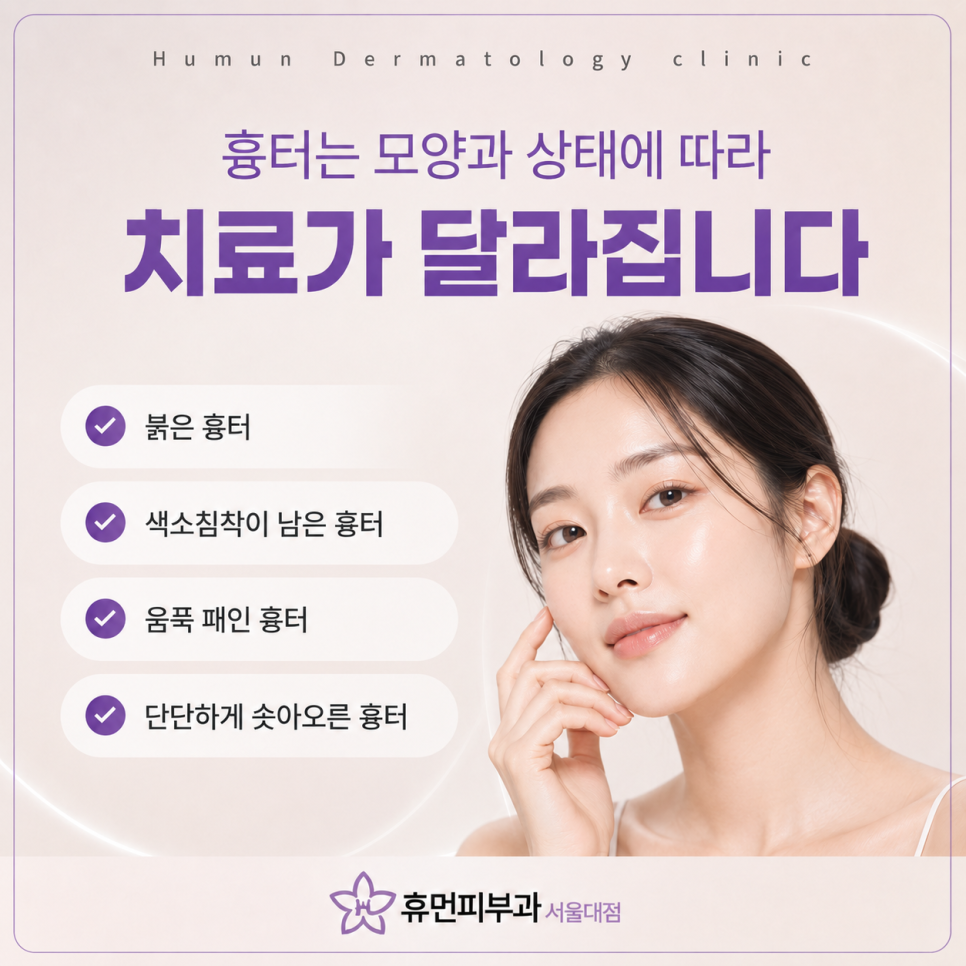
Treatment varies according to the shape and condition of the scar
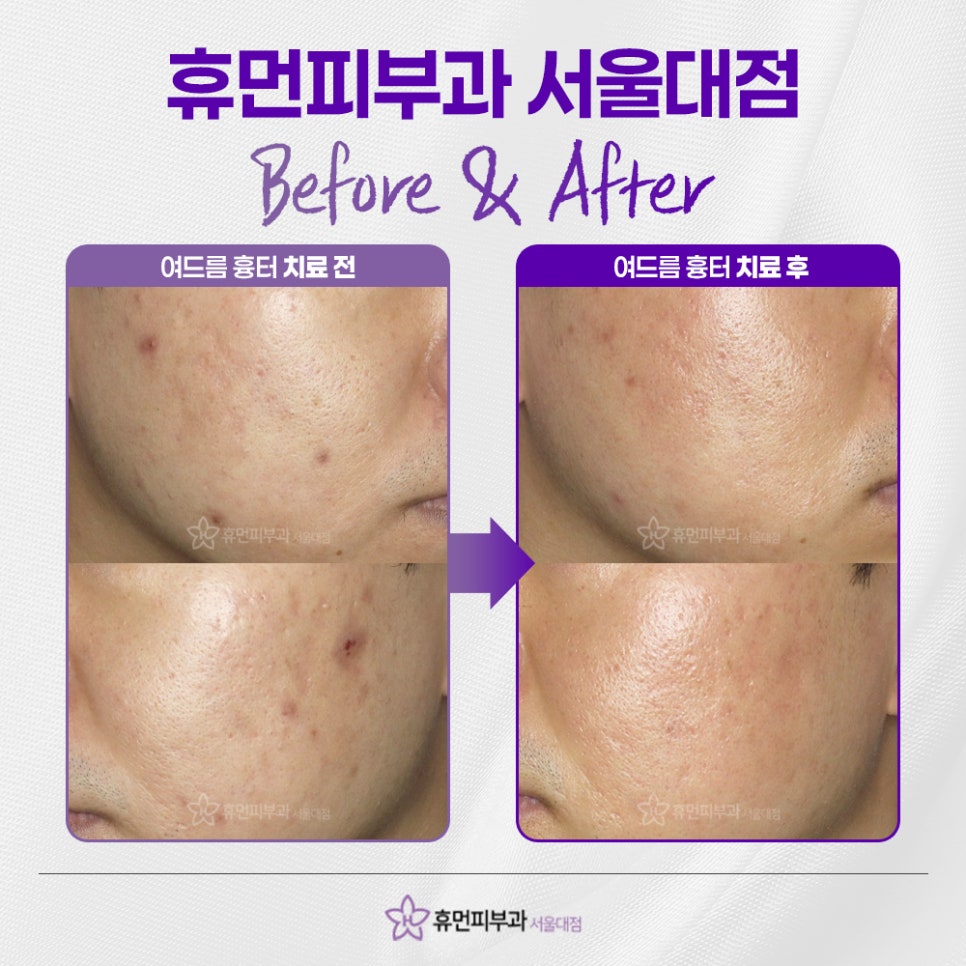
Not all scars are treated in the same way. Red scars often indicate that a vascular response remains in the skin, while scars with hyperpigmentation may appear brown because excess melanin remains after inflammation. Depressed scars that develop after acne or trauma often involve damage to the dermal layer along with indentation of the skin tissue.
�0
Conversely, some scars become firm and raised. These elevated scars may feel thick and hard because fibrous tissue forms excessively during the skin’s healing process. As scars vary in form and condition—including red scars, hyperpigmented scars, depressed scars, and raised scars—Human Dermatology Seoul National University Branch first examines which type the patient’s scar most closely resembles before explaining the treatment approach.
�0
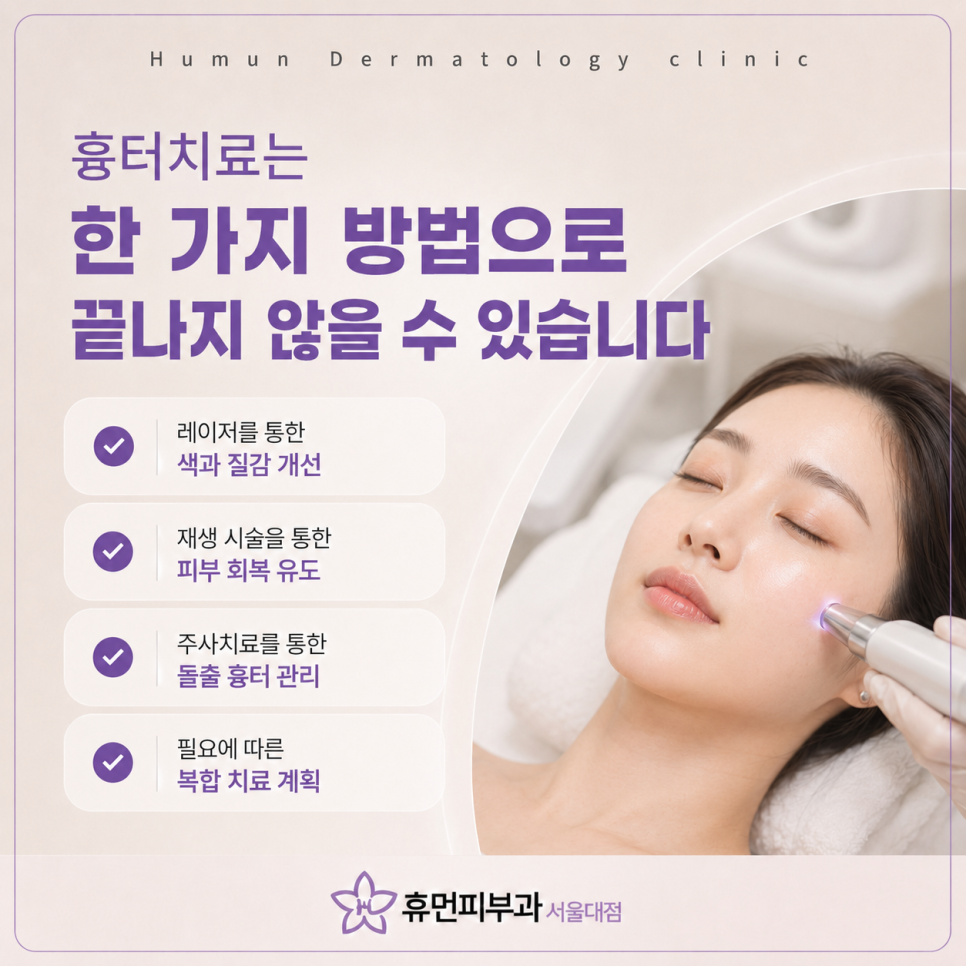
Scar treatment may not be completed with a single method
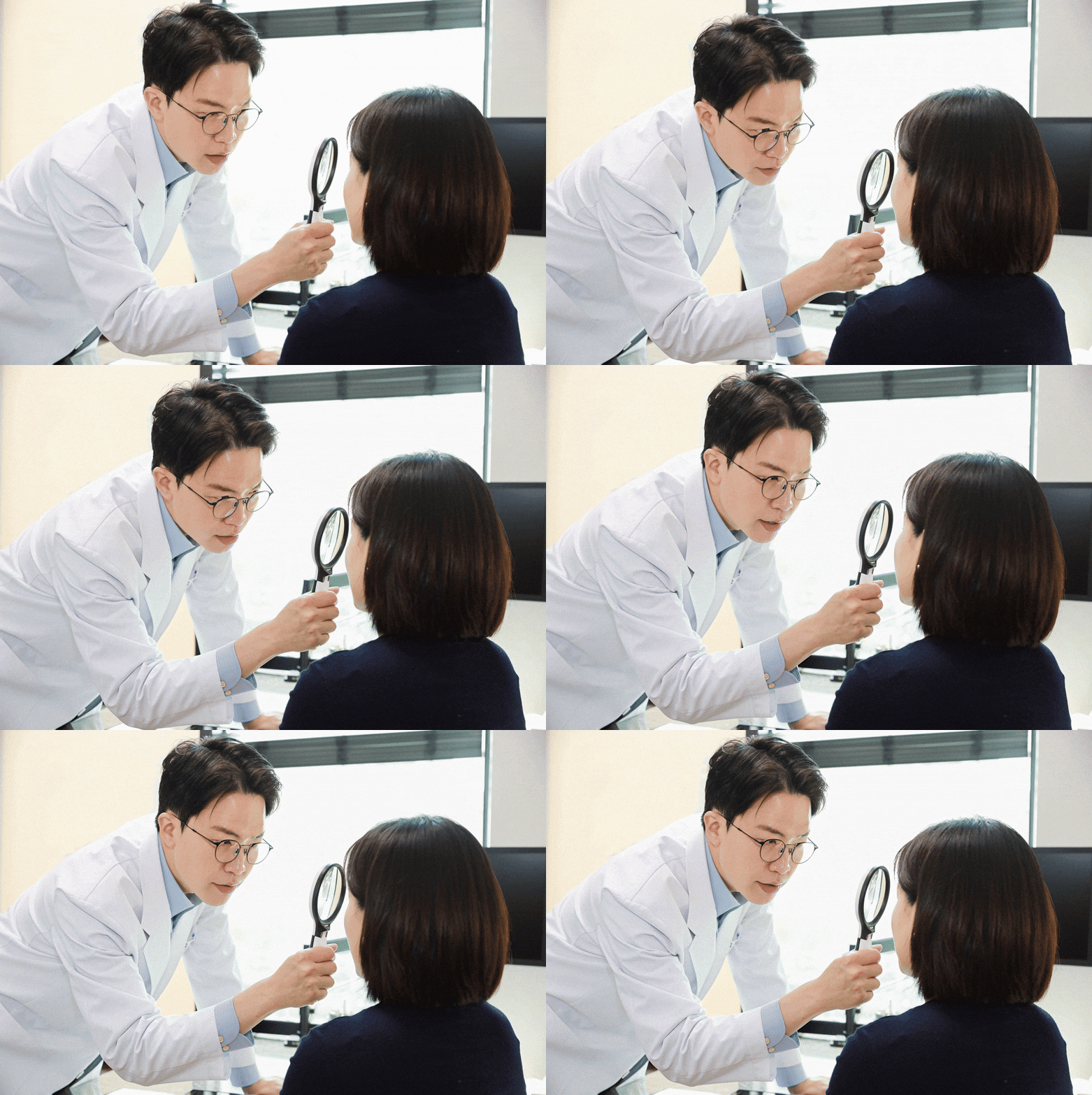
In many cases, it is difficult to address every aspect of a scar with just one procedure. For example, red scars may require treatment aimed at reducing the vascular response, while scars with hyperpigmentation may require treatment focused on lightening the color. When the skin surface is rough or uneven, laser treatment may help improve the skin’s texture and surface quality.
�0
�0
Depressed scars may require treatment that encourages regeneration so the skin can gradually fill in, while firm, raised scars may be approached by controlling their thickness and firmness through treatments such as injections. When changes in color, depth, texture, and elevation occur together, it is important to create a combined treatment plan as needed. Rather than deciding on just one method, Human Dermatology Seoul National University Branch considers a step-by-step treatment approach suited to each patient’s skin condition.
�0

Timing and consistency are important in scar treatment
The timing of scar treatment is also important. Treatment methods and responses may differ depending on whether the wound has fully healed, whether it is in an early stage with residual redness, or whether it has hardened into an established, longstanding scar. If the wound is still healing, it may first be necessary to manage it so the skin can stabilize rather than applying excessive stimulation. On the other hand, if the scar has already become established, planning treatment to support skin regeneration and improve texture may be helpful.
�0
Scar treatment also often improves gradually in line with the skin’s recovery process rather than disappearing suddenly after a single treatment. After treatment, it is important to make sun protection part of your daily routine and reduce touching or irritating the scarred area. Following the recommended treatment intervals and number of sessions may also affect the outcome. When looking for a scar treatment dermatology clinic near Seoul National University Station, it is better to approach treatment with the understanding that consistent care should follow the skin’s recovery process rather than expecting only short-term changes.
�0
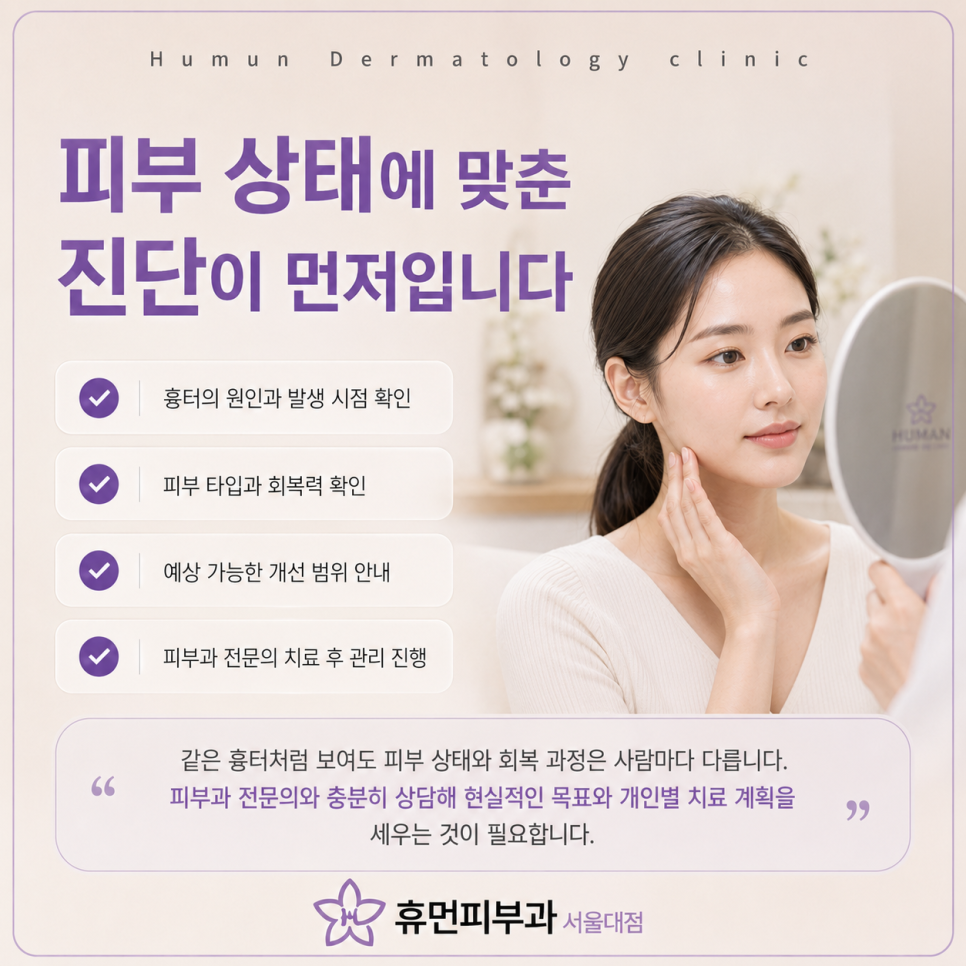
An assessment suited to your skin condition comes first
Even scars that appear similar may actually differ in their cause, time of onset, skin type, and healing capacity. The treatment approach differs depending on whether the scar developed after acne, remained after trauma or surgery, or appeared after a burn or inflammation. It is also necessary to assess whether the skin is sensitive, prone to hyperpigmentation, or slow to regenerate.
�0
�0
What matters in scar treatment is not simply proceeding with the strongest possible treatment, but establishing a safe improvement plan within the range that the skin can currently tolerate. It is necessary to receive sufficient information about the expected range of improvement, set realistic goals, and then begin treatment. At Human Dermatology Seoul National University Branch, we believe it is important to examine each patient’s scar condition and skin recovery process together, then create a plan that also considers care following treatment by a board-certified dermatologist.
�0

�0
Some scars naturally fade over time, but when they remain deep or involve pronounced changes in color and texture, professional treatment may be necessary. In particular, longstanding scars, depressed scars, scars with persistent redness, and firm, raised scars may have limitations when managed only at home. In such cases, the starting point of treatment is accurately identifying the cause and condition of the scar through an assessment by a board-certified dermatologist.
�0
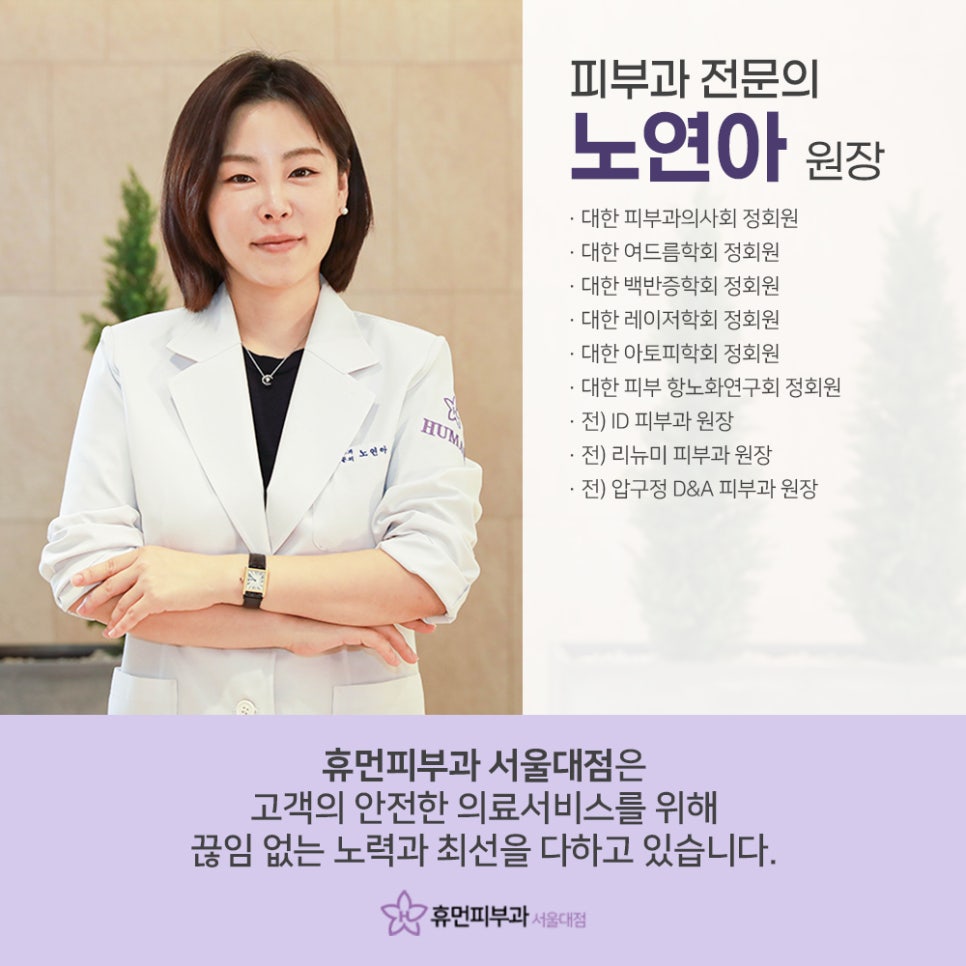
At Human Dermatology Seoul National University Branch, we carefully assess the different scar forms and skin conditions of each patient and consider it important to establish an individualized treatment plan within a reasonable range. Scar treatment is not simply a process of erasing a mark; it is a process of helping damaged skin recover more stably. If changes in your skin texture, color, or appearance caused by a scar are a concern, we recommend consulting a board-certified dermatologist rather than worrying about it alone, and confirming the treatment approach suited to your current skin condition.
�0
�0
�0
📌 Human Dermatology Seoul National University Branch
�0
Read the director’s scar treatment column
http://www.humansnu.co.kr/sub/07/10_list.html
�0
�0




�0
#HumanDermatologySeoulNationalUniversityBranch #SeoulNationalUniversityStationDermatology #SeoulNationalUniversityStationScarTreatmentDermatology #SeoulNationalUniversityStationScarTreatment
�0