Human Dermatology Clinic Seoul National University Branch

After summer, many people look in the mirror and think, “Does my melasma look darker than before?” Even if they had no particular skin problems throughout the summer, they may become concerned that melasma has suddenly appeared when brown spots around the cheekbones, cheeks, or forehead begin to stand out more. In fact, melasma is a representative pigmentary disorder that can become darker under the influence of ultraviolet and visible light.
However, rather than melasma suddenly developing simply because the season has changed from summer to fall, it is often the case that existing melasma becomes more noticeable as the effects of repeated light exposure during the summer accumulate. For this reason, some people notice pigmentation that was previously difficult to see after the vacation season ends or around early fall, when their overall skin tone has begun to return to normal.

The ultraviolet exposure accumulated during summer
can make melasma darker
One of the factors closely associated with melasma is sunlight. When the skin is exposed to ultraviolet rays, it produces melanin pigment to protect itself. In skin with melasma, this pigment-producing response can be more pronounced. This is also related to why melasma mainly appears on areas of the face that receive a lot of sunlight, such as the cheekbones, forehead, and around the nose.
In summer, the amount of time spent in sunlight naturally increases not only through brief outings such as commuting or taking a walk, but also through travel, swimming, and outdoor activities. The issue is not limited to receiving strong sunlight once; repeated exposure in small amounts every day can also have an effect. Therefore, even if you did not notice a major change during the summer, accumulated melanin over time may make the borders of melasma more distinct or make its color appear darker.
Even if you applied sunscreen,
there may be reasons why melasma becomes darker
Many people also ask, “I apply sunscreen every day, so why has my melasma become darker?” Even when using sunscreen, you may not receive the expected level of protection in daily life if you do not apply enough or apply it only once in the morning without reapplying for a long time. If you sweat heavily or spend time in the water, it is especially important to reapply carefully.
Another point to remember is that melasma is not affected only by ultraviolet rays. Visible light contained in sunlight is also known to worsen melasma in some skin types. In particular, if your melasma tends to recur, it can be helpful to not only use sunscreen but also develop habits that reduce direct light exposure, such as wearing a hat or using a parasol.

Repeated skin irritation
can make pigmentation more noticeable
In summer, skin can become more sensitive than usual not only because of strong sunlight but also because of sweat, high humidity, and frequent cleansing. Some people frequently use scrubs or peeling products, or use several functional skincare products at once, because their skin looks dull and feels rough. However, repeated stinging or burning sensations may instead make pigmentation appear darker, so caution is needed.
Therefore, if your skin is very fatigued after summer, it is better to first examine its condition rather than trying to remove pigmentation as quickly as possible. If dryness, redness, or stinging is present, temporarily reduce irritating home-care products and focus on stabilizing your skin with moisturization and sun protection. Maintaining a comfortable skin condition is also an important part of pigmentation care.
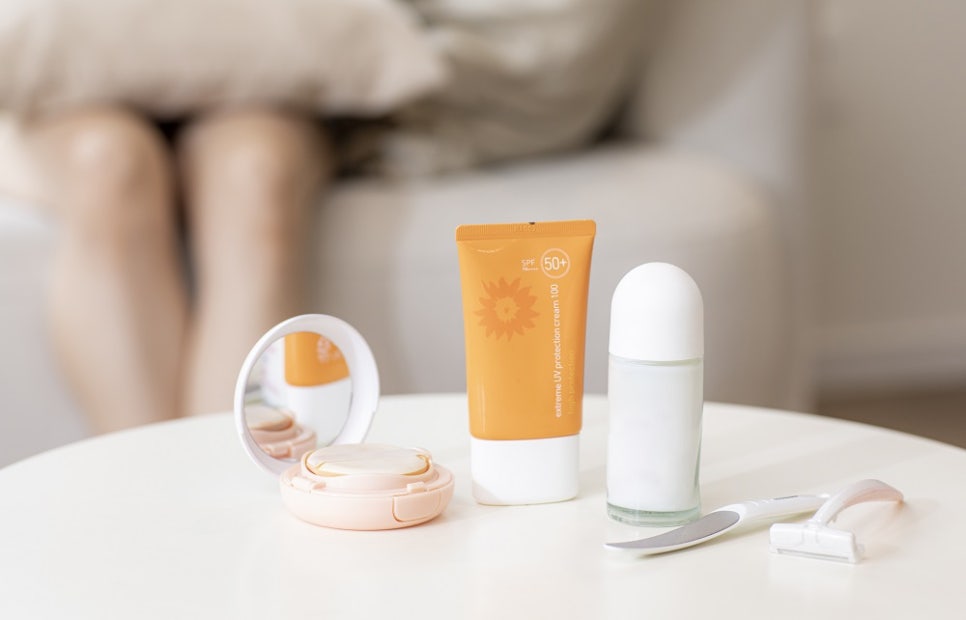
Do not stop protecting your skin from ultraviolet rays
When the weather becomes cooler, some people become less diligent about sun protection because they think the sunlight has weakened. However, with melasma, consistent management of light exposure is important regardless of the season. It is recommended to use sunscreen even on cloudy days, apply it evenly over the entire face when going outdoors, and reapply appropriately if you will be outside for an extended period. If you are prone to melasma, using a hat or parasol as well can also be a good approach.
In melasma care, the process of preventing the pigmentation from darkening again is just as important as lightening it over a short period. This is because melasma can involve multiple factors, including sunlight, genetic factors, and hormones, rather than arising from a single cause. Instead of repeating intensive care and neglect every time the season changes, it is better to continue regular sun protection and gentle skincare.


Not all brown pigmentation that appears on the face is melasma. Blemishes, freckles, solar lentigines, and post-inflammatory hyperpigmentation can look similar to melasma. The response to treatment for melasma can also vary depending on the depth of the pigmentation and the condition of the skin. At a dermatology clinic, the skin can be examined in detail as needed, and a treatment plan can be established after assessing the pattern and depth of the pigmentation.
Melasma is not a condition that can necessarily be resolved quickly simply by repeatedly using a strong laser. Depending on the condition of the skin, several approaches—including topical medication, pigmentation treatments, and laser treatment—may be appropriately combined. It is also necessary to consider that excessive irritation may instead increase the possibility of darker pigmentation. Therefore, if your melasma suddenly becomes darker after summer or continues to recur after previous treatment, it is important to have a dermatologist accurately identify the current type of pigmentation and assess your skin condition before planning treatment and maintenance care suited to you.
Human Dermatology Clinic Seoul National University Branch
Recommended reading