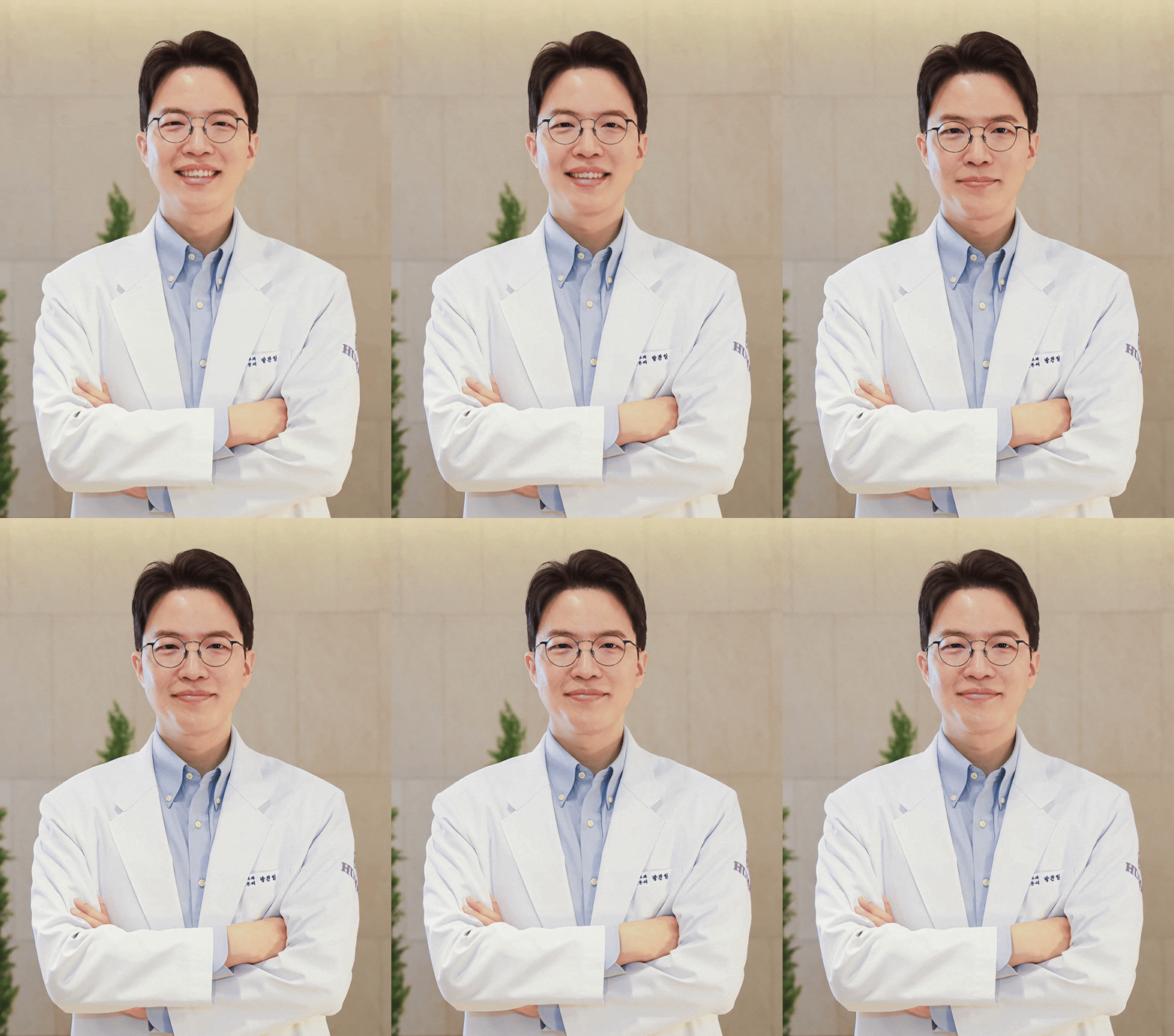
Director Bang Chan-il, Human Dermatology Seoul National University Branch
Hello,
This is Human Dermatology Seoul National University Branch.
Some people notice uneven skin texture or indented marks every time they look in the mirror, even after their acne has subsided. In particular, when uneven areas that are not usually visible become more pronounced under side lighting or sunlight, they can be stressful. If you thought your acne was over but the scars have remained for a long time, it is important to first examine what type of marks are currently left behind.
The first thing we tell people looking into acne scar treatment at Seoul National University Station is that not all scars form in the same way or respond to the same treatment. The shape and depth of the scars, skin type, and whether acne is still active all need to be considered together to determine an appropriate treatment approach for the current condition of the skin.
Acne Scar Treatment at Seoul National University Station,
Treatment Tailored to the Scar Type Is Important
Human Dermatology Clinic Seoul National University Branch
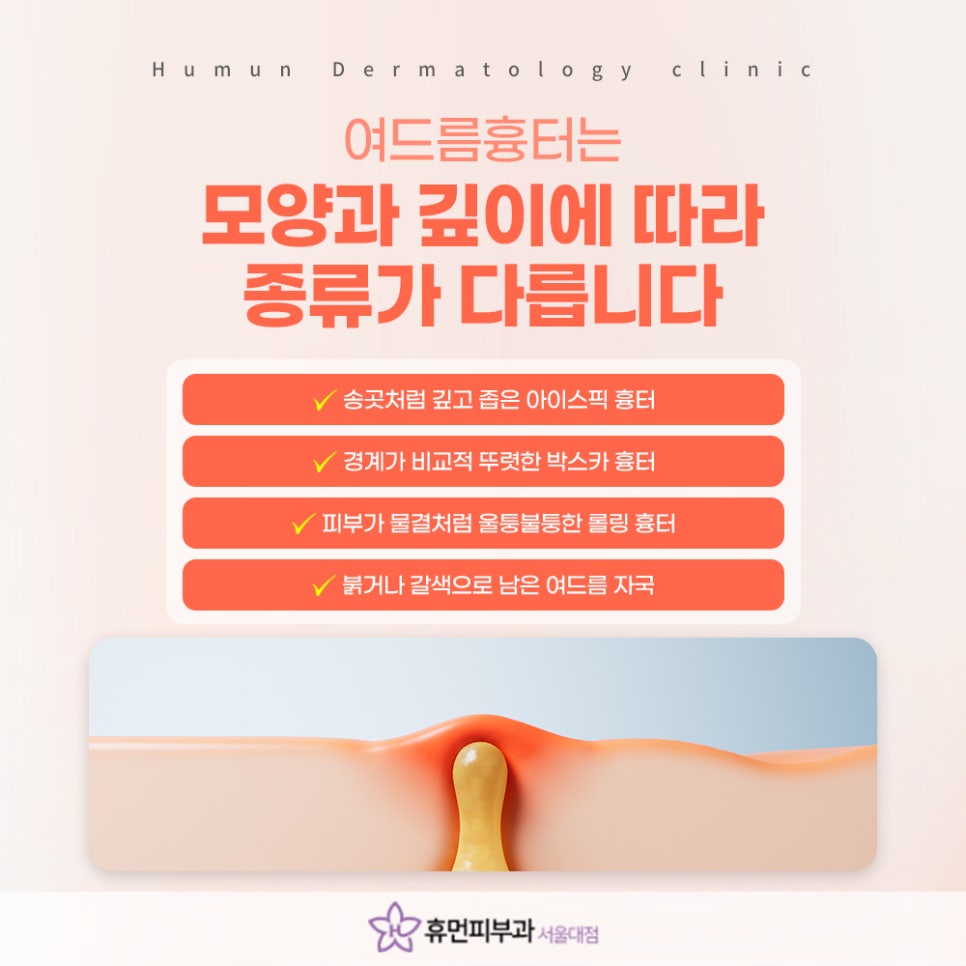
Acne scars vary in type
depending on their shape and depth
Indented acne scars can generally be divided into ice pick, boxcar, and rolling types. Ice pick scars are narrow at the opening but extend deeply, as if pierced by an awl, while boxcar scars appear relatively sharply defined and indented. Rolling scars are characterized by a gently depressed, wavy, uneven surface caused by changes in the tissue beneath the skin. Several types of scars may occur together on the same face.
On the other hand, when only red or brown marks remain where acne once was, they need to be considered from a different perspective than indented scars. Changes in skin color and actual changes in the skin’s structure may require different treatment approaches. During consultations for acne scar treatment at Seoul National University Station, it is important not simply to judge that there are “many scars,” but to carefully distinguish what types are present, where they are located, and how extensive they are.
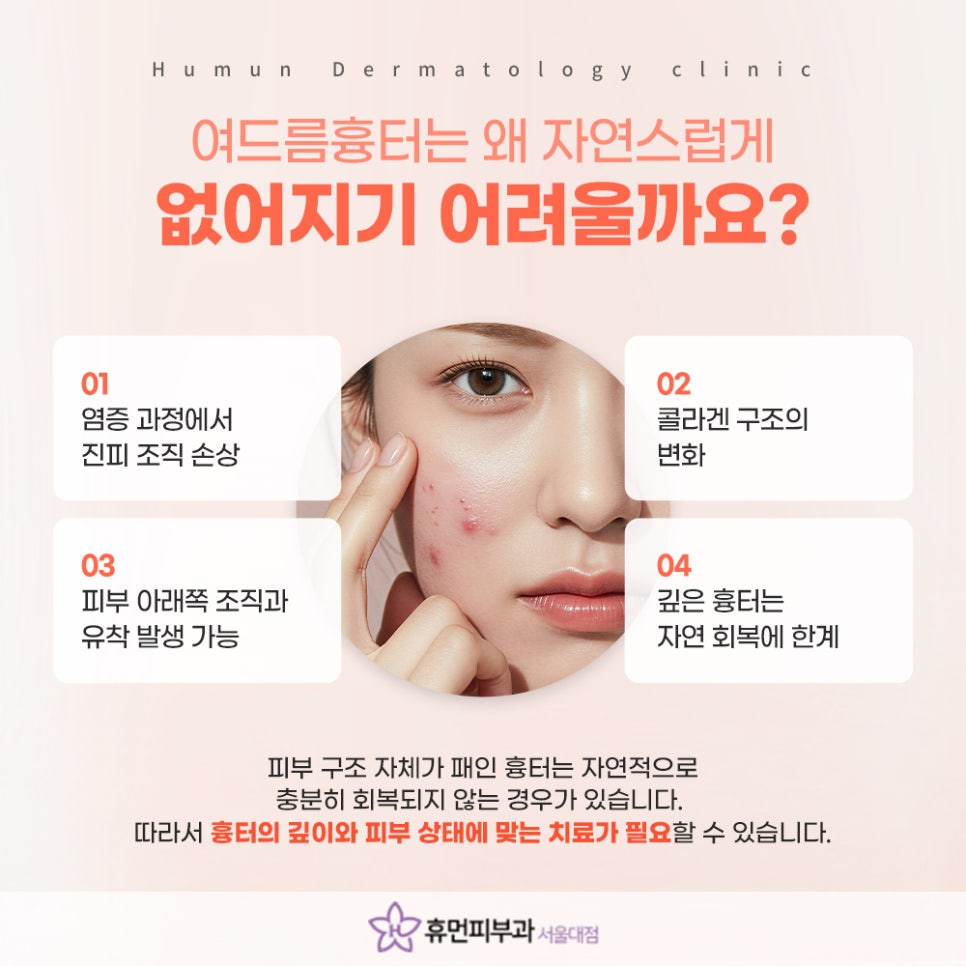
Why are acne scars
difficult to disappear naturally?
When inflammatory acne becomes severe, the inflammation can affect the deeper layers of the skin and damage the dermal tissue. If collagen is produced differently from its original arrangement or in insufficient amounts during the skin’s healing process, indented scars may remain on the surface. These structural changes are more likely to remain in areas where the inflammation was deeper.
With scars such as rolling scars, where the tissue beneath the skin has been pulled downward, adhesions may also affect the uneven contours of the scar. Because indented scars involving changes to the skin’s underlying structure do not always become completely flat over time, it is advisable to examine how deep the scars are and whether adhesions are present beneath the skin when planning acne scar treatment at Seoul National University Station, then select treatment accordingly.
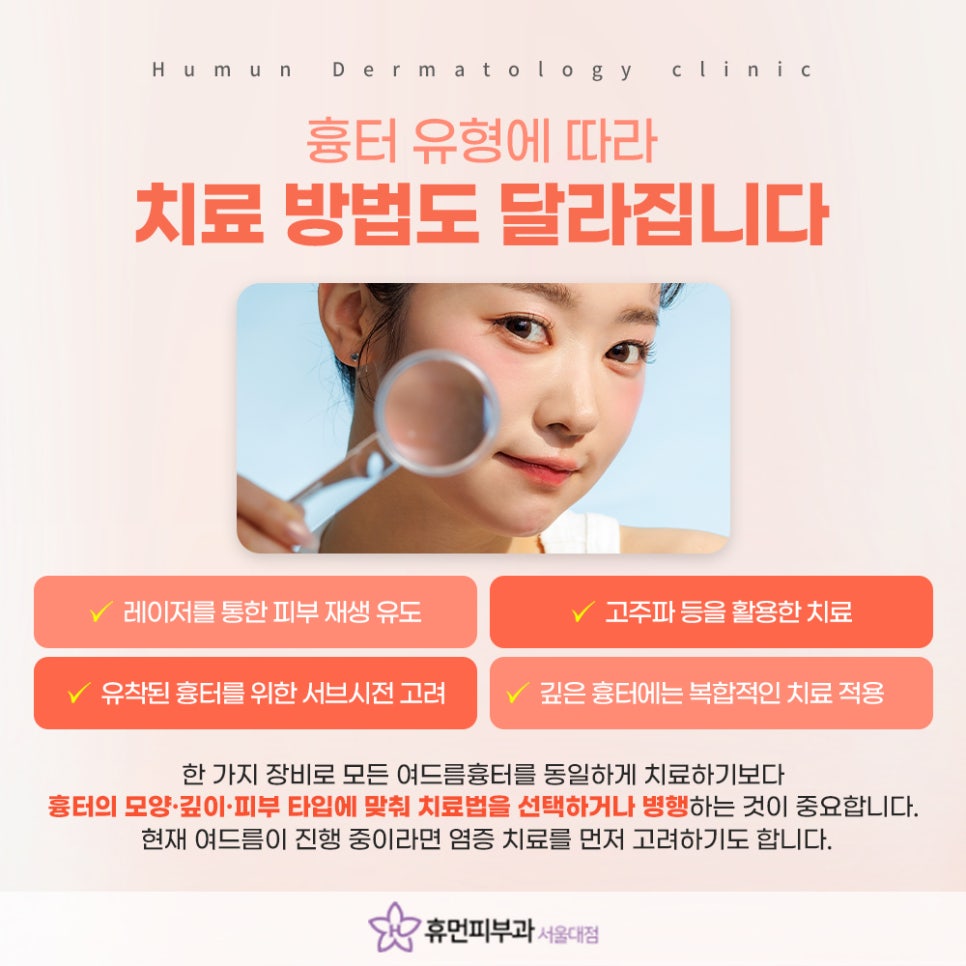
Treatment methods also vary
depending on the scar type
Depending on the condition of the skin, various methods may be considered for acne scar treatment, including fractional lasers, radiofrequency-based treatments, and subcision. Laser and radiofrequency methods may be used to deliver controlled stimulation to the skin and promote the regeneration process, while subcision may be considered for scars held down by adhesions beneath the skin. Different treatments may also be combined depending on the characteristics of the scars.
The important point is that no single device is equally suitable for every type of acne scar. Since ice pick and rolling scars may require different approaches, it is necessary to examine the skin directly before selecting a treatment method. In addition, if red, pus-filled acne is currently recurring, active acne may be managed first to help reduce the formation of new scars. For acne scar treatment at Seoul National University Station, it is important to consider both the current acne condition and existing scars when determining the treatment sequence.
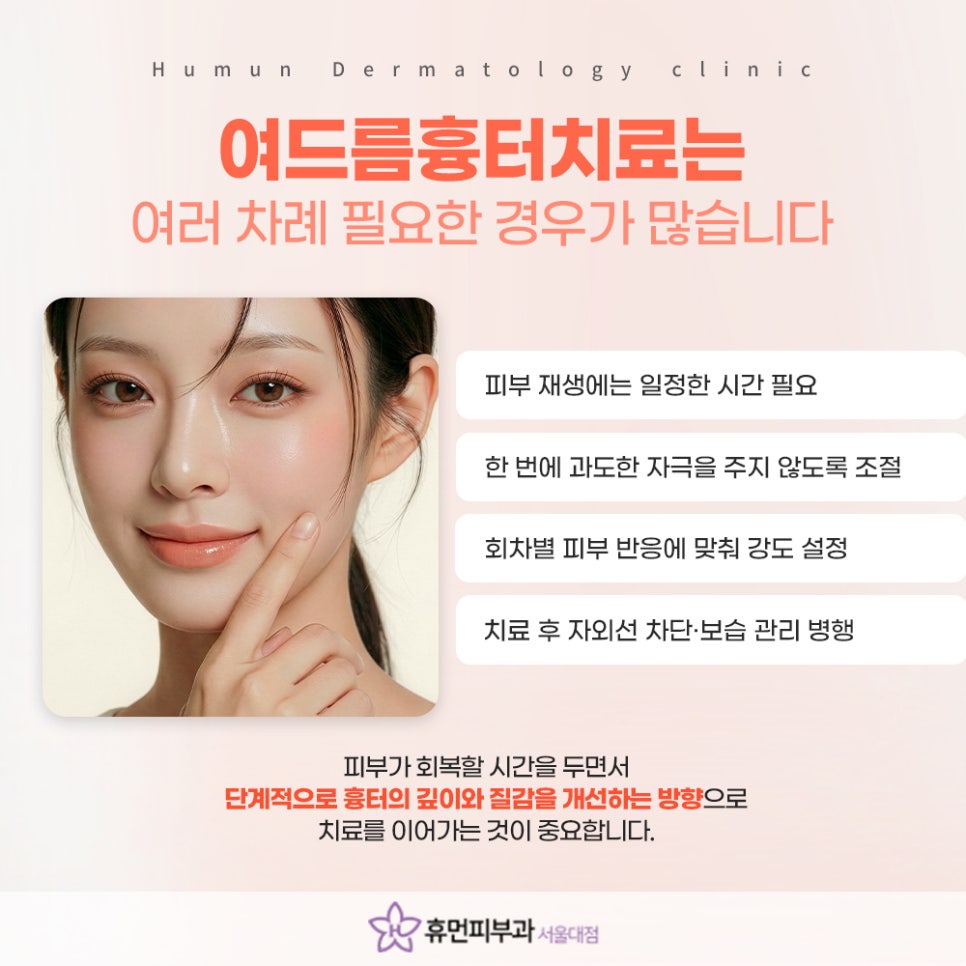
Acne scar treatment
often requires multiple sessions
Rather than making the entire skin surface smooth in a single treatment, indented scars are often improved gradually while allowing the skin time to recover. The number and interval of treatments required may vary depending on the treatment method and scar depth. Even with the same treatment, the degree of change can differ from person to person depending on the skin’s regenerative response and the condition of the scars. Studies comparing various treatment methods have also used different numbers of sessions and treatment combinations, making individualized planning important.
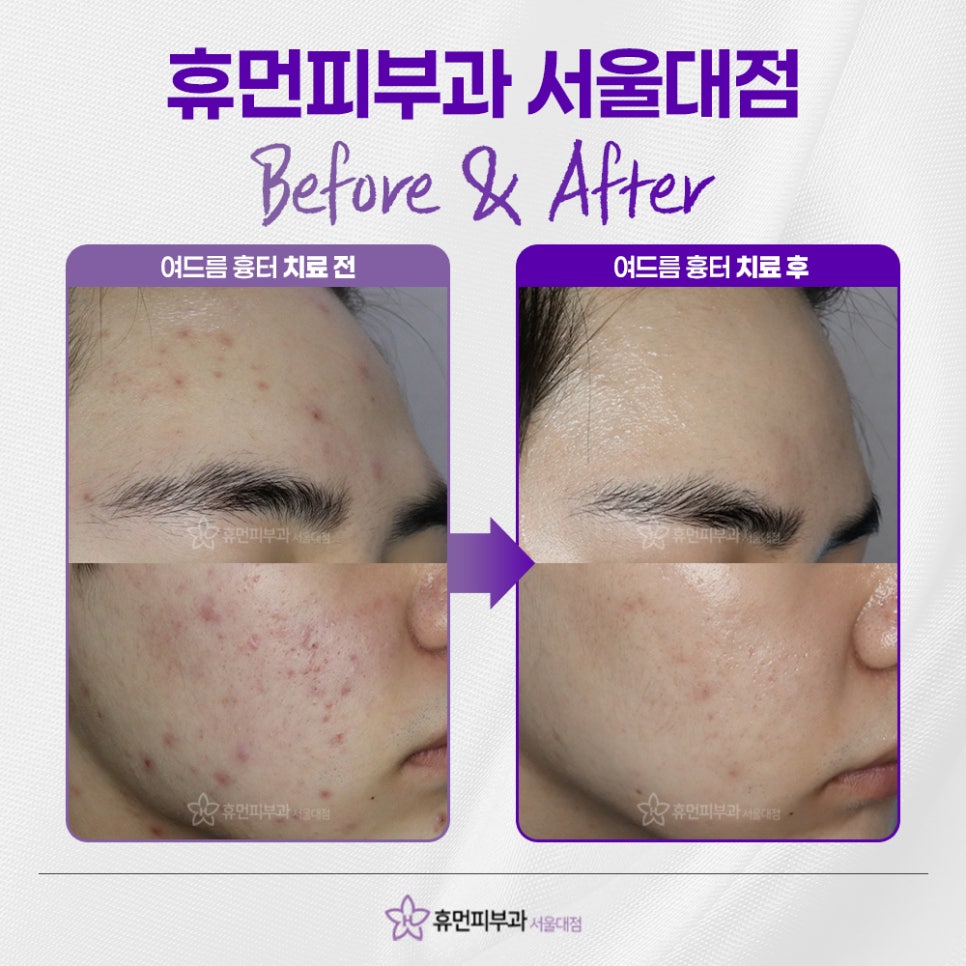
During treatment, it is advisable to examine how the skin responded after each session and adjust the intensity and scope of the next procedure accordingly. Since the skin may temporarily become sensitive after a procedure, sufficient moisturization and sun protection are also important. Acne scar treatment at Seoul National University Station should likewise be planned not around treating as aggressively as possible, but around gradually improving the depth and texture of the scars while taking the skin’s recovery rate into account.
The treatment method for acne scars may vary depending not only on their visible appearance, but also on skin thickness, scar depth and distribution, skin tone, and whether acne is currently active. Even scars that appear to be the same boxcar type may differ in depth, and ice pick and rolling scars may be mixed on the same person’s face. Therefore, before treatment, it is important for a dermatologist to accurately assess the condition of the skin and select a method suited to each scar.
📌Human Dermatology Seoul National University Branch
Read the director’s column on scar treatment
http://www.humansnu.co.kr/sub/07/10_list.html

Rather than repeatedly treating scars with just one device, our clinic first examines what the most noticeable problem is in the current condition of the skin. If you are considering acne scar treatment at Seoul National University Station, instead of comparing only the number of sessions or device names, consult sufficiently with a dermatologist to identify your scar types and treatment goals. Adjusting the intensity and treatment method to the condition of the skin and consistently monitoring its progress may help support more natural and stable scar management.