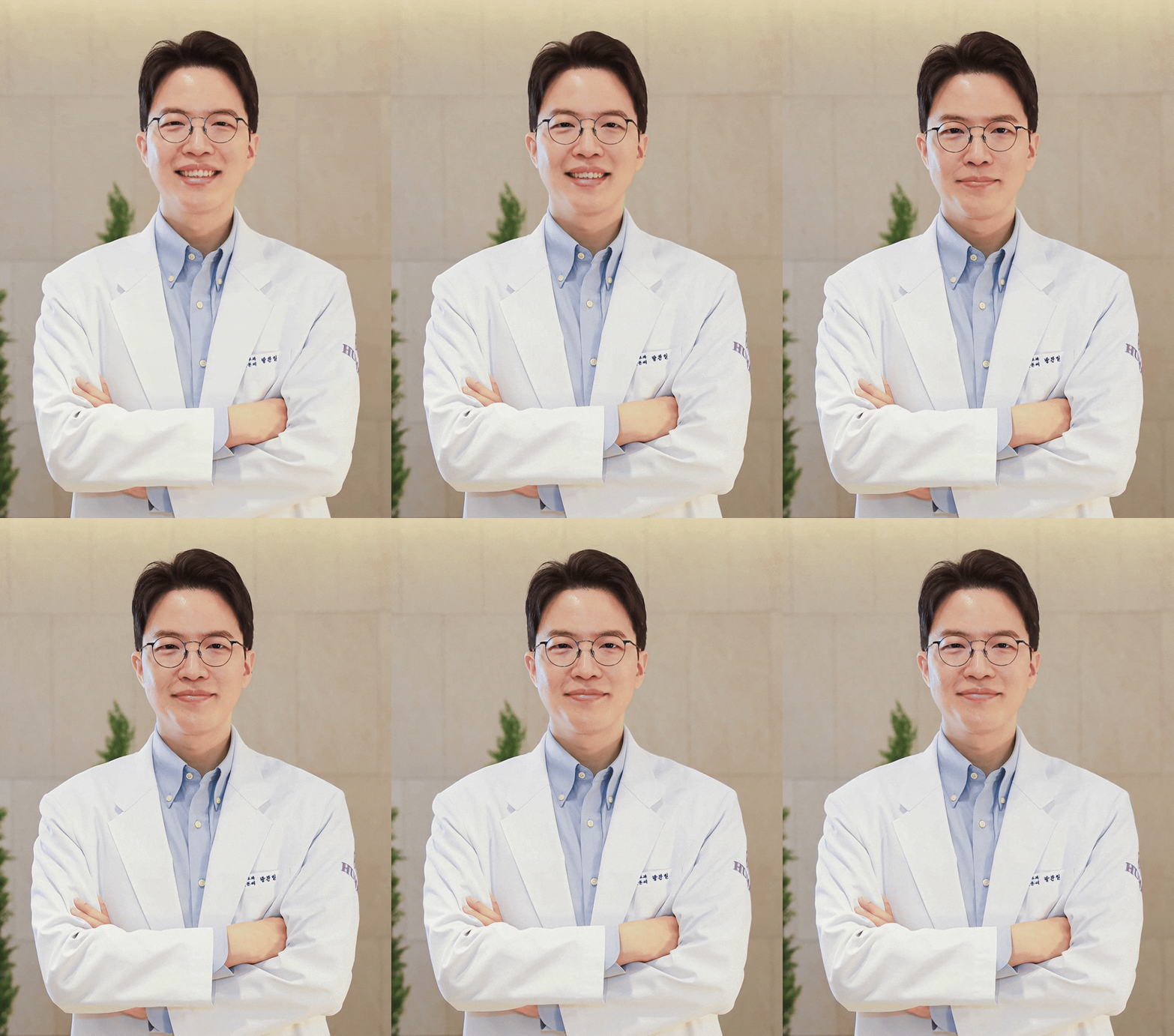
Bang Chan-il, Medical Director of Human Dermatology Seoul National University Station Branch
Hello.
This is Human Dermatology Seoul National University Station Branch.
When acne is actively flaring, the focus tends to be on calming the inflammation. However, once the acne has subsided, the indentations or uneven skin texture left behind can sometimes become more noticeable. In particular, when the contours of the skin’s surface stand out under side lighting or in photographs, many people ask, “My acne has cleared up, so why are the marks still there?” The disappearance of acne does not mean that the skin tissue immediately returns to its original state, so scars need to be considered as a separate issue.
At our clinic, we do not view acne scars simply as “indented skin.” The appropriate approach may differ depending on how deep the scar is, what form it has taken, and how sensitive the skin is. If you are looking into a dermatology clinic near Seoul National University Station, the first step in determining the direction of treatment may be to distinguish whether the remaining marks are redness, hyperpigmentation, or actual indented scars caused by changes in the skin’s structure.
Acne Scars at a Seoul National University Station Dermatology Clinic,
Treatment Tailored to the Skin’s Response Is Important
Human Dermatology Clinic Seoul National University Station Branch
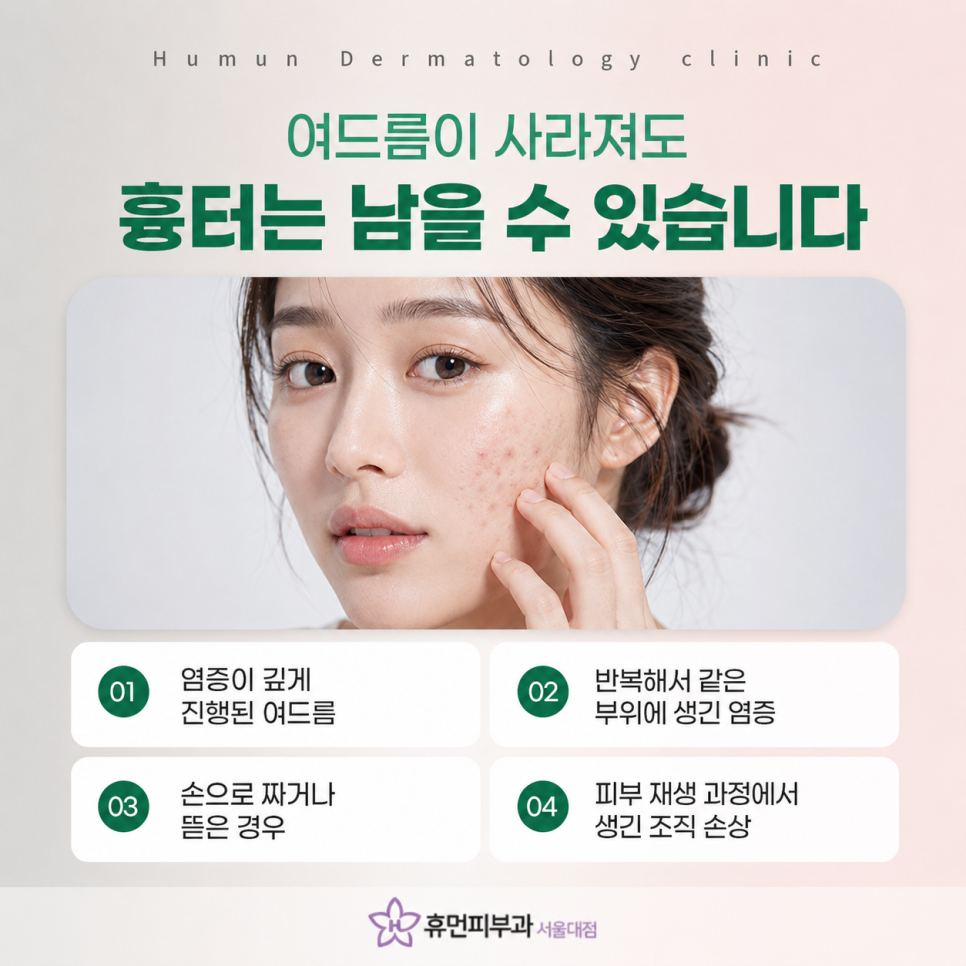
Acne scars can remain even after the acne disappears
Acne scars may develop as the skin heals after tissue damage caused by inflammation extending deep into the skin. In particular, when large, red, swollen inflammatory acne repeatedly occurs, or when inflammation develops multiple times in the same area, the likelihood of the dermal layer being affected increases. If collagen is not sufficiently regenerated in its original structure during the skin’s natural healing process, the surface may become indented or uneven marks may remain.
Forcibly squeezing acne with your hands or repeatedly picking at scabs can also worsen skin damage. Applying strong pressure while inflammation remains may irritate the surrounding tissue, so it is best to avoid touching the area with your hands whenever possible. At our dermatology clinic near Seoul National University Station, we explain that it is important to check whether there is currently active acne and to plan separately for inflammation management to reduce the development of new scars and for the care of existing scars.
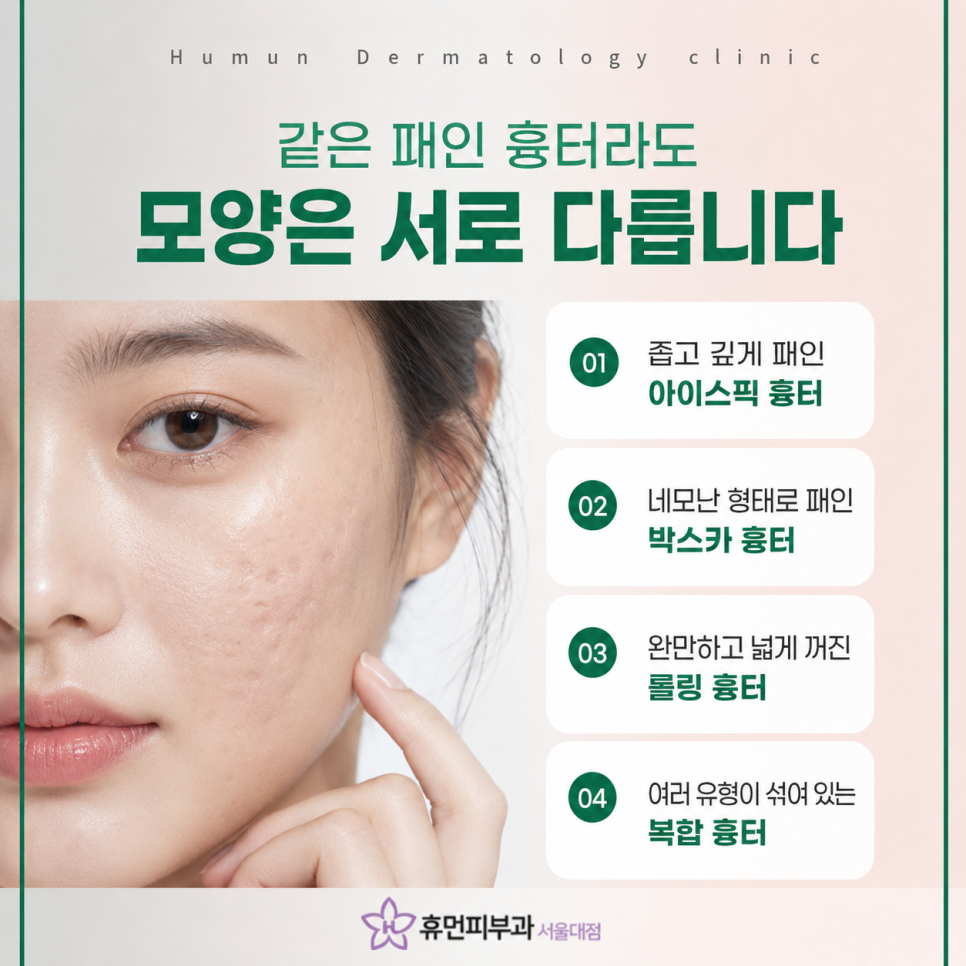
Even indented scars can have different shapes
Indented acne scars can generally be classified by their shape as ice-pick, boxcar, or rolling scars. Ice-pick scars are narrow and deep, as though made by a sharp pick. Boxcar scars appear relatively well-defined and indented in square or round shapes. Rolling scars are broad and gently depressed, giving the skin a wavy, uneven appearance when it catches the light.
In actual clinical practice, it is more common for several types to be mixed together than for only one type of scar to be present. For example, rolling scars may cover a broad area of the cheeks, with deep ice-pick scars interspersed among them. Therefore, when consulting a dermatology clinic near Seoul National University Station about acne scars, it is necessary to examine not only the number of scars but also the shape and depth of each area, as well as skin thickness. When scar types differ, the treatment methods used to address them effectively may also differ.
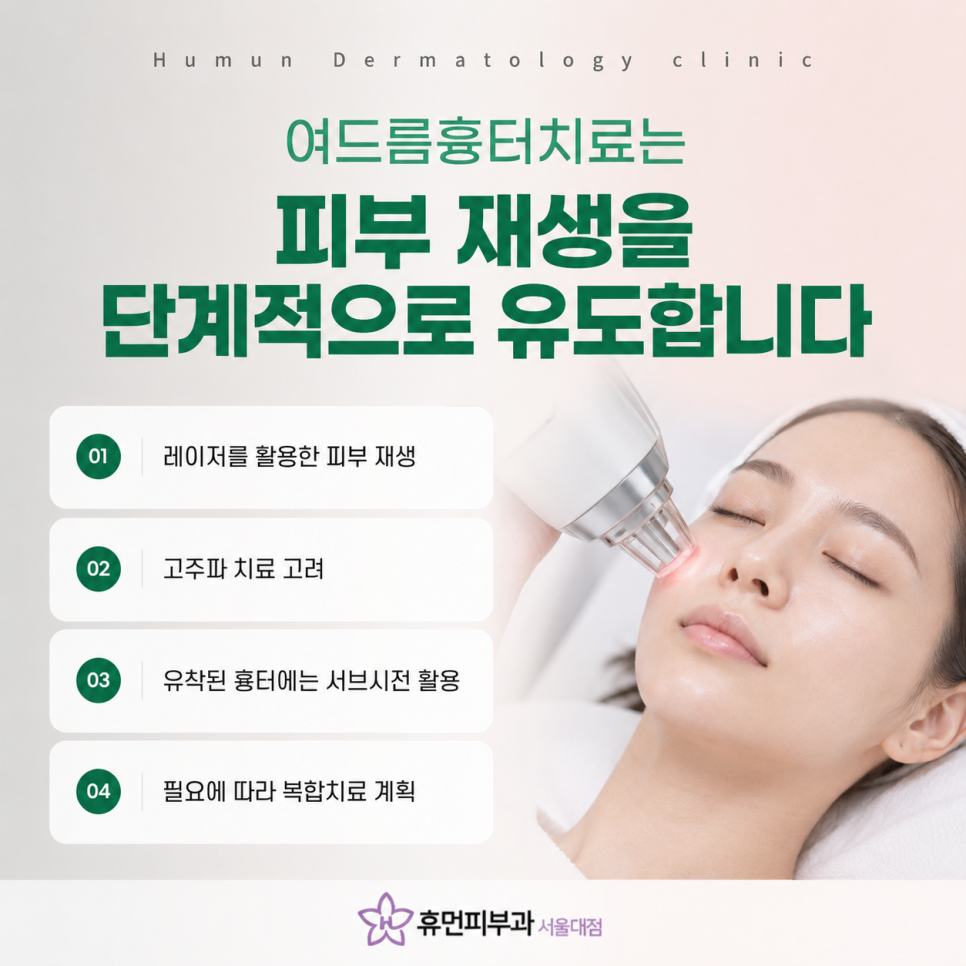
Acne scar treatment
Gradually encourages skin regeneration
Rather than filling indented areas all at once, acne scar treatment often aims to gradually improve skin texture and depth by encouraging the skin’s natural regenerative process. Depending on the skin’s condition, options may include using a laser to provide precise microstimulation and encourage regeneration, or using radiofrequency energy to support collagen remodeling. The treatment method varies according to scar depth and skin type.
When the skin appears depressed because the tissue beneath it is pulling downward, as with rolling scars, subcision to release the adhesions may be considered. Conversely, narrow and deep scars may require a different approach, so several methods may be combined rather than repeatedly using just one device. At our dermatology clinic near Seoul National University Station, we believe that combining the necessary methods after first examining the cause and structure of the scars, rather than deciding on treatment based only on visible indentations, may help achieve a more natural improvement.
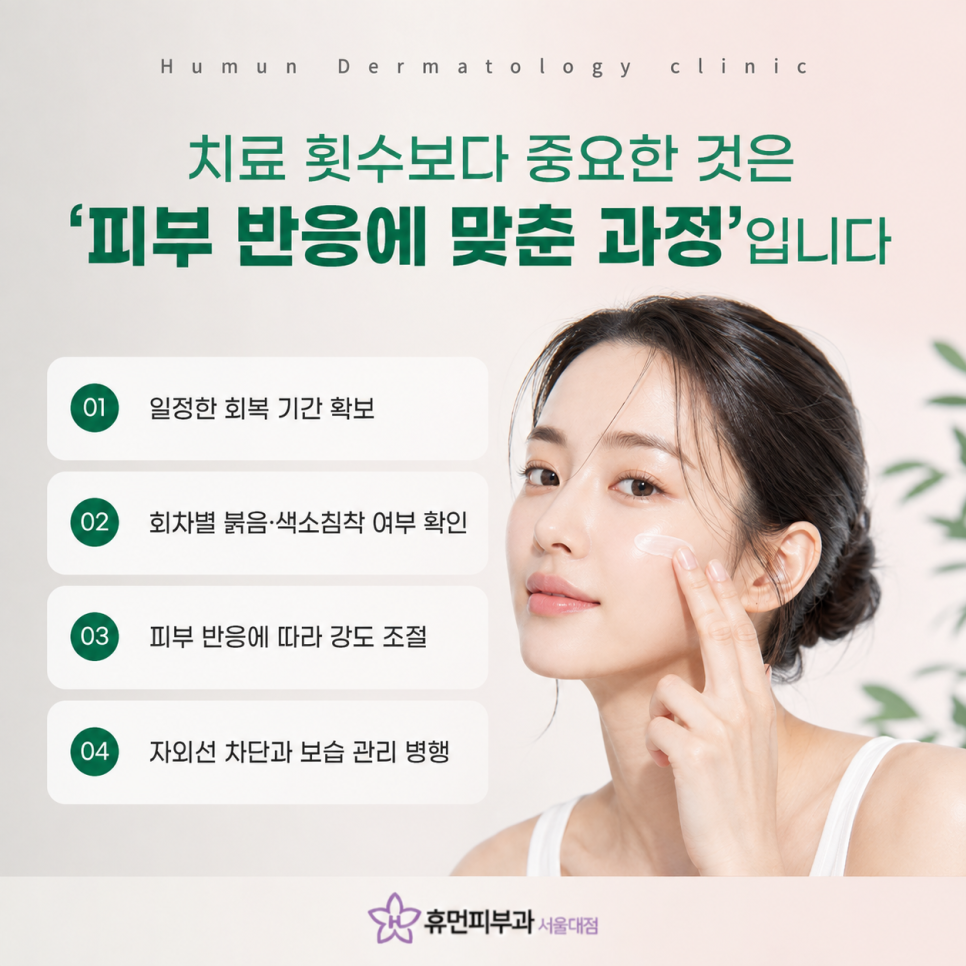
More important than the number of treatments
is the “process tailored to the skin’s response”
People often ask, “How many treatments will it take for my acne scars to disappear?” However, it is difficult to apply the same exact number of treatments to everyone. Skin regeneration takes time, and excessively intense stimulation at once may instead make the skin more sensitive or increase the burden of redness and hyperpigmentation. Therefore, it is important to allow an adequate recovery period and assess how the skin responded to the previous treatment.
The intensity and interval of the next treatment session can be adjusted according to how long redness persists after treatment, whether there are pigment changes, and the degree of dryness or sensitivity. At our dermatology clinic near Seoul National University Station, we consider it more important to continue the treatment plan step by step while checking the skin’s response at each session than simply completing a predetermined number of treatments. After procedures, it is also necessary to consistently use sunscreen and maintain sufficient moisture so that the skin barrier can recover steadily.
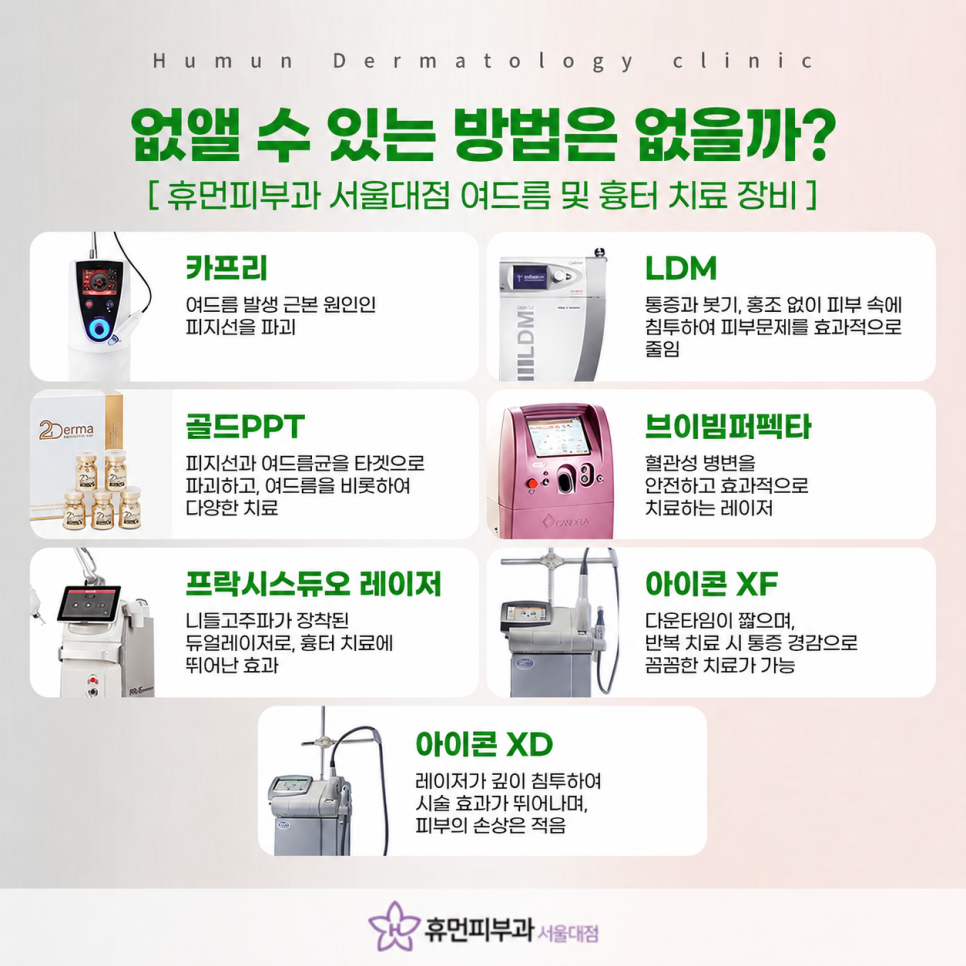
Human Dermatology Seoul National University Station Branch
Acne and scar treatment devices
Because acne can involve varying conditions—including sebum, inflammation, redness, hyperpigmentation, and indented scars—it can be difficult to treat it with a single device. Capri and Gold PPT may be used to manage sebum and inflammatory acne, LDM may be used to soothe and support the recovery of sensitized skin, and V-Beam Perfecta may be used to improve redness.
For indented acne scars, laser treatments that encourage skin regeneration, such as Fraxis Duo and Icon XF·XD, may be considered. At our dermatology clinic near Seoul National University Station, a board-certified dermatologist checks the type, depth, and skin sensitivity associated with the acne and scars before creating an individualized plan for the appropriate devices and treatment sequence.
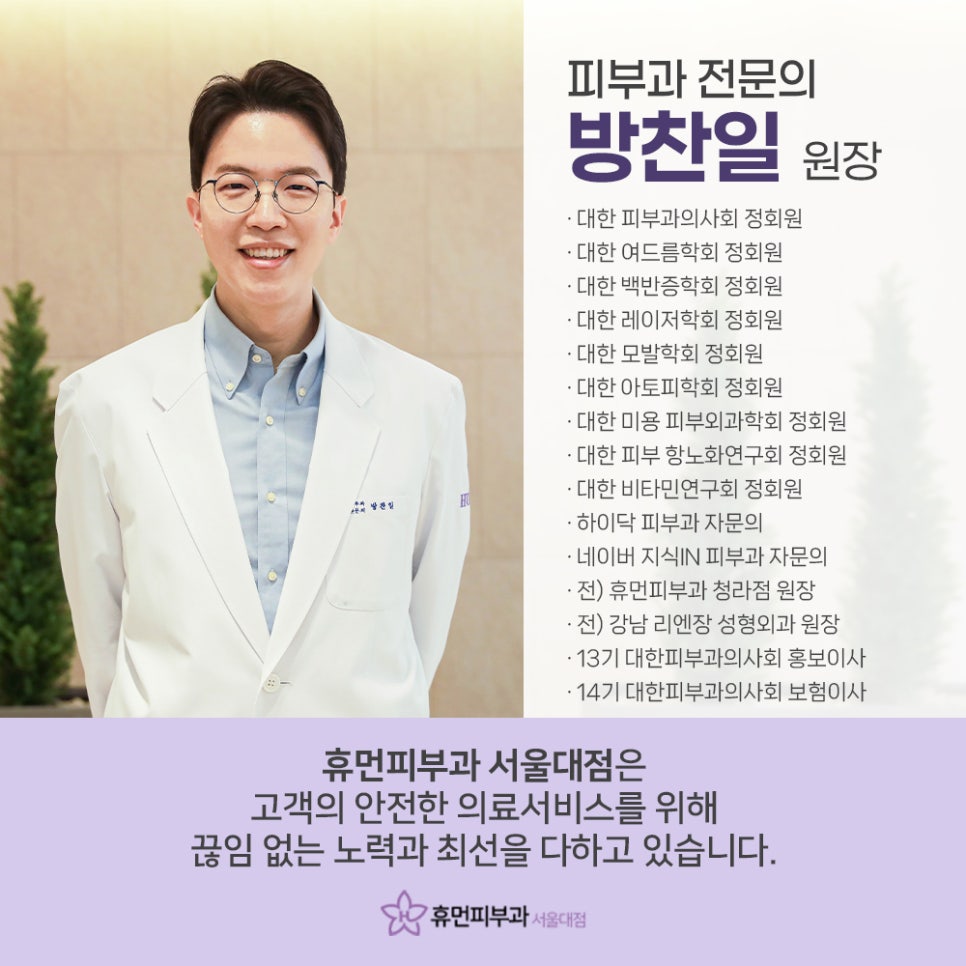
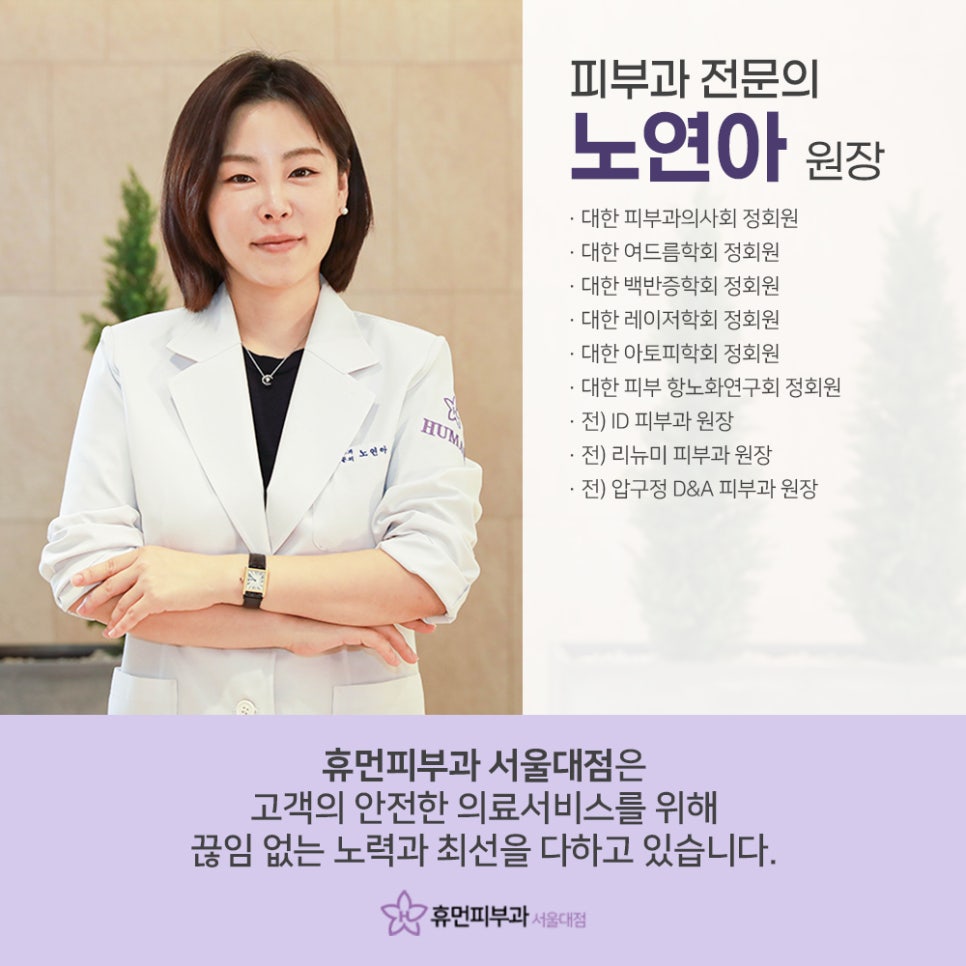
Although acne scars may look similar in photographs, examining the actual skin may reveal differences in scar depth, skin thickness, the presence of adhesions, and the degree of hyperpigmentation. Because different scar types may appear in different areas of the same person’s face, treating every area with the same intensity is not always appropriate. Excessive treatment without sufficiently assessing the skin’s condition may lengthen the recovery period or increase skin irritation.

At our clinic, a board-certified dermatologist directly checks everything from whether acne is currently active to the type and depth of indented scars and the skin’s sensitivity before creating a treatment plan. If you are considering acne scar treatment at a dermatology clinic near Seoul National University Station, instead of comparing only the names of specific devices or the number of treatments, start by receiving an accurate diagnosis of what types of scars remain on your skin and what treatment is needed. Carefully monitoring the skin’s response and proceeding with treatment step by step may help support more stable and natural improvement in skin texture.
📌Human Dermatology Seoul National University Station Branch
View the Medical Director’s Scar Treatment Column
http://www.humansnu.co.kr/sub/07/10_list.html