Hello!
This is Lucid Dental Clinic.
Because teeth do not naturally recover or regenerate once they are damaged,
they require careful management and attention so that problems do not occur.
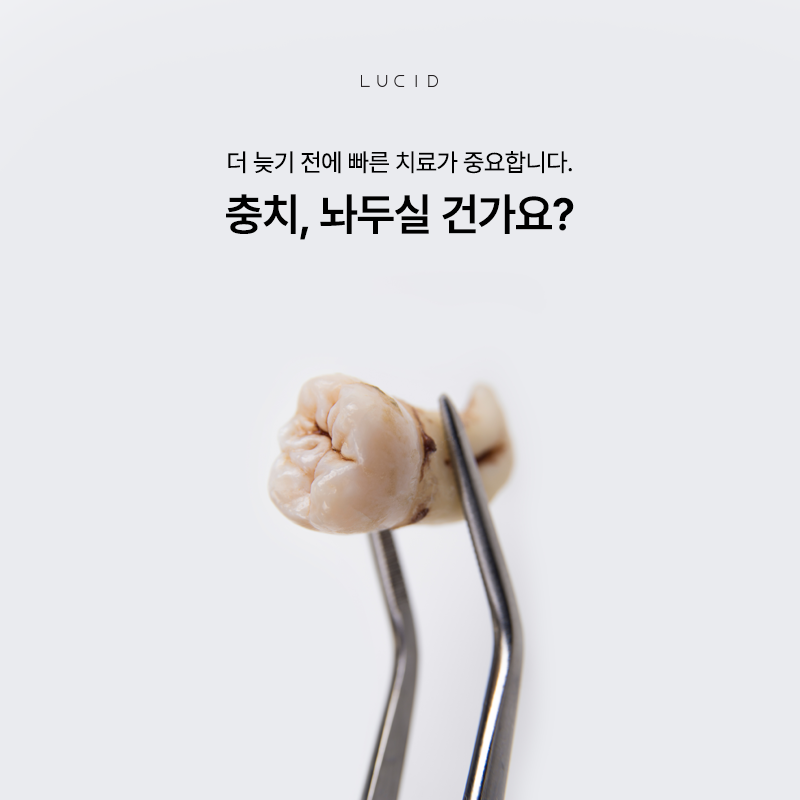
If a problem does arise with a tooth, it is very important to detect it early
and receive appropriate treatment.
In particular, cavities often cause little pain or discomfort in the early stages
and are difficult to identify with the naked eye,
so extra caution is needed.
So today, let’s talk about cavity treatment.
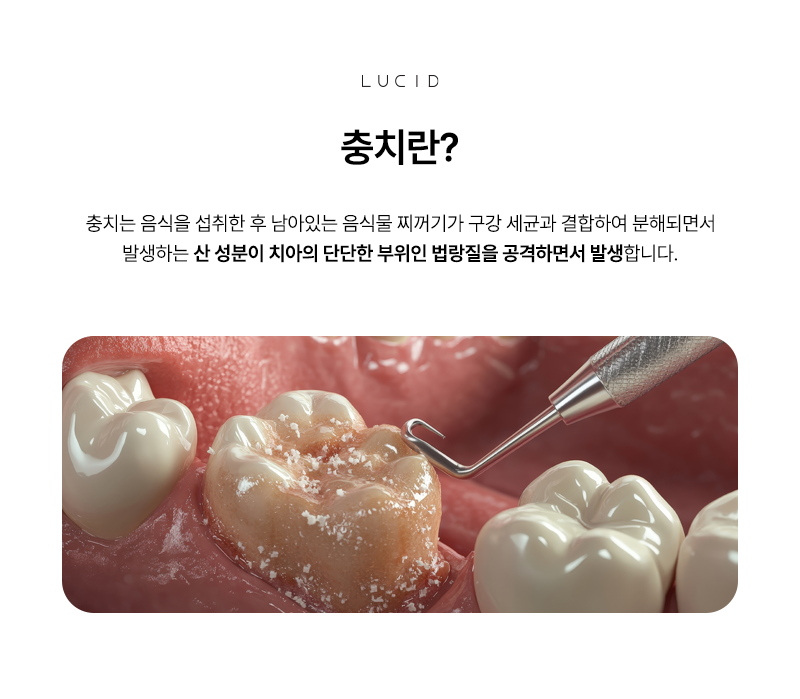
What is a cavity?
A cavity is a condition in which the enamel of a tooth is damaged,
affecting the underlying dentin and even the nerve.
The likelihood of cavities increases when food debris is not properly removed
or when sugary foods are consumed frequently. When a cavity develops,
there is usually no significant pain at first, but as it progresses,
teeth may become sensitive or the pain may worsen.
At Unju Station Dental Clinic, we provide a variety of methods
for cavity prevention and treatment.
Symptoms of cavities
Cavities may not have obvious symptoms in the early stages,
but as they progress, the following symptoms may appear.
If your teeth feel sensitive when eating cold food or sweets,
it is likely an early sign of a cavity.
If brown or black spots appear on the tooth surface,
it is a sign that the cavity is progressing,
and if a specific tooth hurts when chewing food,
it is possible that the cavity has already advanced deeply.
If the cavity becomes severe, bad breath may worsen due to
food debris and bacteria, and part of the tooth may break
or develop a hollowed area.

Stages of cavity progression
Cavities can be divided into several stages depending on how far they have progressed.
Because the treatment method differs by stage,
it is important to determine how far the cavity has advanced.
-
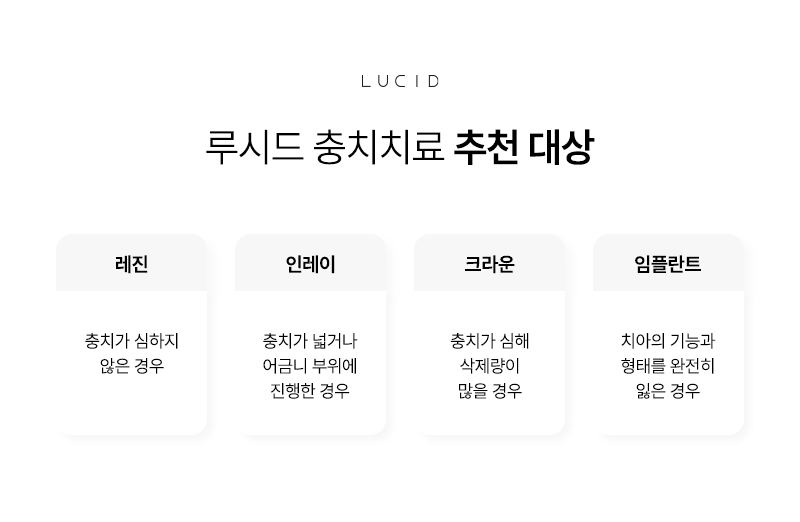
Early cavity (enamel cavity)
The stage where the enamel on the tooth surface begins to erode little by little.
At this stage, there is usually no significant pain,
and progression can be prevented with regular scaling and proper brushing habits.
-
Dentin cavity
This is the stage where the enamel has been damaged and the cavity has progressed into the underlying dentin.
Sensitivity or pain may occur when food gets stuck,
and at this point the decayed area must be removed and treated by filling it with resin or an inlay.
-
Pulp cavity (cavity that has reached the nerve)
The cavity reaches the nerve and causes severe pain.
At this stage, root canal treatment is necessary,
and in severe cases, the nerve must be removed and a crown placed.
-
Tooth damage and the need for extraction
If the cavity progresses severely, the tooth may no longer be salvageable,
and extraction may ultimately be necessary.
Therefore, it is important to detect and treat cavities as early as possible.
Precautions during cavity treatment
Early treatment is important
As cavities progress, the treatment process becomes more complicated
and costs may increase.
Therefore, even a small cavity should not be left untreated;
it is important to treat it early.
At Unju Station Dental Clinic, long-term oral examinations
help detect cavities early.
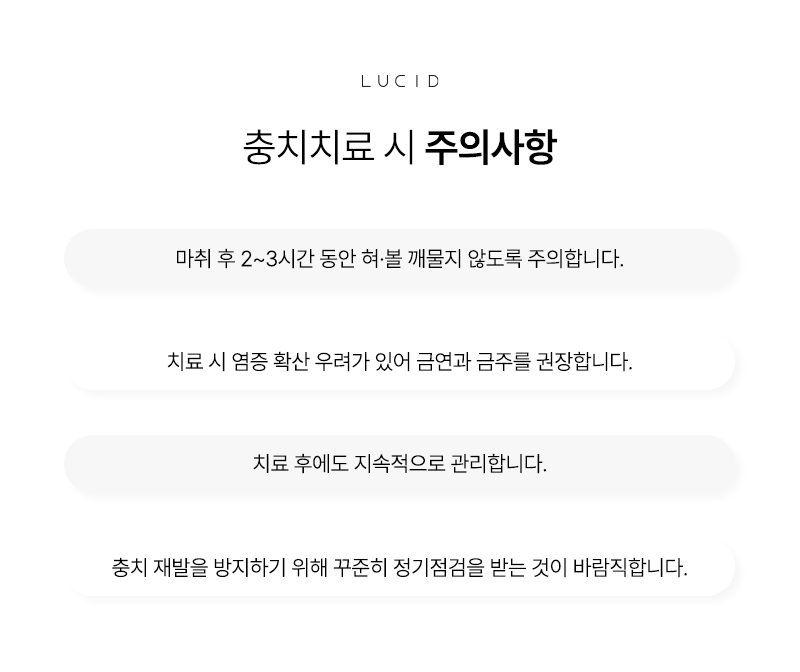
After treatment, there may be pain,
and for 2 to 3 hours after anesthesia, you should be careful not to bite your tongue or cheek.
Because there is a concern that inflammation may spread during treatment,
we recommend quitting smoking and drinking,
and management after treatment is also important.
Proper brushing, flossing, and regular dental visits are necessary,
and it is especially important to manage the treated area so that food does not get stuck there.
Frequently consuming sugary foods or carbonated drinks increases the likelihood
of cavities recurring, so maintaining healthy eating habits helps prevent cavities.
If cavities are left untreated, they can cause serious tooth damage,
so early treatment is important.
However, even if they want to visit the dentist, many people find it difficult to make time during weekday daytime hours because of work or school.
To ease this inconvenience,
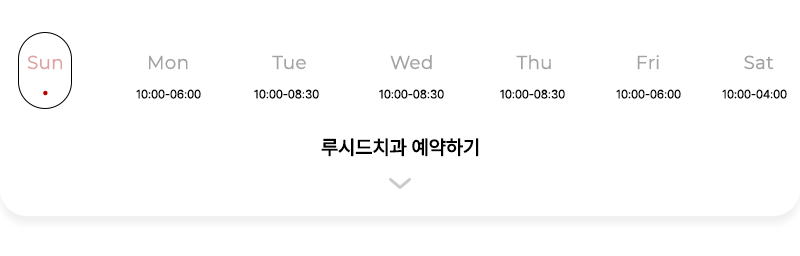
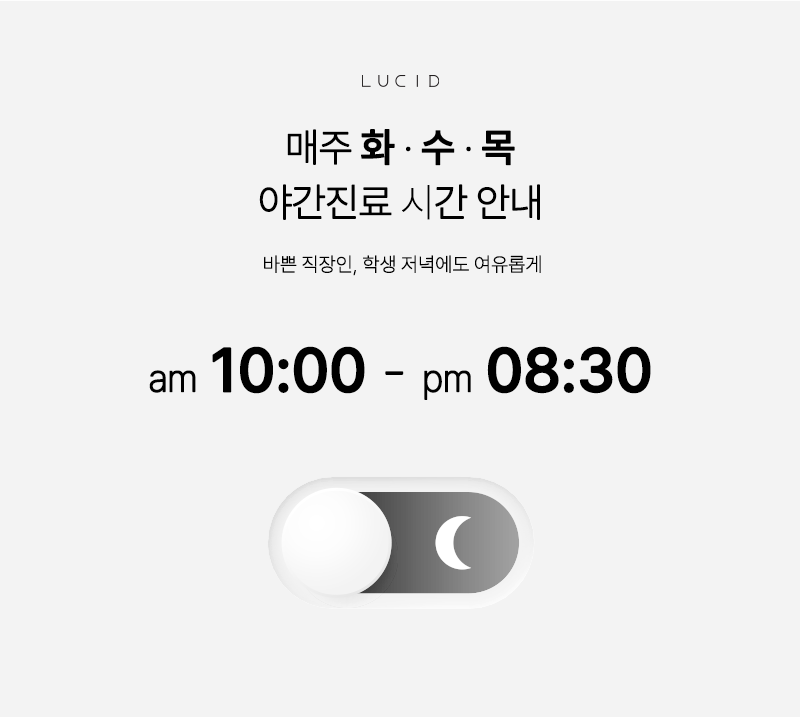
Lucid Dental Clinic provides care every Tuesday/Wednesday/Thursday until 8:30 p.m.
For those who have difficulty visiting the dentist during weekday daytime hours,
we recommend making active use of our evening hours to check your oral health.
Thank you.
Lucid Dental Clinic
3rd–4th Floors, Coway Building, 606 Nonhyeon-ro, Gangnam-gu, Seoul