Hello, this is Lucid Dental Clinic.
Once teeth are damaged, they can never be restored to their original state,
so prevention is more important than anything else.
Since cavities usually have almost no noticeable symptoms in the early stages,
regular care is truly important.
Today, based on a Yeoksam-dong dental clinic’s perspective,
we’ll look at cavity prevention habits that can be practiced in everyday life.
Did you know that even very small changes in your habits can reduce the occurrence of cavities?
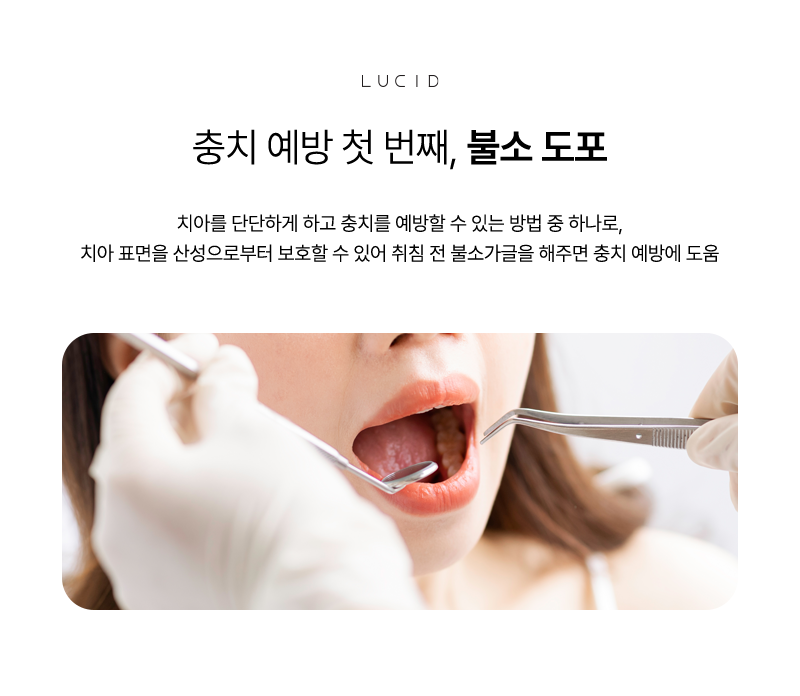
- First for cavity prevention: fluoride application
In simple terms, it helps strengthen teeth and protects them from the acids produced by cavity-causing bacteria.
In particular, making a habit of using a fluoride mouthwash before bed was very helpful in preventing cavities.
Using toothpaste that contains fluoride is also a good method,
and it is well known as an effective preventive measure not only for children but also for adults.

- Second for cavity prevention: fiber intake
Plaque is a bacterial film that naturally sticks to the surface of teeth after we eat.
If this plaque is not removed, it can easily lead to cavities.
What matters here is fiber intake.
When you eat fruits or vegetables rich in fiber,
a natural 'self-cleaning' effect occurs, physically cleaning the surface of the teeth.
Vegetables and fruits with a crisp bite, such as apples, carrots, and celery,
are especially good as snacks and also beneficial for dental health.
Of course, fiber alone cannot remove all plaque,
but simply making a habit of choosing fruit instead of dessert after an ordinary meal can also have a positive effect on dental health.

- Third for cavity prevention: avoid carbonated drinks
Carbonated drinks taste good, but they are not good for your teeth.
Most carbonated drinks contain large amounts of sugar and acid,
which erode the tooth surface and create an environment that causes cavities.
The risk becomes even greater if you sip the drink slowly or keep it in your mouth for a long time.
Also, frequently consuming carbonated drinks or fruit juice even once or twice a day can lead not only to cavities but also to periodontal disease (gum disease).
Instead, simply switching to water or unsweetened tea can already have a significant preventive effect.
At the Yeoksam-dong dental clinic, we also often found early cavities or acid erosion in people who drank a lot of carbonated beverages.
As you can see, just changing one drink you have often can make a big difference to your dental health.
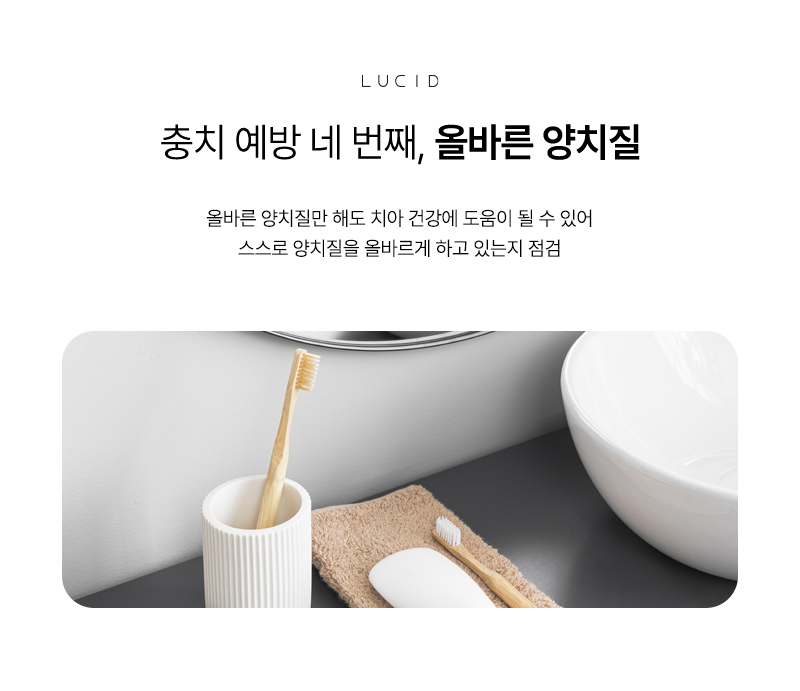
- Fourth for cavity prevention: proper brushing habits
No emphasis on brushing can be excessive.
But if it is not done the right way,
even if you do it diligently, the effect is only half as good.
▪ It is best to brush within 3 minutes after eating.
▪ Brushing thoroughly 2 to 3 times a day for at least 2 minutes is the basic standard.
▪ For brushing, the 'rotational method' of scrubbing at a 45-degree angle between the teeth and gums is effective.
▪ For debris that cannot be removed by brushing alone, it is good to use dental floss, interdental brushes, or a Waterpik together.
In particular, brushing before bed is arguably the most important part of the day.
If you go to sleep without removing the plaque and food debris that have built up throughout the day,
bacteria become more active while you sleep, increasing the risk of cavities.
At the Yeoksam-dong dental clinic, first-time patients are kindly guided on the correct brushing method and how to use oral hygiene products suited to them.
Depending on the shape of your teeth or the condition of your gums, different toothbrush shapes may also be recommended,
so we recommend getting advice from a professional at least once.
Cavities are a condition that can be sufficiently prevented through very small habits in our daily lives.
However, once a cavity develops, it does not heal naturally,
so it is most important to build good prevention habits in advance.
As introduced today, try to incorporate fluoride use,
fiber intake, reducing carbonated drinks, and proper brushing habits into your daily routine.
If you combine regular checkups with prevention-focused care at a Yeoksam-dong dental clinic,
you may be able to maintain healthy teeth without worrying about cavities for a long time.
Above all, prevention is easier than treatment,
less painful, and more economical!
Please keep that in mind, and why not start putting each one into practice from today?
Lucid Dental Clinic
3rd–4th Floors, Coway Building, 606 Nonhyeon-ro, Gangnam-gu, Seoul