Has a tooth been throbbing for no clear reason lately,
or do you feel a sharp sensation every time you eat something cold?
Are you worried that a cavity may have gotten deep?
If so, it will be helpful to keep in mind the root canal treatment
we’re introducing today.
Today, at Sinnonhyeon Station Dental Clinic,
we’ve prepared detailed information about root canal treatment.
For those who feel unfamiliar and worried about dental treatment,
I hope this article can help you feel a little more at ease.
I’ll explain everything step by step from now on :)
What is root canal treatment?
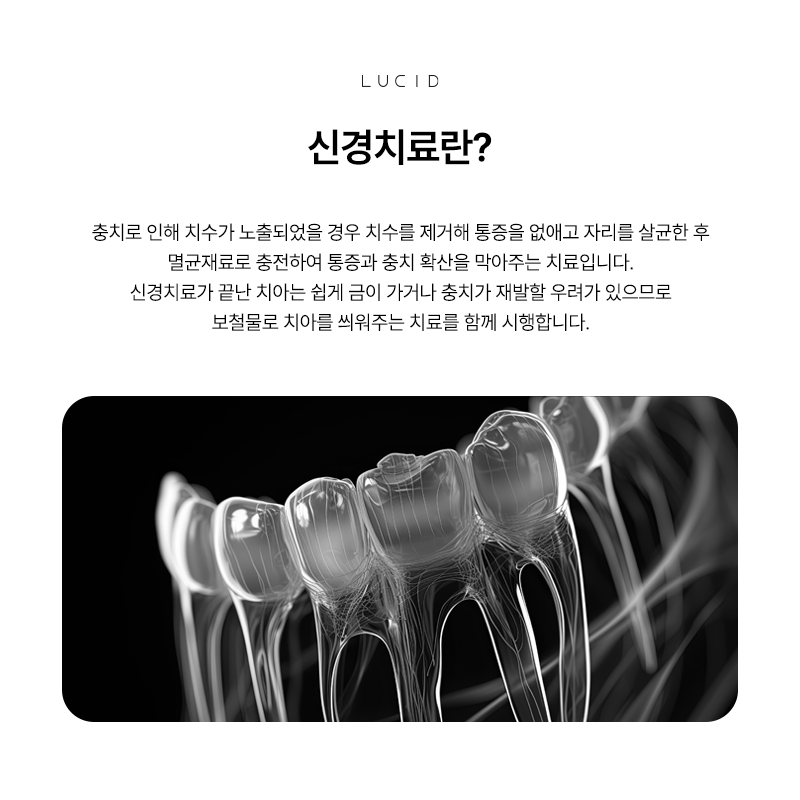
Root canal treatment is a procedure that removes the pulp
when it has been damaged by cavities, trauma, or other causes,
then thoroughly disinfects the inside and fills it with dental material
to relieve pain and prevent the spread of infection.
In particular, if the damage has reached the pulp,
it is difficult to recover with a simple filling,
so root canal treatment is essential.
After treatment, the tooth can easily become weak,
so it is generally protected with a prosthetic restoration.
To carry out all of these steps safely,
at Sinnonhyeon Station Dental Clinic, we carefully manage anesthesia,
sterilization, and even your visit schedule in a patient-tailored way.
Root canal treatment process
-
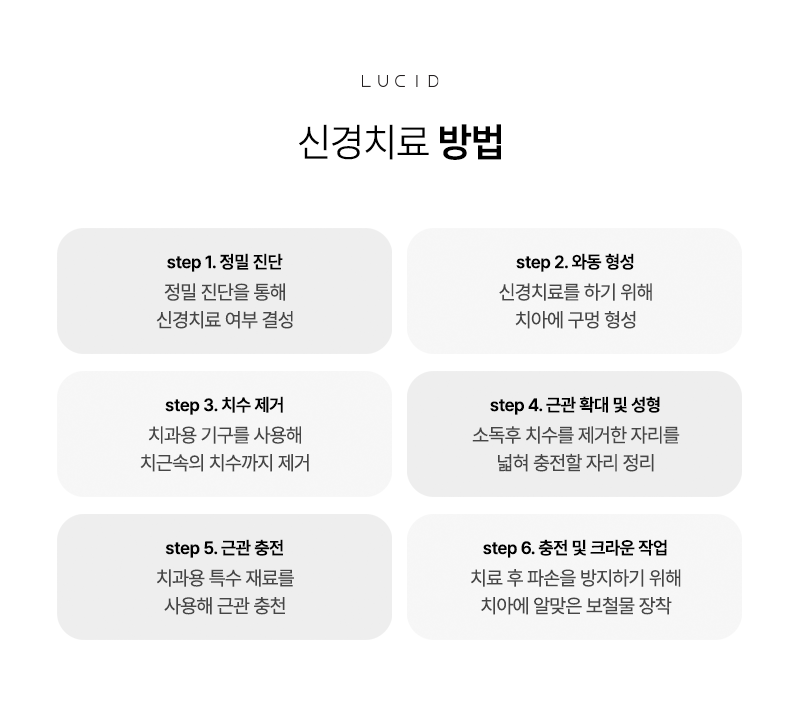
Precise diagnosis
X-rays and examinations are used to check the inside of the tooth
and determine whether root canal treatment is needed.
-
Cavity access preparation
A small opening is made in the tooth to create a pathway
for access to the pulp.
-
Pulp removal
The infected or damaged pulp is carefully removed.
-
Root canal enlargement and shaping
After removing the pulp, the inside is widened, cleaned up,
and disinfected so the material can be filled in properly.
-
Root canal filling
Special dental materials are used to fill the root canal completely
in order to block bacterial intrusion.
-
Filling and prosthetic restoration
Because the treated tooth can become weak, a crown may also be performed if needed.
Root canal treatment is usually completed over 2 to 3 visits,
and if the pain is severe or the infection is extensive,
more time may be needed.
At Sinnonhyeon Station Dental Clinic, the treatment plan is flexibly adjusted
depending on the interval between visits and the level of pain.
Precautions during root canal treatment
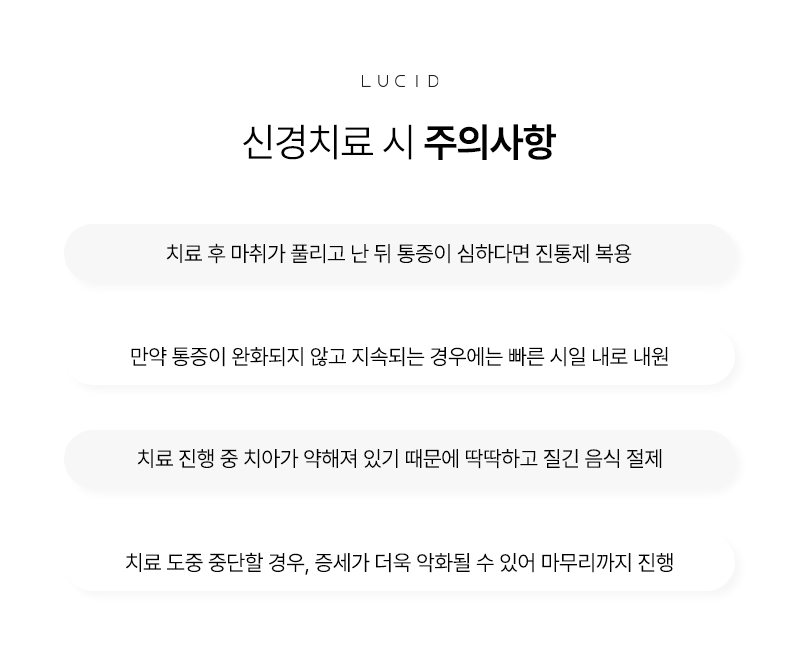
▪ After treatment, once the anesthesia wears off, pain or a foreign-body sensation may occur. It can be controlled with painkillers, but if the pain continues, please visit the clinic right away.
▪ The tooth under treatment is weakened, so it is best to avoid hard or chewy foods.
▪ If treatment is stopped midway, bacteria may invade again and the infection may worsen, so please be sure to complete the treatment to the end.
▪ During the treatment period, you need to be careful when using the tooth, and especially when eating, chewing on the opposite side can help.
When root canal treatment is needed
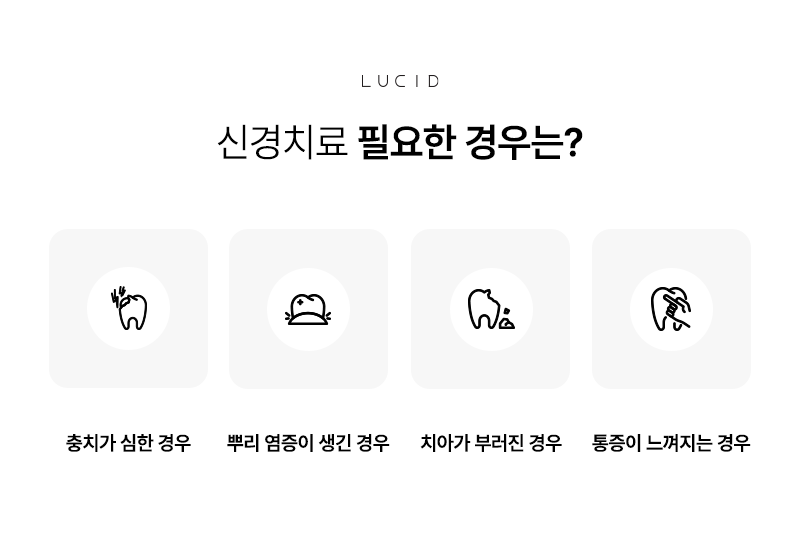
▪ When a cavity has progressed to the tooth nerve
▪ When inflammation develops in the gums or around the root
▪ When a tooth is broken or cracked and the nerve is exposed
▪ When persistent pain is felt for no particular reason
▪ When inflammation develops under an old prosthetic restoration
▪ When the tooth reacts sensitively to cold food or drinks
In addition, root canal treatment may also be recommended
when a problem is found on an X-ray during a regular checkup.
At Sinnonhyeon Station Dental Clinic, we provide an accurate diagnosis
and recommend it only when necessary, without unnecessary treatment.
Self-diagnosis test
If you have any of the following symptoms, you should consider root canal treatment.
▪ Pain lasts a long time when drinking cold water or eating hot food.
▪ There is pressure or pain in the tooth when chewing.
▪ The gums are swollen or there is a feeling of pus.
▪ Throbbing pain repeats even without any stimulation.
▪ The tooth has turned dark or has become more sensitive than before.
If even one of these symptoms applies to you,
we recommend visiting Sinnonhyeon Station Dental Clinic promptly for an examination.
If found and treated early, you can keep your teeth healthy for longer.
Root canal treatment is called
the last treatment that can save a tooth. Treatment can feel scary and unfamiliar,
but at our Sinnonhyeon Station Dental Clinic, we help minimize pain
and make sure you can receive careful treatment.
If your tooth feels sensitive or if you have even a little discomfort,
now is the time to get it checked.
And don’t skip your regular checkups!
For your healthy teeth and comfortable daily life,
Lucid Dental Clinic will be with you.
Thank you :)

Lucid Dental Clinic
3rd and 4th Floors, Coway Building, 606 Nonhyeon-ro, Gangnam-gu, Seoul