Hello. This is Lucid Dental Clinic.
Have you ever felt that a tooth was bothering you, but you were unsure whether it was serious enough to need extraction?
Or have you felt unsure about what treatment to receive when a tooth was broken or painful?
Many people delay treatment in situations like these, and their symptoms often worsen.
Today, to help ease those concerns, we will explain prosthetic treatment in an easy way.
What is prosthetic treatment?
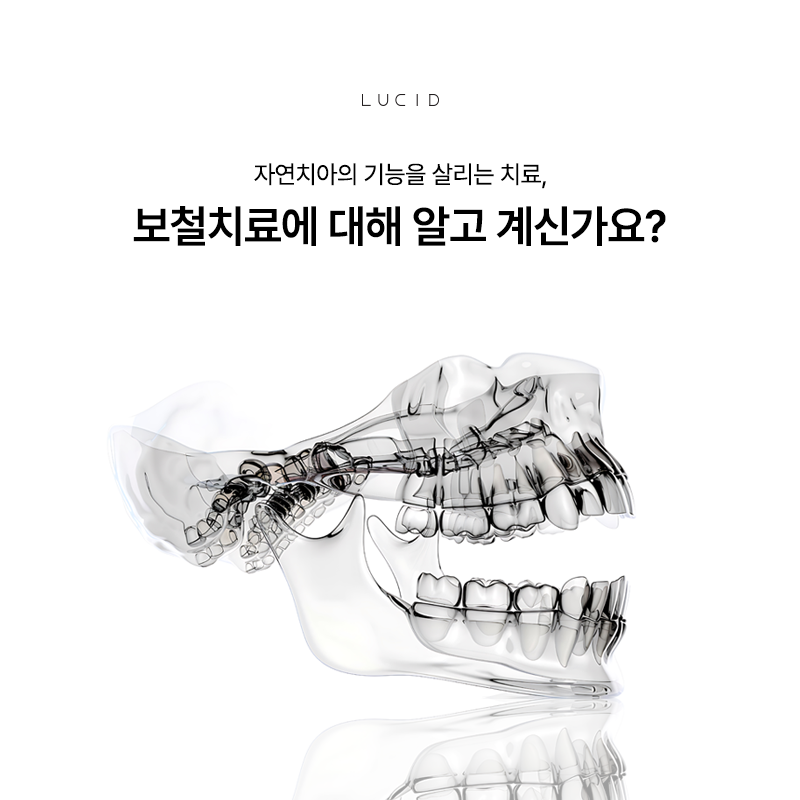
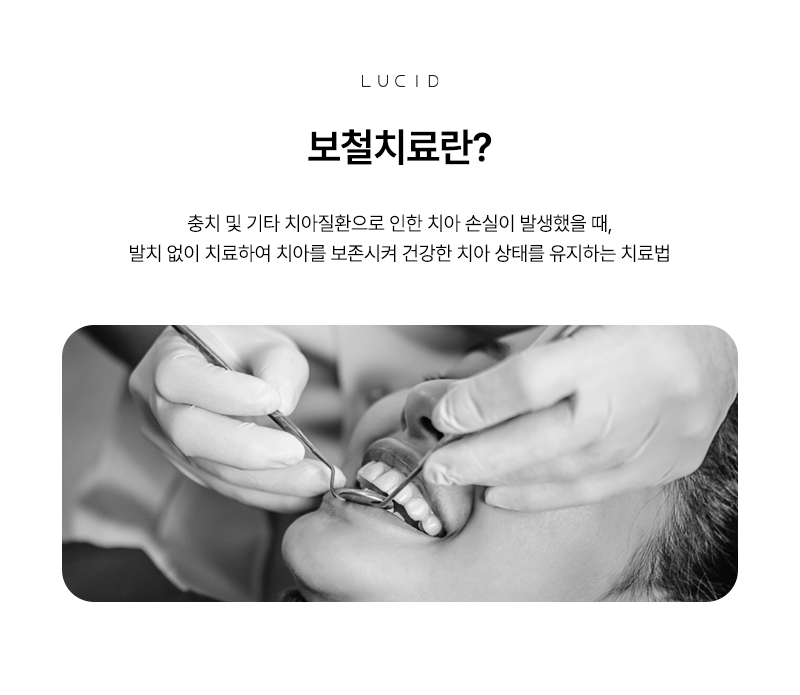
Prosthetic treatment is a procedure that restores function and aesthetics by preserving or replacing teeth damaged by cavities, trauma, wear, and other causes.
Even if a tooth is damaged, it is not always necessary to extract it. This is a highly specialized treatment in which the appropriate material and method are selected according to each tooth’s condition.
At our Yeoksam-dong dental clinic, we use various systems to establish prosthetic plans tailored to each patient.
When is prosthetic treatment needed?
▪ When a tooth has been extensively removed due to cavities
▪ When a tooth is broken or fractured due to trauma
▪ When a tooth becomes weakened after root canal treatment and needs protection
▪ When an old filling is damaged or has developed gaps
▪ When multiple teeth are missing and chewing function has declined
In these cases, prosthetic treatment can help restore function and improve aesthetics as well.
The importance of prosthetic treatment
Once a tooth is damaged, it is difficult for it to naturally recover, so early response is very important.
If left untreated, the damaged area can become larger.
It can also affect nearby teeth.
Prosthetic treatment helps prevent this and restores tooth function and shape, playing a role in preventing bigger problems.
Inlay treatment for restoring larger areas
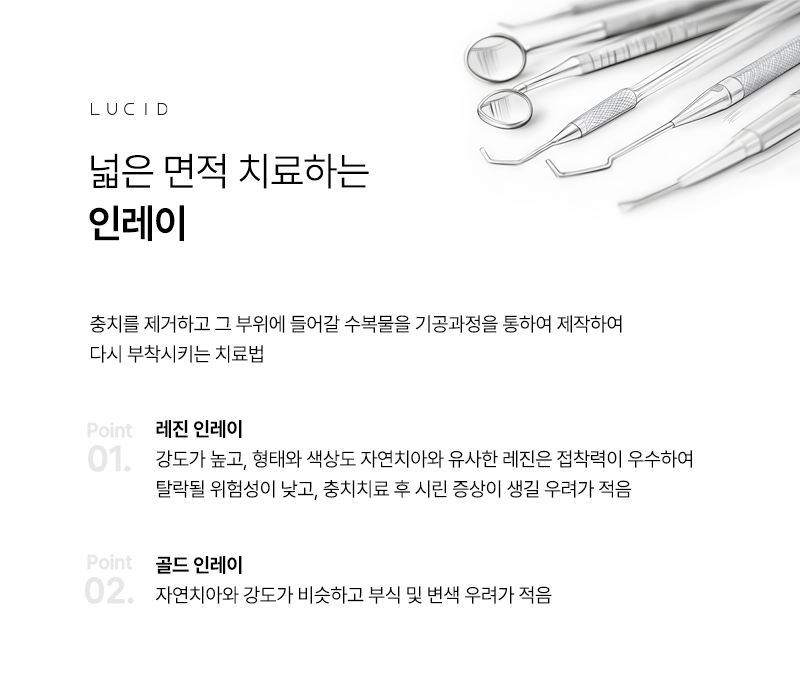
When the range of tooth removal is extensive after cavity treatment, a customized restorative treatment called an inlay is needed rather than a simple resin filling.
- Resin inlay
A material with a color and translucency similar to natural teeth, it offers excellent aesthetics and strong adhesion, making it less likely to come off. It also has high strength, so it can be used without difficulty even in molar areas, and it tends to cause less sensitivity after treatment.
However, if there is a strong bite force, another material may be more suitable.
- Gold inlay
It undergoes little deformation or corrosion even after long-term use, and its strength and elasticity are similar to those of natural teeth, allowing it to be used for a long time.
It causes little irritation to the gums and has excellent durability, making it especially suitable for areas with strong chewing force, such as molars.
Crown treatment to protect teeth
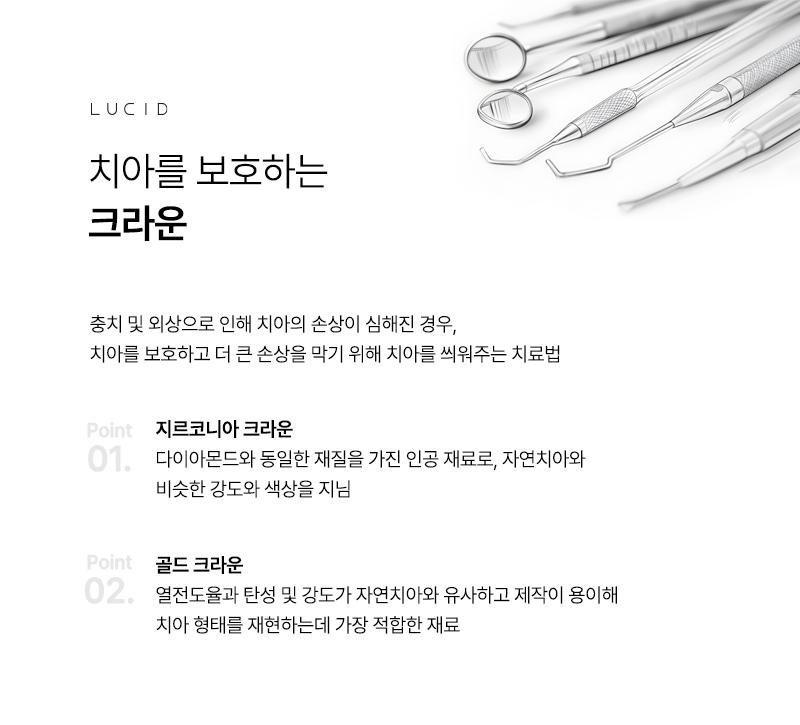
When a tooth is severely damaged by cavities or trauma, crown treatment is performed to cover and protect the tooth.
Because it is a method that covers the entire tooth, it helps prevent further damage to the affected tooth and maintains chewing function.
-
Zirconia crown
A material with translucency and color very similar to natural teeth, it offers excellent aesthetics.
It is also highly durable, so it can be used not only for front teeth but also for molars, and since it contains no metal at all, there is less concern about allergies.
-
Gold crown
Its thermal conductivity and strength are very similar to those of natural teeth, and one advantage is that it requires less tooth reduction.
It is easy to fabricate and can be applied quickly, and it maintains tooth shape well, making it suitable for long-term use.
If multiple teeth are missing, denture treatment
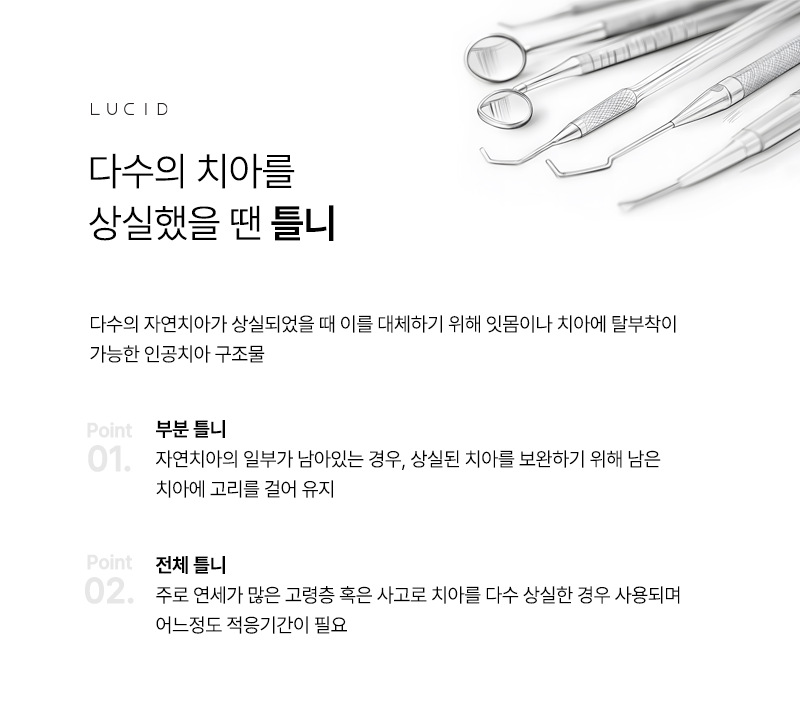
If several teeth are missing and functional recovery is needed, denture treatment is considered. The choice varies depending on the overall oral condition, age, and number of remaining teeth.
-
Partial denture
When some natural teeth remain, a metal or resin clasp is placed around the remaining teeth to compensate for the missing area.
It is relatively easy to adapt to and has a lower cost burden.
-
Complete denture
This is a prosthesis used when all teeth are missing. It rests on the gums and requires a somewhat longer adaptation period, but it can greatly help with daily life.
Recently, digital fabrication has made them much more precise and improved the fit significantly.
Prosthetic Treatment Q&A
Q. How long can prosthetic treatment last?
A. It depends on the material used and a person’s oral hygiene habits, but on average, inlays and crowns can be used for more than 7 to 10 years. With regular dental checkups and proper care, they can last even longer.
Q. Can cavities develop under a prosthesis?
A. Yes, if food gets into the gap between the prosthesis and the tooth,
or if maintenance becomes inadequate, secondary cavities can occur.
That is why regular checkups and scaling are essential.
Yeoksam-dong dental clinic prosthetic treatment is not simply about covering damaged teeth; it is precise treatment that restores function, aesthetics, and health at the same time. A well-established treatment plan is necessary for long-term use and can minimize the impact on surrounding teeth.
At our Yeoksam-dong dental clinic, we provide precise diagnosis using various devices and offer prosthetic treatment tailored to each patient.
If you are curious about your current dental condition or feel that prosthetic treatment may be needed, please visit us anytime without 부담.
We will be with you so that small changes can lead to major recovery. Thank you.

Lucid Dental Clinic
3rd–4th Floors, Coway Building, 606 Nonhyeon-ro, Gangnam-gu, Seoul