
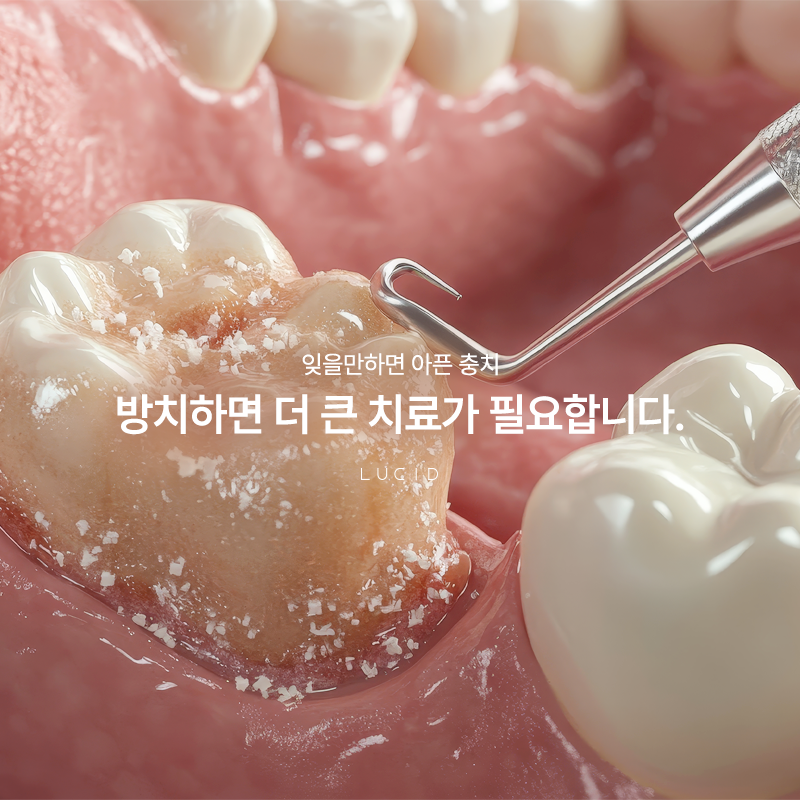
Hello, this is Lucid Dental Clinic.
Dental health can usually go by without any problems,
but at some point, discomfort can appear unexpectedly.
In particular, cavities progress quietly,
so they are not easy to notice on your own,
and if left untreated, they can worsen faster than you might think.
In the early stages, cavities usually do not cause any special symptoms,
but once they start, they are difficult to heal naturally,
so early detection and treatment are very important.
Today, at the Yeoksam-dong dental clinic, we will carefully explain
from the causes of cavities, to the areas where they commonly develop,
the stages of progression, and when treatment should be received.
This is information that can help you keep your teeth healthy for a long time,
so please read through to the end.
Why do cavities happen?
Cavities form when acids produced by bacteria in the mouth
as they consume and metabolize sugar, carbohydrates, and similar substances
attack the surface of the teeth.
These acids slowly erode enamel, the hardest layer of the tooth,
and eventually create holes that develop into cavities.
In particular, if brushing is not done properly and plaque builds up
on the tooth surface or near the gums, bacteria become more active,
increasing the risk of cavities.
A low saliva flow, irregular eating habits,
and a lifestyle that frequently includes sweets can also cause cavities.
Also, because cavities do not heal on their own over time,
early detection and treatment are the most important things.
So, where are cavities most likely to develop?
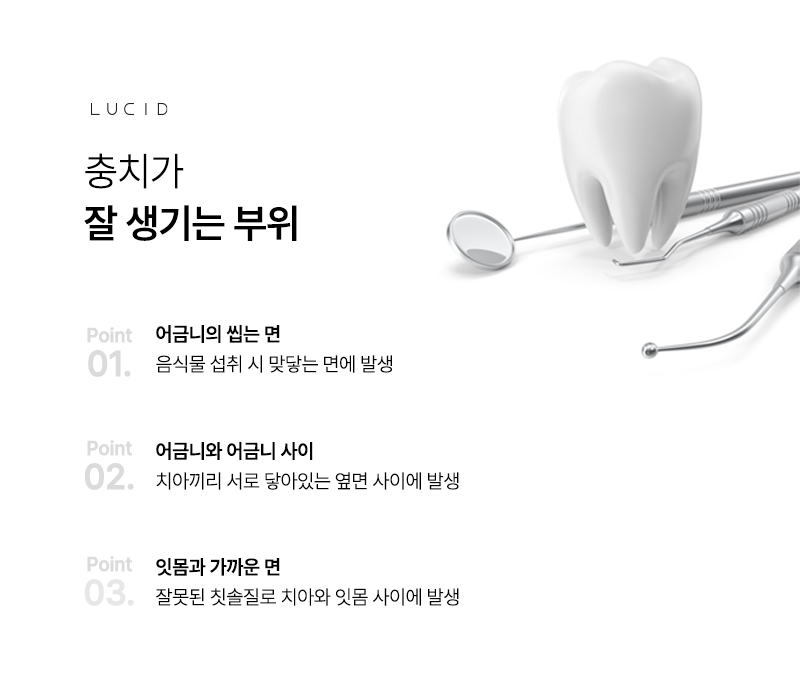
The chewing surface of molars
Food tends to collect here, and toothbrushes do not reach well,
so cavities often occur in this area.
Between teeth
The sides where teeth touch each other are hard to see with the naked eye,
and food can get stuck there, making it easy for bacteria to grow.
Areas close to the gums
The root area of the tooth or the border where it meets the gums
can be easy to neglect when brushing, so cavities can develop there easily.
In particular, when there is not enough use of interdental brushes or floss,
cavities between teeth are often not noticed and are left untreated.
These areas are best examined carefully through regular dental checkups.
How do the stages of cavity progression change?
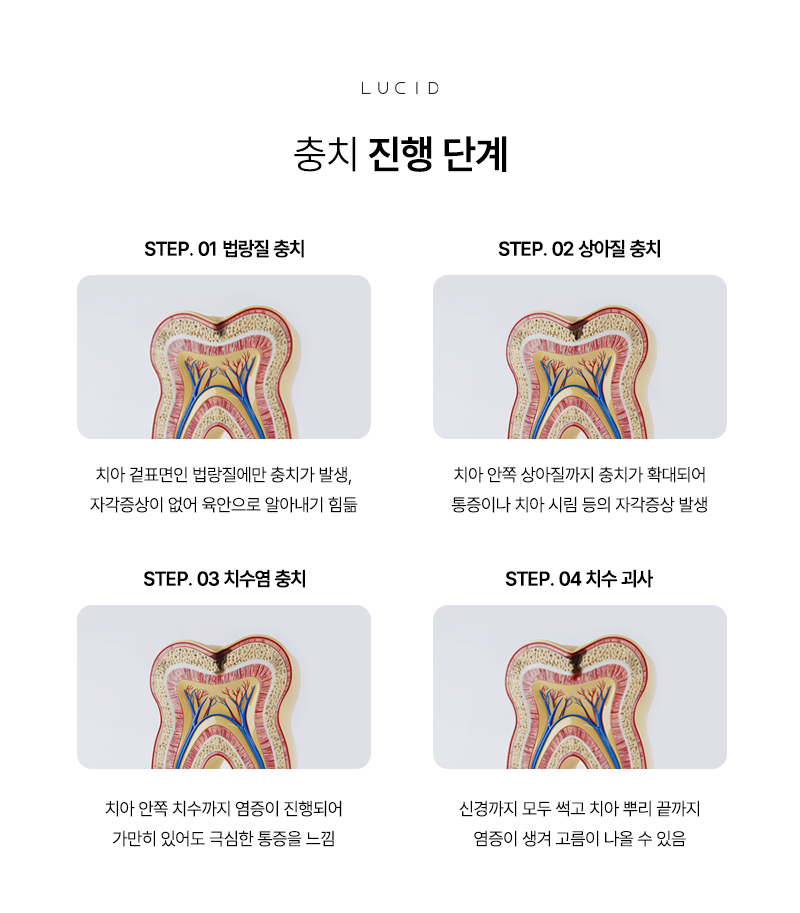
Stage 1: Enamel cavity
This is when a cavity has formed only in the enamel,
the outermost layer of the tooth. There is usually no special pain or noticeable symptoms,
so it is difficult to detect with the naked eye, but if found early,
a simple treatment can be enough.
Stage 2: Dentin cavity
This is when the cavity has gone beyond the enamel and invaded the inner dentin.
You may feel sensitivity to cold or hot things, or occasionally feel pain.
Stage 3: Pulpitis cavity
This is the stage where the cavity has reached the nerve, causing severe pain.
A throbbing pain may be felt even when sitting still, and root canal treatment
may be needed.
Stage 4: Pulp necrosis
This is a serious condition in which the nerve has died and inflammation has spread
to the tooth root. In this case, symptoms may worsen, such as pus buildup or facial swelling,
and tooth extraction may be necessary.
Because cavities become deeper and spread wider over time,
it is important to detect and treat them early.

Cavity treatment should definitely be received in these cases.
▪ When black dots or lines are visible on the tooth surface
▪ When you feel intermittent pain when pressing on a specific tooth
▪ When sensitivity occurs while eating cold or hot food
▪ When bad breath that was not there before has become worse
▪ When the tooth feels broken or chipped
▪ When food frequently gets stuck between the teeth
▪ When there is pain or bleeding in the gums or teeth while brushing
If even one of the symptoms above applies to you,
it is a good idea to visit the Yeoksam-dong dental clinic for an accurate diagnosis.
Cavity Treatment Q&A
Q. Do cavities go away naturally?
A. No. Cavities do not heal on their own. The longer they are left untreated, the worse they become, so treatment should be received early.
Q. Does treatment hurt?
A. Early cavities can be treated with simple resin treatment and completed without pain. If root canal treatment is needed, it is performed under anesthesia, so it is not very painful.
Q. Can cavities recur after treatment?
A. Yes, if poor oral care or eating habits continue, cavities can develop again around the treated area. Ongoing care is necessary.
Q. Can treatment be done during pregnancy?
A. It is best to avoid treatment in early or late pregnancy, but if pain is severe or there is a risk of infection, treatment can be carried out within a safe range.
Q. If there is no pain, do I not need treatment?
A. Even if there is no pain, the cavity is still progressing. Treating it early helps preserve as much of the tooth as possible.
Cavities are a condition that progresses quietly and quickly.
Even a small cavity that is hard to notice can eventually lead to tooth loss if left untreated. At our Yeoksam-dong dental clinic, based on precise diagnosis and extensive experience,
we provide cavity treatment tailored to each patient's condition.
Please protect your precious teeth through regular checkups and early treatment.
The moment your smile becomes healthier, Lucid Dental Clinic will be there with you.



Lucid Dental Clinic
3rd–4th Floors, Coway Building, 606 Nonhyeon-ro, Gangnam-gu, Seoul