Hello. This is Lucid Dental Clinic.
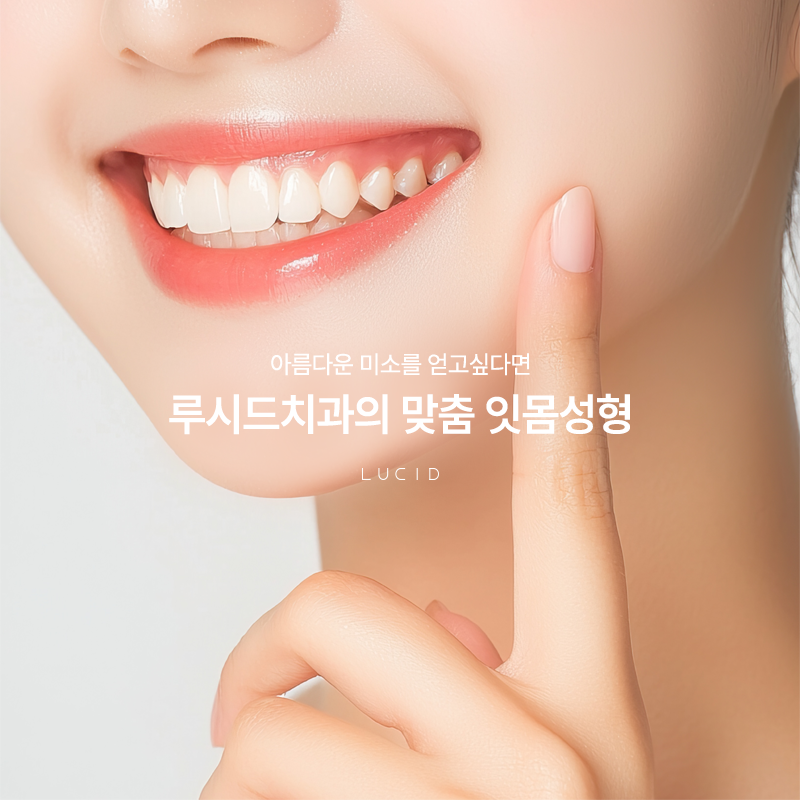
For a natural and harmonious smile, gum reshaping,
why should you consider it?
When we meet another person, the first thing
we face is the 'smile.'
White, evenly aligned teeth give a neat impression,
but if the gums show excessively when smiling, it can unintentionally
create an awkward or tense impression.
This is commonly called a 'gummy smile,'
and many people worry about this kind of smile.
A 'gummy smile' may be seen as simply an appearance issue,
but because it is also connected to confidence,
it can affect satisfaction in everyday life.
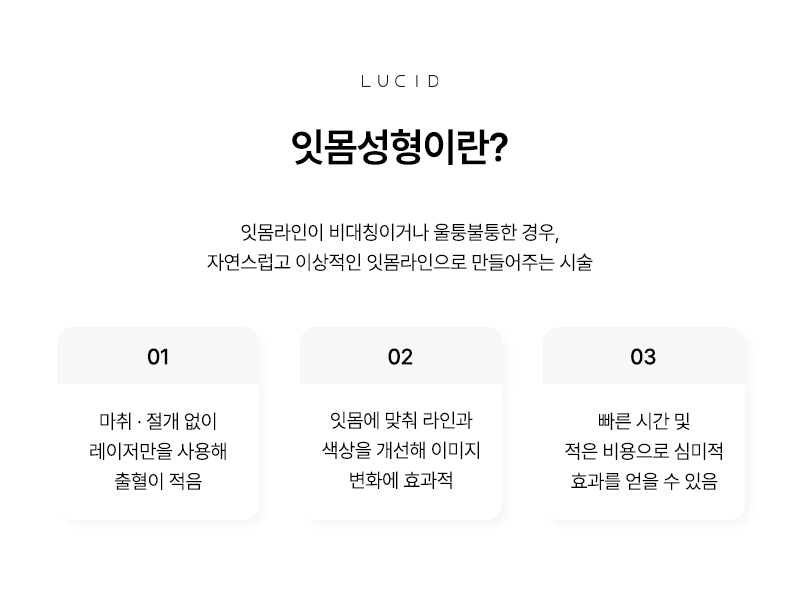
Gum reshaping is a dental approach aimed at making the smile natural
and balanced in this way.
It is a procedure that adjusts the height, shape, and proportions
of the gums so that the gums and teeth look harmonious,
and it may help improve the overall impression through a more balanced smile.
Is gum reshaping really necessary?
Having a lot of gum show is not always a problem.
Depending on a person's facial shape, tooth structure, and lip movement,
gums may naturally show, and this may be accepted as part of their individuality.
However, gum reshaping may be worth considering in the following cases.
▪ When the upper lip rises a lot while smiling, exposing the gums excessively
▪ When the teeth appear short and the gums cover them a lot
▪ When the left and right gum lines are asymmetrical, making the overall impression look unbalanced
▪ When planning aesthetic restorations such as teeth whitening or veneers
▪ When the gums have receded and the tooth roots are exposed, causing inconvenience in appearance or hygiene management
These are situations many people can relate to in practice,
and whether gum reshaping is needed can be determined more accurately
through an oral examination.
How is gum reshaping performed?
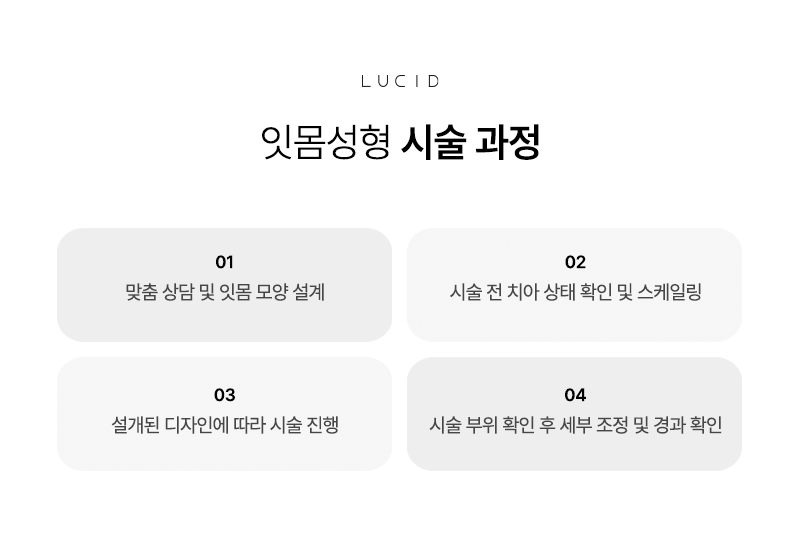
Gum reshaping is performed under local anesthesia,
and the procedure is carried out by finely adjusting the treatment area
to organize the height and line of the gums.
The treatment methods can largely be divided into two types.
- Gingivectomy
If the gums cover the teeth excessively
and make the teeth look small, a portion of the gums is trimmed to adjust
the proportion of the teeth. It is performed in a relatively short time,
and the extent varies depending on the patient's gum and tooth condition.
- Gum grafting
Conversely, if the gums have receded and the tooth roots are exposed,
autologous tissue or artificial tissue is used to cover the gums.
It is mainly applied to patients with thin or receded gums.
Gum reshaping may be performed on its own,
but it can also be combined with treatments such as aesthetic restorations,
teeth whitening, or orthodontics,
helping improve the completeness of smile design.
However, whether the procedure is appropriate and the order of treatment
must be determined through consultation with a specialist,
and rather than applying it excessively, the patient's oral condition and needs
should be fully taken into account.
What is the recovery period and how should it be managed?
In most cases, it is performed on an outpatient basis, and the procedure time is short,
so returning to daily life is relatively quick.
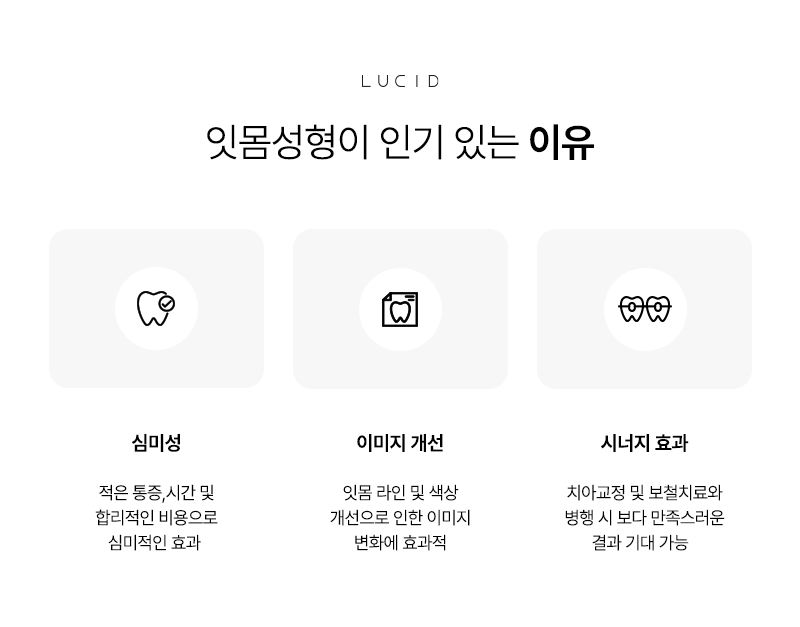
In general, recovery takes about 3 to 7 days after the procedure
without major inconvenience in daily life,
and suture removal is usually done after 1 to 2 weeks.
For a few days after the procedure, mild swelling or sensitivity may occur in the area,
and this varies from person to person.
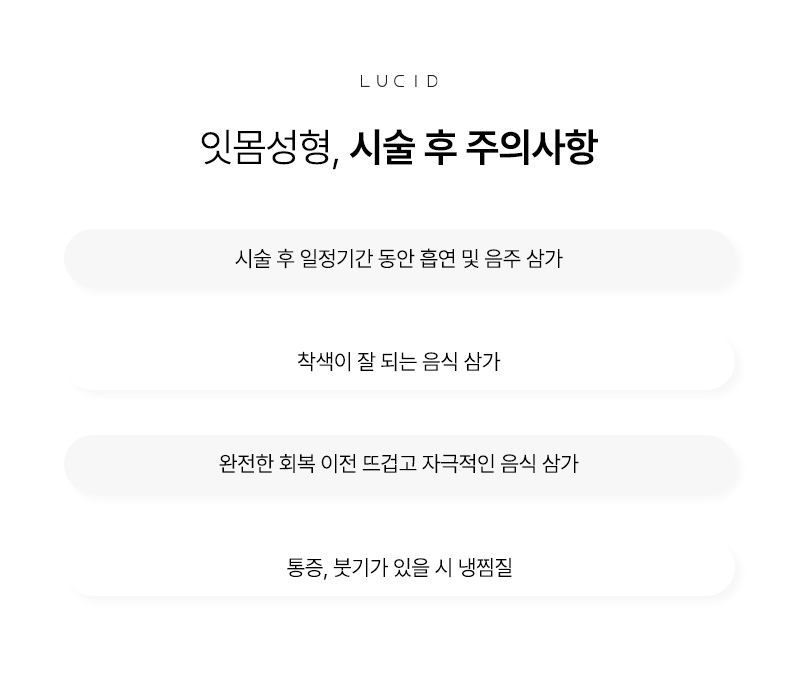
When eating, it is best to avoid hot or irritating foods, and oral hygiene
should be maintained gently, while excessive tooth brushing should be avoided.
During recovery, simple care such as using a gum-specific cleanser or, if needed,
taking medication according to the medical staff's instructions can be helpful.
Above all, regular dental visits before and after the procedure and consistent oral care
are important.
What should you check before the procedure?
Gum reshaping is not simply a procedure that just 'cuts' the gums.
It must be designed by comprehensively considering various factors,
such as the patient's gum bone condition, tooth length, facial shape,
and facial expressions when smiling.
In addition, if the gums are excessively removed or adjusted asymmetrically,
side effects such as sensitivity or an uneven gum line may occur,
so an accurate diagnosis and sufficient consultation before the procedure are essential.
Furthermore, since gum reshaping is a medical procedure,
it is advisable to check whether it is suitable for your condition
and make the decision carefully together with the medical staff.
You should also keep in mind that the treatment effect and recovery speed vary from person to person,
and the same result will not appear in every patient.
Gum reshaping is a dental procedure that can help improve the details of a smile
and create a more harmonious impression through the balance of the teeth and gums.
However, it is not applicable in every case,
and an appropriate plan must be established for each individual situation
through adequate diagnosis and consultation.
A comprehensive approach is needed that considers not only cosmetic purposes,
but also psychological satisfaction and improved oral health.
Since a smile is one of the important factors that determine confidence,
it is a good idea to carefully examine with a specialist whether this is the treatment you need.
 Lucid Dental Clinic
3rd–4th Floors, Coway Building, 606 Nonhyeon-ro, Gangnam-gu, Seoul
Lucid Dental Clinic
3rd–4th Floors, Coway Building, 606 Nonhyeon-ro, Gangnam-gu, Seoul