Hello, this is Lucid Dental Clinic.
For many people, when they think of dental treatment,
the first feeling that comes to mind is
"anxiety."
In particular, even relatively common treatments such as
cavity treatment are often postponed because of tension.
However, the longer a cavity is left untreated, the more it can lead not only to pain,
but also to root canal treatment, crown restoration, and in severe cases,
extraction. That is why receiving treatment in a timely manner is
most important.
Even so, some people have had difficulty going to the clinic because of fear,
gag reflex, or sensitivity to pain during treatment.
In such cases, one method that can help is
sedation under conscious sedation.
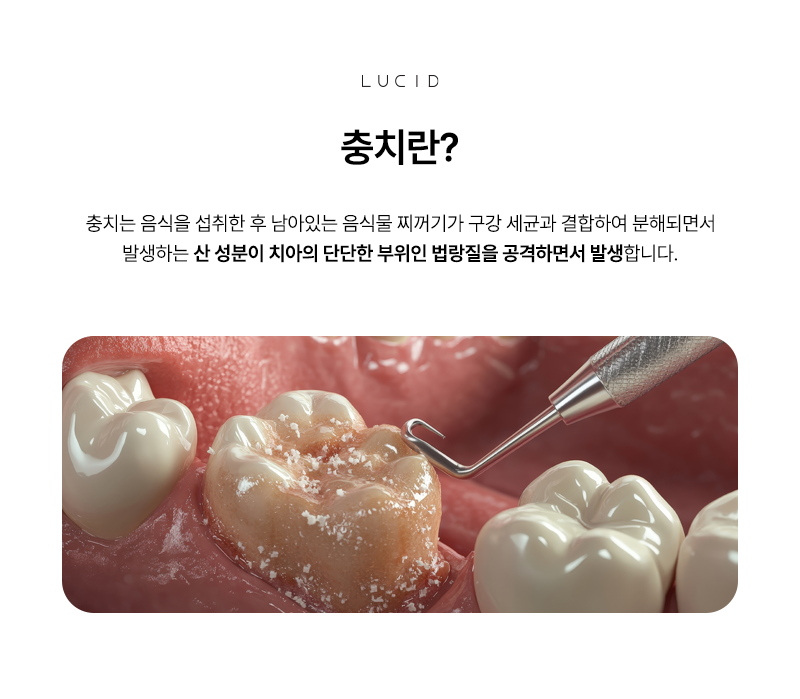
What is cavity treatment?
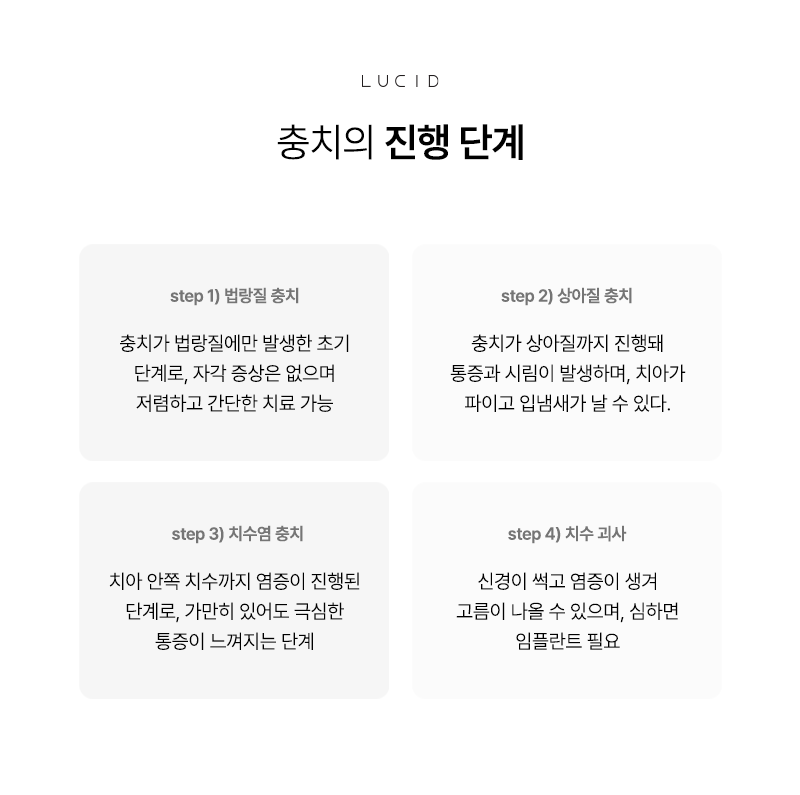
A cavity refers to the process in which leftover food particles or bacteria accumulate on the tooth surface,
damaging the enamel and then the dentin beneath it,
and eventually the nerve.
Early cavities may not show major visible changes
and often cause little pain, so they are easy to miss.
But as time passes, symptoms such as sensitivity, pain, and food frequently getting stuck can occur,
and if treatment is not provided at the proper time, the tooth’s internal nerve may be damaged.
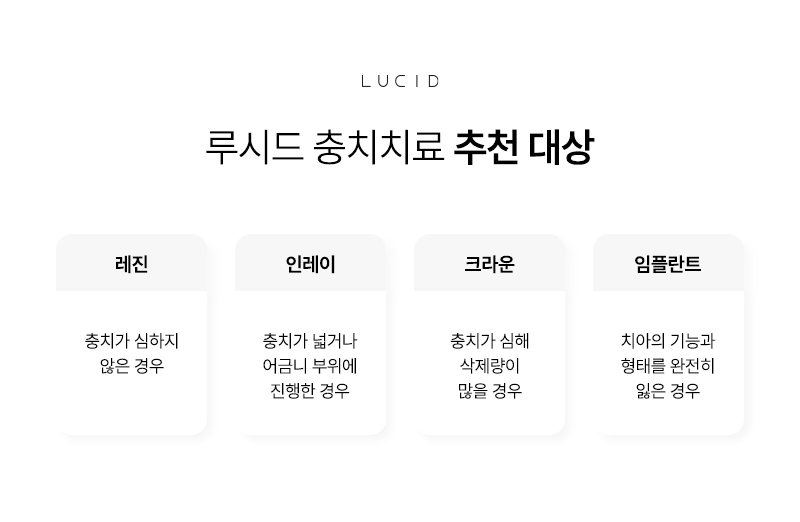
Depending on how far the cavity has progressed, treatment is divided as follows.
▪ Early cavity: Fill the damaged area with a filling.
▪ Moderate cavity: Remove tooth structure and cover it with a prosthetic restoration for protection.
▪ Severe cavity: Root canal treatment is performed first, followed by crown treatment.
▪ If the tooth is fractured or the lesion has progressed to the root: Extraction may be necessary, followed by prosthetic treatment.
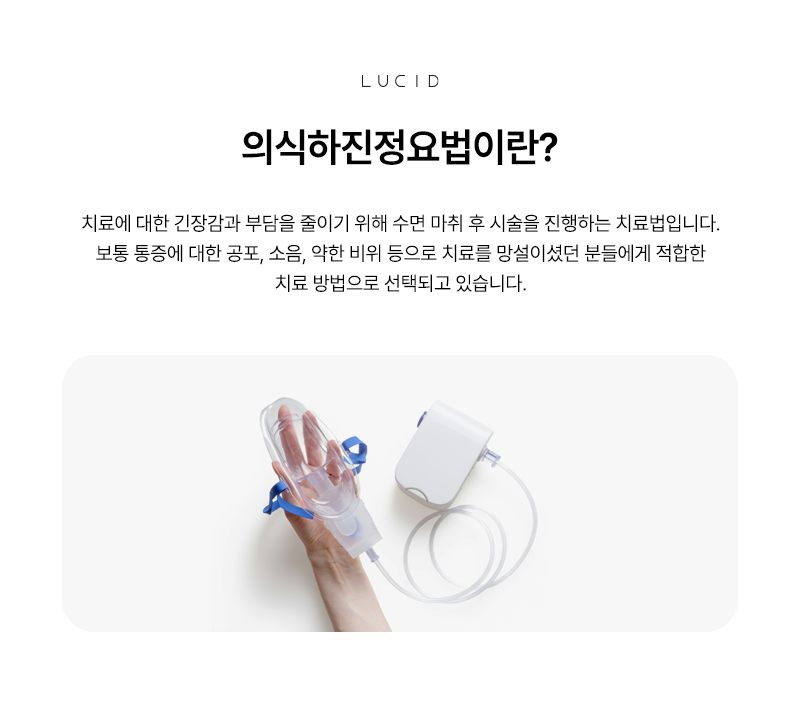
What is conscious sedation?
Conscious sedation is a method that reduces a patient’s anxiety and tension during treatment.
It mainly uses sedative medication to induce a "sleep-like" state,
but it is not full sleep; treatment can be performed while breathing and consciousness are maintained.
This method is not simply about sedation alone;
because the patient can move on their own and even have brief communication with the medical staff,
it is operated as a treatment that meets safety and application requirements under medical law.
When fear of dental treatment is strong,
even if you know a cavity is progressing, you may hesitate to go to the clinic.
Especially if painful treatment experiences from childhood,
or memories of sensitivity after anesthesia or the sound of the drill remain,
even a simple resin treatment can feel like a major source of stress.
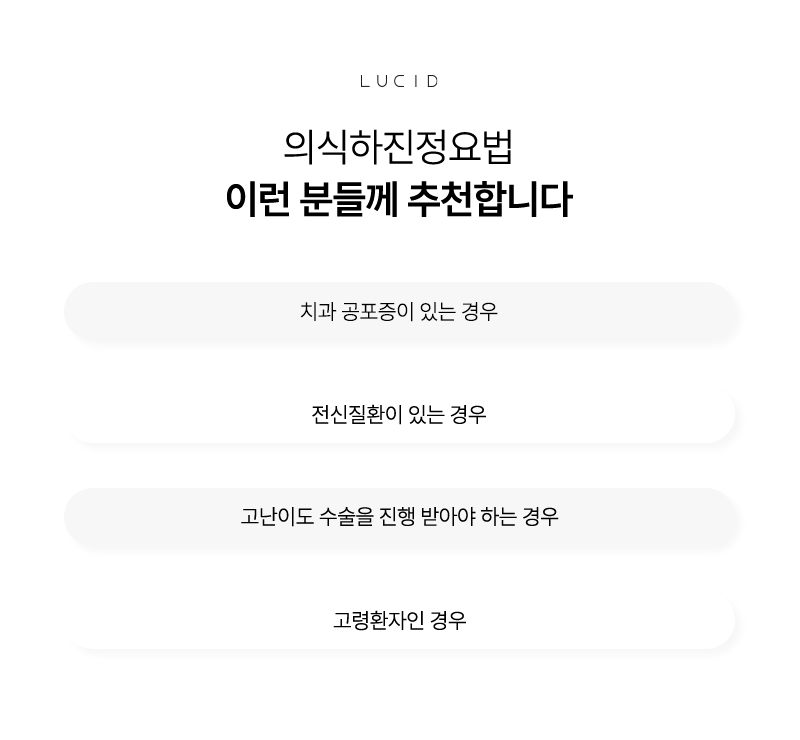
In such cases, conscious sedation is used as a way to help cavity treatment proceed more comfortably.
Because the patient can receive treatment in a more relaxed and comfortable state,
treatment time can be shortened,
and the burden of sudden movement or breathing difficulty during treatment can also be reduced.
For example, if there are several cavities and multiple areas need to be treated at once,
or if a long procedure such as root canal treatment is scheduled,
conscious sedation can be used together to reduce the patient’s fatigue and anxiety.
In addition, conscious sedation can be a gentler treatment option for older patients with weak gums or difficulty keeping their mouth open for long periods,
adults whose bodies become stiff due to tension during treatment,
or children with little treatment experience.
Most importantly, conscious sedation does not replace treatment;
rather, it is a method that helps treatment be received more safely and comfortably.
Therefore, if you have a cavity but have hesitated because of anxiety about treatment,
it may be a good idea to start without too much burden through this auxiliary method.
If you are planning the procedure,
please make sure to know this.
▪ To secure the speed of drug response and safety, preparation before the procedure is important for conscious sedation.
As a rule, from 6 hours before the procedure, even water should be avoided,
and any medications you are taking or your health condition should be fully shared with the medical staff in advance.
▪ The day of the procedure is a day when the body’s reactions may become more sensitive.
Sudden movements, driving yourself, or going home alone should be avoided,
and it is safer to visit with a guardian.
▪ Depending on your overall health condition, such as high blood pressure, diabetes, liver/kidney disease, adjustment may be necessary.
▪ In particular, if you have recently undergone another treatment or surgery,
your recovery status and response to medication must be considered together,
so it is advisable to adjust the schedule accordingly.
Treatment points at Lucid Dental Clinic
At Lucid Dental Clinic, the anxiety and tension a patient feels during treatment are also taken into account when planning care.
After checking the location and extent of the cavity, as well as the oral condition,
the treatment environment is adjusted while considering the patient’s response and anxiety.
If necessary, we can provide guidance through consultation about auxiliary methods such as conscious sedation,
and all treatments are explained with full consideration of the patient’s health condition and existing medical history,
and are carried out with consent.
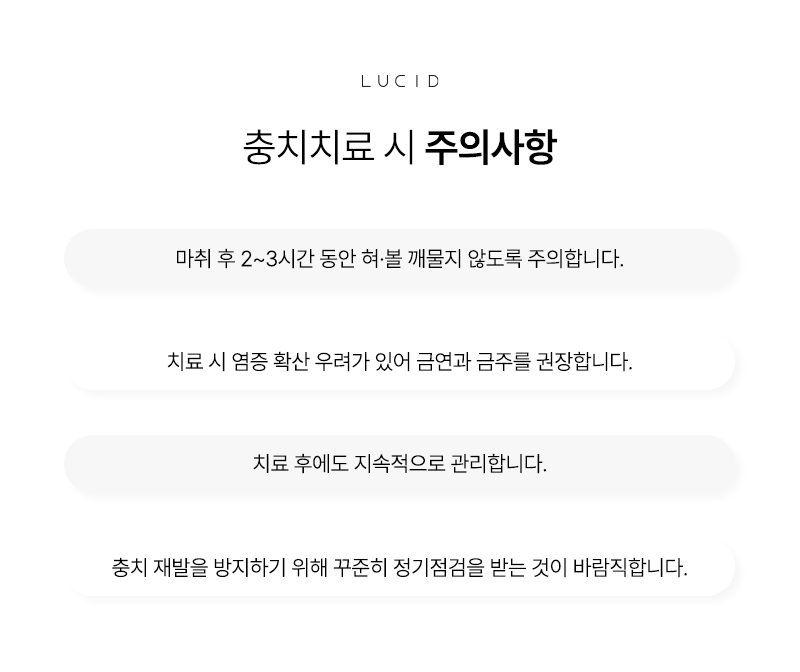
Cavity treatment is a basic way to protect tooth health,
but for some people, it can also become a major barrier because of tension and anxiety.
Conscious sedation is one method that can reduce this burden and lower the threshold for treatment.
At Lucid Dental Clinic, we consider not only oral health but also psychological comfort to be important in care.
If you are experiencing discomfort due to cavities,
why not first receive a consultation to find the treatment method that is right for you?
 Lucid Dental Clinic
3rd–4th Floors, Coway Building, 606 Nonhyeon-ro, Gangnam-gu, Seoul
Lucid Dental Clinic
3rd–4th Floors, Coway Building, 606 Nonhyeon-ro, Gangnam-gu, Seoul