Hello, this is Lucid Dental Clinic.
Have you found that even losing just one tooth
makes daily life inconvenient?
At first, it may not have seemed like a big deal.
You may have thought, “I can just chew on one side,”
or “It’s a little uncomfortable, but I can put up with it.”
But as time goes by, food gets stuck more easily,
you gradually chew on fewer sides, and the balance inside the mouth begins to break down.
A missing tooth does not simply mean
a loss of one function.
▪ Speech may become unclear when talking
▪ You may feel self-conscious when smiling
▪ Nearby teeth may tilt, leading to a chain of problems that can affect other areas as well
In particular, for office workers in their 20s to 40s who are active in social life, or for middle-aged and older adults for whom eating habits are important, these changes can lead to lower confidence, stress, and changes in eating habits.
Lucid Dental Clinic focuses not simply on filling in missing teeth,
but on restoring the daily rhythm and oral function that a person originally had.
Even a single prosthetic restoration is carefully planned and designed to suit that person’s oral structure and lifestyle.
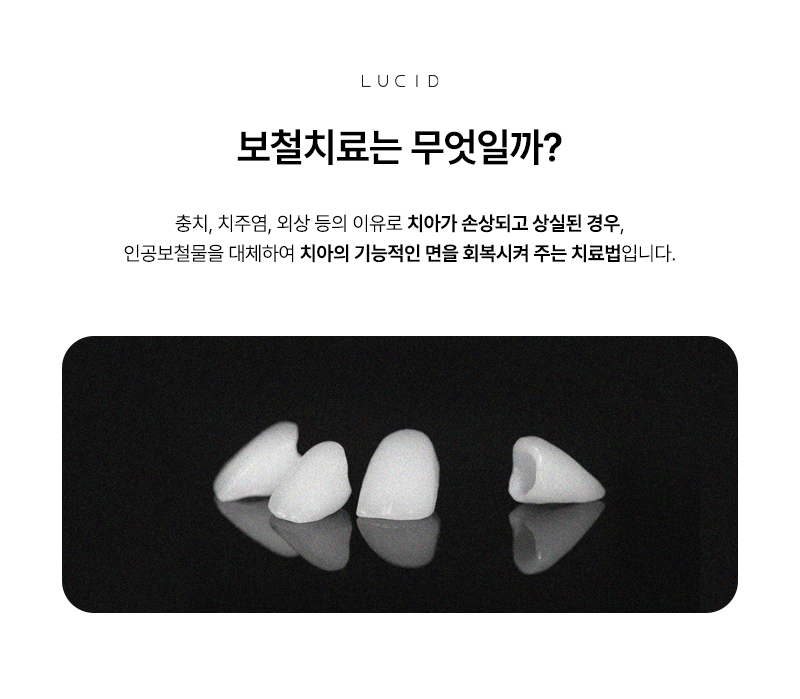
What is prosthetic dental treatment?
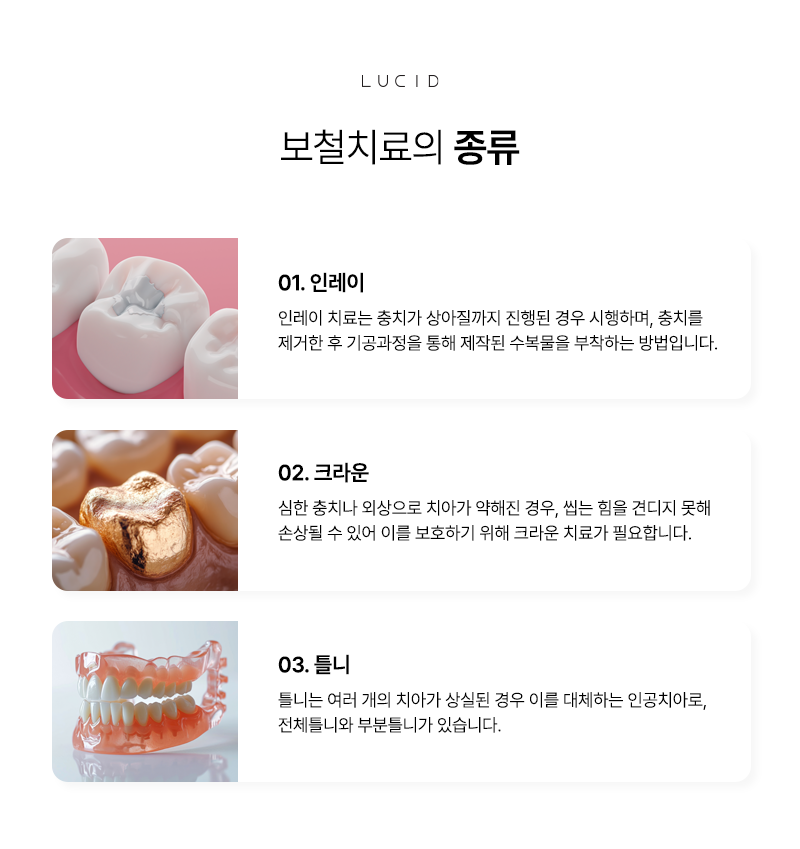
Prosthetic dental treatment is a treatment that uses artificial tooth structures to replace or restore teeth in order to recover the function of damaged or missing teeth.
▪ Crown: Covers and protects a damaged tooth
▪ Bridge: Connects a missing area using adjacent teeth
▪ Implant prosthesis: Attaches a prosthetic restoration to an artificial tooth root
▪ Denture: A device that replaces several teeth or all teeth
Prosthetic Treatment vs. Implants: What’s the difference?
The method most often mentioned as a way to replace teeth is the “implant.”
However, in fact, implants are also a type of prosthetic dental treatment, and the method and indications can differ.
An implant involves placing an artificial tooth root into the jawbone and connecting a prosthetic restoration on top of it.
Because it stands independently like a natural tooth, there is no need to shave down neighboring teeth, and its strong fixation makes it suitable for long-term use.
However, the procedure may be limited depending on the amount and density of the jawbone, as well as overall health conditions (such as diabetes or osteoporosis).
On the other hand, a bridge uses the healthy teeth on both sides of the missing tooth as supports and connects an artificial tooth in the middle.
It is faster and relatively simpler than an implant, but a drawback is that the supporting teeth must be trimmed, and it can be difficult to apply if the teeth are not in good condition or if multiple teeth are missing.
A crown is used to cover a tooth whose root is still alive but whose crown has broken, or a tooth that has become weakened after root canal treatment. It is closer to reinforcement than full replacement.
Dentures are “removable prosthetics” used when several teeth or all teeth are missing, and they can be a practical alternative for those who find bone grafting or fixed treatment burdensome.
Among these various prosthetic options, the most suitable treatment is determined by comprehensively considering the number of missing teeth, gum condition, the health of surrounding teeth, whether there are systemic diseases, and even the patient’s budget and lifestyle patterns.
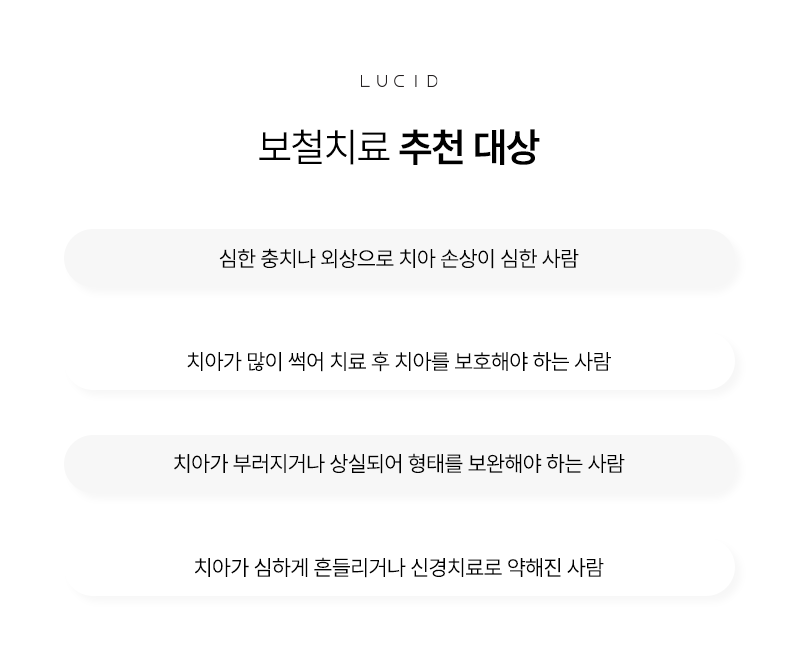
We recommend prosthetic treatment for the following people.
▪ Those whose teeth have been damaged by cavities or accidents
When part of a tooth has broken or chipped due to deep cavities or trauma, it can be difficult to fully maintain chewing function with the remaining tooth alone. In such cases, prosthetic treatment that covers and protects the damaged area through crown treatment may be needed to restore function.
▪ Those whose teeth have become weakened after root canal treatment
A tooth from which the nerve has been removed becomes hollow inside and weakens over time. When chewing hard food, it may break, or it may crack toward the gum line. In such cases, treatment that protects the tooth by covering it with a prosthetic restoration can be helpful.
▪ Those whose missing teeth have been left untreated and have caused nearby teeth to shift
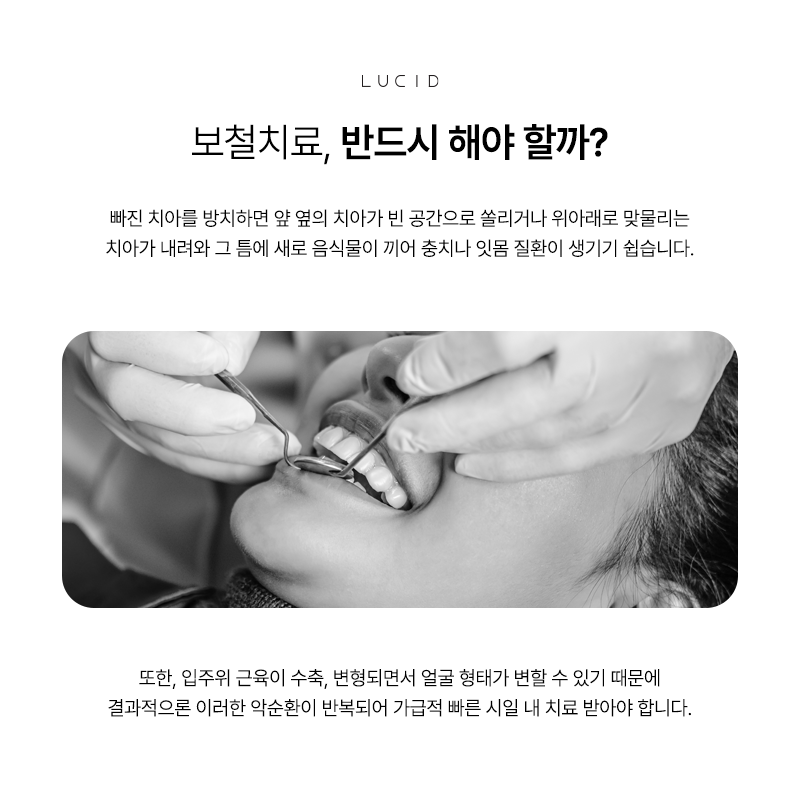
The area where a tooth is missing gradually causes the surrounding teeth to lean into the space or spread apart over time. Eventually, the balance of chewing force breaks down, which can also lead to bite problems. It is more stable in the long term to replace a missing tooth with a prosthetic restoration as early as possible.
▪ Those who are experiencing discomfort due to old prosthetic restorations
If an existing prosthetic restoration starts to feel loose or wobble, it may not fit the gums properly or the bite may have changed. If retreatment or replacement is not done in time, it can lead to gum inflammation and pain, so it is important to check the condition through regular examinations.
▪ Those who need improvement for speech, chewing, or esthetic reasons
Many people also have difficulty speaking clearly or feel discomfort while chewing because of problems with tooth alignment, size, or position.
In addition, noticeable damage to front teeth or molars can lead to psychological withdrawal and lower confidence. In these cases as well, improvement is possible through prosthetic treatment that considers both function and appearance.
Post-treatment care is important.
Unlike natural teeth, prosthetic restorations are artificial structures, so their durability and lifespan can vary greatly depending on how well they adapt to the gums and how oral hygiene is managed.
If left without regular checkups and care, inflammation may develop around the prosthetic restoration, or the adhesive strength may decrease, causing it to loosen or come off.
At Lucid Dental Clinic, even after treatment, we provide the following ongoing care programs.
▪ Regular examination system
We check the condition of the prosthetic restoration, gum health, bite condition, and more every 6 months or 1 year. Even if there is no discomfort, regular checkups help with long-term stability.
▪ Guidance on precautions when using prosthetic restorations
If there is a risk of fracture when eating very hard or sticky foods, we provide guidance so that the use of that area can be adjusted or supplemented.
▪ Hygiene habit coaching for long-term use
Improper bite habits (such as chewing on only one side or teeth grinding) can affect the lifespan of prosthetic restorations, so we analyze the patient’s lifestyle patterns as well and provide preventive care.
Frequently Asked Questions
Q. How long can prosthetic treatment be used?
A. In general, the lifespan of prosthetic restorations varies widely from 5 to more than 15 years, and depending on regular examinations and proper care, they may be used for much longer.
Q. Is the treatment very painful?
A. Because the treatment is performed under local anesthesia, there is almost no pain during the procedure. After the procedure, there may be some foreign-body sensation or gum discomfort, but this usually gradually improves within a few days.
At Lucid Dental Clinic, we provide enough explanation before treatment and guide you through a process that minimizes discomfort during the procedure.
Q. Do I have to get an implant?
A. No. Prosthetic treatment includes various methods such as bridges, dentures, and crowns, and the most suitable method is decided after consulting with the medical staff, taking into comprehensive consideration the patient’s alveolar bone condition, the health of surrounding teeth, and the overall bite condition.
Prosthetic dental treatment is not simply a process of filling in a single tooth.
It is a comprehensive treatment that restores chewing function, confidence in speaking, a natural smile, and oral balance together.
Lucid Dental Clinic’s principle is to go beyond a simple procedure and provide systematic care, including precise diagnosis, customized treatment planning for each patient, and post-treatment management.
A change in one tooth can change your entire life.
Do not let today’s discomfort continue for longer.
Please find out which treatment is most suitable for you through an accurate diagnosis and consultation with a specialist.
 Lucid Dental Clinic
3rd–4th Floors, Coway Building, 606 Nonhyeon-ro, Gangnam-gu, Seoul
Lucid Dental Clinic
3rd–4th Floors, Coway Building, 606 Nonhyeon-ro, Gangnam-gu, Seoul