Hello, this is Lucid Dental Clinic.
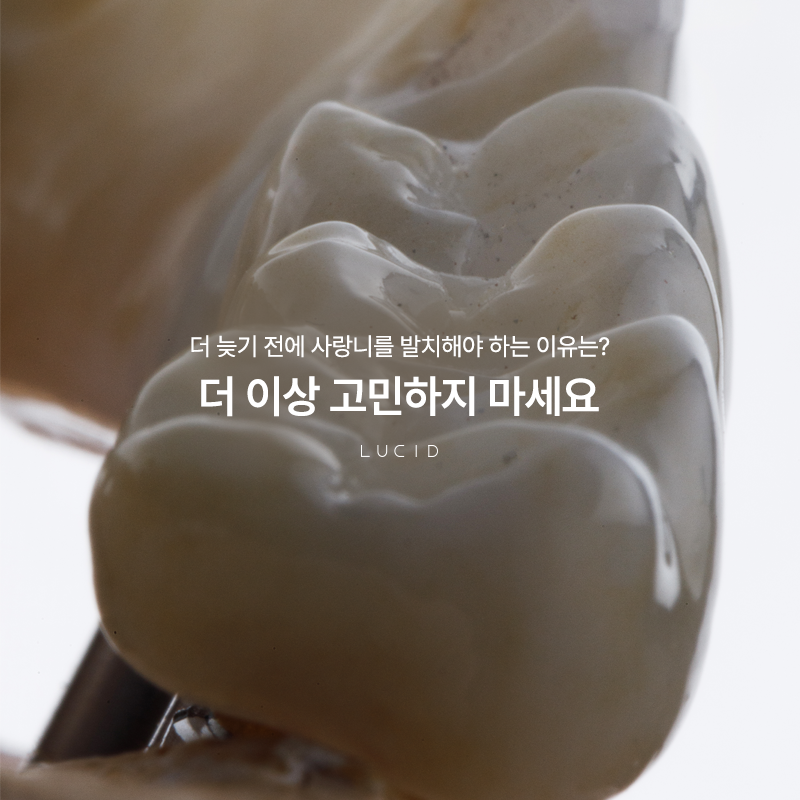
Have you recently felt stiffness at the tip of your jaw, or noticed discomfort behind your molars when brushing?
If pain suddenly appears in a spot that usually felt fine, or if chewing has become uncomfortable, it may mean a 'wisdom tooth' is starting to emerge.
Wisdom teeth are the teeth that come in as we become adults. Even if they cause no noticeable symptoms at first, they can later lead to pain, inflammation, and even damage to surrounding teeth.
That is why we are often asked questions like, 'Do they have to be removed no matter what?' and 'Can’t I just leave them alone?'
Today, at Lucid Dental Clinic, we want to organize the questions people most often ask about wisdom teeth, one by one.
From why wisdom teeth develop, to when extraction is necessary, the procedure process, and treatment options for those worried about pain, we have carefully included only the essential information.
If you are currently worried about your wisdom teeth, we hope this article can be a good first step.
What Are Wisdom Teeth?
As we pass through adolescence and begin to enter adulthood, a new tooth quietly starts to appear from an unexpected place.
It is almost as if it is saying, 'I’m grown now too.'
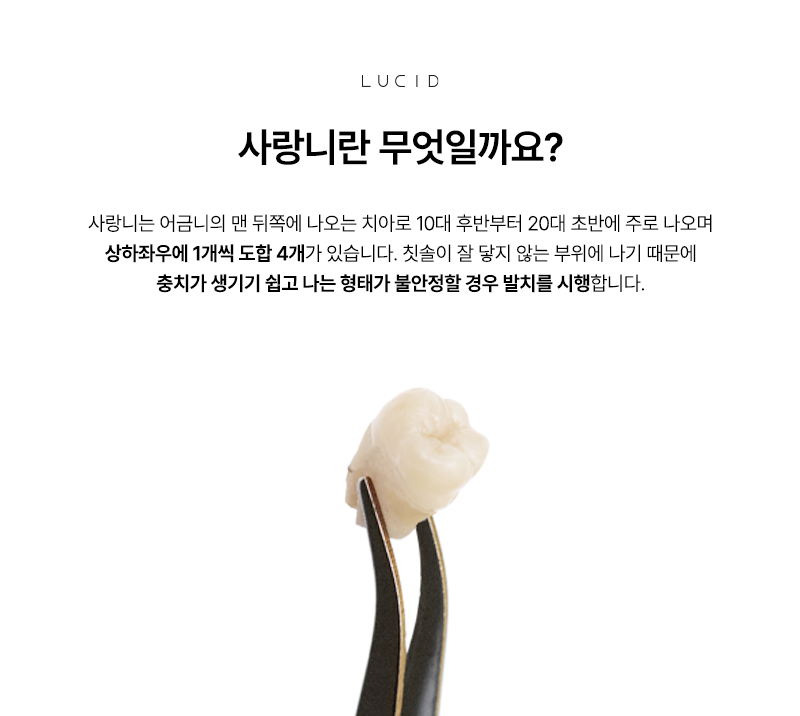
That tooth is the wisdom tooth, the last guest to appear quietly at the very end of the dental arch.
Wisdom teeth are not easily visible when talking or smiling, and they are located in the deepest area, where a toothbrush also has difficulty reaching. Because of this, many people may not realize they are there until much later, and one day they may signal their presence through sudden pain or swelling, as if saying, 'I’m here!'
Not everyone has wisdom teeth.
Some people do not have them at all, and in others, only some of them erupt, or they grow in an odd direction.
In particular, when there is not enough space in the jawbone, wisdom teeth cannot grow straight upward and instead grow sideways or remain trapped inside the gum.
This is called an 'impacted wisdom tooth,' and various problems can begin at that point.
If a wisdom tooth does not take its proper position, it can push against neighboring teeth or cause inflammation, gum pain, and in severe cases, even affect the jawbone.
Because of the structure around them, it is also difficult to clean them properly, so the risk of cavities and bacterial growth is high.
In other words, it is not just a problem involving one tooth; it can become a factor that affects overall oral health.
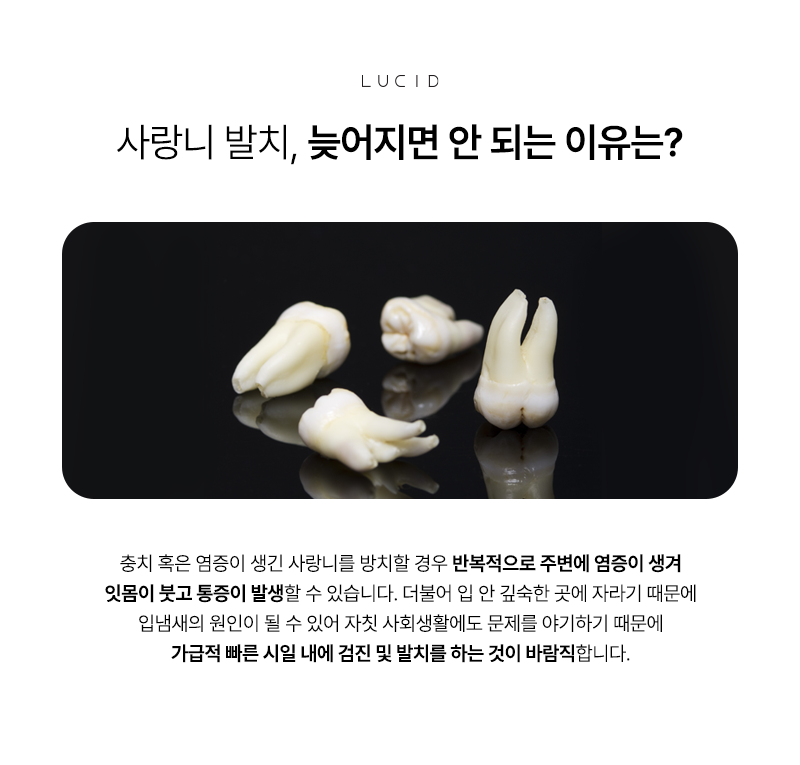
Why Wisdom Tooth Extraction Should Be Considered Carefully
Wisdom teeth are not teeth that must always be removed.
If they grow normally and harmonize well with the other teeth, there is no need to extract them.
However, the problem is that wisdom teeth that grow without issues are rarer than expected.
Even when they erupt straight, they are so far back that brushing is difficult, and their structure makes it easy for cavities or gum inflammation to develop.
In particular, if space forms around a wisdom tooth, food can get trapped, bacteria can multiply, and this may lead to acute inflammation, infection in the jawbone, or even damage to the neighboring molars.
For this reason, when to remove a wisdom tooth is very important, and it is advisable to decide whether extraction is needed through regular checkups.
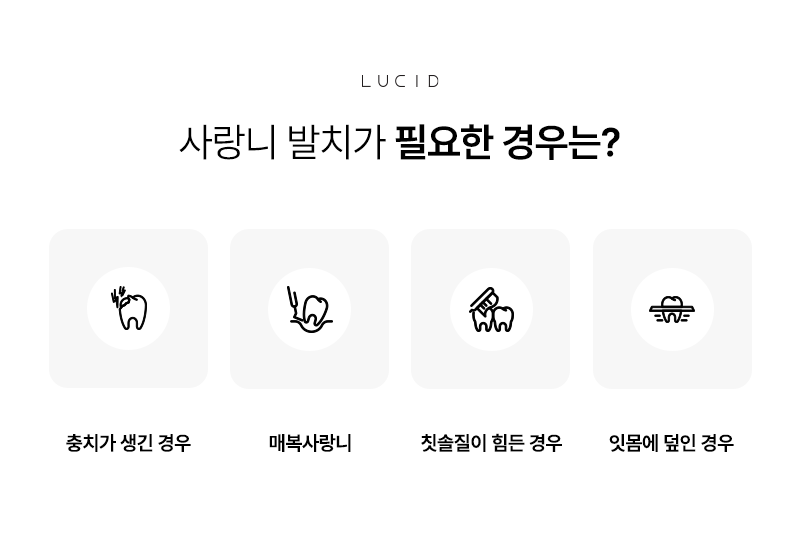
When Wisdom Tooth Extraction Is Needed
▪ When a wisdom tooth is tilted and pushing against an adjacent tooth
▪ When an impacted tooth irritates the gum or causes inflammation
▪ When symptoms such as pain, swelling, or pus repeatedly occur around the wisdom tooth
▪ When oral hygiene management is difficult and food frequently gets trapped
▪ When a wisdom tooth interferes with space before orthodontic treatment
In addition, there are cases accompanied by temporomandibular joint pain, headaches, or facial pain, and it is essential to accurately determine the current condition through X-rays and CT scans before deciding whether extraction is necessary.
Wisdom Tooth Self-Diagnosis Test
Check the items below that apply to you.
If three or more apply, it is a good idea to get examined at a nearby Gangnam dental clinic.
▪ Recently, I have felt discomfort, swelling, or a foreign-body sensation behind my molars.
▪ My jaw feels stiff, or I feel a 'pulling sensation' when opening my mouth.
▪ When brushing, I do not feel like I can reach the very back of my molars, and food sometimes gets stuck.
▪ When opening my mouth, I feel a sharp sensation, or the back part feels uncomfortable when chewing.
▪ I am considering orthodontic treatment or treatment related to temporomandibular joint pain.
Why Wisdom Tooth Extraction Should Not Be Delayed
The longer wisdom tooth removal is postponed, the more firmly it can attach to the bone, which can make extraction more difficult and lengthen the recovery period.
Also, if inflammation keeps recurring, it can affect the surrounding tissue and nerves, making treatment more complicated than a simple extraction. In particular, lower wisdom teeth are located close to the inferior alveolar nerve, so early examination is essential.
If the tooth is too close to the nerve, planning and approach before extraction become more important than the extraction itself, so it is safer to proceed with careful review and at a dental clinic with extensive experience.
For Those Worried About Pain
Conscious Sedation
The biggest reason people fear wisdom tooth extraction is the thought that it might hurt.
At Lucid Dental Clinic, we also provide guidance on conscious sedation for such patients.
Unlike sleep anesthesia, this method is a medication-based sedation technique that helps patients receive treatment comfortably while remaining conscious.
▪ For people with dental phobia
▪ For people who had a bad previous extraction experience
▪ For people who feel too tense to focus on treatment
It is recommended for these patients, and during the procedure, memory may become hazy or tension may be eased, allowing for a more stable extraction.
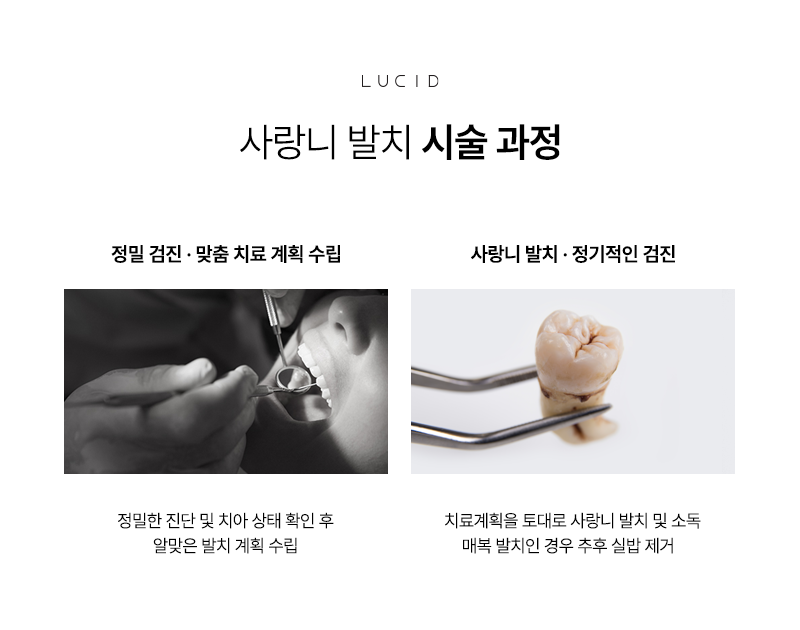
Wisdom Tooth Extraction Procedure
- Detailed examination and customized plan creation
▪ Through 3D CT imaging, the position of the wisdom tooth, its distance from the nerve, root direction, and other factors are analyzed in detail.
▪ The extraction timing and method are planned by considering the patient’s oral condition and medical history.
▪ For high-risk wisdom teeth, simulated nerve analysis is used to review procedural risks in advance.
- Wisdom tooth extraction and regular checkups
▪ Extraction is performed under local anesthesia or conscious sedation, and may involve simple extraction or extraction after gum incision.
▪ After extraction, patients are guided on taking prescribed recovery medication, hemostasis, and using cold compresses, and lifestyle precautions are provided to help prevent side effects.
▪ At a later point, regular checkups are used to assess recovery and whether there is inflammation in the surrounding tissue. Additional treatment is provided if needed.
Why Is 'Experience' Important for Wisdom Tooth Extraction?
Wisdom tooth extraction is not simply 'pulling out a tooth.'
The distance from the nerve, gum thickness, number of roots, and how tightly the tooth is attached to the bone all affect the difficulty of extraction.
Experienced medical staff are better able to respond to various wisdom tooth shapes and can minimize predictable problems, which may also lead to faster recovery.
In particular, for complex cases such as impacted wisdom teeth, clinical skill is important in reducing the risk of tooth damage or nerve injury.
Wisdom teeth can grow quietly and then suddenly cause pain or swelling one day.
If they are left alone with the thought, 'It’s not hurting yet, so it must be fine,' inflammation may spread or sudden pain may require emergency extraction at an unexpected time.
The most ideal way to manage them is to check the position and condition of the wisdom teeth through regular oral examinations and proceed with extraction at the appropriate time if needed.
Lucid Dental Clinic helps each patient receive wisdom tooth treatment that suits them best through precise diagnosis and a careful treatment plan.
If you have been feeling discomfort, now is the time to check your wisdom teeth.
Take the first step toward oral health with Lucid Dental Clinic.
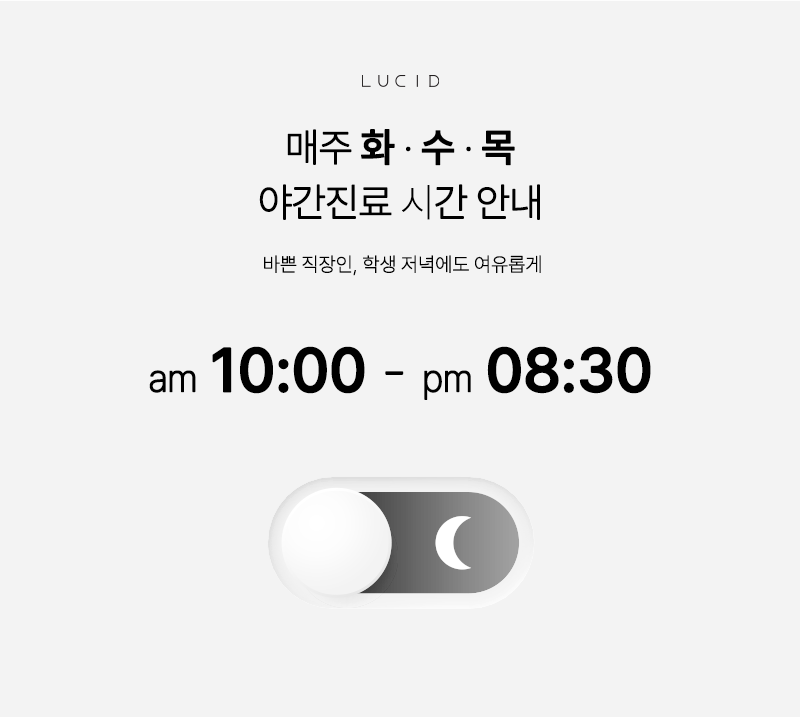
Lucid Dental Clinic
3rd–4th Floors, Coway Building, 606 Nonhyeon-ro, Gangnam-gu, Seoul