
Hello. This is Lucid Dental Clinic.
If you’ve been going about your day without any particular symptoms, then suddenly your tooth
starts to feel sensitive, anyone would feel startled.
But if you look closely, that pain
may already be a sign that the cavity has progressed quite a bit.
Cavities are a condition that can be detected early and prevented. But in a busy daily routine,
tooth care is often neglected, making it easy to miss the right time for treatment.
Today, we’ll systematically guide you from the causes of cavities to prevention methods you can
practice in daily life, and even treatment options to consider if a cavity does develop.

When do cavities tend to form?
Cavities form more easily in certain situations or habits.
For example, if you often snack or frequently drink beverages,
your mouth is constantly exposed to sugar, which naturally makes bacterial activity more active.
Did you know that what’s more dangerous than eating a lot of sweets
is keeping your mouth in a sugary state for a long time?
Also, people who sleep with their mouth open or who habitually breathe through their mouth
are more vulnerable to cavities because the mouth becomes dry and the protective action of saliva weakens.
Saliva neutralizes acidity in the mouth and washes away bacteria.
When this function declines, the likelihood of cavities progressing increases.
Meanwhile, if you are undergoing orthodontic treatment or using prosthetics, there can be areas
that are hard for a toothbrush to reach, so cavities may begin unnoticed.
For these people, additional care is essential beyond ordinary brushing.
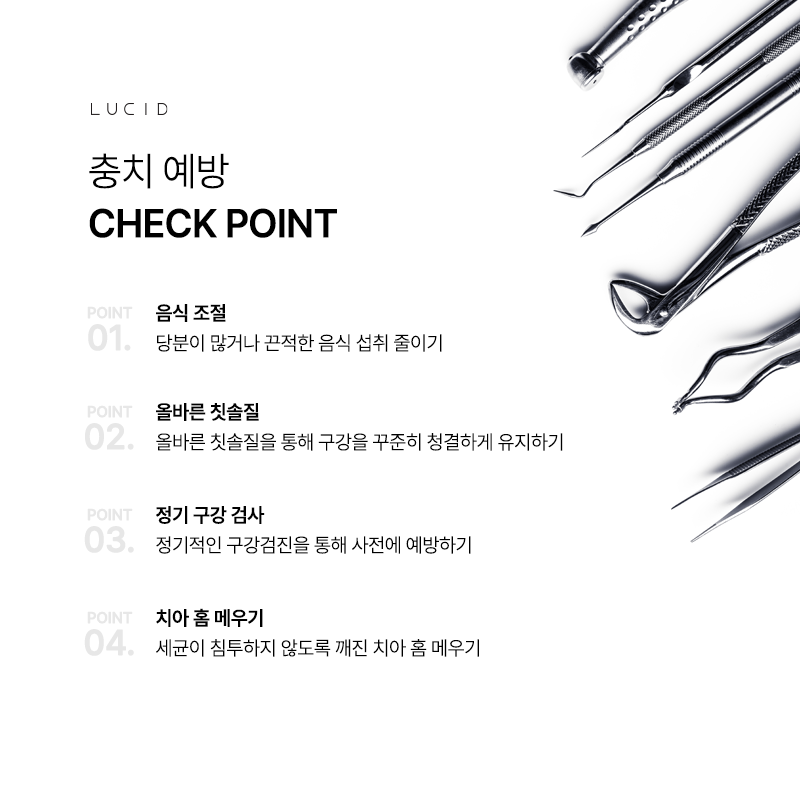
Cavity prevention check points
To prevent cavities, habits are the most important factor.
Check the items below and assess your oral health.
▪ Are you brushing 2–3 times a day within 3 minutes after meals?
▪ Do you always rinse with water after eating sweets or drinking sweet beverages?
▪ Are you getting scaling or a dental checkup every 6 months?
▪ Are you cleaning the hard-to-reach molar areas thoroughly as well?
Every small habit is a key part of cavity prevention.
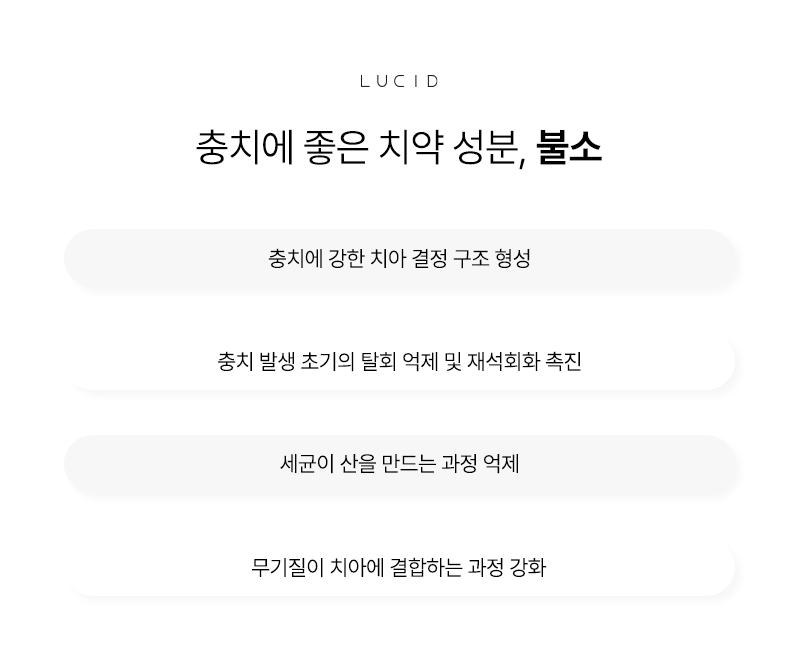
An effective ingredient for cavity prevention, 'fluoride'
When choosing a toothpaste to help prevent cavities,
it’s a good idea to check whether it contains fluoride.
Fluoride makes the tooth surface harder
and increases resistance to acids produced by bacteria.
If you have early cavities, fluoride can help with remineralization
and may slow the progression of decay.
However, if the fluoride content is too high, it can be harmful,
so for adults, toothpaste with about 1000–1450 ppm is recommended.
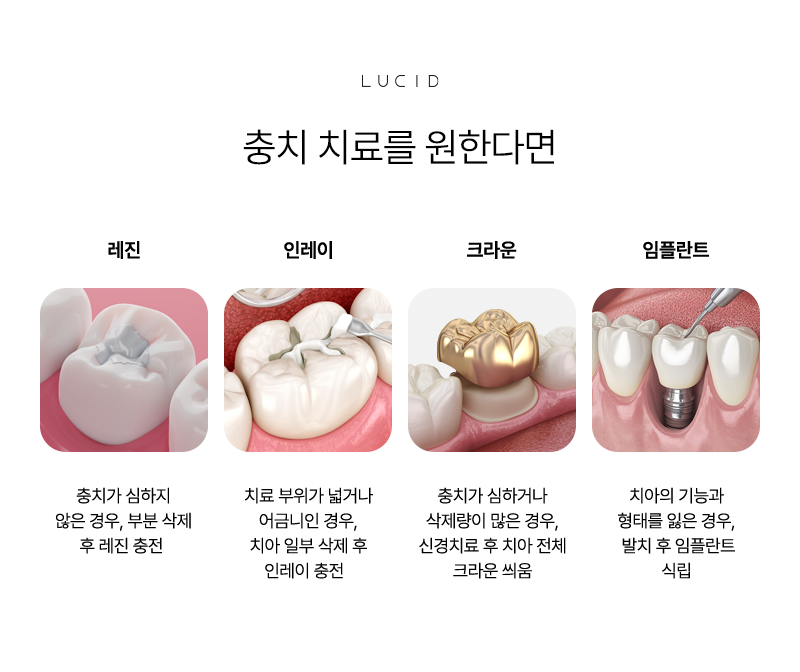
If a cavity develops? Treatment summary
When a cavity develops, the treatment method varies depending on the condition.
After an accurate diagnosis, it is important to receive treatment
that matches the condition of the tooth.
▪ Resin treatment
For an early cavity, the decayed area is removed minimally
and the space is filled with resin.
Because it is similar in color to the tooth, it offers good aesthetics and is often completed relatively simply.
▪ Inlay treatment
This is used when the cavity has progressed to a moderate level.
After removing the inside of the tooth, an impression is taken to fabricate a custom prosthetic,
which is then attached. It is harder than resin and can last longer.
▪ Crown treatment
When the cavity has affected more than half of the tooth,
a prosthetic that covers the entire tooth is placed.
This method removes and protects the existing tooth,
and is also suitable for molars that endure strong chewing forces.
▪ Implant treatment
When the tooth can no longer be saved because of decay,
this is a method of placing an artificial tooth after extraction.
It provides chewing force similar to natural teeth
and is also aesthetically excellent.
However, because surgery is required and there is a recovery period,
careful consultation and preparation are necessary.
Preventing cavities is much easier than treating them.
Daily brushing habits, regular checkups, and even choosing
fluoride toothpaste—each small action is the first step toward healthy teeth.
At Lucid Dental Clinic, we carefully manage our patients’ oral health
through personalized consultations and treatment for cavity prevention.
Even for a small pain,
don’t put it off,
and we recommend getting it checked quickly.
We hope you can smile brighter every day with healthy teeth.

Lucid Dental Clinic
3rd–4th Floors, Coway Building, 606 Nonhyeon-ro, Gangnam-gu, Seoul