
Hello, this is Lucid Dental Clinic.
A mouth that feels dry and sticky,
may not simply be a matter of not drinking enough water.
If speaking or swallowing food feels especially uncomfortable,
and the dryness in your mouth continues,
it may be necessary to suspect dry mouth syndrome.
This may be a sign that the balance of the oral environment has been disrupted,
rather than just a temporary symptom.
In this post, we will look at the background of dry mouth syndrome,
along with self-check methods, prevention tips,
and professional management methods, one by one.
If your oral health feels uncomfortable,
let’s check it together from now on!
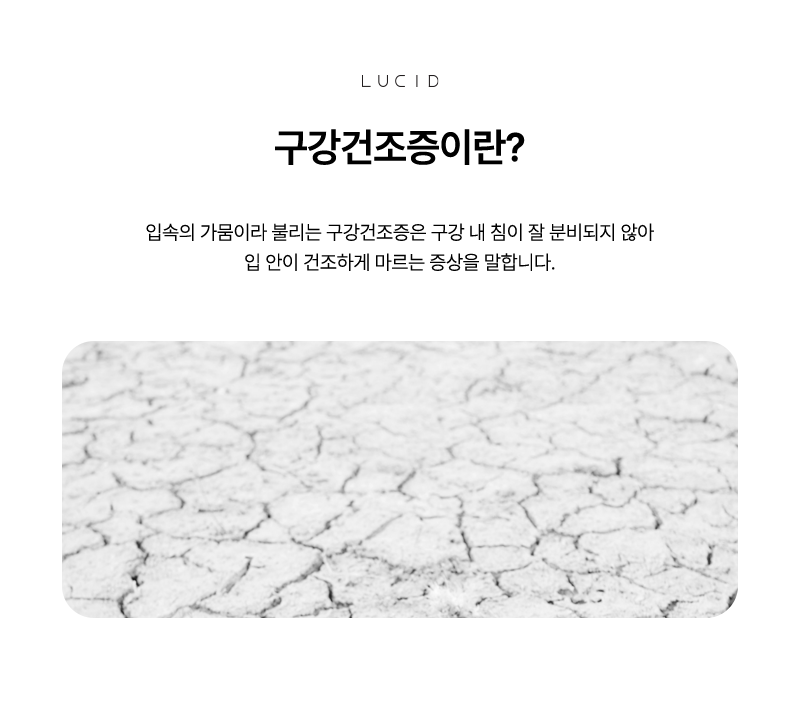
What Is Dry Mouth Syndrome?
Dry mouth syndrome is a symptom in which there is not enough saliva in the mouth,
and it can occur for various reasons such as reduced salivary gland function,
a physical illness, or taking medication.
Medically, it refers to a condition in which the amount of saliva secreted in the mouth is reduced,
or the viscosity of saliva increases, reducing its function.
Unlike simple temporary dryness,
if left untreated for a long time, it can lead to various problems such as cavities, oral inflammation, gum disease,
bad breath, and difficulty eating.
Main Causes of Dry Mouth Syndrome
Dry mouth syndrome can appear for a number of reasons.
Typical examples include the following.
Medication
Some medications, such as blood pressure medications, antidepressants, and antihistamines,
can reduce saliva production.
Hormonal Changes
In particular, women in menopause may experience reduced saliva production due to hormonal changes.
Stress and Tension
Due to the influence of the autonomic nervous system, severe stress can reduce saliva production.
Systemic Diseases
Diabetes, Sjögren’s syndrome, and rheumatic diseases are also
associated with reduced salivary gland function.
Smoking and Alcohol
They can suppress saliva secretion and irritate the mucous membranes,
which may worsen symptoms.
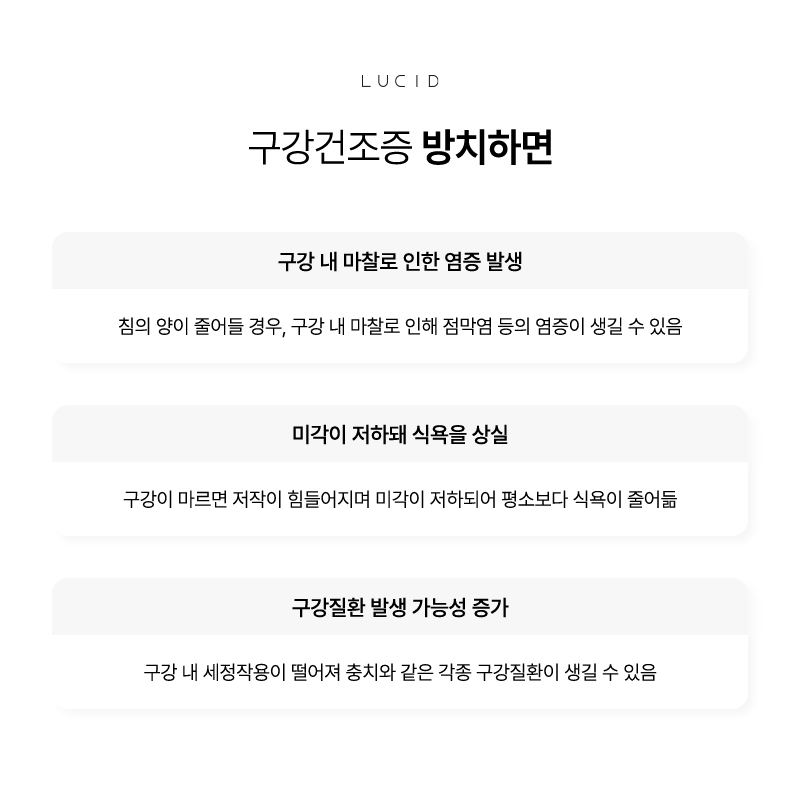
Problems That Can Happen If Dry Mouth Syndrome Is Left Untreated
Dry mouth syndrome can go beyond simple discomfort
and affect overall oral health.
Increased Risk of Cavities
Saliva neutralizes acidity in the mouth and helps suppress bacterial growth,
so if there is not enough saliva, cavities can develop more easily.
Gum Disease
If bacteria are not washed away properly,
it can lead to gum inflammation.
Bad Breath
When there is not enough saliva, bad breath tends to become more noticeable.
Difficulty Eating
Because the mouth is dry, you may feel discomfort when chewing and swallowing food.
Mouth Pain and Infection
A dry and weakened mouth can become easily infected even with small wounds.
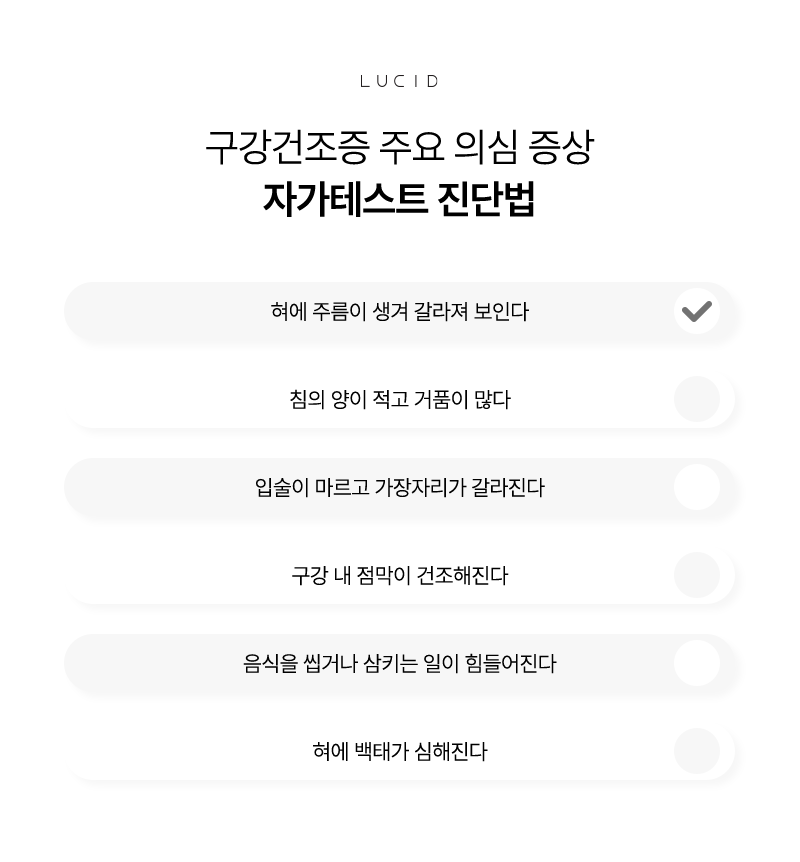
If You Have These Symptoms? Self-Check Test
▪ My mouth often feels dry
▪ My lips often crack or get flaky
▪ My tongue often feels irritated or cracked
▪ I have difficulty swallowing food without water
▪ I often notice bad breath
▪ My mouth often feels dry when I speak
▪ My mouth is extremely dry when I wake up in the morning
If you have two or more of these symptoms, it is a good idea to receive a detailed consultation at a Gangnam dental clinic.
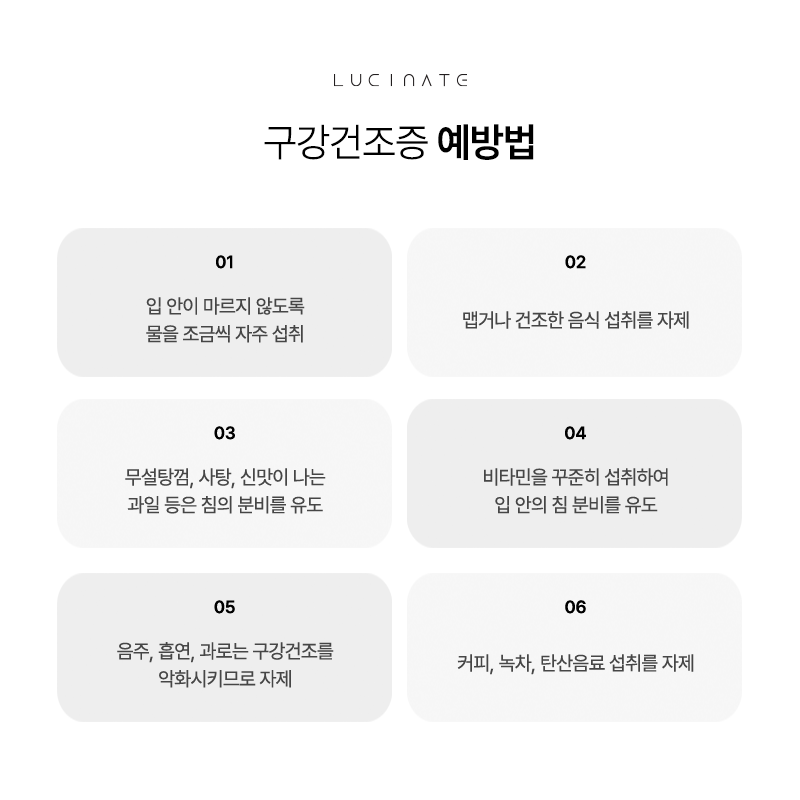
How to Prevent Dry Mouth Syndrome
There are also many preventive measures you can practice in daily life.
Try to keep up with small habits consistently.
Drink Enough Water
It is best to drink about 1.5 to 2 liters of water a day, often and in small amounts.
Reduce Caffeine
Coffee, green tea, energy drinks, and similar beverages can cause dehydration.
Avoid Alcohol and Smoking
They can irritate the oral mucosa and reduce salivary gland function.
Use Gum or Sugar-Free Candy
Chewing activity helps stimulate saliva production.
Breathe Through Your Nose Rather Than Your Mouth
Breathing through your mouth can worsen dryness,
so try to develop the habit of nasal breathing.
Use a Humidifier
It is best to keep indoor humidity at around 40–60%.
Ways Gangnam Dental Clinic Can Help
If it goes beyond simple discomfort and becomes bothersome in daily life,
professional care is needed.
At the dental clinic, we can help in various ways.
Dry Mouth Syndrome Diagnosis and Consultation
An accurate diagnosis is possible through saliva flow measurement and analysis of the oral condition.
Guidance on Using Artificial Saliva or Moisturizers
Products that help mimic saliva function can reduce discomfort.
Guidance on Salivary Gland Massage
There are also methods that stimulate specific areas to encourage saliva secretion.
Stimulation Treatment Inside the Mouth
If needed, stimulation devices or treatment techniques can help restore salivary gland function.
Treatment of Oral Inflammation or Diseases
If there is accompanying inflammation, appropriate treatment must be carried out together for symptoms to improve.
If the symptom of a dry mouth continues, please remember that it should not simply be dismissed as a temporary phenomenon,
because it may be a warning sign for oral health.
With proper early management, you can greatly reduce the inconvenience in daily life.
At Lucid Dental Clinic, we provide various methods to help relieve dry mouth syndrome through customized care tailored to each patient’s condition.
If your mouth feels dry and uncomfortable, feel free to seek professional consultation at any time.
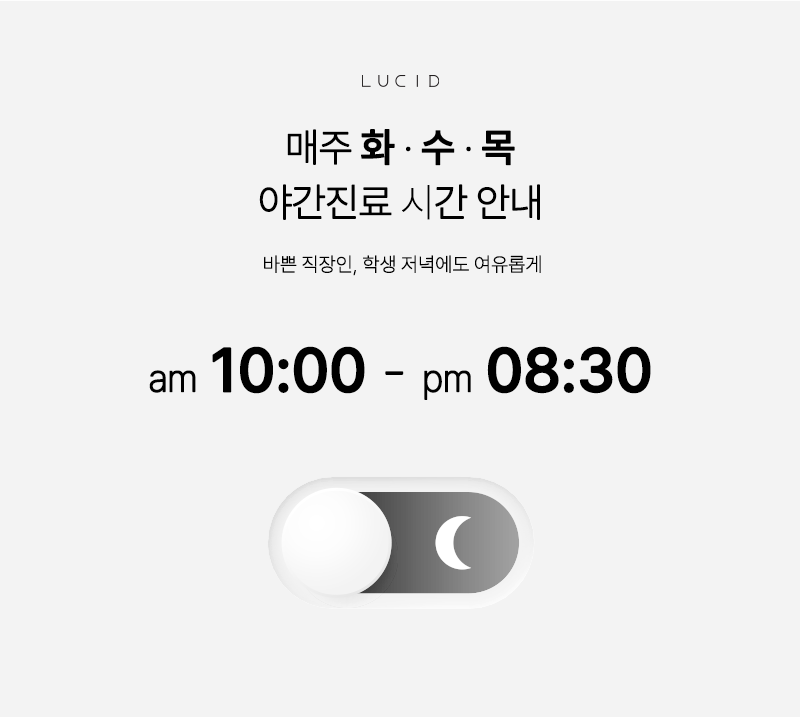
Lucid Dental Clinic
3rd–4th Floors, Coway Building, 606 Nonhyeon-ro, Gangnam-gu, Seoul