Hello. This is Lucid Dental Clinic.
Have you been thinking about visiting a Yeoksam-dong dentist because your tooth has been throbbing or giving you a sharp, stinging pain lately?
Because of busy work schedules, many people keep putting off a visit to a Yeoksam-dong dentist and only start looking it up online when the pain gets worse.
Today, we’ll easily organize only the essential information about root canal treatment, which is often discussed in situations like this.
"Do I really need treatment?"
If you’ve been wondering that, reading through to the end may help.
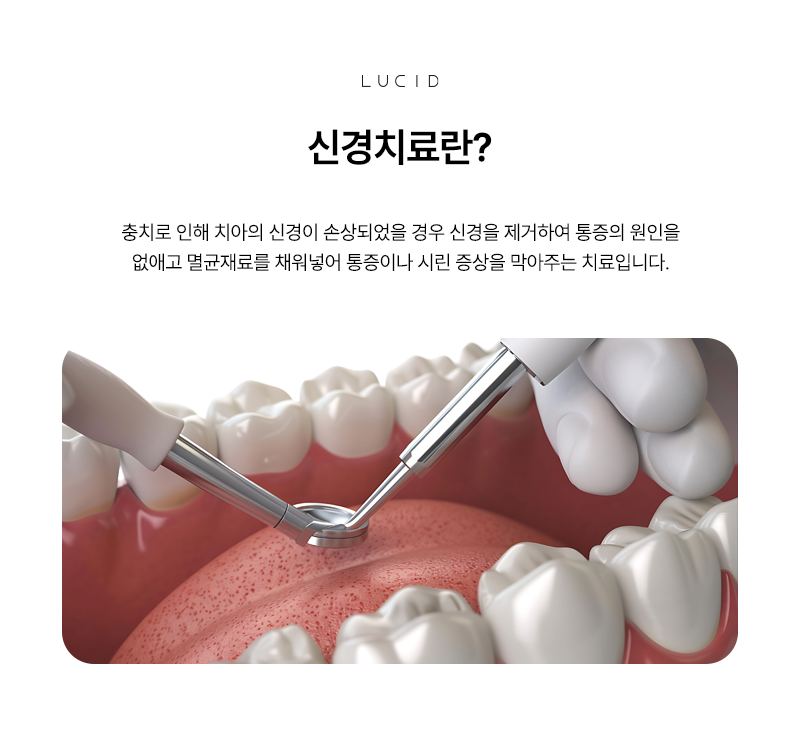
What is root canal treatment?
Root canal treatment is performed when the nerve tissue inside a tooth is damaged or becomes inflamed.
When tooth decay gets deep or the nerve inside the tooth becomes infected due to external impact, pain occurs.
If this condition is left untreated, the pain can become worse and may eventually lead to a situation where the entire tooth has to be extracted.
Root canal treatment is a procedure that helps prevent this, removes the painful nerve, and keeps the tooth as healthy as possible.
In simple terms, you can think of it as a process that preserves the root of the tooth while removing the source of pain.
Because it is an important treatment that helps you keep your natural tooth for a long time,
receiving it at the right time is very important.
When is root canal treatment needed?
▪ When the tooth reacts sensitively to cold or hot food and drinks
▪ When you feel a sharp pain or discomfort while chewing
▪ When there is a persistent throbbing sensation even when you are doing nothing
▪ When deep decay has spread to the nerve
Especially when it starts out bearable but suddenly becomes so painful that you can’t even sleep at night, root canal treatment is often necessary.
If you leave it untreated until then, the treatment may become more complicated.
Is root canal treatment really necessary?
If it hurts, don’t hold it in—visiting a Yeoksam-dong dentist for a diagnosis first is the best option.
If it is a mild cavity, simple treatment may be possible, but if inflammation has already spread to the nerve,
it is difficult to relieve the pain without root canal treatment.
Busy office workers, in particular, often find it hard to make time during the week, so they tend to put it off even more.
In the end, once the pain becomes severe, you may have to receive emergency treatment,
which can be more inconvenient and take more time.
Just getting an early diagnosis can significantly reduce the treatment period and number of visits.
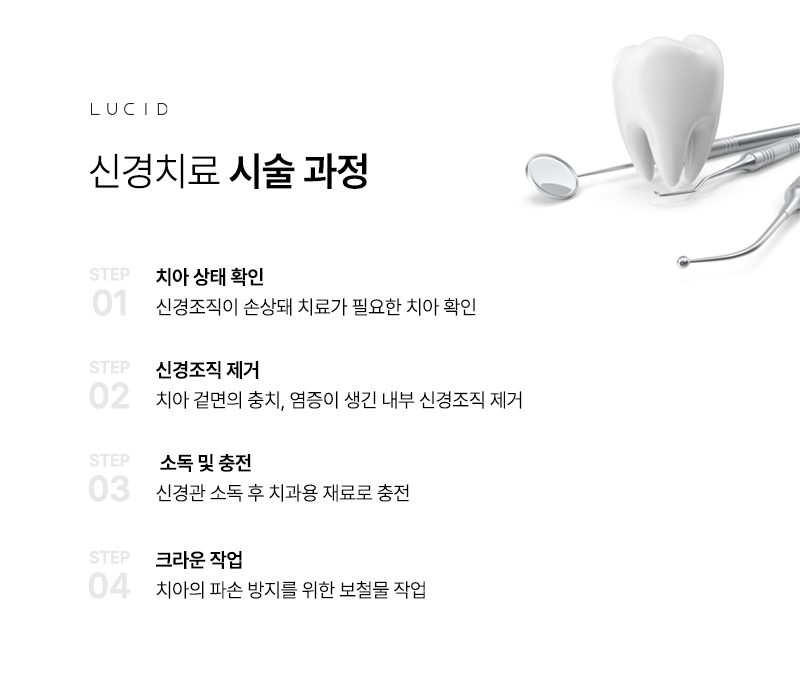
Root canal treatment procedure
- Check the condition of the tooth
Through detailed imaging and diagnosis, the tooth with damaged nerve tissue is identified.
- Remove the nerve tissue
After removing the decay on the tooth surface,
the inflamed internal nerve tissue is removed.
- Disinfection and filling
After the root canal is thoroughly disinfected,
it is filled with special material to prevent bacteria from entering.
- Crown work
Because the tooth becomes weaker, a crown is placed for protection to prevent fracture.
It is usually completed in an average of 2 to 3 visits,
but this may vary depending on the situation.
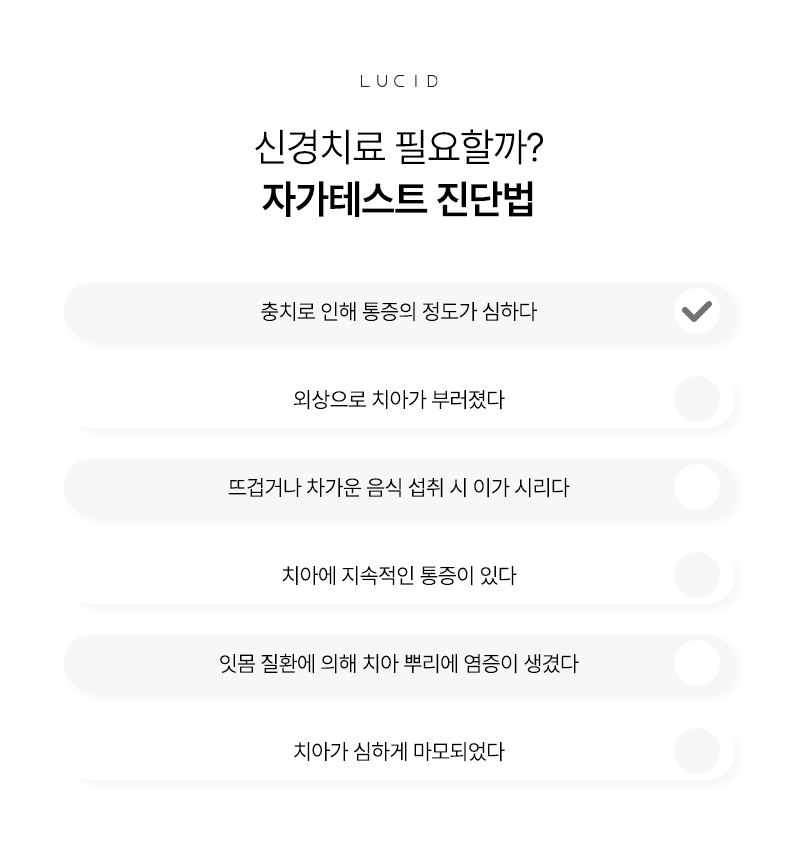
Self-check test for root canal treatment
If any of the items below apply to you, make sure to get examined at a Yeoksam-dong dentist.
▪ A sharp pain persists when drinking cold water.
▪ You feel discomfort or pain in the tooth when chewing food.
▪ Your tooth aches or throbs even when you are still.
▪ A tooth that was treated before has started hurting again.
Even if just one applies, we recommend getting it checked early.
Once a tooth hurts, it does not get better on its own.
Root canal treatment Q&A
Q. Is root canal treatment very painful?
A. Since it is performed under local anesthesia, there is not much need to worry about pain during the procedure. There may be some discomfort after the treatment, but most cases improve within a few days.
Q. How many times do I need to visit the clinic?
A. An average of about 2 to 3 visits is needed, but the number may vary depending on the condition of the tooth.
Q. Can I chew right after root canal treatment?
A. After the treatment is completed and the crown is also finished, you can eat normally. However, please avoid hard foods during the treatment process.
Q. Is a crown really necessary?
A. After root canal treatment, the tooth becomes weaker, so using it without a crown increases the risk of cracking or breaking. A crown is an important step in protecting the tooth.
Toothache often leads to more extensive treatment the longer you endure it.
If you’ve been delaying your visit to a Yeoksam-dong dentist because of a busy schedule,
now may be the earliest time to go.
At Lucid Dental Clinic, we help busy office workers receive care as efficiently as possible through accurate diagnosis and systematic treatment.
Don’t keep putting it off—please make sure to get it checked.
Before it hurts, or before it hurts even more.
Lucid Dental Clinic
3rd–4th Floor, Coway Building, 606 Nonhyeon-ro, Gangnam-gu, Seoul