

Hello. This is Lucid Dental Clinic.
You may have experienced the pain of a sore mouth that even makes it hard to swallow a single spoonful of rice.
A small pain you once brushed off as nothing can grow over time and, before you know it, cause major inconvenience in daily life.
That is what we’re talking about today: ‘oral ulcers.’
At first, you may think it is just a minor sore inside the mouth, but as the pain gradually worsens and keeps recurring, many people end up visiting a clinic.
Although it is a common condition that many people experience, it is surprisingly often overlooked.
Today, we’ll take a closer look at oral ulcers from a more practical perspective.
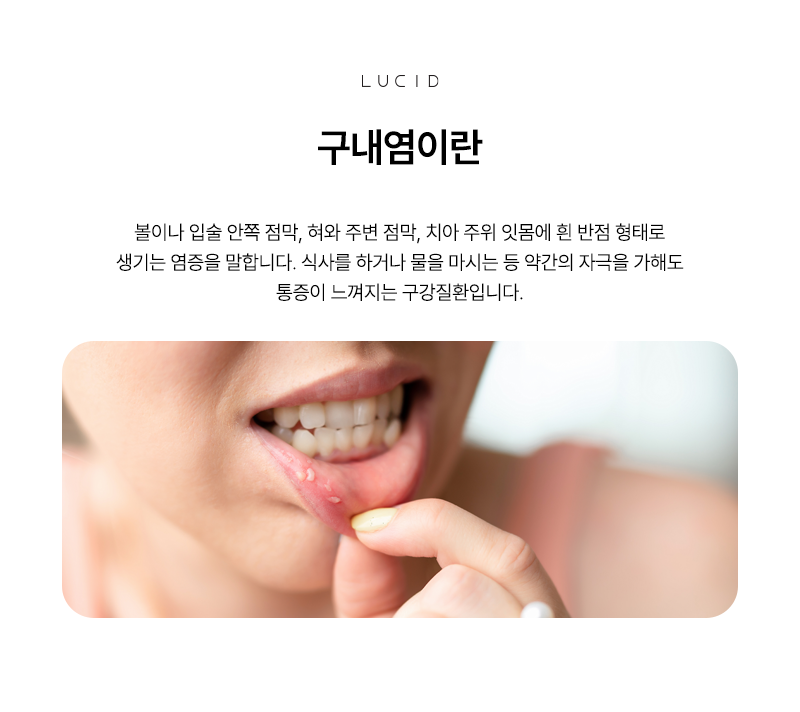
What Are Oral Ulcers?
Oral ulcers refer to inflammation of the mucous membrane inside the mouth.
They can occur anywhere, including the inside of the lips, tongue, gums, and roof of the mouth, and can range from a slight stinging pain to a condition so severe that eating or even speaking becomes difficult.
However, most people tend to think, ‘It’ll get better soon,’ and leave it alone, while the discomfort gradually increases.

Various Causes of Oral Ulcers
Oral ulcers can arise from surprisingly diverse causes.
Weakened immunity
They can easily develop when you are overworked or under a lot of stress.
Nutritional deficiencies
In particular, a lack of B vitamins, iron, and zinc can make oral ulcers more likely.
Poor oral hygiene
They can also occur when brushing is not done properly or when there is a lot of tartar and many factors that can trigger inflammation.
Physical irritation from teeth or dental appliances
They may occur when dentures, orthodontic appliances, or sharp teeth repeatedly irritate the mucous membrane.
Viral or fungal infection
They can be caused not only by fatigue but also by viral or fungal infections.
Because the causes are so varied, rather than simply dismissing them as ‘a sore,’ accurate diagnosis is necessary if they keep recurring.
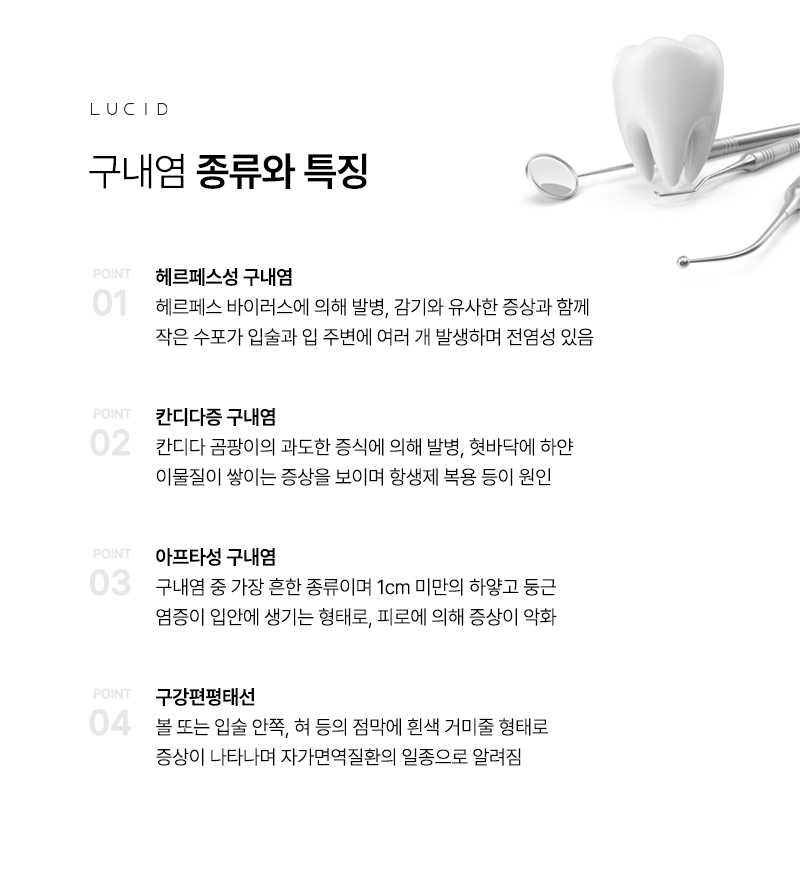
Types and Features of Oral Ulcers
Herpetic stomatitis
This mainly occurs in infants and young children, and it is an acute contagious disease caused by the herpes simplex virus. It is characterized by swollen gums, bleeding, fever, and the appearance of multiple small blisters.
Candidal stomatitis
A white film that looks like milk residue forms inside the mouth, and when wiped off, the underlying surface appears red and peeled. It commonly occurs when immunity is weakened, during long-term antibiotic use, and often in denture wearers as well.
Aphthous stomatitis
This is the most common type. Small white ulcers form in various parts of the mouth, surrounded by a red border. They can appear without any particular cause, but fatigue, stress, and hormonal changes have the greatest impact. They usually heal naturally within 1–2 weeks, but they recur and cause discomfort.
Oral lichen planus
This is thought to be a type of autoimmune disease. White, lace-like lines appear inside the mouth, and pain may accompany them. It can persist chronically, and in rare cases, a tissue biopsy may be necessary.

Everyday Ways to Prevent Oral Ulcers
Oral ulcers occur often and can subtly interfere with daily life. They cannot be completely prevented, but with good everyday habits, you can reduce the risk significantly.
Get enough sleep and rest
When fatigue accumulates, immunity drops sharply, and oral ulcers become more likely.
Get enough nutrients through a balanced diet
In particular, make sure to get enough vitamin B, iron, and zinc to support your immune system.
Keep the mouth clean
It is important to maintain a clean oral environment through brushing after meals, flossing, and using mouthwash.
Manage stress
Mental stress is also a major cause of weakened immunity. Try relieving stress with a light walk, meditation, hobbies, and other activities.
Avoid irritating foods
Spicy or salty foods can irritate the lining of the mouth. If you get oral ulcers often, dietary adjustments may also be necessary.
Treatment Methods for Oral Ulcers
Most oral ulcers heal naturally over time, but if the pain is severe or they recur, or if they interfere with daily life, professional treatment may be necessary.
Using medications to relieve symptoms
Pain relievers and anti-inflammatory ointments may be prescribed.
Treatment according to the cause
If it is fungal, antifungal agents may be used; if it is viral, antiviral agents may be needed. Appropriate treatment depends on the cause of the oral ulcer.
Strengthening oral hygiene
Keeping the mouth clean is also part of treatment, since poor oral hygiene can slow recovery. Brushing and using mouthwash can help maintain cleanliness.
If oral ulcers keep recurring, a medical examination is essential
Oral ulcers that keep coming back or last a long time once they appear may be related to autoimmune disease, gastrointestinal disease, or hormonal imbalance. It is best to get an accurate diagnosis.
If you brush off a slight stinging in the mouth as no big deal, it can lead to unexpectedly serious discomfort. That is what oral ulcers can do.
There is no need to worry if they happen once or twice, but if they recur often or heal slowly, we recommend consulting a specialist.
Lucid Dental Clinic carefully checks your oral health and, when necessary, helps provide an accurate diagnosis and guidance.
Do not overlook even small pain inside the mouth.
We will always be by your side so that your daily life can become more comfortable.

Lucid Dental Clinic
3rd–4th Floors, Coway Building, 606 Nonhyeon-ro, Gangnam-gu, Seoul