Hello. This is Lucid Dental Clinic.
Sometimes, you may have had an experience like this.
You brush diligently,
and you don’t have any particularly painful areas,
but when you go to the dentist,
you hear, “The cavity has progressed quite a bit.”
It can be surprising to find out you need treatment you didn’t expect,
and you may think, “Since when did I have a cavity?”
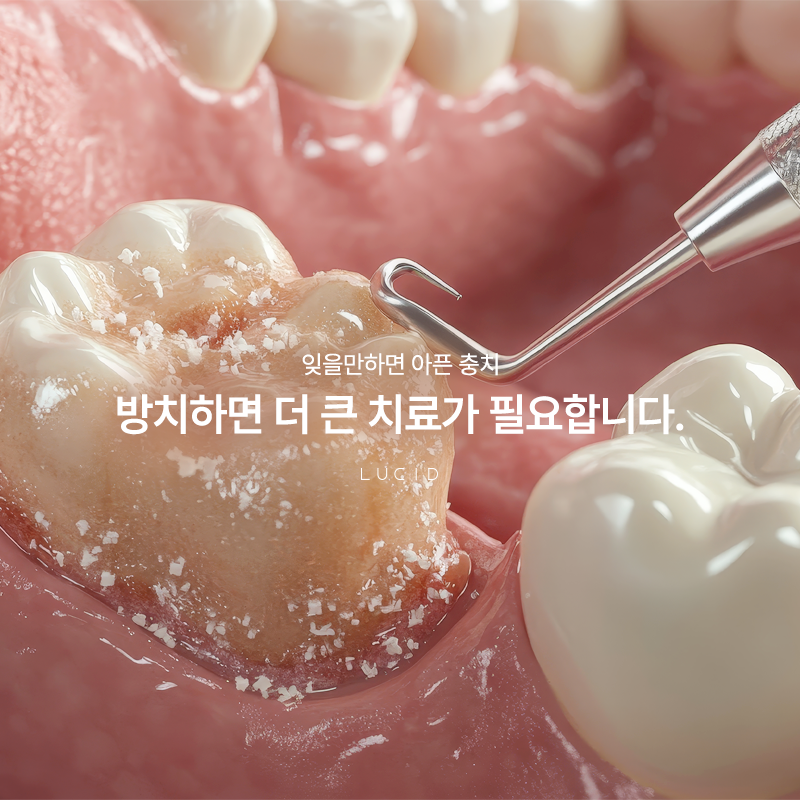
In fact, tooth decay is a condition that is difficult to notice on your own until pain appears.
It starts quietly in the gaps you can’t see,
and at some point it can spread to the nerve.
So today, we’d like to talk about the process
by which tooth decay progresses, what signs you should not miss,
and how you can manage it in everyday life.
What is tooth decay?
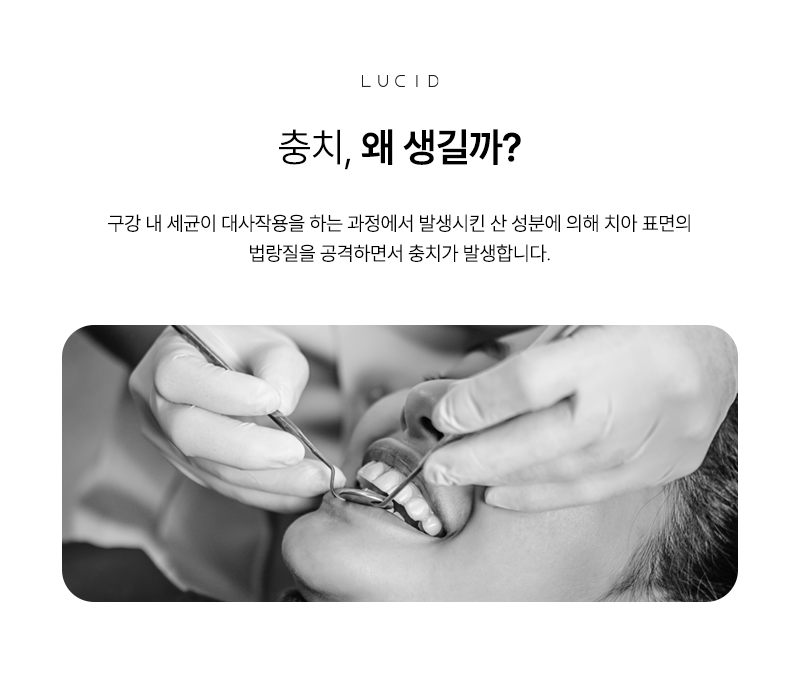
Tooth decay is a condition in which bacteria present in the mouth
break down sugars from food and produce “acid,”
and this acid slowly erodes the tooth surface.
It penetrates in the order of enamel → dentin → pulp,
causing pain or inflammation,
and in severe cases, it can lead to tooth loss.
Why does tooth decay occur?
There are various causes,
but habits like the following can easily lead to tooth decay.
Incomplete brushing
If you don’t properly clean between the teeth or in the grooves of the molars,
food debris and bacteria meet and cause cavities.
Frequent sugar intake
Chocolate, carbonated drinks, candy, and similar foods make the mouth
more acidic and help bacterial activity.
Frequent dry mouth
Saliva plays a role in neutralizing acidity in the mouth.
If you have dry mouth, your risk of developing cavities increases.
Skipping brushing after late-night snacks
If food is not cleaned away before bed,
bacteria become active throughout the night.
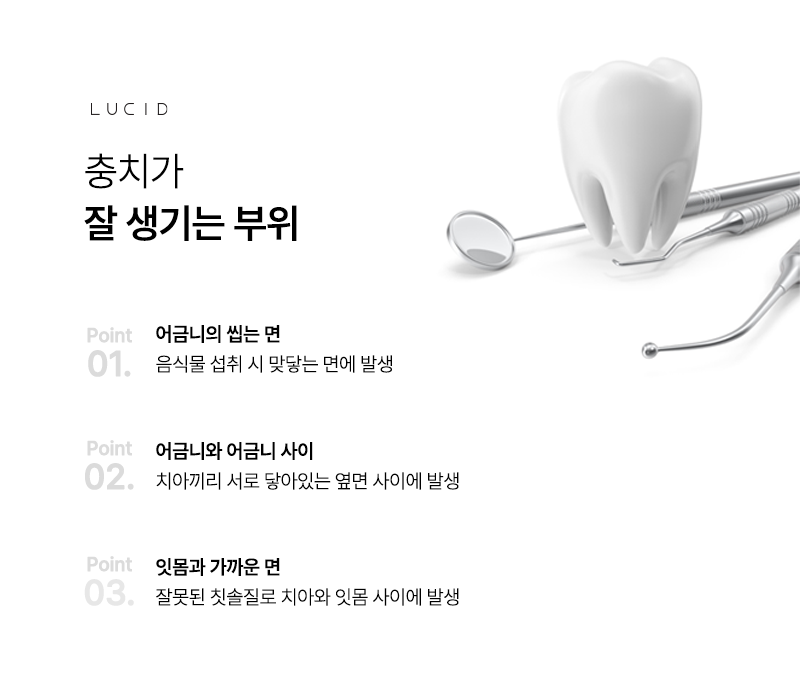
Cavities often develop in areas that are hard for a toothbrush to reach, such as below
▪️Molars and deep grooves
▪️Between teeth
▪️The boundary where the tooth meets the gum
▪️Around orthodontic appliances
In particular, extra care is needed around orthodontic treatment or wisdom teeth,
because they are more difficult to maintain.
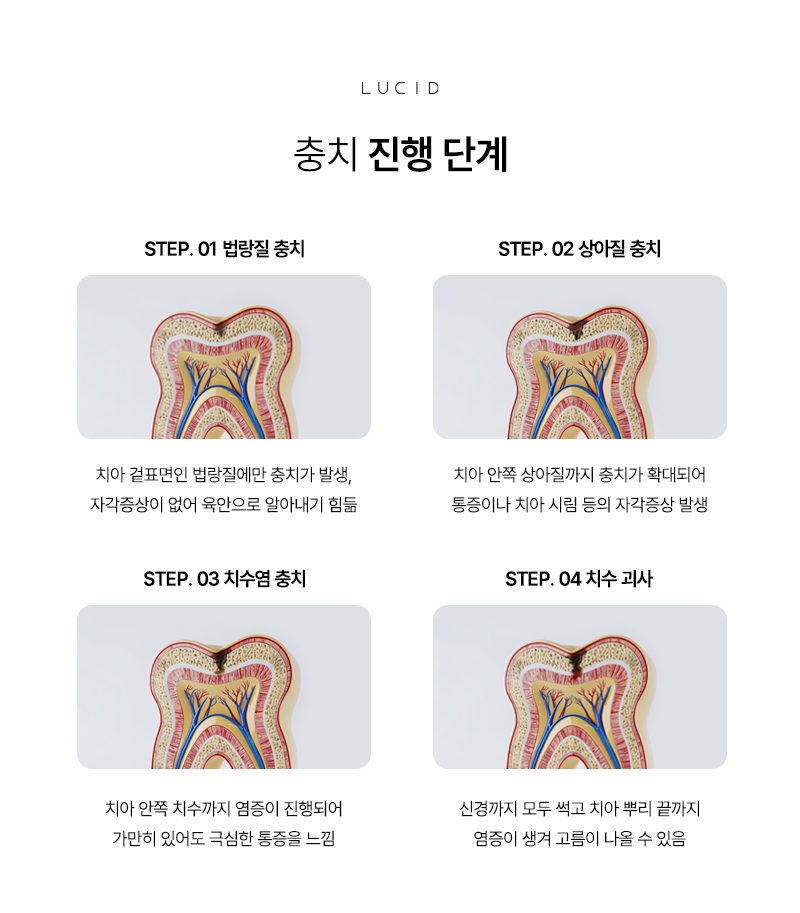
Stages of tooth decay
Tooth decay worsens step by step.
The symptoms also become more severe over time.
- Enamel cavity
A cavity limited to the enamel, the outermost layer of the tooth.
There are almost no noticeable symptoms,
but there may be white spots or slight discoloration.
- Dentin cavity
A condition in which decay has progressed to the dentin beneath the enamel.
You may feel sensitivity when eating something cold or sweet,
and the decayed area may become noticeable.
- Pulpitis cavity
The stage in which inflammation has occurred in the tooth nerve.
It may throb even when you are doing nothing,
and pain tends to become worse at night.
- Pulp necrosis
The nerve has become necrotic, pus has accumulated,
and the inflammation has spread to the root tip.
The pain can become severe enough to cause swollen gums or facial swelling.

Tooth decay treatment: when should you get it?
If you have the following symptoms,
there is a high possibility that tooth decay has started or is progressing.
Don’t brush it off lightly; be sure to get an examination at Lucid Dental Clinic.
▪️A black spot on the tooth, or a visible cavity starting to appear
▪️A dull ache when eating sweets
▪️Bleeding when brushing or an unpleasant odor
▪️Sudden tooth pain
▪️A foreign-body sensation or pressure when chewing food
▪️Sensitivity or throbbing in only a specific tooth
If these symptoms repeat,
it is possible that the decay has already progressed
to the dentin or even the pulp.
It is a good idea to visit Lucid Dental Clinic
to check your condition.
Let’s practice these cavity prevention methods!
- Brush thoroughly 2 to 4 times a day
Try to make a habit of brushing within 3 minutes after meals.
- Use dental floss or interdental brushes
These are helpful tools for keeping clean even between teeth
that a toothbrush cannot reach.
- Regular scaling and checkups
Through regular checkups at Lucid Dental Clinic once every 6 months to 1 year,
early cavities can be detected in advance.
- Reduce sugar intake
Avoid sugary snacks and drinks as much as possible,
and be sure to brush after eating them.
- Drink water often
This helps saliva production and lowers acidity in the mouth.
- Use fluoride toothpaste
Fluoride strengthens enamel and is effective in preventing cavities.
Tooth decay is a condition that is easy to dismiss as “It’s okay because it doesn’t hurt,”
but once it starts, it can worsen quickly
and is a serious disease.
Early detection is the best treatment and prevention.
Protect your dental health through careful oral care and regular checkups.
Lucid Dental Clinic always provides careful treatment
for your healthy smile.
Lucid Dental Clinic
3rd–4th floors, Coway Building, 606 Nonhyeon-ro, Gangnam-gu, Seoul