
Hello, this is Lucid Dental Clinic.
The moment you sit across from someone and have a conversation,
even if you try not to be conscious of it,
the most sensitive thing that may come to mind is 'bad breath.'
Bad breath may be considered merely a matter of manners,
but in fact, it can be a small health signal from our body.
Halitosis may be related not only to oral hygiene,
but also to overall health conditions,
so rather than overlooking it, it is important to understand the cause
and manage it properly.
In this article, we will walk you through the main causes and effects of halitosis,
self-check methods you can use on your own,
and practical management methods you can apply in daily life.

What is halitosis?
Halitosis refers to an unpleasant smell from the mouth.
It may occur temporarily, or it may persist repeatedly.
It may seem like a problem limited to the mouth,
but in some cases it can also be related to overall physical health,
so rather than brushing it off, it is important to identify the cause
and manage it appropriately.
Why shouldn't halitosis be left untreated?
▪️ Social discomfort: It can create distance in conversations and relationships, leading to psychological shrinking.
▪️ A sign of oral health problems: Early symptoms of gum disease, cavities, dry mouth, and similar conditions often appear as bad breath.
▪️ Connection with systemic disease: Bad breath may also accompany some symptoms of non-oral diseases such as reduced liver function, diabetes, and tonsil stones.

Various causes of halitosis
Causes within the mouth
▪️ Gum disease such as gingivitis or periodontitis
▪️ Bacterial growth caused by cavities
▪️ White coating on the tongue
▪️ Poor care of prosthetic appliances
▪️ Protein breakdown by bacteria in the mouth
Causes outside the mouth
▪️ Upper respiratory conditions such as rhinitis, sinusitis, and tonsillitis
▪️ Gastroesophageal reflux and digestive diseases
▪️ Reduced liver or kidney function
▪️ Metabolism after consuming certain foods (garlic, onions, etc.)
Smoking and drinking
▪️ Irritates and dries the oral mucosa, and increases volatile compounds that cause odor.
Medication use
▪️ Some medications reduce saliva secretion and cause dry mouth, which can lead to bad breath.

Simple self-check methods for bad breath
- Back-of-the-hand test
After washing your hand thoroughly, lick it and smell it after 10 seconds.
- Floss test
After using floss between your teeth, smelling it can help you guess whether gum disease may be present.
- Check for tongue coating
If you look at your tongue in the mirror in the morning and there is a lot of white or yellow coating, it may be related to bad breath.
Self-checking is for reference only, and for an accurate assessment,
a professional examination at Lucid Dental Clinic is recommended.
Major oral diseases associated with bad breath
▪️ Periodontal disease (gum disease): Bacterial activity becomes more active due to inflammation, causing bad breath
▪️ Cavities: Food debris and bacteria inside cavities cause bad breath
▪️ Dry mouth: Reduced self-cleansing action of saliva increases the possibility of bacterial growth
▪️ Tongue coating: Accumulation of bacteria and residue on the tongue surface
▪️ Other conditions: Residual food around prosthetic appliances and inflammation around wisdom teeth are also related.
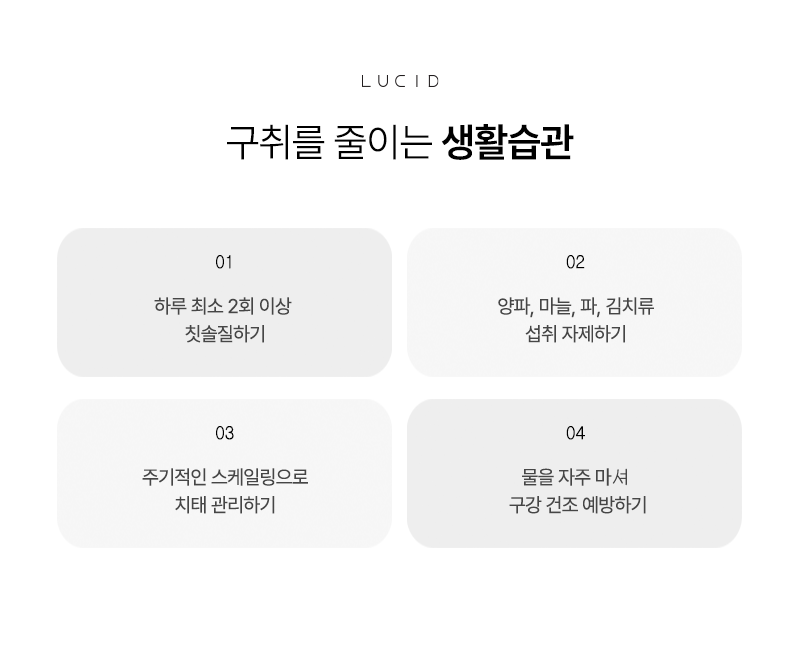
Lifestyle habits that help reduce bad breath
- Regular tooth brushing
Brush 2 to 3 times a day, and be especially thorough before going to bed.
- Use a tongue cleaner
Removing tongue coating from the surface of the tongue is effective for managing bad breath.
- Use floss and interdental brushes
Manage areas that a toothbrush cannot reach to prevent bacterial growth.
- Increase water intake
This helps saliva secretion and prevents dryness in the mouth.
- Regular oral checkups
This is a good way to identify the exact cause of bad breath and manage it early.
Bad breath can happen temporarily to anyone,
but if it keeps recurring, it is a good idea to check the cause.
Lucid Dental Clinic identifies various causes related to bad breath according to each patient's oral condition,
and through customized treatment helps maintain a more comfortable oral environment.
Even small changes in daily life can be enough to control bad breath.
If you've recently been concerned about your breath without realizing it,
why not take this article as the starting point for managing it now?
Lucid Dental Clinic
3rd–4th Floors, Coway Building, 606 Nonhyeon-ro, Gangnam-gu, Seoul