
�
Hello, this is Lucid Dental Clinic.
Our children use their teeth several times a day,
you all know how precious they are, right?
�
But when brushing habits get disrupted in a busy daily life,
or when they enjoy sweet foods often,
there is an unwelcome guest that quietly comes along.
�
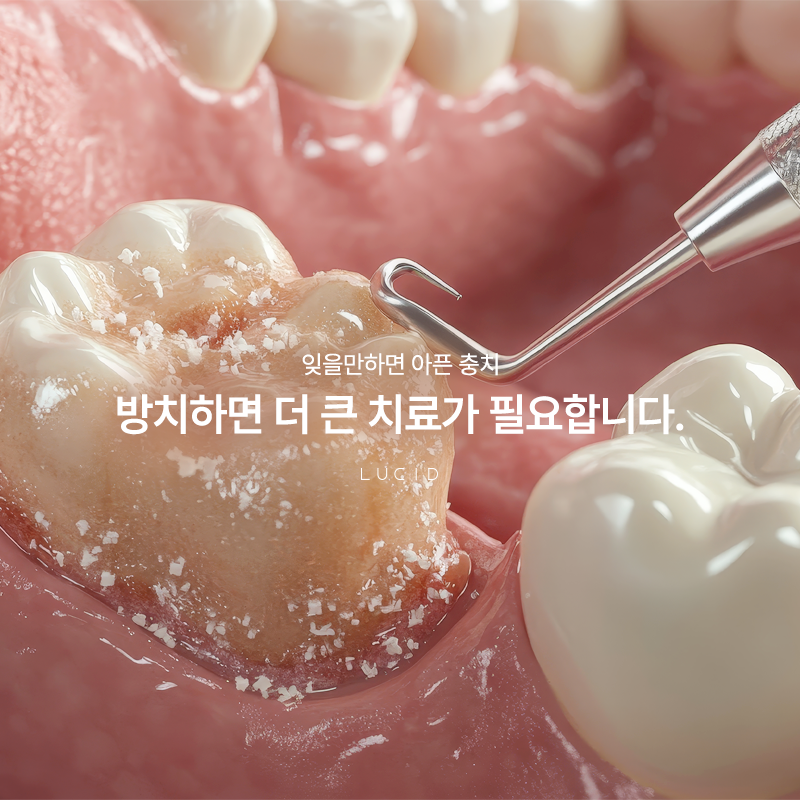
That is tooth decay.
�
Cavities are easy to overlook because they are not obvious on the outside,
but once they begin, they progress deeper and wider,
so it is really important to develop proper care habits
starting in elementary school.
�
Especially in the lower grades of elementary school,
there is a transitional period when baby teeth are being replaced by permanent teeth,
so if they are not properly cared for at this time,
permanent teeth that will be used for life can easily develop cavities.
�
Today, at Yeongdeungpo Station Dentist,
we will organize the information in an easy-to-understand way for both children and parents:
why cavities develop, which areas are prone to them, and how to prevent them.
�
Please read to the end so we can help protect our children's healthy smiles for a long time.
�
Why do cavities develop?
Cavities begin when acids produced as bacteria in the mouth break down the sugar in food gradually dissolve the teeth.
�
In particular, eating sweets, carbonated drinks, and snacks frequently without brushing well increases the likelihood of cavities.
Which areas are prone to cavities?
Cavities are a disease in which food debris and bacteria left on the tooth surface create acids that gradually corrode the hard outer layer of the tooth.
�
However, not every part of the tooth develops cavities equally.
�
Certain areas that are especially difficult to care for tend to develop cavities more easily.
�
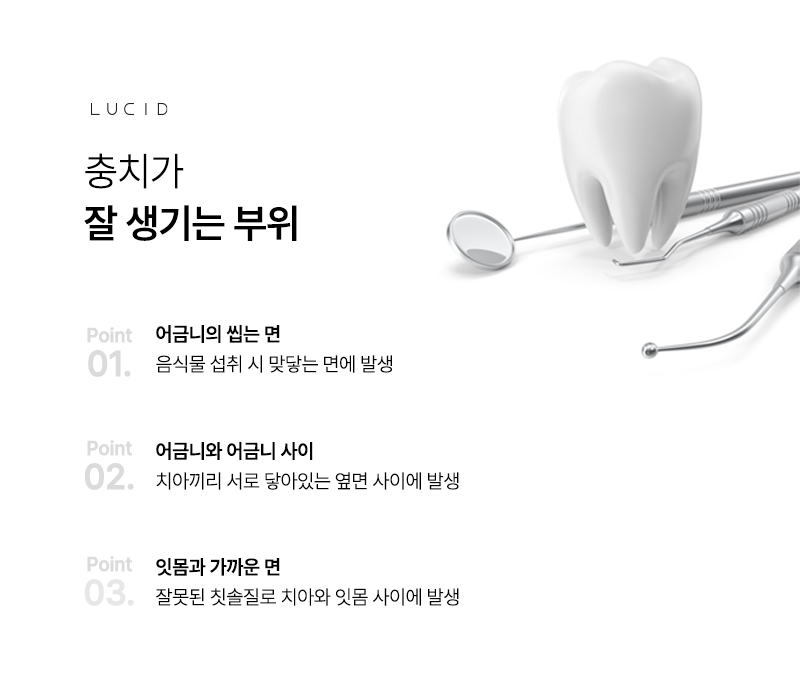
- Chewing surfaces of the molars
The surfaces of molars are not flat; they have many irregular grooves (pits and fissures).
�
These grooves are structured so that food easily gets stuck, and in many cases it is difficult to clean thoroughly even with a regular toothbrush.
�
Especially for children or younger kids whose hands are still not fully skilled, this area is often not cleaned properly,
so it is considered one of the main areas where cavities in children occur.
�
That is why dental clinics sometimes prevent cavities on the chewing surfaces of molars with sealant (fissure sealant) treatment.
�
- Between teeth
The space between two teeth may look fine from the outside, but inside, food debris and bacterial film can easily accumulate.
�
In addition, because it is a structure that toothbrush bristles have difficulty reaching directly, it is hard to manage with brushing alone,
and cavities can quietly progress in areas that are not visible.
�
To prevent this, it is essential to use dental floss or interdental brushes as a habit. Using them consistently every day helps prevent not only cavities but also gum disease.
�
- Between the teeth and gums
The boundary where the teeth and gums meet is also one of the high-risk areas where cavities often occur.
�
If the toothbrush bristles do not reach this area sufficiently while brushing, plaque can easily build up, and over time it can lead to gingivitis or cavities.
�
In particular, for people whose gums have slightly receded and the roots of the teeth have started to become exposed, this area is covered by dentin rather than enamel, making it more vulnerable to cavities. Therefore, when brushing, it is important to gently sweep along the gum line.
Stages and symptoms of cavities
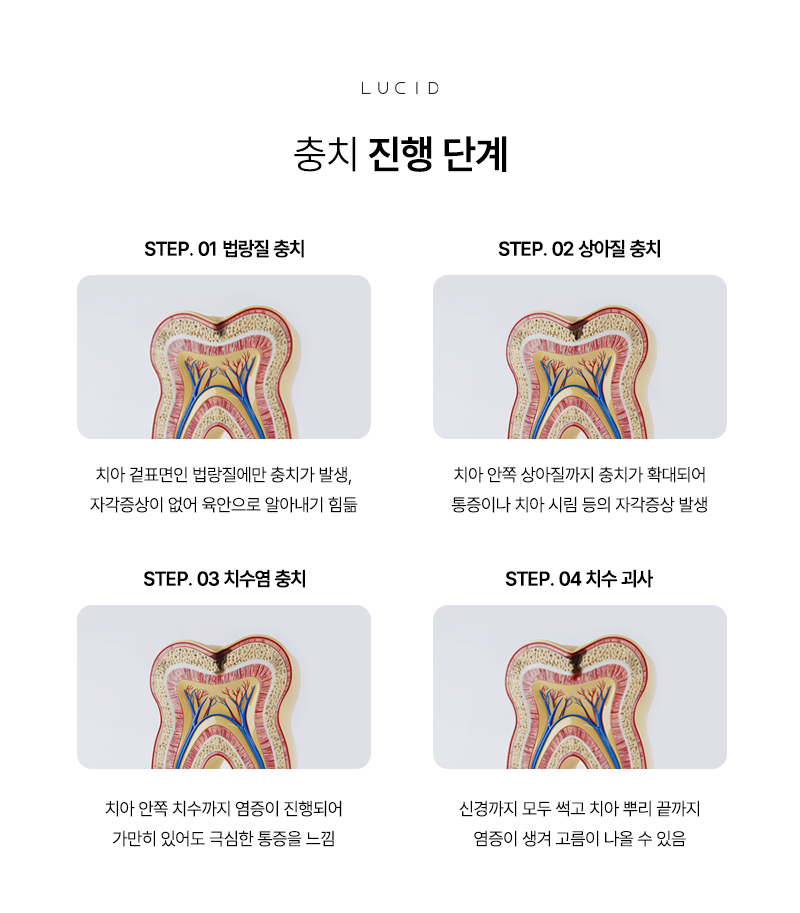
1st stage: Enamel damage
Not easily visible, no pain
�
2nd stage: Dentin involvement
Sensitivity when drinking cold water, occasional sharp pain
�
3rd stage: Progression to the nerve
Throbbing at night, persistent pain
�
4th stage: Pus and inflammation
Swollen gums, severe pain, pus formation

Why should cavity treatment not be delayed?
Because cavities progress slowly without being noticeable,
there is no pain in the early stages and they do not cause much inconvenience in daily life.
�
So many people end up thinking, "It should be okay," and postpone treatment,
but missing this timing can lead to bigger problems than expected.
�
Once cavities start, they do not stop and instead gradually dig deeper into the tooth. They are a progressive disease.
If caught early, they can be sufficiently treated with a simple procedure,
but if the timing for treatment is missed, they spread deeper and require more complex treatment.
�
For example, a cavity that has only damaged the surface can be completed in a short time with a simple material such as resin. But once the cavity reaches the nerve,
the pain becomes stronger, and treatment also involves a process such as root canal treatment that requires multiple visits.
�
In some cases, the tooth may not be savable and extraction may be necessary. The later the treatment, the greater the burden of visiting the dentist becomes, and the treatment time, number of visits, and cost all increase.
�
When you finally receive care only after reaching the point where it can no longer be delayed,
it can lead to fear of the treatment itself or stress.
�
Especially for children, if the treatment timing is missed, even a small cavity can lead to complex treatment, and the fear experienced during that process can remain as resistance to the dental clinic itself.
�
As a result, they often find it difficult to receive the treatment they need later on as well.
�
That is why the younger the child, the more important it is to receive treatment at Yeongdeungpo Station Dentist before pain develops.
It should also start with instilling a positive perception that the dentist is not a scary place, but a place that protects healthy teeth.
�
Cavity prevention management methods
Habits to keep every day
▪️ Use dental floss or interdental brushes, and a water flosser
▪️ Finish with mouthwash
�
Regular preventive care
▪️ Regular checkups every 6 months: cavities that are not visible can also be found early
▪️ Fluoride application: helps make teeth stronger
�
Dietary management
▪️ Eat sweets only occasionally, and if you do, brush right away
▪️ Sticky jellies, caramels, and snacks stay in the mouth for a long time, so be careful!
▪️ Drink plenty of water; if saliva secretion is smooth, bacteria have a harder time increasing
�
Your child's first cavity can be prevented in advance.
Because teeth cannot be restored once they are damaged,
rather than thinking, "I'll treat it later," the attitude of "Let's prevent it now!" is really important.
�
Especially in elementary school, it is often difficult to brush carefully.
�
That is why parental attention and help are needed.
�
From brushing habits to flossing and regular checkups,
these small forms of care come together to become the most powerful way to protect your child's healthy smile.
�
Lucid Dental Clinic creates a soft and friendly atmosphere so that pediatric patients can receive care comfortably without fear. We also provide treatment plans tailored to children's growth and development, so if you suspect a cavity or feel that care is needed, please feel free to visit us anytime.
�
Lucid Dental Clinic will be with you so that your child can keep smiling freely in the future.

Lucid Dental Clinic
3rd-4th Floors, Coway Building, 606 Nonhyeon-ro, Gangnam-gu, Seoul

�