Hello, this is Lucid Dental Clinic.
Everyone has probably experienced a time when a tooth felt sensitive or food got stuck and caused discomfort.
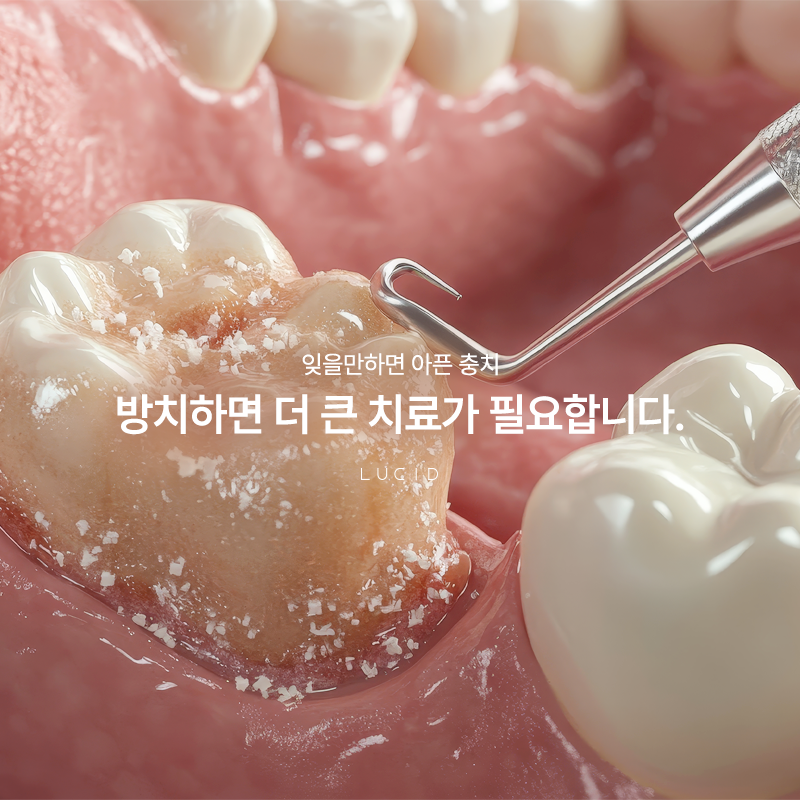
However, if you simply brush it off as minor discomfort and it develops into a cavity, treatment can take longer and the inconvenience in daily life can increase. A cavity is one of the conditions for which early detection and proper management are most important.
In this article, we will go over the concept of cavities, their causes, the areas where they commonly occur, self-check methods, the treatment process, preventive habits, and when you should seek a specialist consultation.
What is a cavity?
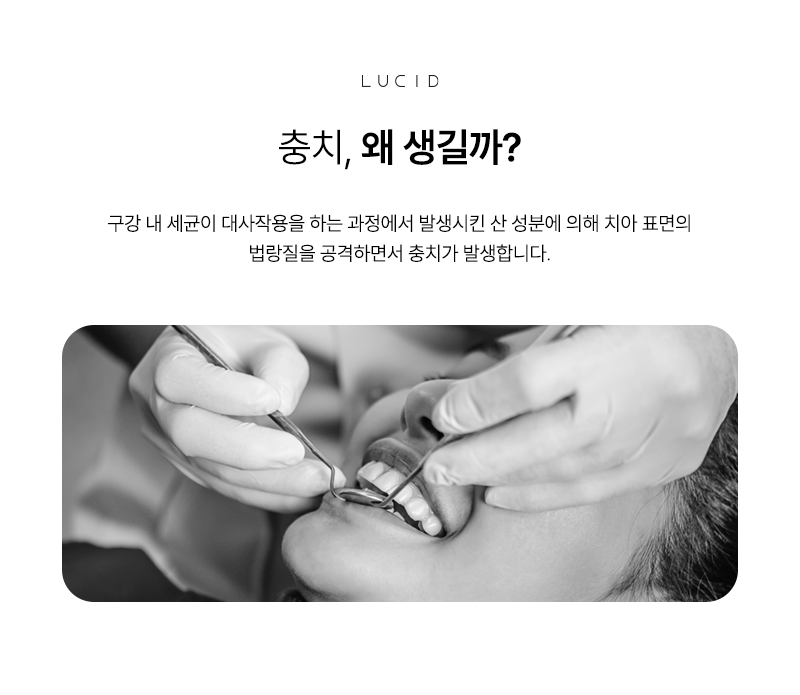
A cavity is a condition in which bacteria multiply on the surface of the tooth, produce acid, and that acid dissolves the enamel and dentin that make up the tooth, creating a hole.
Simply put, it is the process of tooth decay.
Although it may look like just a small black spot on the outside, it may be progressing more extensively on the inside, so it is necessary to check it early at a Gangnam dental clinic.
Why cavities form
Cavities occur through the combined effect of multiple factors. The main causes are summarized below.
Bacterial activity
Various bacteria live in the mouth, and some of them break down sugars in food and produce acid. This acid is the direct cause of tooth erosion.
Sugar intake
Sweets, carbonated drinks, and sticky snacks cling to the tooth surface easily and become food for bacteria, promoting cavities.
Incomplete brushing habits
Even if you brush your teeth three times a day, if you do not clean the spaces between teeth, the areas where the gums meet the teeth, and the grooves of the molars properly, the likelihood of cavities increases.
Insufficient saliva secretion
Saliva helps keep the mouth clean and neutralize acid. However, if you have dry mouth or do not drink enough water, the risk of cavities increases.
Individual tooth structure
If the grooves on the tooth surface are deep or the teeth are not aligned evenly, food can easily get trapped and cavities form more easily.
Areas where cavities commonly form
Cavities can form anywhere on a tooth, but some areas are especially vulnerable.
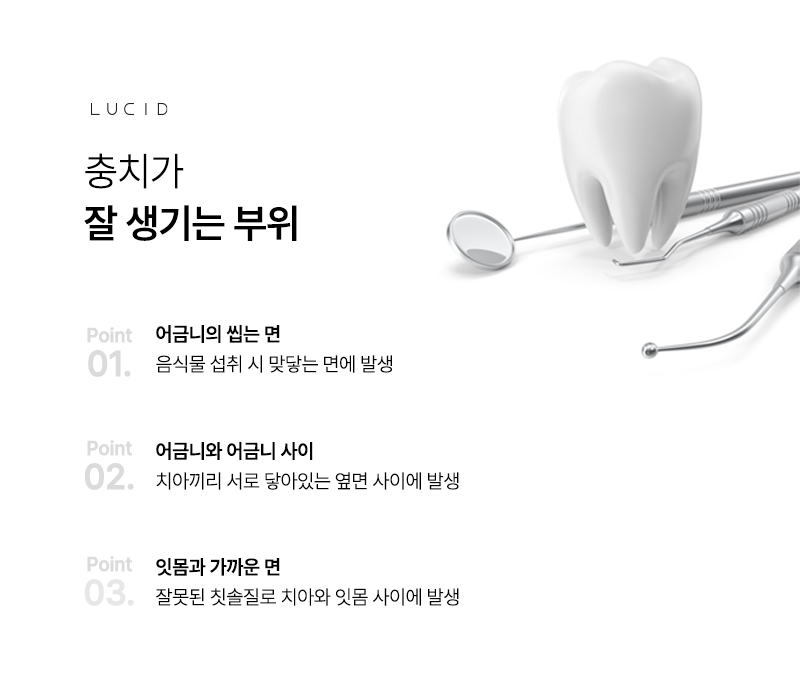
The chewing surface of molars
The grooves are deep, so food and bacteria get trapped easily, and it is difficult for the toothbrush to reach.
Between teeth
If you do not use interdental brushes or floss, food debris can build up and cavities can progress easily.
The root area of the tooth
When the gums recede and expose the root, dentin rather than hard enamel becomes visible, and cavities spread more quickly.
Cavity self-check test
A professional diagnosis is only possible at a Gangnam dental clinic, but in daily life, you may suspect a cavity if you notice the following symptoms.
▪️Your teeth feel sensitive to cold or hot foods, or sweet or sour foods.
▪️Black spots or brown discoloration appear on the tooth surface.
▪️Even after brushing, a certain tooth still feels like food is stuck in it.
▪️The area near the gums often swells or bleeds.
▪️You chew only on one side, or you feel pain when chewing.
If even one or two of these apply to you, a checkup at a Gangnam dental clinic is recommended. Rather than assuming everything is fine because there are no symptoms, regular checkups are the safest option.
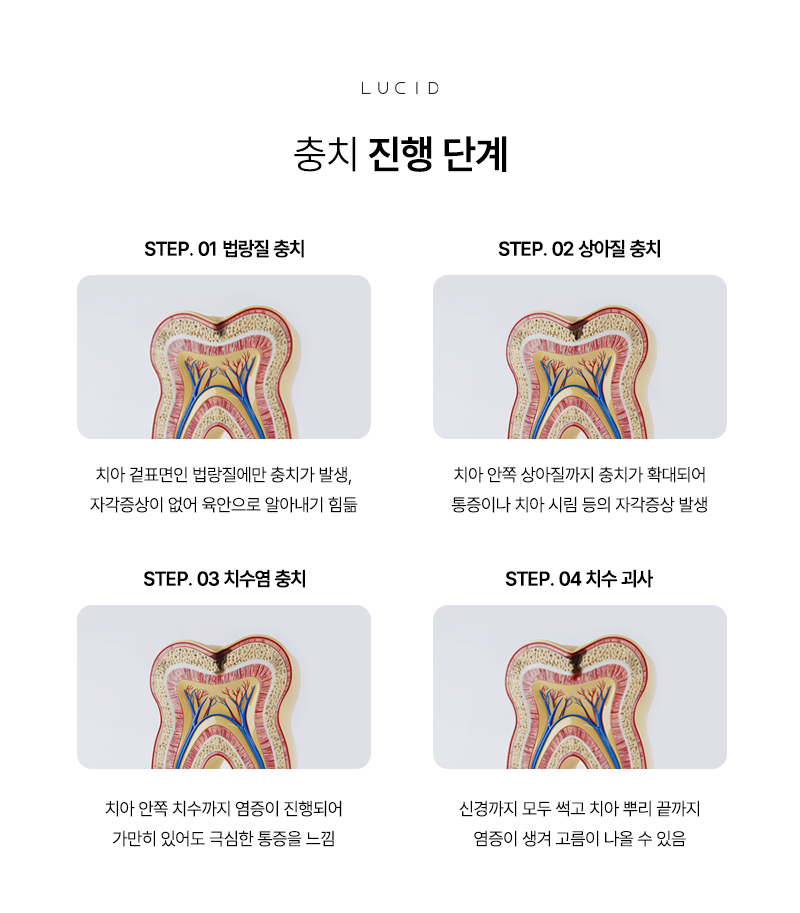
Treatment methods by cavity stage
- Early cavity
There is almost no pain, and recovery is possible with a simple filling treatment.
- Mid-stage cavity
Sensitivity to cold or sweets increases, and filling treatment or prosthetic treatment such as an inlay may be needed.
- Pulpitis cavity
Severe pain is present. At this stage, root canal treatment is used to remove the inflammation, and a crown is placed.
- Pulp necrosis
All of the nerve tissue has decayed, and inflammation can occur all the way to the root tip of the tooth, possibly causing pus.
If it is difficult to resolve with root canal treatment, extraction followed by replacement treatments such as an implant or bridge must be considered.
Above all, if treatment is delayed, it becomes difficult to preserve the tooth, and more cost and time are required.

Daily habits that can help prevent cavities
Preventing cavities is not difficult.
When small actions are consistently added to your daily habits, you can protect your dental health for a long time.
- Proper brushing habits
Brush within 30 minutes after meals and maintain a regular routine at least three times a day.
- Use floss and interdental brushes
It is recommended to use them at least once a day to keep the spaces between teeth clean.
- Reduce sugar intake
Cut back on sweets and carbonated drinks, and after eating, rinse your mouth with water to neutralize acid.
- Use fluoride toothpaste
Fluoride helps prevent cavities by making the tooth surface stronger.
- Regular dental checkups
It is a good idea to have a professional checkup and scaling once every 6 months to 1 year to monitor your condition.
Cavities may seem small and minor, but if left untreated, they are a condition that can significantly affect the overall health of your teeth.
They can be prevented through daily habit management and regular checkups, and with early treatment, they can recover sufficiently.
If you are already feeling some discomfort or suspect a problem, the best approach for dental health is not to think, "I'll go later," but rather, "I need to check it now."

Lucid Dental Clinic
We are Lucid Dental Clinic, bringing you happiness.
pf.kakao.com
Lucid Dental Clinic
3rd–4th Floors, 606 Nonhyeon-ro, Gangnam-gu, Seoul, Korea
Lucid Dental Clinic - LUCID DENTAL CLINIC(@lucid_dental_clinic) • Instagram photos and videos
12K followers, 25 following, 488 posts - View Lucid Dental Clinic - LUCID DENTAL CLINIC(@lucid_dental_clinic)'s Instagram photos and videos
www.instagram.com