Hello. This is Lucid Dental Clinic.
If you lose a tooth due to an accident, cavities, or neglecting regular dental care,
it can affect not only chewing comfort but also your smile and speech.
In such cases, the natural alternative that comes to mind
is the “implant” treatment at a Sinnonhyeon Station dental clinic.
But when you actually start looking into implants,
many questions come up, such as “What process does it go through?” “Does it hurt?”
and “How is it maintained?”
In this post, we have organized the information around the questions
people considering implants ask most often.
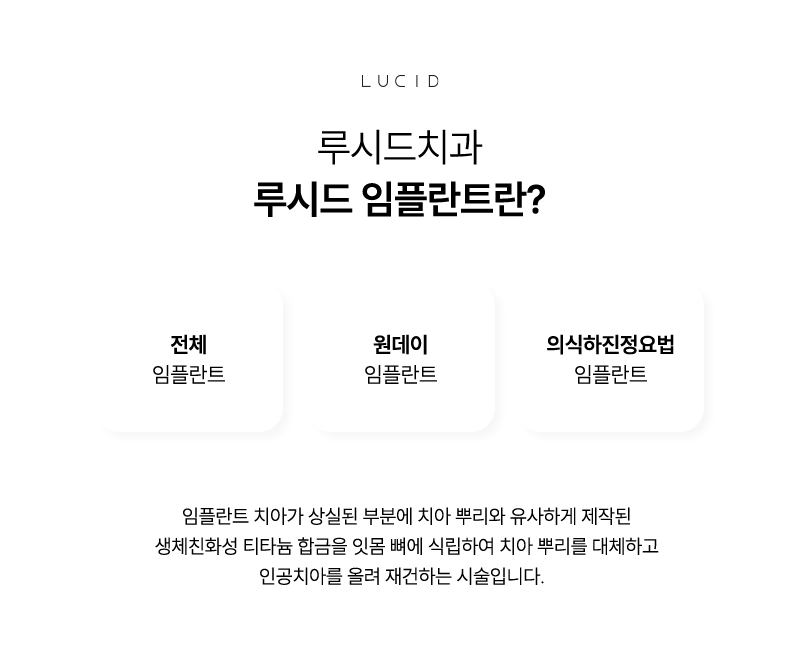
What is an implant?
An implant is a treatment that restores the function and shape of a natural tooth by
placing an “artificial tooth root” into the jawbone to replace a missing tooth,
then connecting a prosthetic tooth on top of it.
Simply put, it is a “tooth newly created from the root up.” Unlike dentures or bridges,
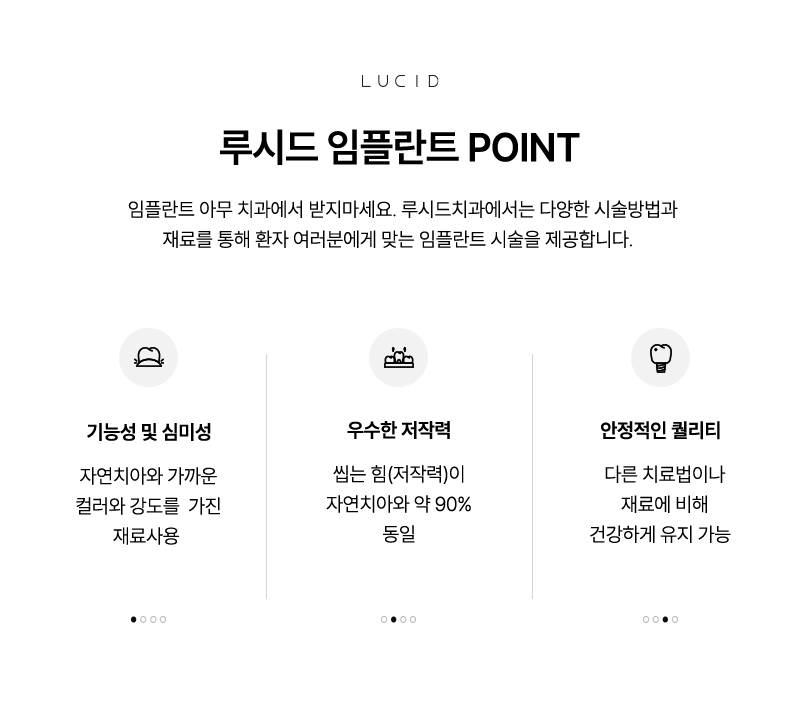
it does not require grinding down neighboring teeth, and it offers strong chewing power,
which is a major advantage.
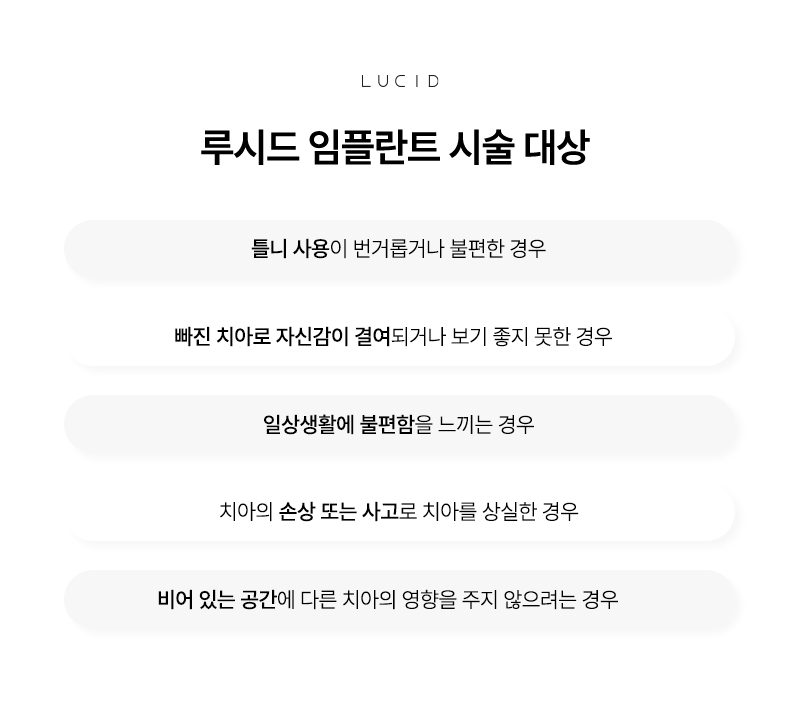
When is an implant necessary?
Not every missing tooth leads to an implant at a Sinnonhyeon Station dental clinic.
However, an implant is likely to be needed in the following cases.
When a tooth is completely damaged due to an accident or trauma
If the tooth root is fractured due to a car accident or sports injury,
it is difficult to restore the tooth naturally.
When a tooth must be extracted due to severe cavities or gum disease
If the alveolar bone is damaged to the point that recovery is difficult with root canal
or conservative treatment, an implant is considered as a way to replace the tooth.
When discomfort from dentures continues
If the foreign-body sensation, looseness, or difficulty chewing caused by dentures is severe,
there is a method of increasing stability by replacing some teeth with implants.
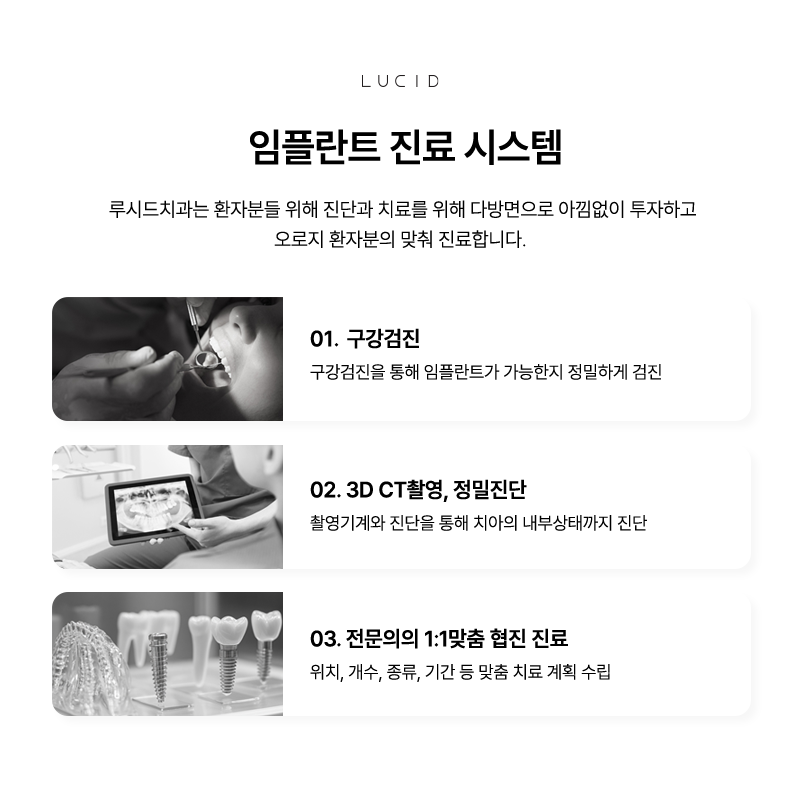
How is the implant procedure carried out?
An implant is not simply a matter of “placing one tooth.”
It requires an accurate diagnosis, planning, and a step-by-step process.
- Detailed diagnosis
Through CT scans and oral scans, the height and thickness of the jawbone,
as well as the location of the nerves, are checked. If the amount of bone is insufficient,
a grafting procedure may be performed as well.
- Implant placement
After making an incision in the gums, the artificial tooth root is placed.
The procedure method varies depending on the condition of each person’s alveolar bone.
- Healing period
A process called “osseointegration,” in which the implant and jawbone firmly fuse together,
is necessary.
Although it varies by person, it usually takes about 2 to 3 months.
- Prosthetic attachment
Once healing is complete, a prosthetic tooth is fabricated and attached on top.
The color and shape are matched as closely as possible to the patient’s natural teeth.
Top 5 questions people ask most often
Q. How long can an implant last?
A. It depends on how well it is maintained, but in general it can be used for more than 10 years.
If regular checkups and proper oral care habits are maintained, 15 years or more is certainly possible.
Q. Is it very painful?
A. Since the procedure is performed under anesthesia, there is almost no pain during treatment.
However, for a few days after the procedure, there may be swelling or minor discomfort.
This is a natural part of the recovery process and gradually subsides.
Q. Is it possible even at an older age?
A. What matters more than age is the health of the jawbone.
If the bone is sufficiently strong, it is possible even for older adults,
and suitability is determined by comprehensively evaluating the person’s health condition.
Q. Can just one or two be done?
A. Yes. Depending on how many teeth are missing, only one implant may be placed,
or several can be placed at the same time. If all teeth have been lost,
a “full-arch implant” approach may be used.
Q. Why is there such a big difference in cost?
A. The difference comes from the materials used, the lab system, the treatment equipment,
and the level of precision in the diagnostic process. In particular, a Sinnonhyeon Station
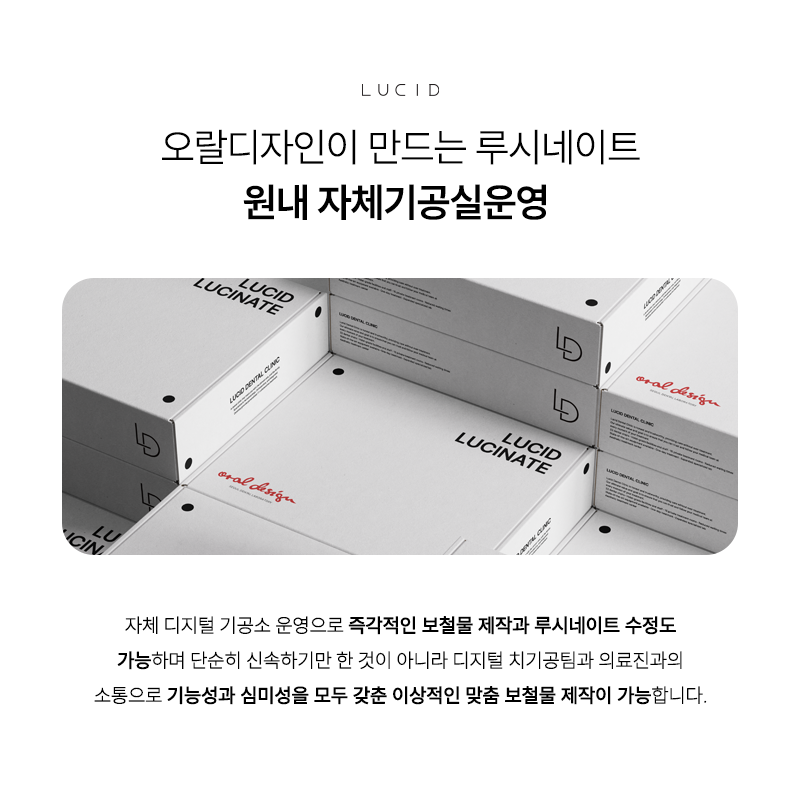
dental clinic that operates an in-house dental lab can produce prosthetics and adjust color quickly,
with systematic quality control.
Implants vs. Dentures
What is the difference?
| Category | Implant | Denture |
|---|
| Fixation method | Artificial tooth root fixed to bone | Structure placed on top of the gums |
| Chewing power | About 80–90% of natural teeth | About 30–40% |
| Foreign-body sensation | Low | Relatively high |
| Lifespan | Semi-permanent with maintenance | Average 5–7 years |
| Advantages | Natural aesthetics, strong fixation | Relatively low cost |
| Disadvantages | Initial cost, treatment period needed | Food restrictions, removal required |
In other words, if dentures are a short-term alternative, implants can be seen as a choice
that seeks long-term stability.
Implants at a Sinnonhyeon Station dental clinic are not simply about “placing” a tooth,
but about restoring quality of life.
Because they affect daily life in many ways, including eating, speech, and smiling,
careful consideration is necessary. Above all, what matters most is an accurate diagnosis
and plan tailored to your oral condition.
Lucid Dental Clinic aims for natural and personalized results through precise diagnosis
using digital equipment and an in-house dental lab system.
If you are considering implants, we recommend receiving a consultation first not only about
simple procedure information, but also about the treatment direction that is right for you.
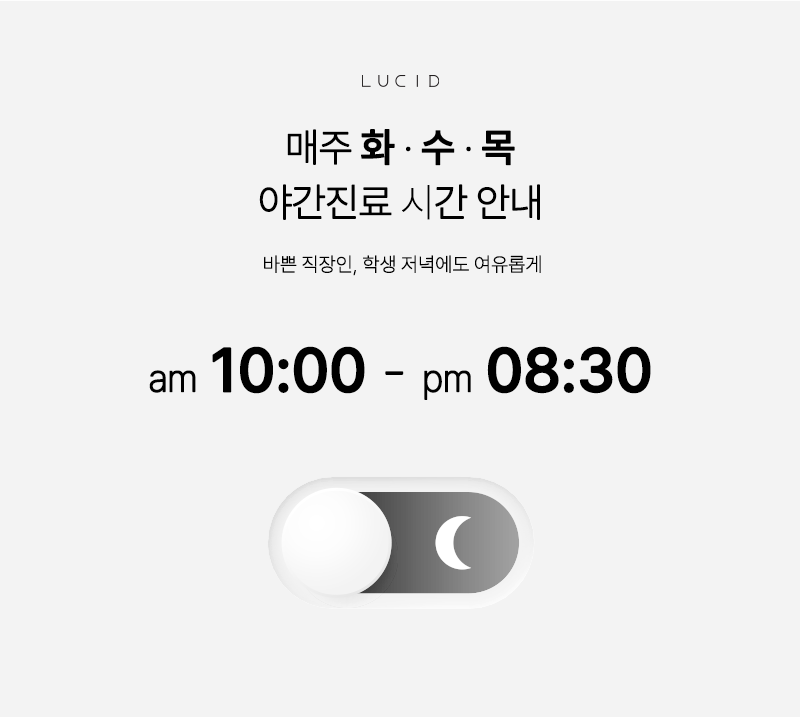
Lucid Dental Clinic
3rd–4th Floors, Coway Building, 606 Nonhyeon-ro, Gangnam-gu, Seoul
Lucid Dental Clinic
This is Lucid Dental Clinic, bringing you happiness.
pf.kakao.com
Lucid Dental Clinic - LUCID DENTAL CLINIC(@lucid_dental_clinic) • Instagram Photos and Videos
12K followers, 25 following, 506 posts - View Instagram photos and videos from Lucid Dental Clinic - LUCID DENTAL CLINIC(@lucid_dental_clinic)
www.instagram.com