
Hello. This is Lucid Dental Clinic.
"I brush carefully, so do I really need scaling?"
Many people have probably thought this at least once.
Scaling is not simply a procedure to "clean the teeth well."
It is the most basic and important preventive care for protecting gum health.
Today, for those who are curious about scaling,
we’ll explain in detail everything from why it is needed to how often it should be done and how to care after it.
What Is Scaling?
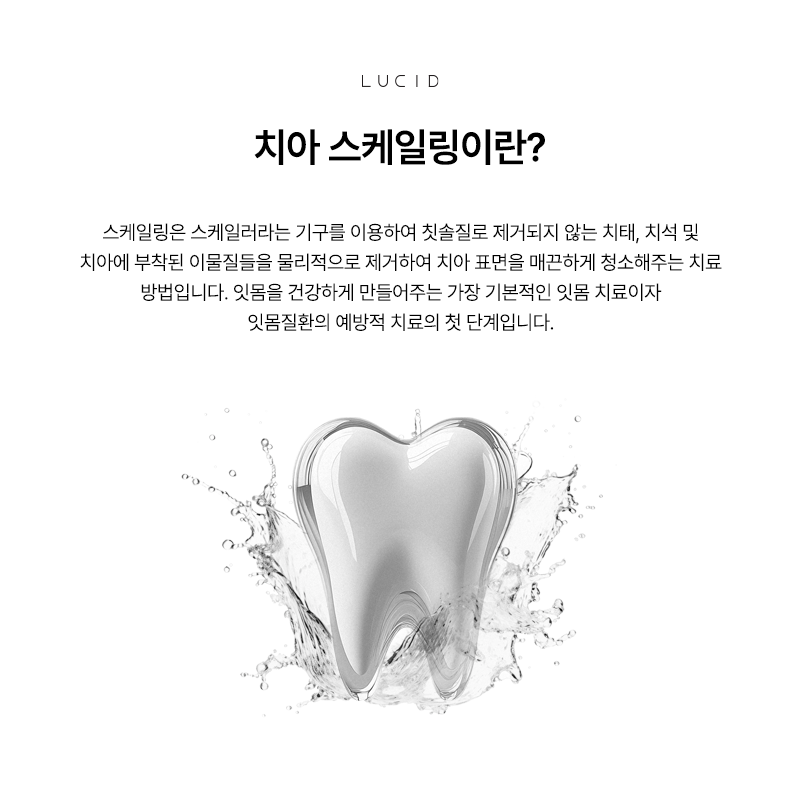
Scaling is a professional procedure that removes tartar attached to the teeth
and the invisible bacterial film.
What brushing can remove is only up to "plaque."
But over time, it combines with minerals in saliva,
hardens, and turns into "tartar," which cannot be removed with a toothbrush.
This tartar hides between the gums and the teeth, causing inflammation
and can eventually lead to gum disease.
Scaling is the process of precisely removing tartar from the tooth surface
and even below the gum line to prevent this process.

Why Scaling Is Needed
- Preventing periodontal disease
The biggest purpose of scaling is to prevent gum disease.
Tartar creates an environment where bacteria can thrive,
and when those bacteria penetrate the gums,
inflammation develops. Removing tartar through scaling blocks bacterial growth
and can help prevent symptoms such as swollen or bleeding gums in advance.
- Reducing bad breath
One of the main causes of bad breath is bacteria in the mouth and food residue.
When tartar and bacterial film are removed through scaling,
the mouth feels much fresher and it also helps reduce bad breath.
- Aesthetic improvement
Staining on the tooth surface caused by smoking, coffee, tea, or wine
can be partially removed with scaling.
As the teeth regain their natural brightness,
they also look cleaner aesthetically.
- Connection to overall health
Recent studies have also shown results suggesting that gum inflammation
is linked to cardiovascular disease and diabetes.
In other words, reducing inflammation in the mouth
can have a positive effect on overall health.
How Often Should You Get It?
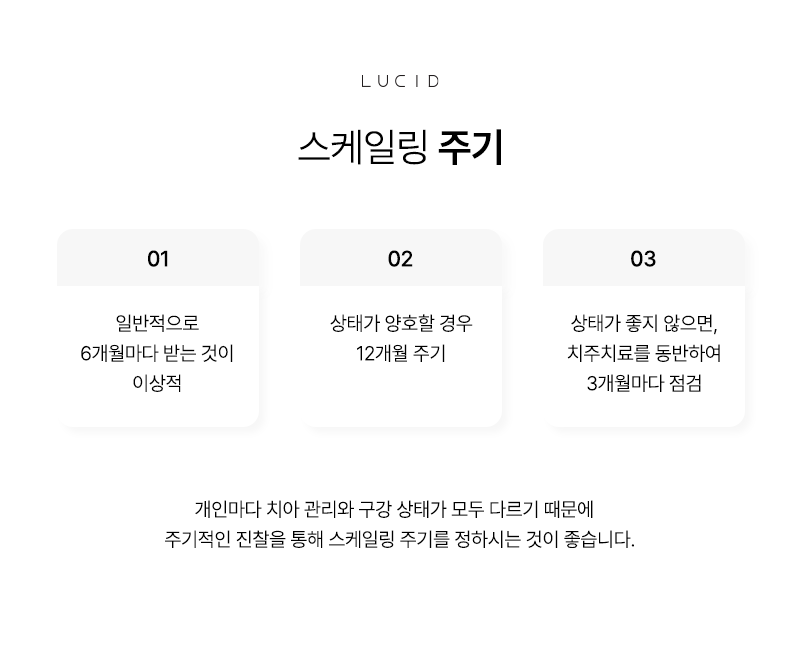
In general, scaling at Nonhyeon-dong Dental Clinic is recommended
about once every 6 months.
However, because the rate at which tartar forms
and the condition of the gums differ from person to person,
the interval can be adjusted to anywhere from 3 months to 1 year.
For people who develop tartar quickly
It is good to manage it every 3 to 4 months.
For smokers and people who drink coffee often
Staining forms easily, so periodic scaling is necessary.
For people with a history of gum disease
Regular scaling helps prevent recurrence.
For reference, health insurance also provides scaling coverage once a year.
(However, this applies to adults aged 19 and older.)
In other words, it is a good idea to have it done at least once a year.

Is Scaling a Painful Procedure?
Many people worry that scaling at Nonhyeon-dong Dental Clinic will make their teeth sensitive,
but in reality it is often closer to a feeling of discomfort than pain.
Because tartar between the teeth and gums is removed with ultrasound,
the procedure is finished in a short time.
If the pain is severe, the pace can be adjusted sufficiently during treatment,
and if necessary, anesthesia can also be used.
Temporary sensitivity may occur after scaling,
but this is a natural response that happens as the gums recover healthily.
In most cases, it goes away within 1 to 2 days.

Precautions After Scaling
Right after scaling at Nonhyeon Station Dental Clinic, the tooth surface becomes clean,
so it may temporarily be more sensitive to external stimulation.
Therefore, the following care is helpful.
- Avoid hot or cold foods for 1 to 2 days
- Avoid irritating foods
- Brush with a soft toothbrush
- Prevent re-mineralization issues through regular oral care
Also, after scaling, the gum condition is checked,
and if necessary, it may lead to gum treatment or additional care.
Through this process, you can maintain dental health over the long term.
What Can Happen If You Put Off Scaling
If you do not get scaling for a long time, tartar gradually moves farther down below the gums
and can develop into periodontitis, which destroys the jawbone supporting the gums.
At this stage, simple scaling becomes difficult,
and a procedure called "root planing," which involves opening the gums to remove tartar,
may be necessary.
Scaling is not a procedure that shaves down or damages the teeth.
Rather, it is a basic oral care method that removes bacteria and tartar
and helps the gums recover healthily.
Regular scaling can help prevent cavities,
gum disease, and bad breath, and keep your teeth healthy for a long time.
Lucid Dental Clinic carefully guides each patient on the scaling interval and care method
that best fit their oral condition.
Lucid Dental Clinic
3rd–4th Floors, Coway Building, 606 Nonhyeon-ro, Gangnam-gu, Seoul
Lucid Dental Clinic
We are Lucid Dental Clinic, bringing you happiness.
pf.kakao.com
Lucid Dental Clinic - LUCID DENTAL CLINIC(@lucid_dental_clinic) • Instagram photos and videos
12K followers, 25 following, 513 posts - See Instagram photos and videos from Lucid Dental Clinic - LUCID DENTAL CLINIC(@lucid_dental_clinic)
www.instagram.com