Hello. This is Lucid Dental Clinic.
Have you ever experienced swollen gums or bleeding while brushing?
Many people think these symptoms are just temporary, caused by fatigue, and tend to overlook them. However, if these symptoms occur repeatedly, it is worth considering whether they may be related to periodontitis, also known as periodontal disease.
Periodontitis is one of the oral diseases that many people experience more often than expected. In particular, it can be difficult to notice in the early stages because the pain is not severe. Since it often begins with slight gum swelling or bleeding while brushing, many people assume it is only a minor gum problem and leave it untreated.
However, periodontitis can gradually progress over time and affect not only the gums but also the tissues around the teeth. If the tissues supporting the teeth become weakened, you may feel that your teeth are loose or experience discomfort while chewing. Therefore, it is important to check and manage your gum condition regularly.
Today, let’s take a detailed look at what periodontitis is, what symptoms appear, self-check methods, preventive habits, and the proper way to brush your teeth.
What is periodontitis?
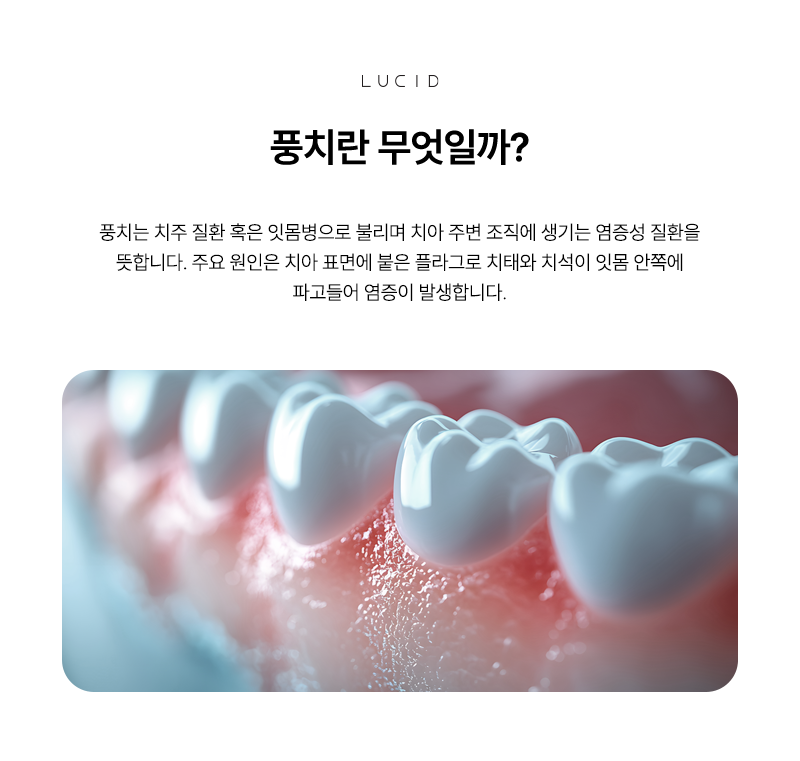
Periodontitis is a condition referred to in dentistry as periodontal disease, meaning inflammation occurs in the tissues around the teeth.
Teeth are not simply attached to the gums; they are maintained with the help of several tissues. The gums, periodontal ligament, and alveolar bone all work together to support the teeth securely.
Periodontitis begins when inflammation develops in these tissues around the teeth. In the early stage, it may appear as gingivitis, which is gum inflammation. At this stage, symptoms such as swollen gums or bleeding while brushing may occur.
However, if it is not properly managed, the inflammation can gradually progress and affect even the tissues that support the teeth. As this stage progresses, changes may also appear in the bone around the teeth, and you may feel that the teeth are loose.
In this way, periodontitis starts as simple gum inflammation, but if care is lacking, it can affect dental health, which is why early management is important.
Main causes of periodontitis
One of the main causes of periodontitis is plaque and tartar.
Plaque is a thin film formed by food debris and bacteria and easily sticks to the tooth surface. If brushing is not done properly, plaque gradually accumulates.
Over time, this plaque hardens and turns into tartar. Once tartar forms, it creates an environment where bacteria can more easily multiply around the gums. If this condition continues, inflammation can develop in the gums.
In addition, the following lifestyle habits can also affect the development of periodontitis.
These factors can act together and lead to periodontitis.

How to self-check for periodontitis
If you have the following symptoms, it is worth checking your gum condition.
-
Blood comes from the gums when brushing
-
The gums look swollen or red
-
Bad breath is a concern
-
Teeth feel loose
-
It feels like the spaces between teeth are gradually widening
-
The gums feel uncomfortable while chewing
-
The gums feel like they are receding
-
Food often gets stuck between the teeth
These symptoms may appear temporarily, but if they occur repeatedly, they may be related to the condition of the gums.
In particular, bleeding while brushing is known as one of the early signs of periodontitis that many people experience.

Habits that help prevent periodontitis
Periodontitis can be helped prevented through daily oral care habits.
- Proper brushing habits
It is important to remove plaque from the tooth surface by brushing at least 2 to 3 times a day.
- Care between the teeth
Because a toothbrush alone may not fully clean between the teeth, using dental floss or interdental brushes together can be helpful.
- Oral care after meals
It is important to make sure food debris does not remain between the teeth after eating.
- Regular oral checkups
It is also important to regularly check the condition of your teeth and maintain your oral hygiene.

The proper way to brush your teeth to help prevent periodontitis
Brushing is not just about cleaning the tooth surface; it is important to care for the area where the gums and teeth meet. The proper brushing method is as follows.
- Place the toothbrush at a 45-degree angle between the gums and teeth.
- Brush gently with small vibrations.
- Clean both the inner and outer surfaces of the teeth thoroughly.
- Do not miss the chewing surfaces of the molars.
- Lightly brush the tongue as well.
Rather than brushing with strong force, it is important to brush gently and thoroughly.
Ways a dental clinic can help
If periodontitis is suspected, Hakdong Dental Clinic can carry out a process of checking both the teeth and gum condition.
The condition around the teeth is checked, and oral hygiene status is assessed. If necessary, you may be guided on how to manage plaque or tartar accumulated on the tooth surface.
At Lucid Dental Clinic, after checking both the condition of the teeth and the gums, we guide you on care methods suited to your current oral environment. Periodontitis may not be very painful in the early stages, but changes can appear over time, so regular management can be helpful.
Q&A
Q. Does periodontitis only occur when you get older?
A. Periodontitis is not a condition that appears only in a specific age group; it can occur in various age groups depending on oral condition and lifestyle habits.
Q. If my gums bleed, does that mean it is definitely periodontitis?
A. Gum bleeding can occur for various reasons, but if it happens repeatedly, it may be related to the condition of the gums.
Q. Can periodontitis improve naturally?
A. In the case of early inflammation, it may improve if oral care habits are improved, but if symptoms persist, it is necessary to check the condition of the teeth.
Q. Is periodontitis okay if there is no pain?
A. In the early stages of periodontitis, there are many cases where there is little to no pain. Since symptoms may only appear as slight gum swelling or bleeding while brushing, many people tend to think it is just a minor gum problem and let it pass. However, if these symptoms recur, they may be related to the gums, so it may be helpful to check your oral condition once.
Q. Once periodontitis starts, does it keep progressing?
A. The degree of progression of periodontitis can vary depending on a person’s oral care habits and gum condition. Maintaining proper brushing and oral care habits and regularly checking the condition of your teeth can help manage your oral environment. If you notice changes in your gums, it may also be helpful to visit a dental clinic to check your current condition and receive guidance on how to manage it.
Periodontitis is one of the oral diseases many people can experience, but in the early stages it is often difficult to notice because the pain is not severe.
However, if small changes such as gum bleeding, swollen gums, or bad breath keep recurring, it may be helpful to check your oral health. Maintaining proper brushing habits and consistent oral care habits can help keep your oral environment healthy.



Lucid Dental Clinic
3rd–4th Floors, Coway Building, 606 Nonhyeon-ro, Gangnam-gu, Seoul
Naver Booking :: Lucid Dental Clinic
[LUCID DENTAL CLINIC Lucid Dental Clinic] Lucid aims to provide dental care that designs both aesthetics and function, not simply a place that treats teeth. We understand that visiting a dental clinic requires a great deal of 고민 and 결심. That is why Lucid follows the principle of treating only as much as necessary rather than treating too much. Preserving the teeth and gums as much as possible is the best treatment. We prioritize ways to protect natural teeth, and even when treatment is needed, we provide precise care that minimizes damage. [LUCINATE Premium Laminate] Lucid...
m.booking.naver.com
Lucid Dental Clinic
This is Lucid Dental Clinic, bringing happiness.
pf.kakao.com