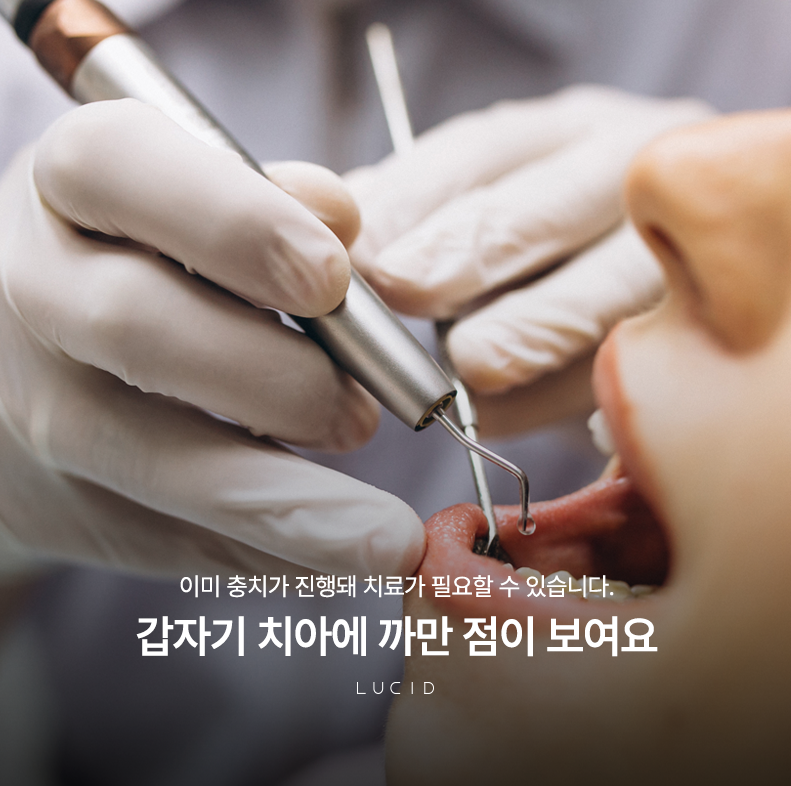
Hello. This is Lucid Dental Clinic.
One of the most common dental conditions people encounter in everyday life is cavities. Many people tend to think of cavities lightly or visit the dentist only after pain starts, but in reality, early response is very important.
If detected early, treatment can be done with a relatively simple method. However, if left untreated, the cavity can deepen over time, the treatment area can become broader, and it may lead to a situation where the tooth itself becomes difficult to preserve.
In particular, people in their 20s and 30s often consume coffee, carbonated drinks, and desserts frequently, and due to busy daily routines, oral care can easily be neglected, increasing the risk of cavities.
Today, we will provide a more detailed guide from how cavities develop to treatment methods and management methods.
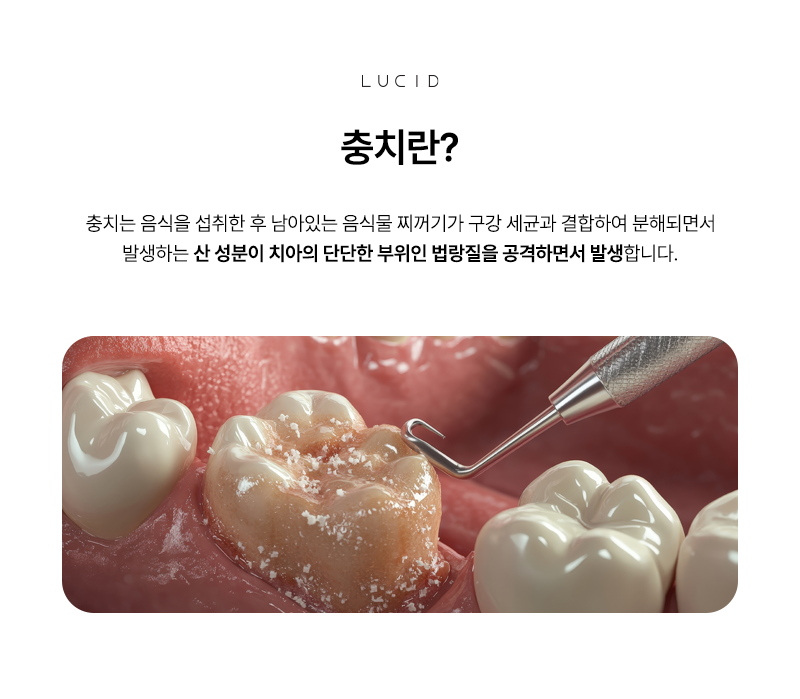
What are cavities?
Cavities are a condition caused when bacteria in the mouth break down sugars in food and generate acid, and this acid gradually dissolves the tooth’s hard structure.
Teeth are made up of enamel, dentin, and pulp, and cavities progress from the outside inward. In the early stage, they may not be clearly visible or may have no noticeable symptoms, but over time the tooth gradually weakens and pain begins to appear.
If treatment is not received at the proper time during this process, more complex treatment may be needed.
Various causes of cavities
Cavities are not caused simply by brushing poorly; several factors work together.
-
Consuming foods and drinks high in sugar
-
Delayed brushing after meals or insufficient oral care
-
Lack of care between teeth (not using floss or interdental brushes)
-
A prolonged acidic environment in the mouth due to frequent snacking
-
Reduced self-cleansing function due to dry mouth
-
Tooth alignment or structural factors
In particular, the habit of snacking several times a day or frequently drinking beverages can lengthen the time teeth are exposed to acid, increasing the likelihood of cavities.

Stages of cavities and treatment methods
Depending on how far the cavity has progressed, the treatment method at Gangnam Dental Clinic will differ.
- Early cavity (enamel stage)
At this stage, only the tooth surface is damaged, and it can be treated with a relatively simple resin procedure. Using a material similar to the color of the tooth helps reduce cosmetic concerns and supports a natural-looking recovery.
- Mid-stage cavity (dentin stage)
If the cavity has progressed to the dentin, inlay or onlay treatment may be necessary. After removing the damaged area, a prosthetic restoration is made to restore the tooth’s function and shape.
- Severe cavity (when it has reached the nerve)
If the cavity has affected the tooth’s internal nerve, root canal treatment is necessary, followed by crown treatment to protect the tooth. At this stage, the treatment period may become longer, which further emphasizes the importance of early care.
Problems that can occur if cavities are left untreated
If cavities are not treated in time, they can lead to the following problems.
-
Increased pain and discomfort in daily life
-
Higher risk of tooth fracture
-
Need for complex treatment due to nerve damage
-
Gum inflammation and effects on surrounding teeth
-
Progression to a situation where extraction becomes necessary
As such, even a simple cavity can affect overall oral health if left untreated, which is why early Gangnam cavity treatment is important.

Lucid Dental Clinic’s approach to cavity treatment
At Lucid Dental Clinic, we do not simply carry out treatment; we aim for care that also considers the patient’s current condition and lifestyle habits.
-
Precise diagnostic system: After carefully checking the oral condition, we establish a treatment plan suited to the current stage.
-
Treatment with natural-looking results in mind: We consider not only functional recovery but also the color and shape of the tooth so the final result looks more natural.
-
In-house laboratory operation: If prosthetic treatment is needed, the in-house laboratory allows smoother communication during the fabrication process, enabling more detailed adjustments.
-
Sufficient explanation of the process: We explain the entire treatment process in an easy-to-understand way and help patients make comfortable choices.
Signs that cavity treatment may be needed
If you experience the following symptoms, you may want to suspect cavities.
-
Sensitivity to cold or hot food
-
Food frequently getting stuck in a specific area
-
Tooth discoloration or a blackened appearance
-
Discomfort or mild pain when chewing
-
A rough feeling on the tooth surface
Because there may be almost no noticeable symptoms in the early stage, regular checkups are important.

Lifestyle habits for cavity prevention
Cavities can be effectively prevented through improvements in lifestyle habits.
-
Maintain proper brushing habits 2 to 3 times a day
-
Care for the spaces between teeth using floss and interdental brushes
-
Rinse your mouth with water after consuming sugar
-
Reduce eating before bedtime
-
Keep up with regular scaling and checkups
Small changes in habits can have a major impact on long-term oral health.
How to care for your teeth after cavity treatment
Continued care is necessary after treatment.
-
Be careful not to apply excessive force to the treated area
-
Be cautious when eating hard or sticky foods
-
Check the condition through regular examinations
-
Maintain oral hygiene habits
The maintenance period of treatment results may vary depending on how well the area is managed.
Cavity treatment Q&A
Q. Is cavity treatment very painful?
A. It may differ depending on the scope of treatment, and if necessary, methods to reduce discomfort will be provided as well.
Q. Can cavities disappear on their own?
A. Cavities that have already progressed are difficult to recover naturally, so appropriate treatment is necessary.
Q. What happens if treatment is delayed?
A. As time passes, the cavity can deepen, and the treatment area may become larger.
Q. Can I return to daily life right after treatment?
A. It varies depending on the type of treatment, and it is best to follow the precautions provided by the medical staff.
Q. Can cavities come back?
A. If care is insufficient, they can recur in the same area or appear in other areas, so consistent management is important.
Cavities are a condition that can occur in anyone, but with proper care and attention, prevention and early treatment are fully possible. In particular, since there may be little discomfort in the early stage, they are easier to miss, so it is important to check your current condition through regular examinations.
At Lucid Dental Clinic, we strive to reduce the burden on patients through diagnosis and consultation that take each patient’s condition into account, and to provide a more comfortable treatment environment. If you are worried about your dental health, please do not hesitate to check your current condition.


If you have questions, chat with Naver Talk Talk!
Lucid Dental Clinic
3rd–4th Floors, Coway Building, 606 Nonhyeon-ro, Gangnam-gu, Seoul
Naver Reservation :: Lucid Dental Clinic
[LUCID DENTAL CLINIC Lucid Dental Clinic] Lucid is not just a place that treats teeth, but a dental clinic that aims to design both aesthetics and function together. We understand well that it takes a lot of consideration and determination to visit a dentist. That is why Lucid follows the principle of treating only as much as necessary rather than treating a lot. Preserving teeth and gums as much as possible is the best treatment. We prioritize methods that protect natural teeth, and even when treatment is necessary, we provide precise care in a way that minimizes damage. [LUCINATE Premium Laminate] Lucid...
m.booking.naver.com
Lucid Dental Clinic
This is Lucid Dental Clinic, bringing happiness.
pf.kakao.com