Hello. This is Lucid Dental Clinic.
Mouth sores, which you may have experienced at least once in daily life, are commonly also called “mouth ulcers.”
They may look like small wounds, but once they appear, they often sting whenever you speak or eat, causing discomfort in everyday life.
They are especially common among busy office workers, people under a lot of stress, and those with irregular eating habits.
It is easy to simply think they will heal with time, but if mouth sores recur or last a long time, they may be related not just to fatigue but also to the oral environment or lifestyle habits.
Today, we will take a detailed look at the causes, types, and self-check methods for mouth sores one by one.
What are mouth sores?
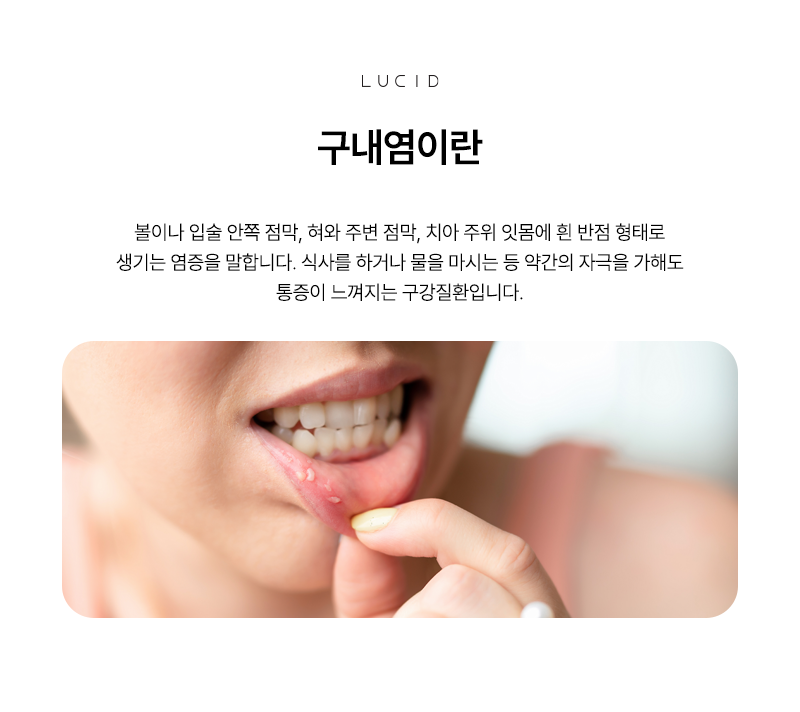
Mouth sores refer to inflammation of the mucous membrane inside the mouth.
They can occur in various areas such as the tongue, gums, inside of the lips, and inside of the cheeks, and they often appear in the form of ulcers or blisters.
Symptoms can begin with mild pain and progress to severe pain when eating, and in severe cases, even speaking can become uncomfortable.
Most cases improve naturally over time, but if they occur repeatedly, it is important to check the cause.

Various causes of mouth sores
Mouth sores often occur due to a combination of multiple factors rather than a single cause. The representative causes are as follows.
- Nutritional imbalance
When nutrients such as B vitamins, iron, and zinc are lacking, the regeneration ability of the oral mucosa decreases. As a result, inflammation can easily develop even from small irritations. In particular, it may occur more easily when dieting or eating irregularly.
- Bacterial and viral infections
Various microorganisms exist in the mouth, and when immunity drops, the balance can be disrupted and inflammation may occur. Certain viral infections can also cause blister-type mouth sores.
- Fatigue and weakened immunity
Lack of sleep, stress, and overwork are major causes of reduced immunity. When immunity is weakened, mouth sores can develop easily even from irritations that normally would not be a problem.
- Cavities and oral diseases
If you have cavities or gum disease, the bacterial environment in the mouth changes, making inflammation more likely. In addition, if a tooth breaks and becomes sharp, or if ill-fitting prosthetics continuously irritate the mucosa, that can also be a cause.
Types and characteristics of mouth sores
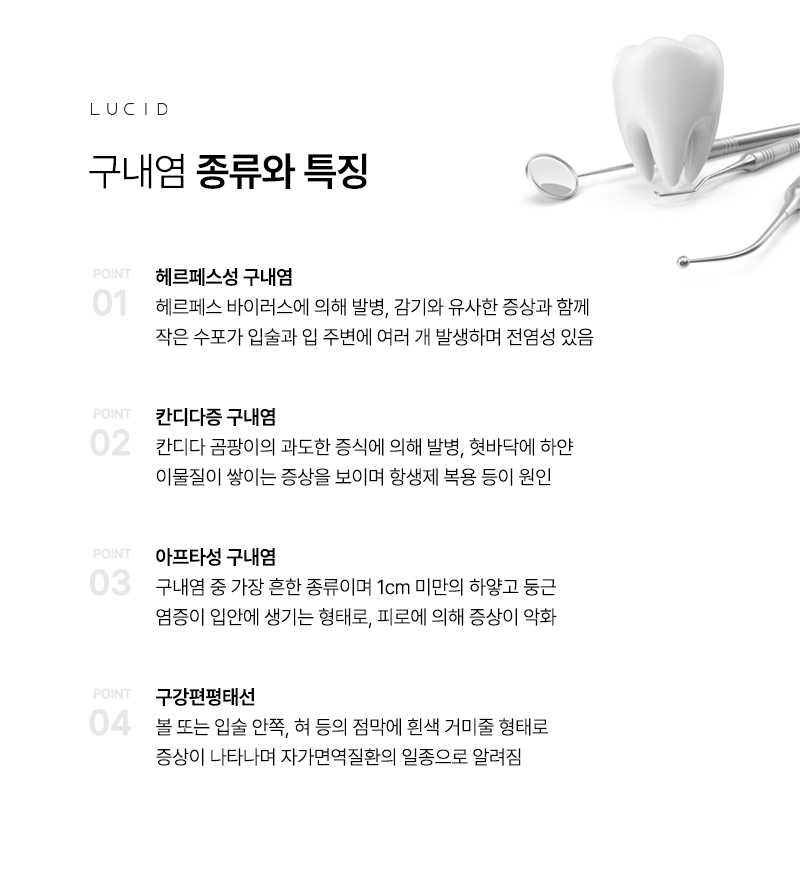
Mouth sores are divided into several types depending on the cause and form. Knowing the characteristics of each type can help you understand the symptoms.
- Herpetic stomatitis
This type is caused by a viral infection and is characterized by small blisters around the mouth or inside the mouth. When the blisters burst, the pain can become severe, and caution is needed because it may be contagious.
- Candidal stomatitis
This occurs due to a fungal infection, and white film or patches often appear inside the mouth. It frequently develops when immunity is weakened, and it can also occur in people with dry mouth.
- Aphthous stomatitis
This is the most common type, characterized by round, white ulcers inside the mouth with redness around them. It is painful, but it often improves naturally after a certain period of time.
- Oral lichen planus
This is a chronic condition related to immune responses, and it is characterized by white, lace-like lesions on the oral mucosa. Because symptoms can last for a long time, steady management is needed.
Self-check methods for mouth sores
If you have the following symptoms, you may want to suspect mouth sores.
-
White ulcers or blisters have appeared inside the mouth
-
A specific area is red, swollen, and stings
-
Pain is felt when eating
-
It recurs when you are tired or stressed
-
The inside of the mouth often becomes sore and recovery is slow
In particular, more careful checking is needed in the following cases.
-
Symptoms last for more than 2 weeks
-
The size gradually increases
-
The pain gradually becomes worse
-
It occurs repeatedly in the same area
In such cases, it may not be a simple mouth sore, so it is a good idea to check the condition of the mouth.
How to make mouth sores heal faster
Lifestyle management alone can help speed up recovery from mouth sores.
-
충분한 휴식 : As the body recovers and immunity rises, inflammation often subsides naturally.
-
Hydration: Since dryness in the mouth can worsen symptoms, drinking enough water is helpful.
-
Avoid spicy or irritating foods: Spicy, salty, and hot foods can irritate the affected area and make the pain worse.
-
Oral hygiene management: It is important to use a soft toothbrush to reduce irritation and keep the mouth clean.
-
Nutritional support: Getting enough B vitamins, iron, and other nutrients may help the mucosa recover.
How to prevent mouth sores
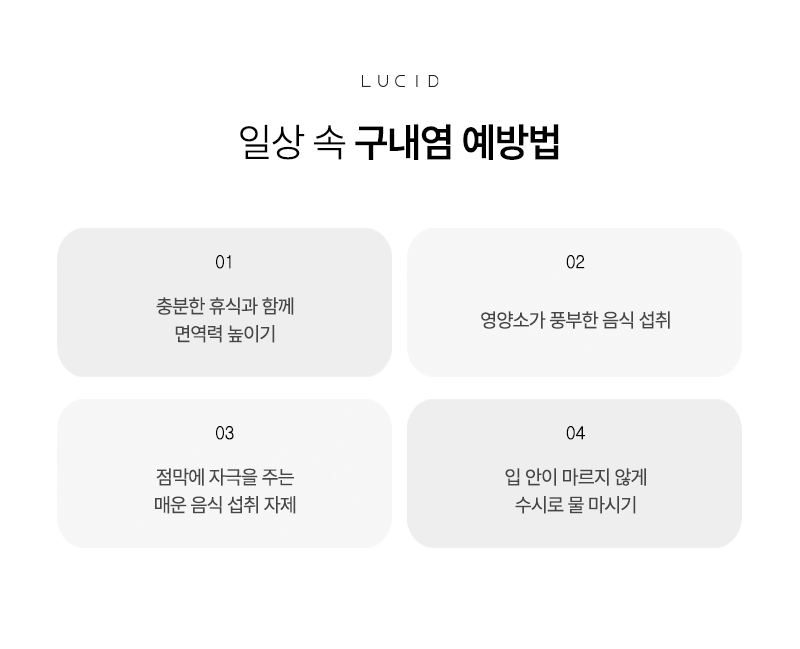
Mouth sores can be sufficiently prevented through lifestyle habits.
Especially for people who repeatedly develop mouth sores, it is important to approach the issue not only by relieving the symptoms but also by improving the oral environment itself.
Mouth sores are a common symptom that anyone can experience at least once, but if they recur or last a long time, it may be difficult to view them as a simple issue.
Small changes in the mouth can be a signal reflecting the condition of our body, so rather than brushing off the symptoms lightly, it is important to look into the cause and manage it.
If the discomfort continues or appears along with other oral problems, it may also be helpful to accurately check your current condition.
We hope you maintain a healthy condition through steady oral care so that even small inconveniences in daily life can be managed comfortably. Thank you.