Hello, this is Lucid Dental Clinic.
Today, we would like to explain in detail a symptom that many people tend to brush off lightly:
the reason your mouth feels dry every morning.
When you wake up in the morning, you may have experienced a sticky feeling in your mouth,
a dry, parched sensation, or even bad breath.
It is easy to dismiss it as just something that happens after sleeping,
but if these symptoms repeat, they may be an early sign of dry mouth syndrome,
so it is worth paying close attention.

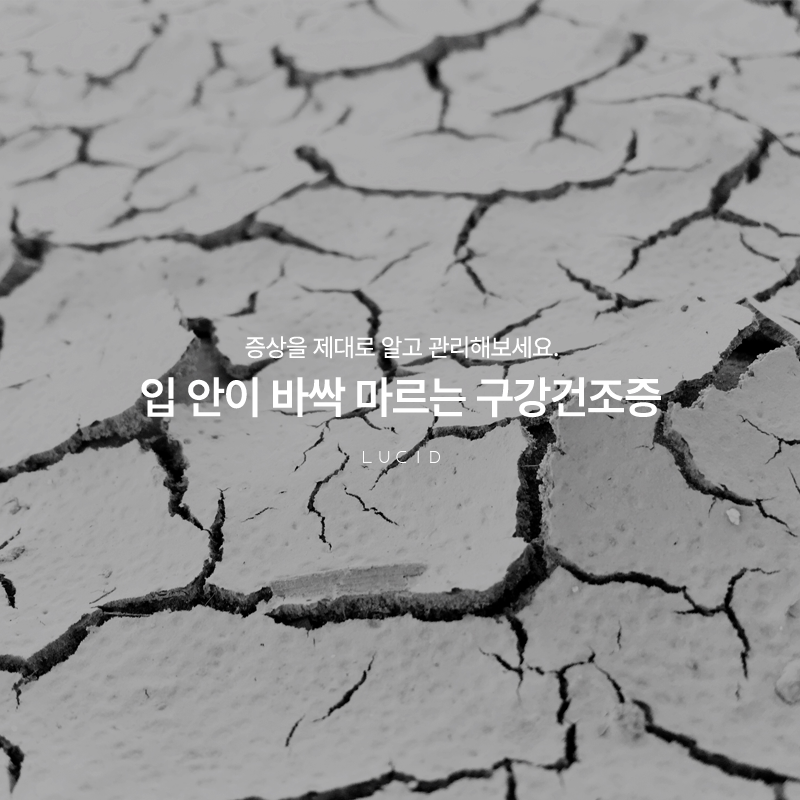
What is dry mouth syndrome?
Dry mouth syndrome refers to a state in which saliva is not sufficiently secreted,
or the inside of the mouth remains persistently dry.
Medically, it is also described as reduced salivary secretion.
Why does your mouth feel dry when you wake up?
During sleep, saliva secretion naturally decreases.
Saliva plays an important role in keeping the mouth moist
and suppressing bacteria,
so when secretion decreases, the mouth becomes dry and an environment is created in which bacteria can easily multiply.
When combined with certain lifestyle habits,
a morning dry mouth symptom can become even more severe.

The most common cause of dry mouth syndrome: sleeping with your mouth open
One of the representative causes of dry mouth syndrome is
the habit of sleeping with your mouth open.
Breathing through the nose is the normal state,
but if you have nasal congestion, rhinitis, or a habitual tendency to breathe through your mouth,
you naturally end up breathing through your mouth.
As moisture in the mouth continues to evaporate during this process,
you wake up feeling severe dryness in the morning.
In particular, if mouth breathing continues, it can lead to dry gums,
an increased risk of cavities, and worse bad breath,
so it is more than just a minor inconvenience and requires management.
A decrease in saliva secretion is also an important cause
There are also cases in which saliva itself decreases.
Stress, lack of sleep, caffeine intake, and taking certain medications
can all be factors that reduce saliva secretion.
In particularly stressful environments,
changes in the autonomic nervous system often cause a decrease in saliva secretion.
In such cases, it is not simply dryness at night;
you may also feel that your mouth is often dry during the day,
or find yourself frequently reaching for water.
Problems that can occur if dry mouth continues
If the dryness in your mouth persists,
it can affect oral health beyond simple discomfort.
Typical issues include an increased risk of cavities,
a worsening of gum inflammation, increased bad breath,
and irritation and pain of the oral mucosa.
Saliva is not just water;
it suppresses bacteria and helps protect teeth,
so a lack of saliva becomes a risk factor for oral diseases.

If the following applies, it is worth checking your condition.
If the following symptoms repeat,
it is a good idea to check your condition at least once.
▪️Your mouth feels extremely dry every morning
▪️Your tongue develops wrinkles and appears cracked
▪️There is little saliva and a lot of foam
▪️Your lips are dry and the corners are cracked
▪️The mucous membranes inside the mouth become dry
▪️Chewing or swallowing food becomes difficult
▪️The white coating on your tongue becomes more severe

Ways to improve it through lifestyle habits
In the early stages, lifestyle habits alone can be enough to help.
▪️Drink enough water before going to bed
▪️Maintain indoor humidity
▪️Improve nasal congestion
▪️Correct the habit of sleeping with your mouth open
It is also important to reduce caffeine and alcohol intake,
and to keep a regular sleep schedule.
If necessary, using supportive oral moisturizing products or receiving professional consultation at Yeoksam-dong Dental Clinic
may help you check your condition.
The symptom of waking up with a dry mouth can be common,
but if it repeats, it may be a sign of oral health issues rather than just a minor inconvenience.
In particular, if mouth breathing or reduced saliva continues,
it can lead to cavities or gum disease,
so it is important to identify the cause early and adjust your lifestyle habits.
Also, if these symptoms persist for a long time
or become severe enough to interfere with daily life,
they may be related not just to habits but also to overall health status.
Therefore, if the symptoms continue, rather than simply putting up with them,
it may be helpful for long-term oral health to more accurately check your current condition
and decide on the appropriate management direction.