Hello, this is Lucid Dental Clinic.
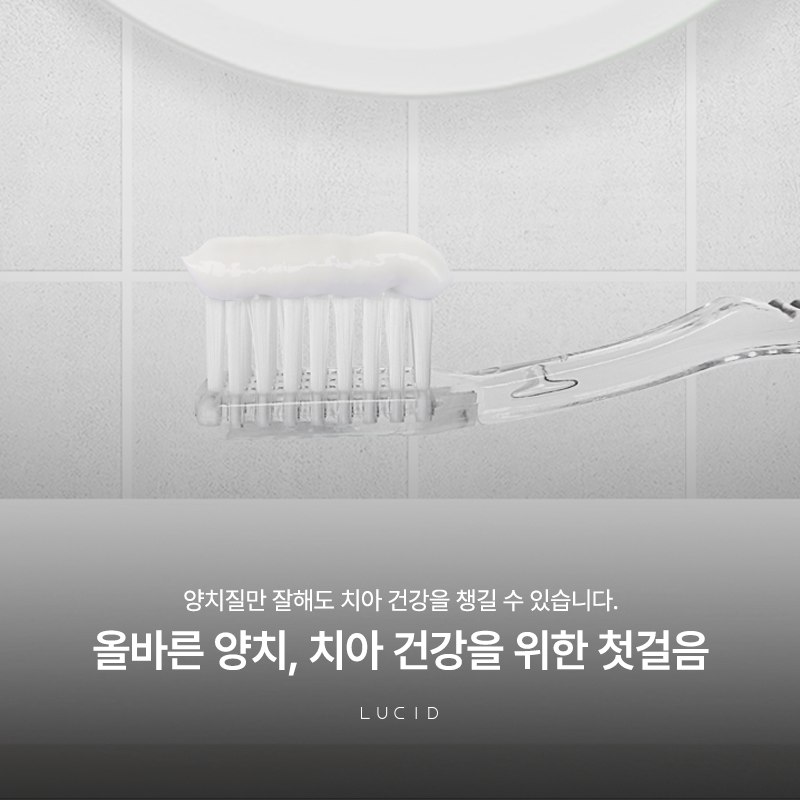
Brushing your teeth several times a day is such a familiar habit that many people assume it is sufficient simply because they do it every day.
However, when it comes to dental health, how you brush may be much more important than simply brushing frequently. Some people develop cavities or frequently experience swollen and sensitive gums even though they brush diligently.
This may be because their brushing method, toothbrush selection, or brushing habits are not appropriate, regardless of how often they brush.
In particular, as more people have come to value gum health as well as the health of their teeth, interest in proper brushing techniques has also grown.
Today, we will take an in-depth look at proper brushing habits that many people are curious about, along with how to find the brushing method that suits you.

Consistency matters, but so does how you brush.
Brushing your teeth is not simply an act of removing food debris. It is an important care habit that involves removing plaque—the bacterial film left on the surface of the teeth—and helping prevent cavities and gum disease.
However, brushing for a long time is not necessarily better. Brushing too forcefully or repeatedly scrubbing in the wrong direction may wear down the tooth surface or contribute to gum recession.
For example, many people brush by scrubbing forcefully from side to side. This habit may fail to remove plaque properly from between the teeth and may also irritate the gums.
Many people also focus on brushing only their teeth without caring for the gumline, the inner surfaces of the molars, or the tongue. However, cavities and gum disease often begin in areas where bacteria remain, so it is important to brush thoroughly in the right direction and order.
Ultimately, what matters is not how long you brush, but how properly you brush.

Do you know the basics of brushing—the 3-3-3 rule?
The 3-3-3 rule is one of the most commonly mentioned guidelines when discussing brushing habits.
-
Brush your teeth 3 times a day
-
Brush within 3 minutes after meals
-
Brush thoroughly for at least 3 minutes
Many of you have probably heard this at least once. Of course, it does not necessarily mean that you must brush exactly within 3 minutes in every situation, but it is a useful basic guide for establishing a regular brushing habit.
After eating, bacterial activity in the mouth increases and acidity rises, so the longer food remains in the mouth, the greater the possibility of developing cavities may be.
However, the important point is to create a care routine suited to your dental condition and lifestyle rather than simply brushing as quickly as possible.
For example:
-
People who drink coffee frequently
-
People who wear orthodontic appliances
-
People with weak gums
-
People who often get food stuck between their teeth
-
People who have received implant or prosthetic treatment
In these cases, regular brushing alone may not be sufficient, so using an interdental brush, dental floss, or an oral irrigator together with brushing may be helpful.
In other words, it is important to find a brushing method that suits you.
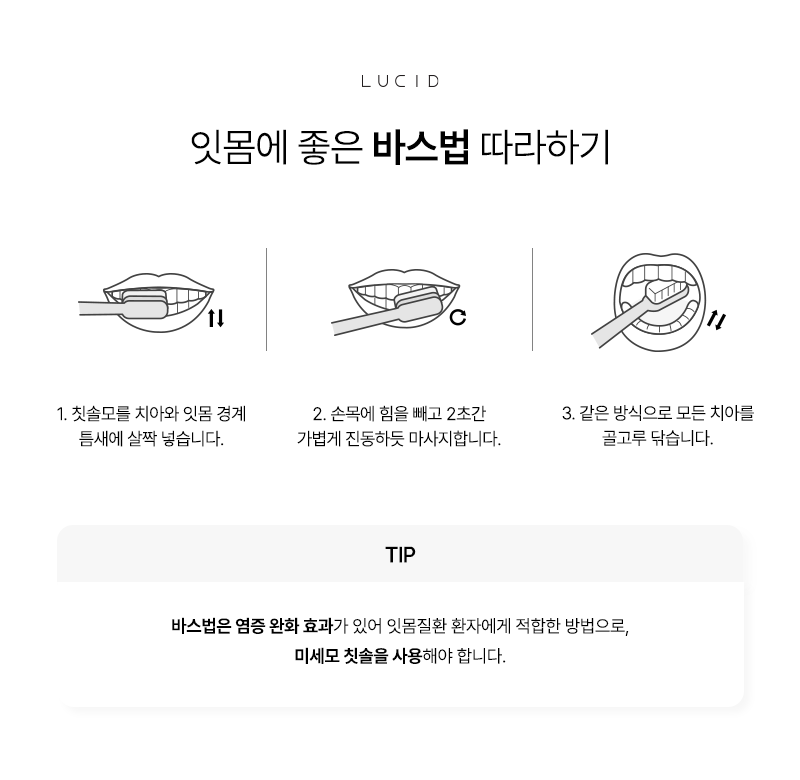
Follow the Bass technique for gum care.
Among brushing techniques, the Bass technique is often introduced as a method that can help with gum care. It is especially known as a useful approach for people whose gums frequently swell or bleed and for those who develop tartar easily.
How do you use the Bass technique?
- Place the bristles at the boundary between the gums and teeth.
- Move the brush gently, as if giving it a light vibration, without applying strong pressure.
- Brush briefly and gently, as though drawing small circles.
- After brushing one area, slowly move on to the next tooth.
The key to the Bass technique is not scrubbing forcefully, but gently caring for the gumline.
Gum disease often begins when bacteria accumulate along the boundary between the teeth and gums, so developing a habit of caring carefully for this area is important.
However, excessive pressure can irritate the gums depending on their condition, so it is best to brush slowly and gently.

Be sure to check the type of toothbrush you use.
Choosing the right toothbrush is just as important as brushing technique. More people than you might expect use toothbrushes that do not suit their oral condition.
Toothbrushes differ mainly in bristle firmness, head size, and handle shape.
When soft bristles may be suitable
-
People with weak gums
-
People whose gums bleed easily when brushing
-
People with tooth sensitivity
-
People who are receiving care after implant or gum treatment
When regular or resilient bristles may be suitable
-
People who develop tartar easily
-
People with a relatively large amount of plaque
-
People with comparatively healthy gums
However, stronger bristles do not necessarily clean better. In fact, using a toothbrush with bristles that are too firm for a long time may cause tooth wear or gum damage.
Also, if the toothbrush head is too large, it may be difficult to clean the inner surfaces of the molars carefully, so it is best to use a product suited to the size of your mouth.
Toothbrushes are generally recommended to be replaced every 2–3 months. If the bristles have become splayed, replacing the toothbrush sooner may help with oral hygiene.
Some areas may require more than brushing alone.
No matter how diligently you brush, it is difficult to clean the spaces between your teeth perfectly. Since cavities often begin between the teeth, developing a habit of using dental floss or an interdental brush is also important.
It may feel inconvenient at first, but with consistent use, your mouth may feel much fresher.
Using a tongue cleaner together with brushing may also help manage bad breath, and an oral irrigator may be helpful for people undergoing orthodontic treatment or needing to care for dental implants.
Proper brushing habits ultimately affect dental health.
Dental health is not established overnight. Small habits repeated every day can build up and affect your oral condition over time.
In particular, improper brushing habits often continue for a long time without the person realizing it, so it is important to review your current brushing method from time to time.
-
Are you brushing too forcefully?
-
Are you cleaning the gumline thoroughly?
-
Is your toothbrush in good condition?
-
Are you skipping flossing?
Checking these points together may help you develop healthier oral care habits.
Proper brushing does not begin with a complicated technique. It begins with consistently practicing a method suited to the condition of your teeth and gums. Since brushing is something you do every day, why not start today by developing a habit of brushing properly rather than simply brushing diligently?