Hello, this is Lucid Dental.
Have you ever suddenly felt a sharp, tingling pain in the corner of your mouth, or experienced swollen and throbbing gums?
There is a high possibility that the cause is a wisdom tooth, which got its name because it is said to appear between the late teens and early twenties, much like experiencing the pain of first love.
When wisdom teeth begin to emerge, many people first worry about whether they need to be removed and how painful the procedure will be. Today, together with Lucid Dental, we will take an in-depth look at when wisdom tooth extraction is recommended, the actual procedure, the pain that many people are most curious about, and frequently asked questions.
What exactly are wisdom teeth?
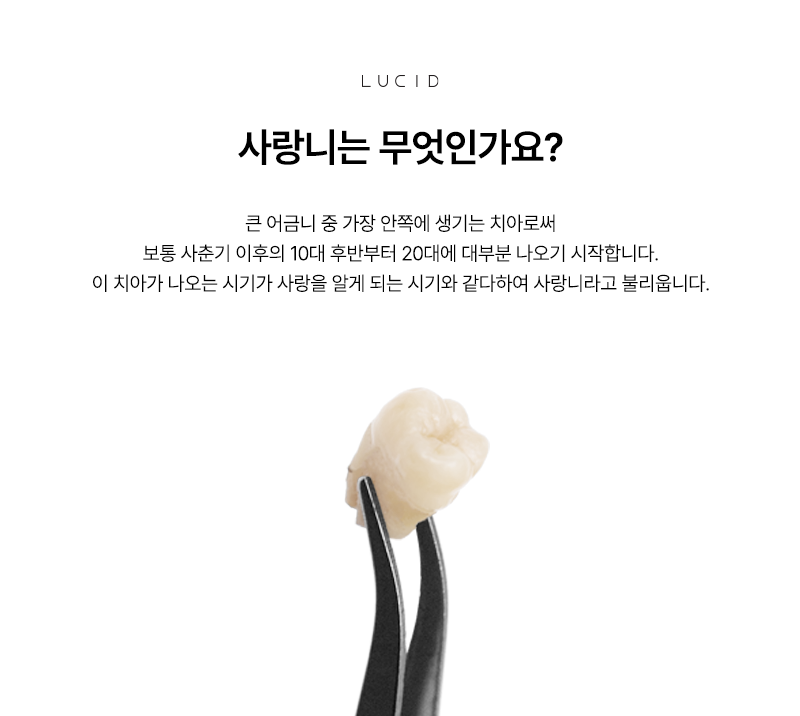
The precise medical name for wisdom teeth is the third molars. They are located at the very back of the mouth and are also the last permanent teeth to emerge.
Usually, one can develop in each of the upper and lower jaws on the left and right, for a maximum of four. However, there can be considerable individual variation: some people never develop wisdom teeth, while others develop only one to three.
As their name suggests, wisdom teeth are said to cause pain like the pain of first love. Rather than growing in neatly, they often emerge from the back corners beneath the gums and cause pain, becoming a concern for many people.
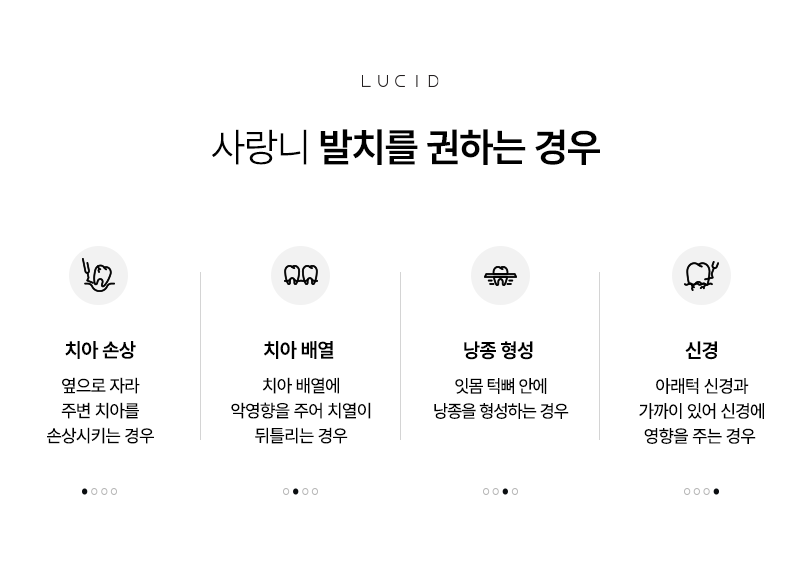
Do wisdom teeth always need to be removed? When is extraction recommended?
To get straight to the point, not all wisdom teeth need to be removed. If a wisdom tooth grows straight like the other teeth, helps with chewing, and can be thoroughly cleaned with a toothbrush—even at the very back of the mouth—it is fine to keep it without having it extracted.
However, as humans have evolved and begun eating fewer tough foods, the jawbones of modern people have generally become smaller. As a result, there is often not enough room for wisdom teeth to grow properly.
This can lead to impacted wisdom teeth that remain crooked beneath the gums, or horizontal wisdom teeth that grow sideways.
At Eonju Station Dental, extraction is recommended for safety when the following problems have occurred or are highly likely to occur due to the structure of the mouth.
-
When they damage adjacent teeth: If a wisdom tooth grows sideways and continuously pushes against the molar next to it, it may not only distort the overall alignment of the teeth but also cause resorption and damage to the root of the important molar.
-
When cavities develop between the molar and wisdom tooth: The space between a wisdom tooth and the molar in front of it is difficult for toothbrush bristles to reach. Food debris can easily become trapped and remain there, which can cause decay not only in the wisdom tooth but also in the important molar that needs to last a lifetime.
-
When gum inflammation and swelling recur: If a tooth cannot fully break through the gums and only the crown slightly emerges, a pocket-shaped space can form between the gum and tooth where bacteria can easily enter. This can cause bleeding and pus accumulation, and in severe cases, significant cheek swelling and difficulty opening the mouth.
-
When a cyst develops in the jawbone: An unerupted wisdom tooth that is completely embedded in the gums may not cause pain at first. However, over time, fluid can accumulate in the sac surrounding the tooth and develop into a cyst. Because this can dissolve the healthy jawbone around it and weaken the jaw, it is advisable to detect it early and take appropriate action.
Therefore, even if you are not in pain right now, it is important to have regular checkups at Eonju Station Dental to determine whether your wisdom teeth are affecting the health of the surrounding teeth and gums.
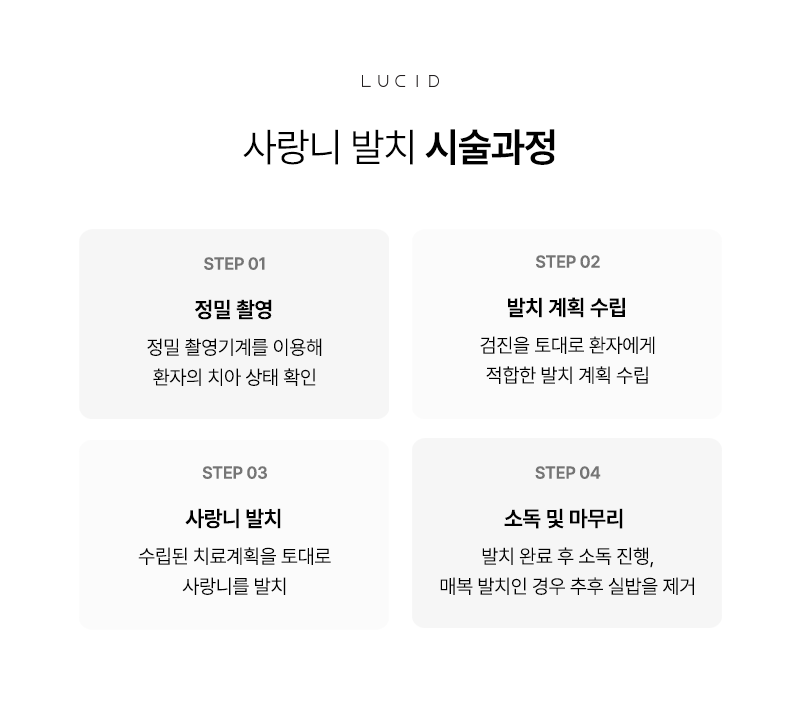
The wisdom tooth extraction process at Lucid Dental
Once wisdom tooth extraction has been decided, it is natural to wonder how the treatment will proceed and to feel anxious. At Lucid Dental, we systematically and transparently explain the entire procedure to help ease our patients’ concerns, even if only slightly.
-
Detailed imaging: The patient’s dental condition is assessed using detailed imaging equipment.
-
Extraction planning: An extraction plan suitable for the patient is established based on the examination.
-
Wisdom tooth extraction: The wisdom tooth is removed according to the treatment plan.
-
Disinfection and completion: The area is disinfected after extraction. In cases of impacted tooth extraction, the sutures are removed at a later visit.
Is wisdom tooth extraction very painful?
It is natural to feel tense just sitting in the dental chair, and the word “extraction” can understandably cause considerable fear.
However, one reassuring point is that thorough anesthesia is administered throughout the extraction process, so you will feel little to no pain during the procedure.
You may occasionally feel pressure or a dull sensation in your jaw or hear the sound of the equipment, but the pain itself is controlled, so you can relax. Many patients leave relieved, saying that the procedure was over quickly and was less painful than they expected.
Of course, throbbing pain may occur on the evening of the extraction, as the anesthesia gradually wears off. However, if you take the medication prescribed by Eonju Station Dental in accordance with the instructions before the anesthesia wears off, and follow the precautions carefully, you can reduce much of the pain in advance, so there is no need to worry too much.
Where should difficult impacted wisdom teeth be removed?
You may have visited a local dental clinic and been told that the tooth was too close to a nerve and that you needed to go to a university hospital, leaving you feeling overwhelmed. University hospitals may have waiting periods of several months for an appointment, making it inconvenient to endure the pain while waiting.
To reduce this inconvenience for our patients, Eonju Station Dental is equipped with 3D CT equipment capable of three-dimensional analysis. Experienced medical professionals with extensive clinical experience are also on site to provide responsible care.
You can have even highly complex impacted or horizontal wisdom teeth removed safely and in a comfortable environment, without having to travel far.
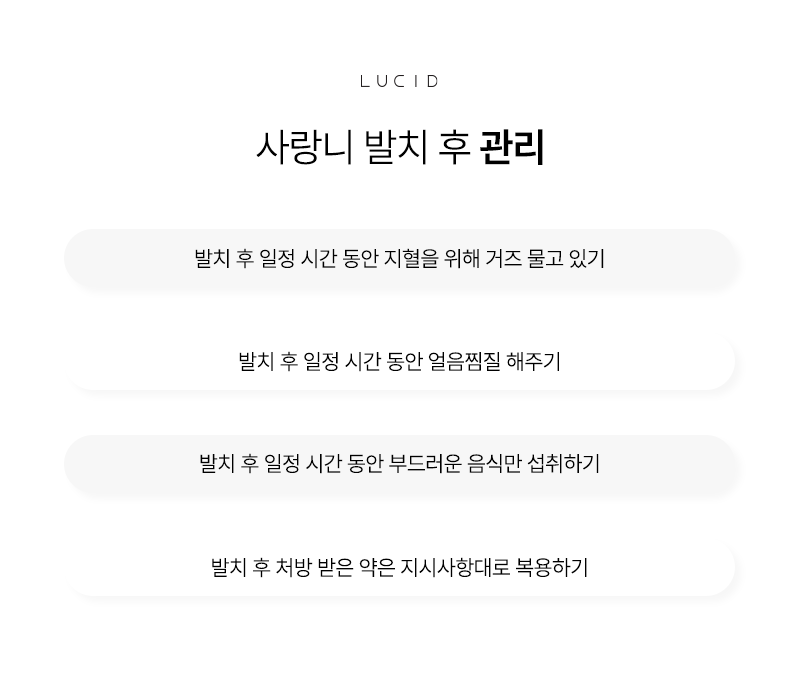
These precautions after extraction are essential
Aftercare is just as important as the extraction itself. Proper care helps the wound heal quickly and can prevent complications.
-
Keep firm pressure on the gauze for two hours: The gauze placed after extraction plays the most important role in helping stop the bleeding. Talking or biting down loosely can delay hemostasis, so keep firm pressure on it while swallowing saliva or blood.
-
Do not use straws or smoke: Actions that increase pressure inside the mouth can dislodge the blood clot formed at the wound and cause rebleeding. Smoking in particular interferes with wound healing, so it must be avoided.
-
Apply a cold compress: Applying a cold compress with an ice pack for 48 hours after extraction can be very helpful in reducing swelling and pain.
-
Take the prescribed medication for the full course: Do not stop taking the medication on your own just because the pain has subsided. To help prevent infection, continue taking the prescribed antibiotics and anti-inflammatory pain relievers for the period specified in the instructions.
Frequently asked questions about wisdom tooth extraction
We have collected questions that patients frequently ask when they visit Eonju Station Dental. We hope these answers help resolve your concerns.
Q. When can I eat after wisdom tooth extraction, and what should I eat?
A. We recommend eating after removing the gauze and waiting until the anesthesia has completely worn off. Chewing while the anesthesia has not fully worn off may cause you to bite your cheek or tongue and injure yourself. It is best to eat non-irritating foods on the day of extraction and the following day, using the teeth on the opposite side to chew.
Q. I feel like my bad breath has gotten worse after having a wisdom tooth removed. Why is that?
A. The area where the wisdom tooth was removed temporarily becomes a deep hole until new tissue fills it in. Food debris can become trapped in this hole, or a temporary odor may develop as the blood clot heals. Do not brush the wound vigorously. Instead, gently rinse it with the mouthwash provided by the dental clinic or with clean water. The area usually fills in gradually over several weeks, so there is no need to worry.
Q. What is dry socket, and how can I prevent it?
A. Dry socket is an infectious complication that occurs when the blood clot that should protect the wound after wisdom tooth extraction fails to form properly or becomes dislodged, exposing the jawbone and causing severe pain and an unpleasant odor. To prevent it, be sure to follow the precautions mentioned above: do not use straws, do not spit, and avoid smoking and drinking alcohol for at least one week. If the pain does not lessen and instead becomes worse three to five days after extraction, contact Eonju Station Dental without delay.
Q. Is same-day wisdom tooth extraction possible?
A. Yes. Many people request same-day extraction because of their busy schedules. When you visit Lucid Dental, we accurately assess the location and relationship of the nerve canal through several examinations. If the inflammation is not severe and the procedure is considered safe, we can perform the extraction on the same day. However, if the gums are severely inflamed and swollen or the pain is extreme, it may be more beneficial for reducing your pain to first take anti-inflammatory antibiotics to calm the inflammation and then schedule the extraction for a later date.
Wisdom teeth can damage the surrounding teeth if left untreated, but receiving appropriate treatment at the right time can be an important first step in maintaining oral health. If you have been postponing treatment because of fear, why not visit Eonju Station Dental for a comfortable consultation, with systematic diagnosis and careful treatment designed to put your mind at ease?
We will always be a dental clinic that puts our patients’ needs first. Thank you.