
Hello, this is Lucid Dental Clinic.
When many people think of cavities, they tend to picture teeth that have turned black or severe pain.
That is why quite a few people put off visiting a Nonhyeon-dong dentist, thinking, “It doesn’t hurt yet, so it should be fine,” or, “It’s only slightly sensitive, so I can wait and see.”
However, cavities progress much more quietly than many people realize. They often begin without any noticeable pain, gradually developing in areas that cannot be seen before suddenly appearing one day as pain or discomfort.
In particular, many modern lifestyles make people more vulnerable to cavities because it can be difficult to brush immediately after meals, while coffee, beverages, and snacks are often consumed frequently throughout the day.
Cavities are a common condition that can affect anyone, but the treatment process and the possibility of preserving the tooth can vary depending on how quickly the cavity is detected and managed.
Today, we will take an in-depth look at what cavities are, why they develop, where they commonly occur, their stages of progression, when treatment is needed, and how to care for your teeth after treatment.
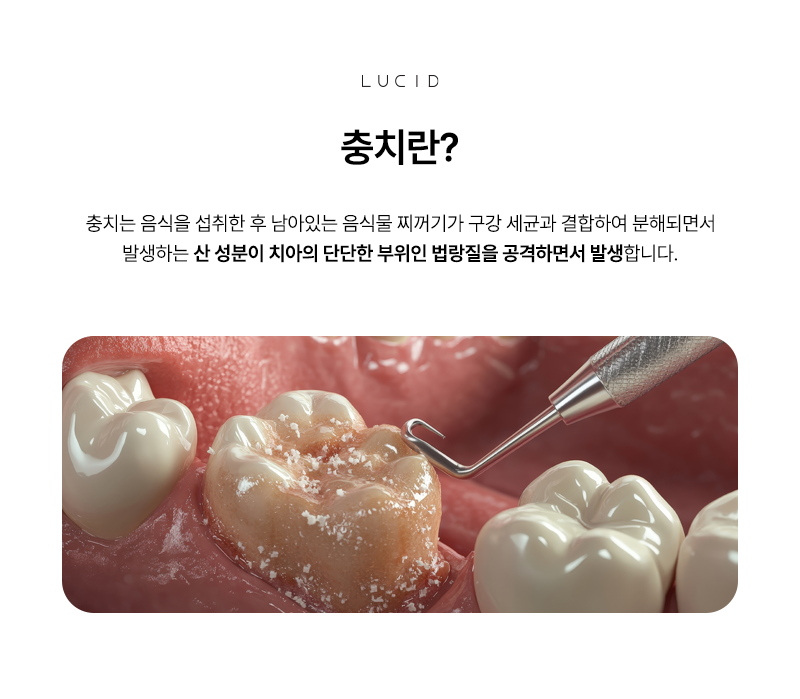
What Are Cavities?
The precise medical term for a cavity is dental caries.
There are countless bacteria on the surface of the teeth. As these bacteria break down the sugars in food, they produce acids.
These acids attack the tooth surface, gradually weakening and damaging the hard enamel. When this process is repeated, a cavity can develop.
Our teeth are broadly composed of enamel, dentin, and pulp.
Cavities begin in the outermost layer, the enamel, and gradually progress inward. At first, the damage may be small, but if left untreated, it can pass through the dentin and affect the nerve tissue.
An important point is that cavities rarely return to their original state naturally.
Therefore, early detection and appropriate care and treatment at a Nonhyeon-dong dentist are important.
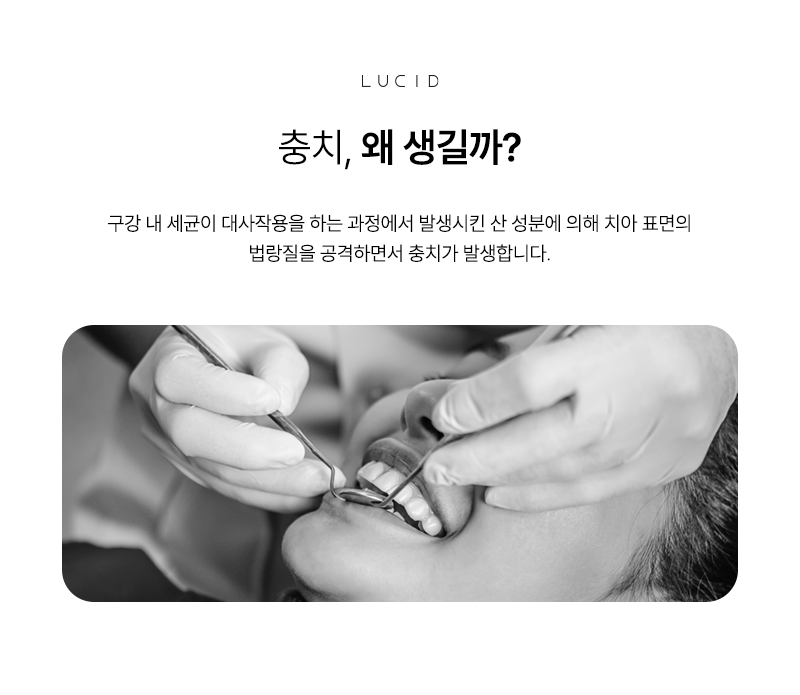
Why Do Cavities Develop?
Many people think that cavities are caused by eating a lot of sugary foods.
While sugar intake can certainly have a significant effect on cavity development, various factors actually work together.
-
Insufficient brushing: When food debris and bacteria remaining on the tooth surface accumulate for a long time, the risk of cavities may increase. In particular, if you do not brush properly before going to sleep, bacterial activity may become more active during the night.
-
Frequent snacking: Not only chocolate and candy, but also bread, snacks, and beverages can contribute to cavity development. Rather than eating a large amount at once, the habit of eating small amounts frequently can place more strain on the teeth.
-
Reduced saliva production: Saliva cleanses the mouth and helps neutralize an acidic environment. If your mouth is frequently dry, the likelihood of developing cavities may increase.
-
Tooth alignment problems: When teeth overlap or are arranged irregularly, it can be difficult for a toothbrush to reach certain areas, making it easier for bacteria to accumulate.
-
Inadequate flossing: It can be difficult to completely clean the spaces between teeth with a toothbrush alone. In fact, cavities often develop between teeth.
-
Around older dental restorations: If a gap develops around an existing crown or resin restoration, bacteria can enter through that area and cause a cavity.
Why Early Detection Is Important
The earlier a cavity is detected, the more likely it may be that relatively simple treatment is possible. Conversely, as a cavity becomes deeper, the scope of treatment may expand, and the burden in terms of treatment time and cost may also increase.
The problem is that early cavities have few or no symptoms. Because there is often no pain or noticeable change, many people do not realize they have one.
In fact, quite a few early cavities are discovered by chance during examinations at a Nonhyeon-dong dentist.
Cavities between teeth and cavities on the inner surfaces of molars are particularly difficult to check with a mirror, so regular checkups at a Nonhyeon-dong dentist may be helpful.
Rather than thinking that everything is fine because it does not hurt, it is especially important to approach dental care with the idea of having your teeth checked before pain develops.
Once a tooth is damaged, it can be difficult to restore it to its original condition. Therefore, early detection is especially important for using healthy natural teeth for as long as possible.
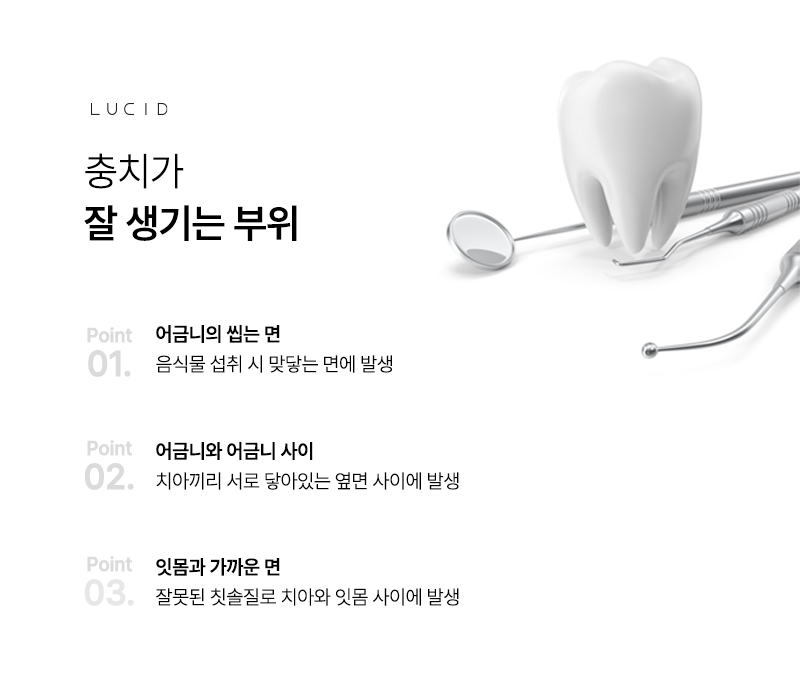
Areas Where Cavities Commonly Develop
Cavities do not develop randomly; they frequently occur in certain areas.
-
Between teeth: This is the most common area for cavities to develop. Because toothbrushes have difficulty reaching these spaces, food can remain there and bacteria can easily accumulate. This is precisely why flossing is important.
-
The chewing surfaces of molars: Molars have many deep and complex grooves. Food can become trapped in these grooves, potentially leading to cavities.
-
Along the gumline: Cavities are more likely to develop when brushing is insufficient or the gums have receded.
-
Around wisdom teeth: Wisdom teeth are structurally difficult to care for, and toothbrushes may not reach them well, which may increase the risk of cavities.
-
Around previously treated areas: Teeth that have received cavity treatment in the past also require careful management, because cavities can develop again around restorations.
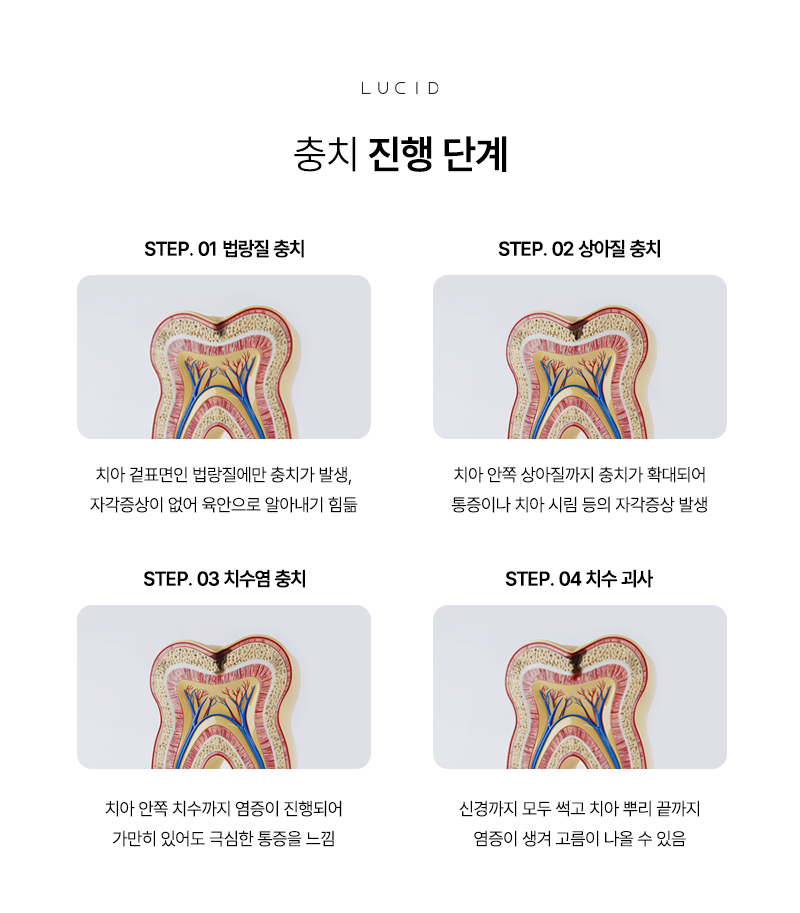
Stages of Cavity Progression
Cavities generally progress through the following stages.
Stage 1: Enamel cavity
This is the earliest stage. A small change appears on the tooth surface, but there is usually little to no pain. In many cases, it can be difficult to detect with the naked eye.
Stage 2: Dentin cavity
At this stage, the cavity has passed through the enamel and progressed into the dentin. Sensitivity may occur when consuming cold or sweet foods.
Stage 3: Cavity near the nerve
The cavity has progressed deeper and is now close to the nerve. Pain may occur when chewing, and you may feel discomfort in everyday life.
Stage 4: Nerve damage stage
At this stage, the tooth nerve has been affected. Severe pain or inflammation may occur, and appropriate treatment may be necessary.
Stage 5: Tooth root damage stage
The cavity has progressed very deeply, and whether the tooth can be preserved may need to be carefully assessed. Therefore, cavities are a condition for which it is more important to have them checked in advance than to simply wait and see.

When to Get Cavity Treatment
If you have any of the following symptoms, it is a good idea to have a dental examination at a Nonhyeon-dong dentist.
-
You feel sensitivity when eating cold foods.
-
You experience discomfort when eating sweet foods.
-
The surface of a tooth appears black.
-
Food repeatedly becomes trapped in a particular area.
-
Your mouth does not feel clean even after brushing.
-
Bad breath persists.
-
You feel pain when chewing.
-
You have not had a regular checkup in the past few years.
Even if you have no symptoms, regularly checking the condition of your teeth may be helpful.

Precautions During Cavity Treatment
Care after treatment at a Nonhyeon-dong dentist is also important.
Treatment does not mean that the matter is completely resolved. Whether a cavity recurs may depend on care afterward.
-
Maintain thorough brushing habits: Brushing three times a day is important, but brushing correctly is even more important.
-
Get regular checkups: This may help detect early cavities and manage treated areas.
-
Manage your eating habits: It is advisable to reduce the habit of frequently consuming snacks and beverages high in sugar.
-
Check the precautions immediately after treatment: Precautions may vary depending on the type of treatment, so it is important to carefully follow the guidance provided by your dental care team.
Why Do So Many People Choose Lucid Dental Clinic for Cavity Treatment?
Cavity treatment at a Nonhyeon-dong dentist is not simply a process of removing the cavity.
It is important to accurately assess the current condition of the tooth, examine the causes of the cavity, and provide guidance on how to manage it in the future.
Lucid Dental Clinic strives to carefully assess each patient’s oral condition and establish a treatment plan based on thorough consultation.
We are also always prepared to ensure that patients can receive care in a comfortable environment.
Cavities are not a condition that time will resolve. Rather, as time passes, the scope of treatment may expand, so it is important not to overlook even small signs.
If it has been a long time since your last dental checkup or you are experiencing discomfort in your teeth, consider taking the time to have your current condition checked.
Healthy teeth are not created overnight. Regular care and attention may be the best way to protect your natural teeth for a long time.