Hello, this is Lucid Dental Clinic.
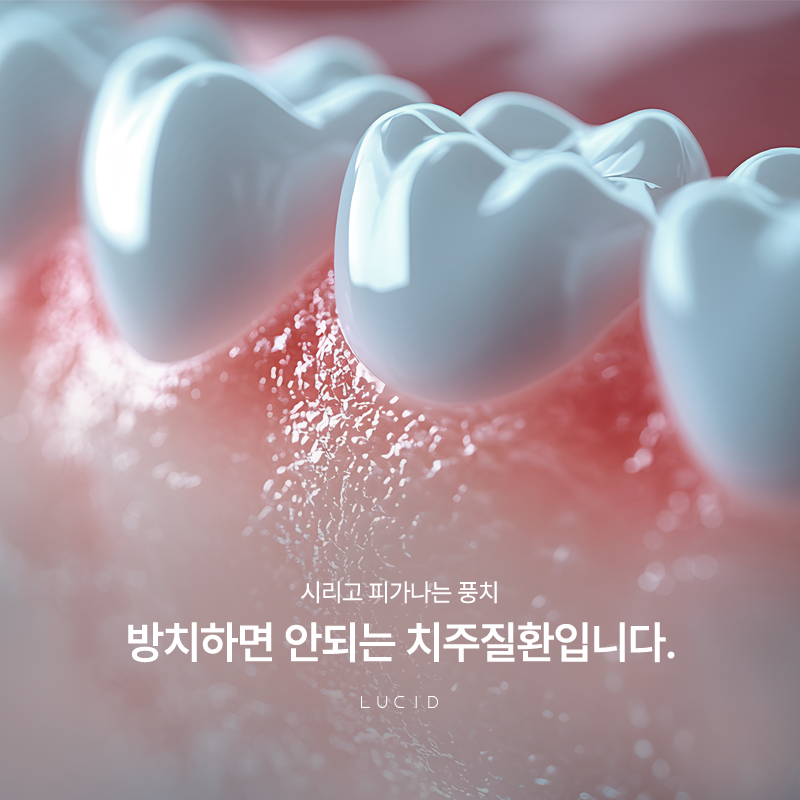
Although many people are very interested in dental health, more often than you might expect, they overlook the health of their gums.
Many people visit the dentist right away when their teeth hurt, but quite a few tend to dismiss bleeding or swelling in the gums as insignificant.
However, to use your teeth for a long time, gum health may be even more important than the teeth themselves.
Just as a house can remain standing for a long time only when its pillars are strong, teeth can function stably only when their supporting structures—the gums and alveolar bone—are healthy.
In fact, gum disease is one of the major causes of tooth loss in adults.
Many people think that losing teeth naturally comes with age, but in most cases, it is the result of advanced periodontal disease rather than aging itself.
Gum disease is particularly easy to detect late because it causes little to no pain in its early stages. While you think, “It’s probably just a little swelling,” or “Maybe I’m just tired,” the inflammation may gradually progress deeper.
Today, we will take an in-depth look at what gum disease is, along with its symptoms, causes, treatment methods, and prevention.
What Is Gum Disease?
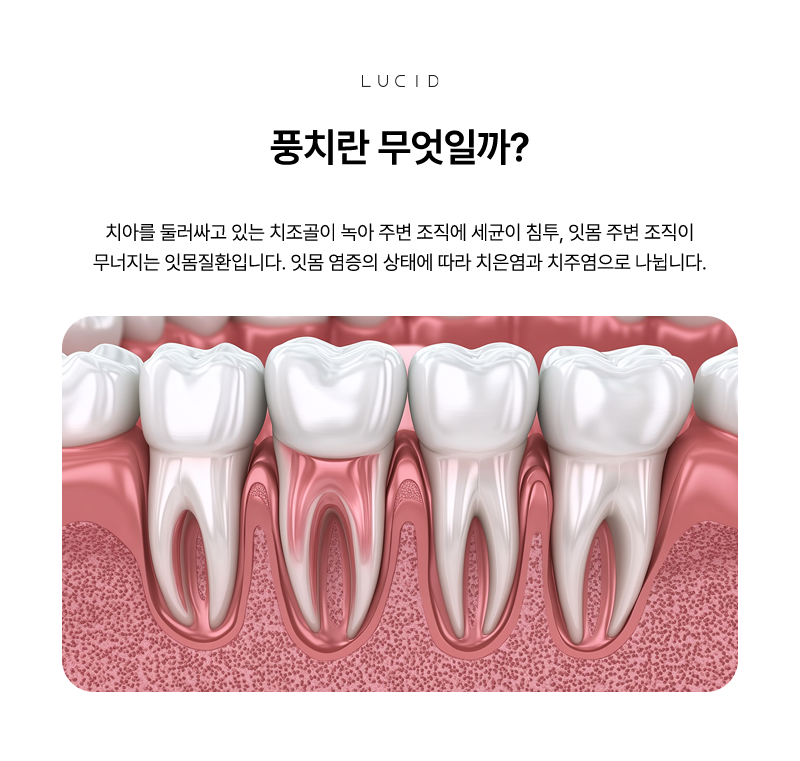
Gum disease is a commonly used expression, while its precise medical term is periodontal disease.
Several tissues support the teeth, including the gums, periodontal ligaments, and alveolar bone. Periodontal disease refers to a condition in which bacterial inflammation develops in these tissues.
Gum disease can generally be divided into two stages.
The first is gingivitis.
Gingivitis refers to a condition in which inflammation is limited to the gums. During this stage, the gums may become red, or bleeding may occur while brushing. Fortunately, because this is a relatively early stage, improvement may be possible with appropriate care and treatment.
The second is periodontitis.
This is a condition in which inflammation continues from gingivitis and progresses into the deeper areas beneath the gums. At this stage, not only the gums but also the bone supporting the teeth may be affected.
Once the alveolar bone begins to become damaged, the teeth may become loose or spaces may develop between them. In severe cases, the condition may progress to the point where tooth extraction needs to be considered.
In other words, gum disease is not simply a condition of weak gums; it is an important disease that can determine the lifespan of your teeth.

Main Symptoms of Gum Disease: Self-Check Test
-
Gums bleed when brushing
-
The gums appear swollen or red
-
Persistent bad breath
-
The spaces between the teeth feel wider
-
Food seems to get stuck more easily than before
-
The gums have receded, making the teeth look longer
-
The teeth feel loose
-
Chewing hard foods is uncomfortable
Even if only one or two of these symptoms appear, it is a good idea to have your gum condition checked at a Nonhyeon-dong dental clinic.
Gum bleeding, which many people experience, is especially one of the most common early signs. Many people think their gums bleed because they brush too hard, but healthy gums do not bleed easily from brushing alone.
Bad breath may also be associated with gum disease. This is because an increase in oral bacteria and the development of inflammation can produce an unpleasant odor.
Why Does Gum Disease Develop?
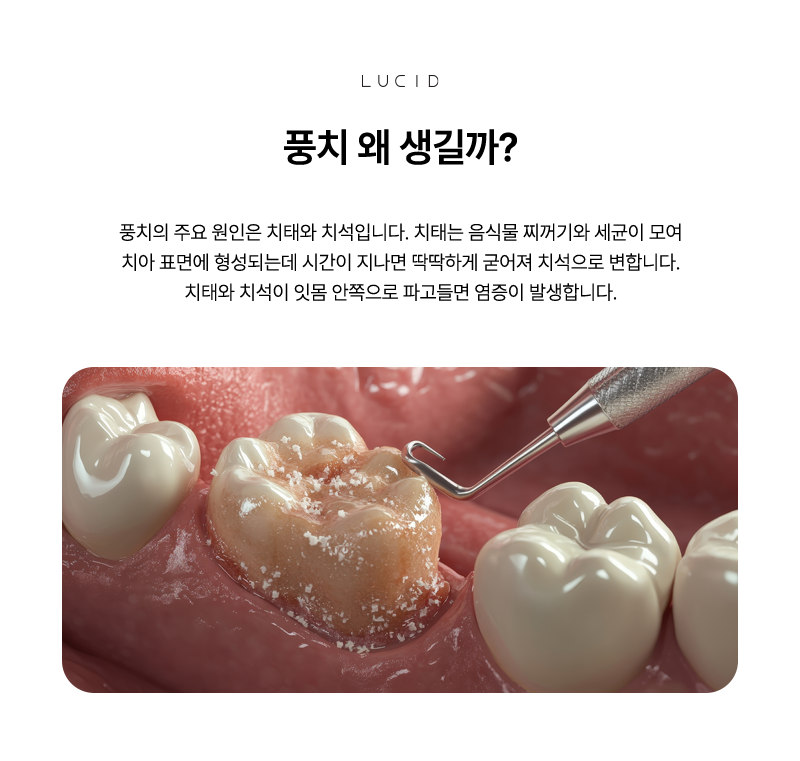
The primary cause of gum disease is bacteria.
After eating, plaque—a combination of bacteria and food debris—forms on the surface of the teeth. If this plaque is not properly removed, it gradually hardens into tartar over time.
Because tartar has a rough surface, it creates an environment where bacteria can attach more easily and continuously irritates the gums. However, removing tartar alone does not resolve every problem. Various factors may contribute to the development of gum disease.
-
Improper brushing habits: If you brush for too short a time or fail to properly clean between your teeth, bacteria can multiply easily.
-
Insufficient flossing: It is difficult to clean the spaces between the teeth completely with brushing alone. If floss or interdental brushes are not used enough, bacteria can accumulate easily.
-
Smoking: Smoking is a major risk factor for gum disease. It can interfere with blood circulation in the gums and reduce immune function, potentially increasing the likelihood that inflammation will worsen.
-
Stress: Chronic stress can lower the body’s immune function and affect inflammatory responses.
-
Lack of sleep: Insufficient rest may reduce the body’s ability to recover and can also affect gum health.
-
Diabetes: When blood sugar is not well controlled, a person may be more vulnerable to bacterial infections, and gum disease may progress more quickly.
-
Pregnancy and hormonal changes: During pregnancy, hormonal changes can make the gums more sensitive than usual. Increased gum bleeding is not uncommon among pregnant women.
-
Genetic factors: Even people with the same lifestyle habits may experience different degrees of gum disease. In some cases, genetics may also play a role.
What Happens If Gum Disease Is Left Untreated?
Because early gum disease causes little discomfort, many people miss the appropriate time for treatment. However, the longer it is left untreated, the more the problem may grow.
It may begin with gum bleeding, but over time the gums may recede and the tooth roots may become exposed. Eventually, the teeth may begin to loosen, and chewing strength may decrease.
In severe cases, the bone supporting the teeth may become significantly damaged, making it difficult to preserve the natural teeth. In particular, when one tooth is lost, it can affect the surrounding teeth as well, so early management is important.
Treatment Methods for Gum Disease
Treatment for gum disease at a Nonhyeon-dong dental clinic may vary depending on the current condition of the gums.
-
Scaling: The most basic treatment for removing tartar and plaque. During the early gingivitis stage, scaling alone may help manage inflammation.
-
Periodontal curettage: A procedure that removes inflamed tissue and bacteria located deep inside the gums. Its purpose is to manage areas that cannot be seen from the outside.
-
Root planing: A treatment that smooths rough tooth-root surfaces to reduce the chance of bacteria attaching again.
-
Periodontal surgery: When inflammation has progressed deeply, the gums may be opened to examine the inside and perform the necessary treatment.
The important point is that treatment for gum disease does not end with a single procedure.
Regular care and lifestyle improvements after treatment are also needed to help maintain a healthier condition.

How to Prevent Gum Disease
Prevention is more important than treatment at a Nonhyeon-dong dental clinic. Because damaged gum bone is difficult to restore completely to its original condition, everyday care is especially important.
-
Brush properly rather than focusing on brushing three times a day: Technique is more important than frequency. You need to develop the habit of carefully brushing the areas where the teeth and gums meet.
-
Use dental floss and interdental brushes: Cleaning areas that a toothbrush cannot reach can help reduce bacterial buildup.
-
Have regular checkups: Regular checkups can help detect problems that are difficult to identify visually at an early stage.
-
Get regular scaling: Because tartar is difficult to remove on your own, regular care at a Nonhyeon-dong dental clinic is important.
-
Quit smoking: Smoking is one of the important factors that increase the risk of gum disease progression.
-
Get enough sleep and eat a balanced diet: Maintaining immune function is also an important part of caring for gum health.
-
Do not consider bleeding normal: If your gums bleed repeatedly when brushing, it may be a signal from your gums.
Healthy teeth begin with healthy gums.
Many people think they only need to visit a Nonhyeon-dong dental clinic when their teeth hurt.
However, because gum disease often progresses without pain, it is important to have your gums checked regularly when there are no symptoms.
If your gums bleed when brushing, or if swelling and sensitivity recur, it is better to have your current condition checked rather than dismissing these symptoms as a temporary issue.
At Lucid Dental Clinic, we carefully examine the condition of your gums and provide guidance on care suited to your individual oral environment.
Because the scope of treatment may become broader when gum disease is discovered late, it is important not to overlook even minor signs.
If you want to use your teeth for a long time, start today by developing the habit of looking after your gums before your teeth.