Hello, this is Lucid Dental.
Many people use mouthwash as the final step after brushing their teeth. It is already a familiar oral-care product, especially for people whose jobs require them to meet others frequently, those who are sensitive to bad breath, and those wearing orthodontic appliances.
In fact, using mouthwash can make the mouth feel cool and refreshed, so many people feel as though they have brushed their teeth. As a result, quite a few people use only mouthwash during a busy morning commute, after lunch, or when they are out and do not have a toothbrush.
However, just because your mouth feels clean and refreshed does not mean that your teeth and gums have been thoroughly cleaned as well. In fact, misunderstanding the role of mouthwash can lead you to overlook important aspects of oral care.
Today, we will take a detailed look at what mouthwash actually is, why it cannot replace brushing, how to use it effectively, and what precautions to keep in mind.
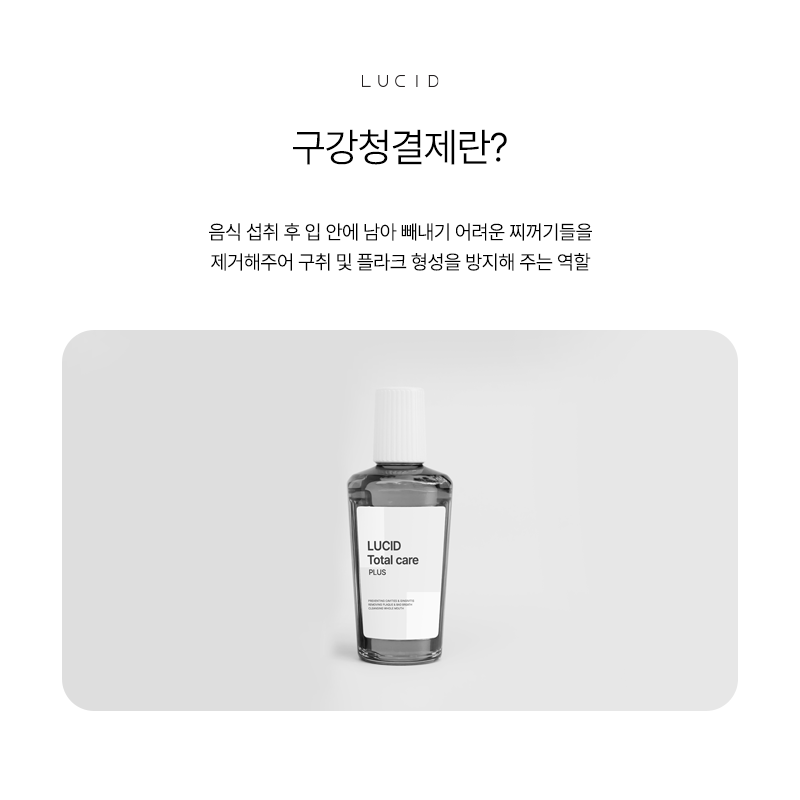
What Is Mouthwash?
Mouthwash is a liquid oral-care product that is used by holding it in the mouth, rinsing or gargling for a certain amount of time, and then spitting it out.
The ingredients vary somewhat from product to product, but mouthwash generally contains antibacterial ingredients, fluoride, and ingredients that help reduce bad breath. It helps reduce bacteria in the mouth and maintain a cleaner oral environment.
Recently, a wide range of products has been released, from those intended to help prevent cavities to products for gum care, products focused on reducing bad breath, and mild products for children.
Many people think of mouthwash simply as a product that eliminates bad breath, but it is actually used for a variety of purposes.
-
Reducing bad breath
-
Reducing bacteria in the mouth
-
Helping inhibit plaque formation
-
Helping prevent cavities
-
Supporting oral care during orthodontic treatment
-
Enhancing the feeling of cleanliness after brushing
However, it is important to understand first that even the best product cannot replace brushing.
Mouthwash Cannot Easily Replace Brushing
This is one of the points that dentists explain most often to patients.
Can you skip brushing if you use mouthwash? The answer is no.
Plaque, a combination of food debris and bacteria, continually forms on the surfaces of the teeth. Plaque is a sticky film that adheres to the tooth surfaces and the areas where the teeth meet the gums. It cannot be removed simply by rinsing with water or using mouthwash.
Removing plaque requires a physical cleaning process in which the toothbrush bristles directly scrub the tooth surfaces.
Simply put, mouthwash helps reduce the number of bacteria, while brushing removes the plaque itself, where the bacteria gather.
For example, imagine that dust has accumulated on a desk. Spraying only an antibacterial spray without first removing the dust does not make the desk clean. The proper order is to wipe away the dust first and disinfect it if necessary.
The same applies to oral care.
The most effective approach is to remove plaque with brushing and flossing, and then use mouthwash.
The spaces between the teeth and the areas where the teeth meet the gums are especially prone to cavities and gum disease. Since these areas are difficult to manage with rinsing alone, floss or an interdental brush should also be used.

Benefits of Mouthwash
Then, what benefits does mouthwash offer at a Hakdong Station dental clinic?
Although it cannot replace brushing, using it appropriately can provide positive support for oral care.
- Reducing bad breath
This is the most commonly recognized benefit. Because mouthwash reduces the activity of bacteria that cause bad breath, it may temporarily help reduce unpleasant breath. Using it before an important meeting, interview, date, or conference may help you maintain a fresher feeling.
- Reducing bacteria in the mouth
Some products contain antibacterial ingredients and may help reduce the number of bacteria. A reduction in bacteria may also have a positive effect on maintaining the oral environment.
- Supporting cavity prevention
Products containing fluoride may help strengthen the surfaces of the teeth. They can serve as a supplementary care method, especially for people at high risk of cavities.
- Useful when brushing is difficult
Office workers and students may sometimes be in environments where brushing after lunch is difficult. In such situations, using mouthwash may help keep the mouth feeling fresher until the next time they brush.
- Supporting care during orthodontic treatment
Food can easily become trapped around orthodontic appliances. Using mouthwash along with other cleaning methods may help maintain a cleaner oral condition.
- Improving the psychological feeling of cleanliness
The feeling of freshness in the mouth can also affect satisfaction in daily life. This refreshing sensation is one of the reasons many people use mouthwash.

How to Use Mouthwash
At a Hakdong Station dental clinic, using a good product is important, but using it correctly is just as important.
Step 1: Brush your teeth first.
The first thing to do before using mouthwash is to brush your teeth. It is more effective to use mouthwash after removing plaque and food debris.
Step 2: Measure the appropriate amount.
The recommended amount varies by product, so it is best to check the instructions.
Step 3: Rinse or gargle for about 30 seconds.
Rinse thoroughly so that the mouthwash reaches all areas of the mouth. It is best to rinse slowly so that it reaches between the teeth and around the gums.
Step 4: Spit it out without swallowing.
Mouthwash is not a beverage. It must be spat out.
Step 5: Do not rinse with water immediately afterward.
Especially with products containing fluoride, avoiding rinsing with water immediately after use may be helpful.
What to Check When Choosing a Product
There are many different types of mouthwash, so it is important to choose one that suits your oral condition.
-
Whether it contains fluoride: If your goal is cavity prevention, check whether the product contains fluoride.
-
Whether it contains alcohol: People who want a strong refreshing sensation may prefer products containing alcohol, but those with sensitive or dry mouths may experience irritation.
-
Intended use: Since each product has different features, such as cavity prevention, bad-breath care, gum care, or care during orthodontic treatment, it is best to identify your purpose first.
-
Level of irritation: People with fragile oral mucosa or severe dry mouth may consider a product with less irritation.

Precautions When Using Mouthwash
There are also some points you should be sure to know when using mouthwash.
-
Do not use it instead of brushing
-
Do not skip flossing
-
Do not exceed the recommended frequency of use
-
Do not swallow it
-
Children should use it under the guidance of a guardian
-
Stop using it if unusual symptoms occur after use
-
Avoid excessive use
-
Consult a professional if severe dryness of the mouth develops
In particular, some people use mouthwash frequently because they have severe bad breath. However, persistent bad breath may have other causes, such as cavities or gum disease, so an accurate examination at a Hakdong Station dental clinic may be necessary.
Mouthwash Q&A
Q. If I use mouthwash, can I shorten the time I spend brushing?
A. No. Mouthwash serves as a supplement to brushing. It is not a product that can be used instead of brushing and flossing. Rather, it is advisable to use it as an adjunct after brushing properly.
Q. Are alcohol-free products always suitable?
A. Not necessarily. This may vary depending on your oral condition and purpose of use. However, people whose mouths dry easily or who are sensitive to irritation may find alcohol-free products more comfortable.
Q. Can I use it every day in the morning, at lunchtime, and in the evening?
A. This is possible if you follow the product instructions. However, excessive use is not recommended and may irritate the oral mucosa, so it is best to check the recommended frequency.
Mouthwash is a useful product that may help manage bad breath and maintain oral hygiene. However, no matter how good the mouthwash is, it cannot replace brushing and flossing.
Proper brushing habits are the most important factor in maintaining healthy teeth and gums, and mouthwash is best used as a supplement. In addition, if bad breath persists for a long time or you experience gum bleeding, tooth sensitivity, or frequent cavities, it is important to accurately assess your current oral condition rather than trying to resolve the issue solely with mouthwash.
At Hakdong Station Dental Clinic, we carefully check the condition of your teeth and gums through regular examinations and provide guidance on care methods suited to your individual oral condition. If you regularly use mouthwash but often experience discomfort in your mouth or have questions about how to care for it, consider having your current condition checked through a dental examination.