Hello, this is Lucid Dental Clinic.
Wisdom teeth are the third molars that naturally erupt during adulthood, but they can also become a concern for many people. Some patients visit the dentist because of pain, while others discover impacted wisdom teeth during an examination despite having no particular symptoms.
Because wisdom teeth are located at the very back of the mouth, they are difficult to clean, and their direction of growth varies from person to person, which can lead to unexpected problems. Today, we will take a detailed look at everything from the types of wisdom teeth to why extraction may be necessary, the appropriate timing, the extraction process, and precautions—including whether wisdom teeth must be removed even when they do not hurt and why impacted wisdom teeth may need to be extracted.
What Are Wisdom Teeth?
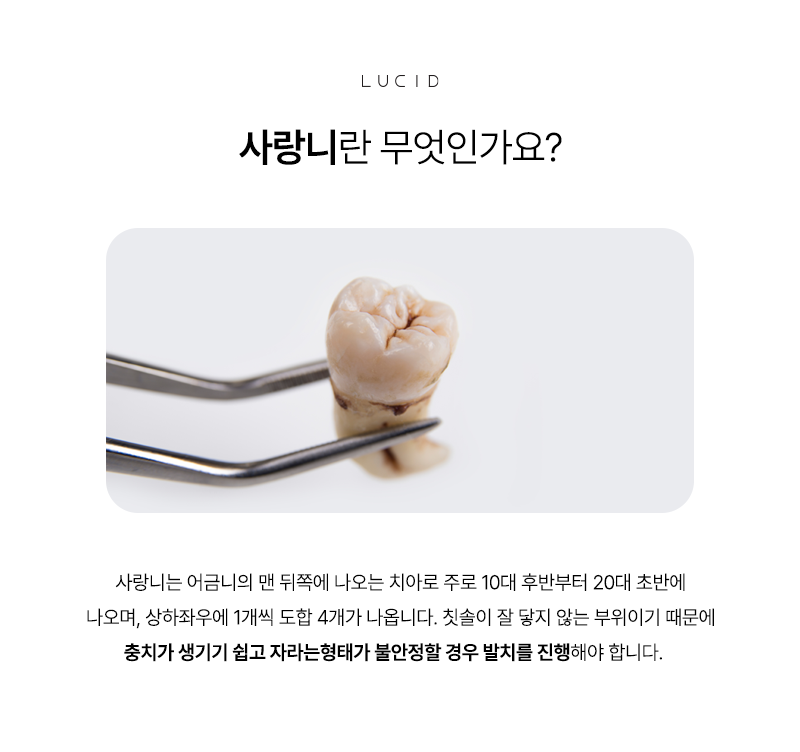
Wisdom teeth are the third molars that grow at the very back of the mouth. They commonly erupt between the ages of 17 and 25, and they were given this name because they appear around the age when people are thought to gain wisdom. Not everyone has wisdom teeth.
Some people develop all four, while others have only some of them erupt or do not have any at all. The problem is that modern people generally have smaller jaws than people in the past, leaving insufficient space for wisdom teeth to grow.
As a result, wisdom teeth may grow at an angle or sideways, and they are often found impacted beneath the gums or within the jawbone.
Do All Wisdom Teeth Need to Be Removed?
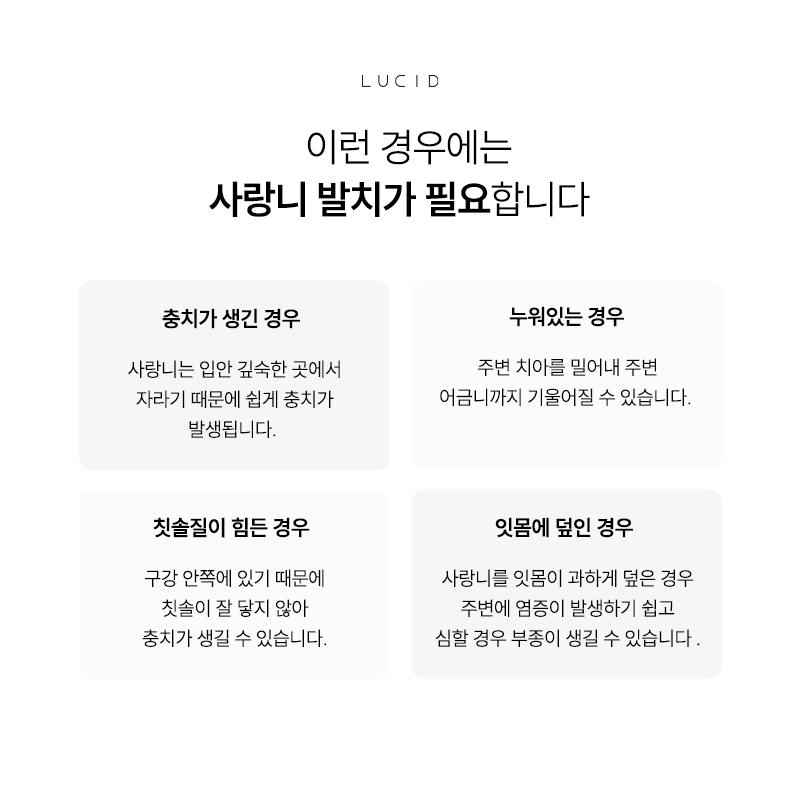
Not every wisdom tooth necessarily needs to be extracted. If it has grown straight, functions normally, and can be kept clean, it may be possible to retain it. However, extraction may be considered in the following situations.
-
It is growing at an angle.
-
It is lying sideways.
-
Only part of it has erupted.
-
Food frequently becomes trapped around it.
-
There is a high risk of tooth decay.
-
It is pushing against the surrounding teeth.
-
Orthodontic treatment is planned.
Because wisdom teeth are difficult to care for due to their location, it is important to have their condition checked through an examination at a Yeoksam-dong dental clinic if there is a possibility of future problems, even when there are no particular symptoms at present.
Why Do Wisdom Teeth Cause Problems?
Wisdom teeth are located at the very back of the mouth, making it difficult for a toothbrush to reach them adequately. Even with thorough brushing, this area is difficult to maintain, so bacteria and food particles can easily remain. In particular, when only part of a wisdom tooth has erupted, debris can easily accumulate in the space between the gums and the tooth, causing repeated inflammation.
Many people think that only the wisdom tooth itself becomes problematic, but in reality, it often affects the neighboring tooth as well. The second molar next to the wisdom tooth may develop tooth decay or gum disease, and in severe cases, even a healthy molar may require treatment.
Therefore, it is important to assess wisdom teeth from the perspective of overall oral health rather than viewing them as an issue involving just one tooth.
What Happens If an Impacted Wisdom Tooth Is Left Untreated?
An impacted wisdom tooth is one that is buried beneath the gums or within the jawbone. Because it is often not visible from the outside, many people are unaware that they have one. However, leaving it untreated can lead to various problems.
-
Inflammation around the wisdom tooth: Food particles and bacteria can easily accumulate around a partially erupted wisdom tooth. This can cause gum swelling and pain or discomfort when opening the mouth.
-
Damage to adjacent teeth: A wisdom tooth lying at an angle can continuously press against the molar in front of it. As a result, the healthy molar may develop tooth decay, or its root may be damaged.
-
Development of gum disease: The difficult-to-clean environment can also affect gum health. If inflammation recurs, it may affect the surrounding tissues as well.
-
Possibility of cyst formation: In rare cases, a cyst may form around an impacted wisdom tooth. Therefore, even in the absence of particular symptoms, it is advisable to check its condition through regular examinations.
Problems That May Occur When Wisdom Tooth Extraction Is Delayed
If a Yeoksam-dong dental clinic determines that extraction is necessary but the condition is left untreated for a long time, the following problems may occur.
-
Recurrent pain
-
Worsening gum inflammation
-
Increased food impaction
-
Bad breath
-
Increased risk of tooth decay in surrounding teeth
-
Possible progression of gum disease
-
Increased extraction difficulty
-
Possible increase in the recovery period
In particular, as people grow older, the jawbone may become denser, which can increase the number of factors that need to be considered when planning treatment.
Types of Wisdom Teeth
Wisdom teeth are classified into various types according to how they grow.
-
Vertical impaction: The tooth is growing in the normal direction, but part of it is covered by the gums.
-
Angled impaction: The tooth is tilted toward the tooth in front of it. It may affect the surrounding teeth.
-
Horizontal impaction: The tooth is growing sideways. This is generally considered a relatively difficult type.
-
Complete impaction: The entire tooth is buried within the jawbone. It is often identified through panoramic imaging or a CT scan at a Yeoksam-dong dental clinic.
It is better to check the condition of a wisdom tooth before problems occur rather than waiting until it begins to hurt.
-
Orthodontic treatment is planned.
-
Impaction has been identified.
-
Inflammation recurs.
-
It is affecting the surrounding teeth.
-
There is a high risk of tooth decay.
If any of the above applies to you, receiving an early consultation may be helpful. When deciding on the timing of extraction, it is important to consider the wisdom tooth’s location, direction, and the condition of the surrounding tissues as a whole, rather than simply considering age.
Why Is a CT Scan Important Before Wisdom Tooth Extraction?
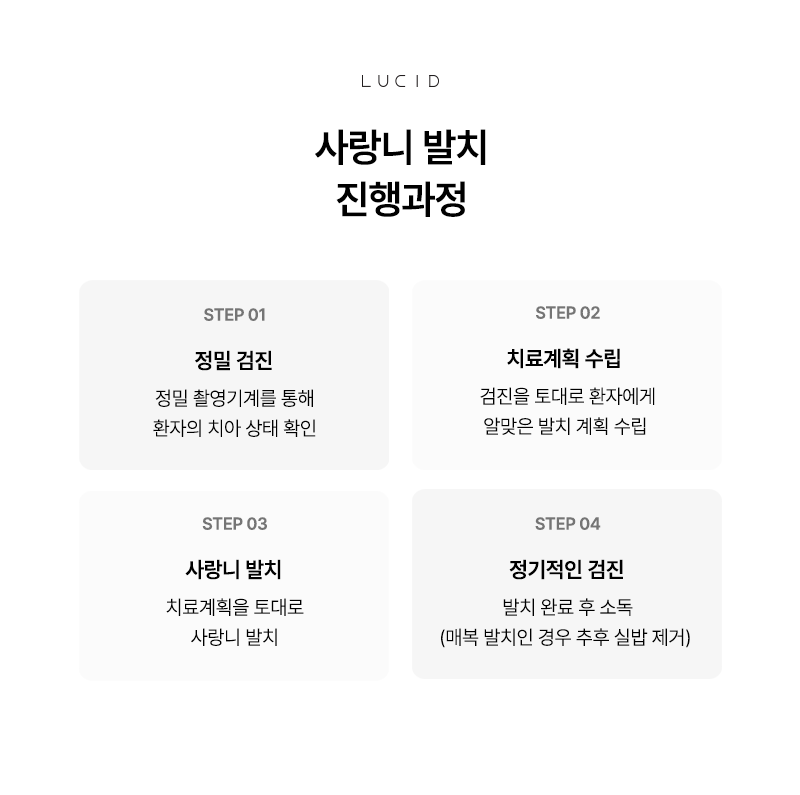
One of the most important steps in wisdom tooth extraction is an accurate diagnosis at a Yeoksam-dong dental clinic. Lower wisdom teeth, in particular, may be located close to the nerve canal. In such cases, it may be difficult to determine their exact location using only panoramic imaging.
At Lucid Dental Clinic, we use CT scans when necessary to examine the wisdom tooth’s direction, depth, and distance from the nerve in greater detail. This can help establish a more systematic treatment plan and support a more predictable extraction process.
Wisdom tooth treatment is not simply a matter of pulling out a tooth; accurately understanding its current condition is one of the most important aspects of treatment.
At Lucid Dental Clinic, we establish a treatment plan after thoroughly assessing each patient’s condition.
Wisdom Tooth Extraction Q&A
Q. How long is the recovery period after wisdom tooth extraction?
A. Although there are individual differences, it is generally possible to resume daily activities within a few days, while the gum tissue may take several weeks to recover steadily. The recovery period may vary depending on the wisdom tooth’s location and the difficulty of the extraction.
Q. How much pain can be expected during wisdom tooth extraction?
A. Because the extraction is performed after anesthesia, significant pain during the procedure is often unlikely. Swelling or discomfort may occur afterward, and experiences vary from person to person.
Q. What precautions should be taken after wisdom tooth extraction?
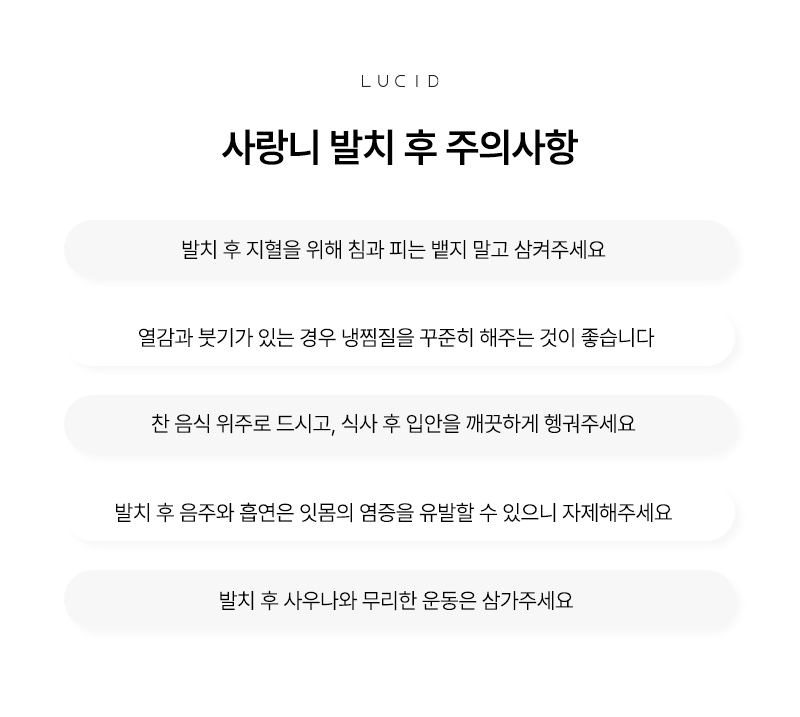
A. Managing bleeding and getting sufficient rest are important. Avoiding smoking and alcohol, refraining from using straws, and avoiding strenuous exercise can also support recovery.
Q. What foods should I eat after wisdom tooth extraction?
A. Soft, non-irritating foods are recommended during the early stages of recovery. Conversely, foods that are very hard, hot, or irritating should preferably be avoided during the initial recovery period.
Wisdom teeth are not teeth that only need to be checked after pain develops. Depending on their direction and location, they may lead to various problems in the future even when there is currently no discomfort. In particular, impacted wisdom teeth are difficult to assess on your own, so it is important to have their condition checked through regular examinations.
If you are concerned about your wisdom teeth or are wondering whether extraction is necessary, please receive an accurate examination at Lucid Dental Clinic. Lucid Dental Clinic carefully reviews each patient’s oral condition and strives to provide guidance on a treatment approach suited to their current situation.
If you are considering wisdom tooth extraction, please feel free to schedule a consultation.