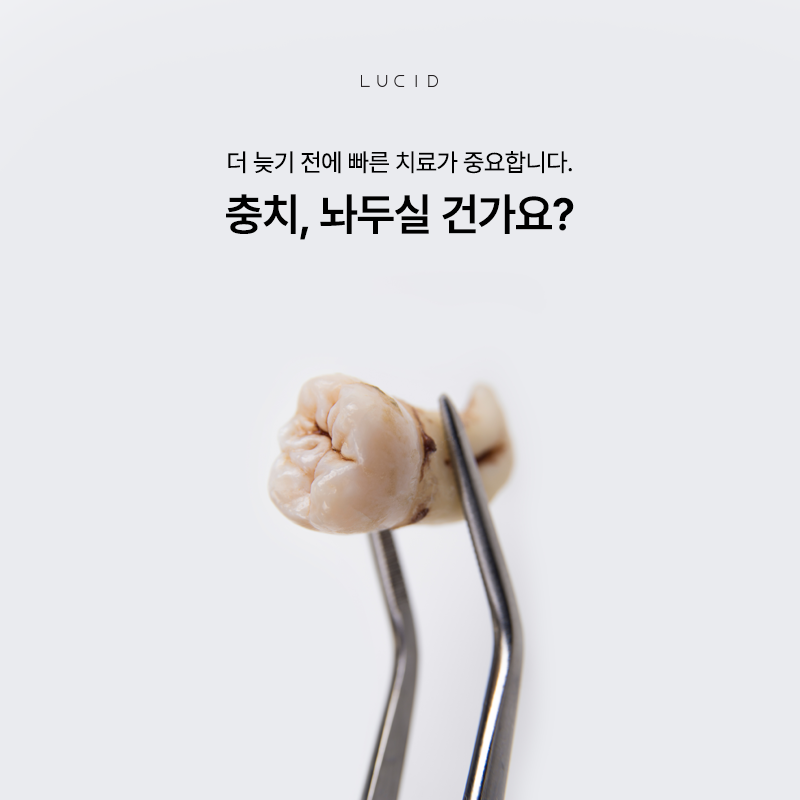
Hello, this is Lucid Dental Clinic.
Have you ever noticed a black spot on a tooth or felt a sharp sensation when eating cold foods, but postponed visiting Sapyeong Station Dental Clinic?
Cavities are an oral disease that many people experience at least once. However, they often cause few noticeable symptoms in the early stages, so it is not uncommon for people to miss the right time for treatment.
In particular, it is common for cavities to be discovered only after progressing deeper than expected because people let their guard down, assuming that the absence of pain means there is no problem.
Because cavities do not heal naturally, it is important to accurately assess their current condition and proceed with the necessary care.
Today, we will take a detailed look at what cavities are, why they develop, what changes occur at each stage of progression, and what should be considered first when planning treatment.
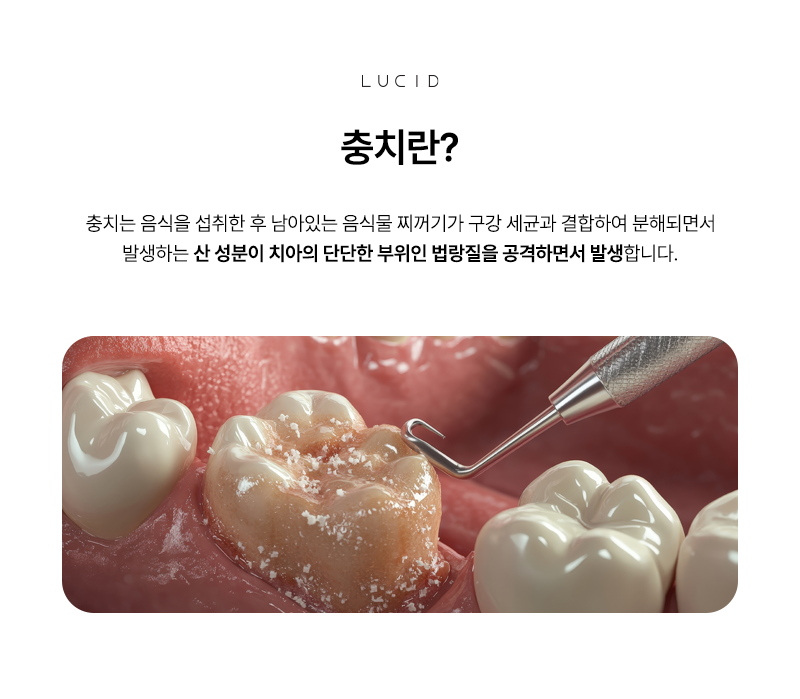
What Are Cavities?
Cavities are a condition in which the surface of a tooth is damaged by bacteria.
When we eat, food debris remains in the mouth, and oral bacteria produce acids as they break down these substances. When this acid repeatedly attacks the tooth surface, the hard enamel weakens and damage gradually begins.
At first, cavities begin as small changes that are difficult to distinguish with the naked eye, but over time they can spread into the interior of the tooth.
Therefore, it is better to understand cavities not simply as the appearance of a black spot, but as a process in which tooth tissue is gradually destroyed. Many people think a cavity must cause pain, but in reality, it often progresses with few or no symptoms.
For this reason, there are limitations to judging dental health based only on noticeable symptoms.
Ultimately, with cavities, the extent of progression at the present time is more important than when they were discovered.
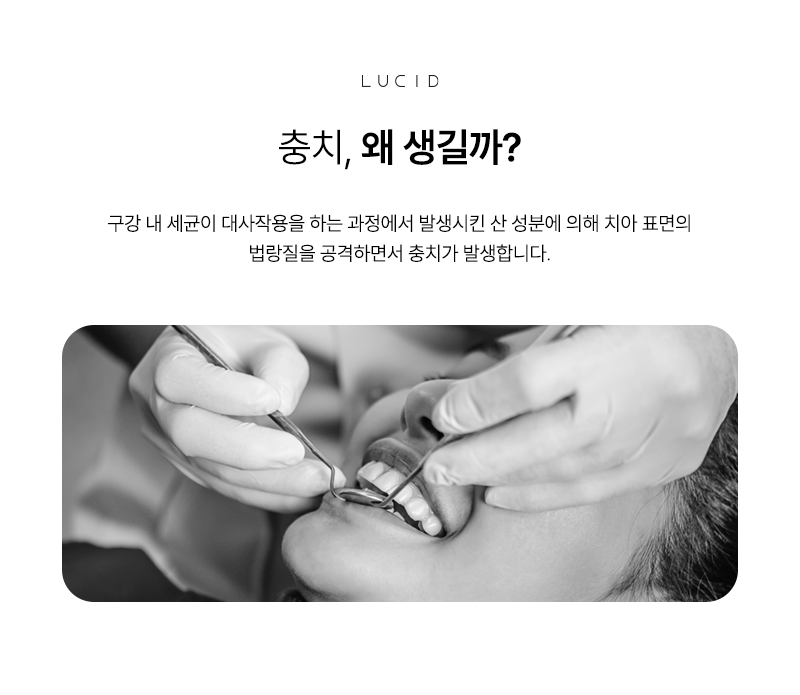
Why Do Cavities Develop?
Cavities do not develop simply because you skipped brushing your teeth for one day. They occur through the combined effects of lifestyle habits, the oral environment, and eating habits.
-
Accumulation of plaque: Plaque is a sticky film formed when food debris combines with bacteria. If it remains for a long time in areas that are difficult for a toothbrush to reach, bacterial activity may increase, which can also raise the likelihood of cavities.
-
Frequent sugar consumption: Chocolate, candy, and carbonated drinks can have an effect, as can sweet coffee and other beverages. In particular, consuming sugary items frequently may have a greater impact on the oral environment than consuming a large amount at one time.
-
Improper oral care: The number of times you brush is important, but so is the method. If you do not carefully clean between the teeth, the inner surfaces of the molars, and the areas along the gumline, bacteria can accumulate easily.
-
Reduced saliva production: Saliva helps neutralize acidity in the mouth and suppress bacterial activity. If your mouth often feels dry or you produce little saliva, the likelihood of developing cavities may increase.
-
Effects of tooth alignment: When teeth overlap or have deep grooves, food can remain trapped more easily. As these areas become more difficult to clean, bacteria may remain there longer, making more attentive care necessary.
Ultimately, cavities are not caused by a single factor but can be viewed as changes resulting from several factors acting together.

Stages of Cavity Progression and the Risks of Leaving Them Untreated
Cavities do not suddenly become severe. They begin with small changes and gradually progress into deeper areas.
The problem is that there is usually little pain in the early stages. Therefore, if you leave a cavity untreated, thinking, “It doesn’t hurt, so it must be fine,” the scope of treatment at Sapyeong Station Dental Clinic may become wider.
Stage 1: Enamel Cavity
This is when changes occur in the enamel, the outermost layer of the tooth. White or brown spots may appear, but there is usually little or no noticeable pain. This stage is often discovered during regular checkups and can be difficult to recognize on your own.
Stage 2: Dentin Cavity
This is when the cavity has passed through the enamel and progressed into the dentin. You may experience sensitivity when eating cold or sweet foods, and food may become trapped more often. This is the stage when discomfort may gradually begin to appear in everyday life.
Stage 3: Pulpitis
This is when the cavity has progressed near the pulp, the nerve tissue, causing inflammation. The tooth may throb even when you are still, the pain may worsen at night, and it may react sensitively to hot or cold foods. Many people also feel discomfort when chewing, which can make daily life more difficult. At this stage, it is important to assess not only the extent of the cavity but also the condition of the pulp.
Stage 4: Pulp Necrosis
If inflammation continues, the pulp tissue can become damaged and lose its function. In some cases, the pain may decrease or disappear, leading people to mistakenly believe that the problem has improved. However, this does not mean the problem has been resolved; the internal tissue may already have been affected. The tissues around the tooth root may subsequently be affected, and swelling or discomfort in the gums may occur. This is why the condition should not be judged solely by whether pain is present.

Problems That May Occur If Cavities Are Left Untreated
-
Greater extent of tooth removal
-
Increased risk of tooth fracture
-
Reduced chewing function
-
Inflammation around the gums
-
Spread of effects to adjacent teeth
-
Longer treatment period
-
More complicated care process
-
Greater burden on overall oral health
Even a change that begins as a small spot can make a bigger difference than expected over time. Therefore, it is especially important to have your condition checked early at Sapyeong Station Dental Clinic.
Why an Accurate Diagnosis Should Come Before the Treatment Method
When considering cavity treatment at Sapyeong Station Dental Clinic, many people are most curious about whether resin or an inlay is better and which treatment method will be used. Of course, the treatment method is also important.
However, what must come first is accurately understanding the current condition. Even when the diagnosis is the same, the factors to consider may vary depending on the location and depth of the cavity and the condition of the surrounding teeth.
For example, a cavity may look like a small spot on the outside while the extent of internal damage is broad. Conversely, something that stands out may actually be staining rather than a cavity. In addition, cavities that develop between teeth, as well as recurrent cavities that develop underneath, may progress without noticeable symptoms.
Because the visible appearance and the actual condition can differ, an accurate diagnostic process is important before deciding on a treatment method.
At Lucid Dental Clinic, we consider it important to assess the current condition from various angles and determine the necessary scope based on oral examinations and imaging. Although cavities share the same name, their extent and location differ from patient to patient.
An appropriate treatment plan can be established only after an accurate diagnosis has been made. Ultimately, the beginning of good treatment is not the treatment method but an accurate diagnosis.

Precautions After Cavity Treatment
Treatment at Sapyeong Station Dental Clinic does not mean that care is finished once the procedure is over. Ongoing care is also important for maintaining a healthy oral environment.
-
Avoid overly hard foods on the day of treatment
-
Do not repeatedly touch the treated area with your tongue
-
Maintain proper tooth-brushing habits
-
Use dental floss and oral care products
-
Check your regular examination schedule
-
Consult the clinic if unusual symptoms persist
-
Reduce the frequency of sugar consumption
-
Maintain adequate fluid intake
Because areas where cavities have occurred may require consistent care, it is advisable to maintain regular checkups and good care habits together.
Cavities are very common, but they should never be taken lightly. They may cause no noticeable pain in the early stages, but over time they can affect areas deep inside the tooth, and the scope of treatment may also change.
The important thing is not to wait until it hurts, but to have your current condition checked at Sapyeong Station Dental Clinic when you notice even a small change.
Because dental damage can be difficult to reverse once it occurs, early detection and care are especially important.
If you are looking for Sapyeong Station Dental Clinic, rather than simply researching treatment methods, start by accurately checking the current condition of your teeth.
At Lucid Dental Clinic, we carefully examine each patient’s current oral condition and work together to consider an appropriate care plan through a thorough consultation.
Do not leave even slight sensitivity or a small spot unattended. The first step toward maintaining healthy teeth for a long time can begin with checking their current condition.