Hello, this is Lucid Dental.
Because teeth cannot heal on their own once they are damaged, it is important not to dismiss even minor symptoms. In particular, if you repeatedly experience sensitivity when drinking cold water or throbbing pain when eating hot foods, it is better to have your current dental condition checked at a Nonhyeon-dong dental clinic rather than assuming it is simply a temporary symptom.
Many people assume that tooth pain means they have developed a small cavity. However, if a cavity has become deep and inflammation has progressed to the nerve inside the tooth, it may be difficult to resolve the problem with general cavity treatment alone. Root canal treatment is the treatment considered when the nerve inside the tooth has been damaged in this way.
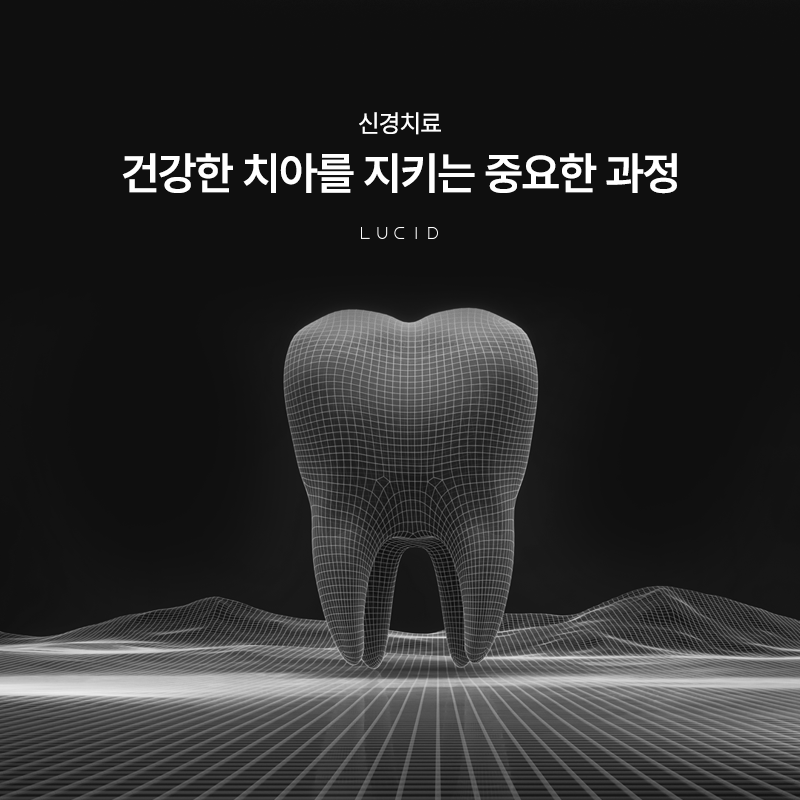
When people hear the term root canal treatment, they often first think about the pain or the treatment period. However, the primary purpose of root canal treatment is not to extract the tooth, but to preserve the natural tooth for as long as possible.
Receiving treatment at the appropriate time may help increase the chances of keeping your own tooth. Conversely, if treatment is delayed, the scope of treatment may become more extensive.
Today, we will take a detailed look at what root canal treatment is, when it is needed, how to self-check for possible symptoms, the treatment process, the average number of appointments, and why a crown may be needed after root canal treatment.
What Is Root Canal Treatment?
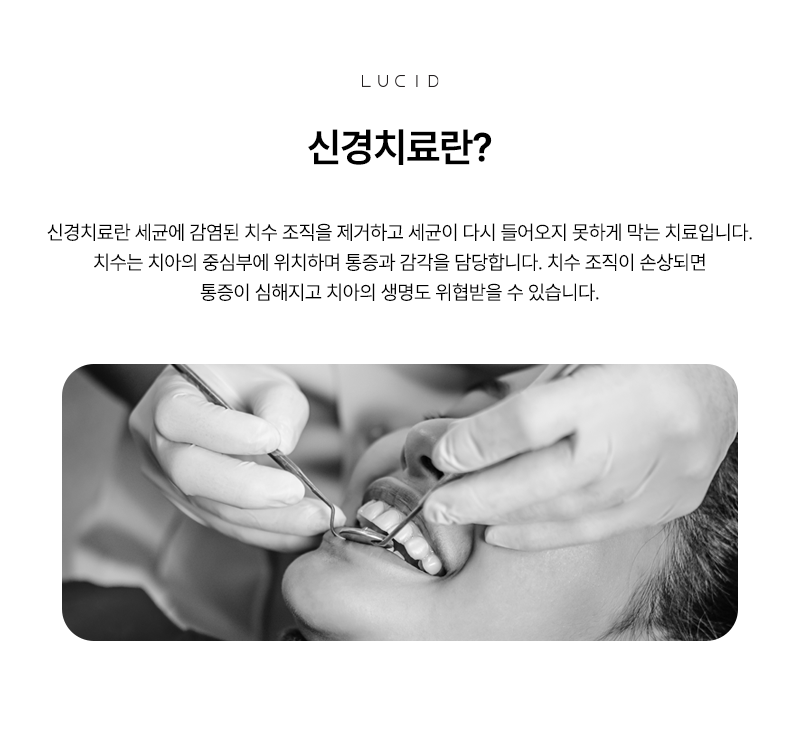
Inside the tooth is tissue called the dental pulp. The pulp contains both nerves and blood vessels and plays an important role in supplying nutrients to the tooth and sensing external stimuli.
However, if a cavity becomes deep, the tooth breaks, or bacteria enter through gaps around an old restoration, inflammation can spread to the pulp. At first, this may begin as sensitivity to cold or hot foods, but over time it can develop into throbbing pain even when nothing is being done to the tooth, or lead to pulp necrosis.
Because severely infected nerve tissue rarely recovers naturally, root canal treatment involves removing the damaged tissue, thoroughly disinfecting the inside of the tooth, and then sealing it again to preserve the natural tooth.
Many people think of root canal treatment as frightening and painful, but it is important to understand first that its actual purpose is to help the tooth remain usable for as long as possible as a conservative treatment.
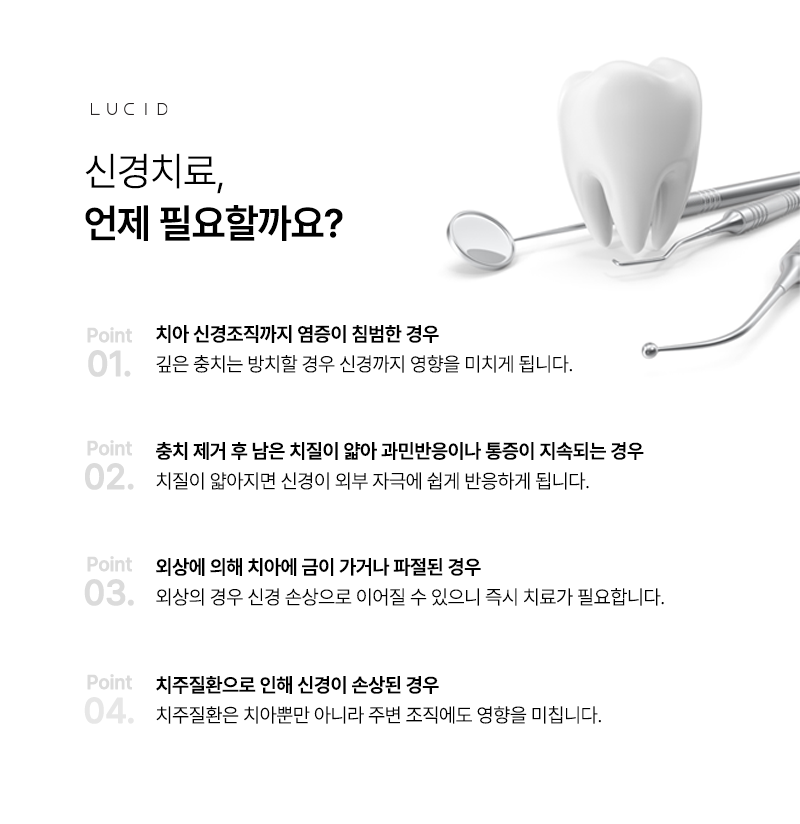
When Is Root Canal Treatment Needed?
Not every cavity leads to root canal treatment.
When a cavity has progressed only to the enamel or dentin, general cavity treatment is often sufficient. However, if bacteria have reached the pulp and caused inflammation, root canal treatment may be necessary.
If you have any of the following symptoms, we recommend having an examination at a Nonhyeon-dong dental clinic.
-
Repeated throbbing pain occurs even when you are doing nothing.
-
Hot foods hurt more than cold foods.
-
You have woken up at night because of pain.
-
Your gums have swollen or pus has developed.
-
You continue to feel discomfort around an old filling or crown.
-
Your tooth has broken or received a strong impact.
Conversely, the absence of significant pain does not necessarily mean that everything is fine. If the nerve has already become necrotic, you may actually feel that the pain has decreased. However, inflammation may still be progressing inside the tooth, and over time it may affect the bone around the tooth root.
Therefore, rather than judging the condition solely by whether pain is present, it is important to check the current state through various imaging tests and an oral examination.
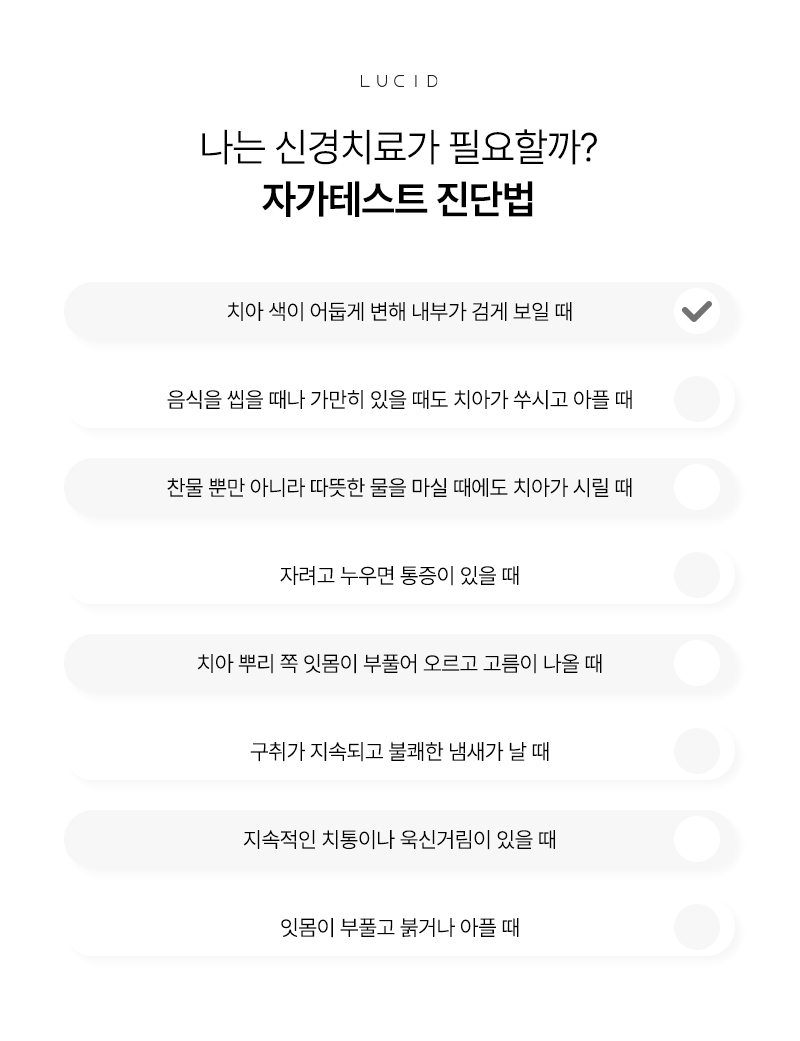
Do I Need Root Canal Treatment?
Check whether any of the following apply to you.
-
Hot foods hurt more than cold foods.
-
Your tooth throbs even when you are doing nothing.
-
You have woken up at night because of a toothache.
-
A particular tooth hurts when you chew.
-
You have been told that you have a deep cavity.
-
An old filling has broken or fallen out.
-
Your gums have swollen or pus has come out.
-
The color of a tooth has become darker than that of your other teeth.
If several of these items apply to you, it is a good idea to have your current condition checked through an accurate examination at a Nonhyeon-dong dental clinic. Rather than beginning treatment after symptoms have become severe, checking the condition at an appropriate time may help preserve the natural tooth.
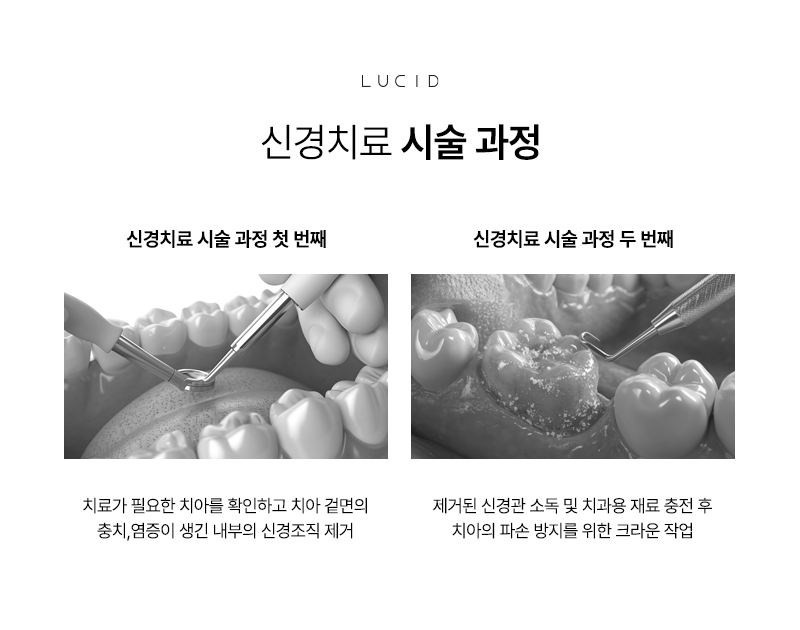
Root Canal Treatment Procedure
- Detailed Examination and Imaging
First, the oral condition is examined, and imaging is used to assess the depth of the cavity, the extent of inflammation, and the condition of the tooth root. After accurately determining the area requiring treatment, a treatment plan is established.
- Removal of the Damaged Nerve
After administering a local anesthetic, the infected pulp tissue is removed. Thoroughly cleaning the inside of the tooth is important because any remaining inflammation may increase the possibility of reinfection.
- Root Canal Cleaning and Disinfection
The inside of the root canals, which are the passages through which the nerves run, is cleaned and disinfected several times. The number and shape of root canals vary from person to person, and molars often have particularly complex structures. Carefully examining these internal structures while removing bacteria is one of the important stages of treatment. If necessary, the disinfection process may be performed several times.
- Root Canal Filling
Once the inside of the root canals has been sufficiently disinfected, it is completely filled with a specialized material and sealed to prevent bacteria from entering again. Completing this process securely may help reduce the possibility of reinfection.
- Final Prosthetic Treatment
After root canal treatment is completed, prosthetic treatment appropriate for the condition of the tooth is performed. A treatment plan is established by considering the amount and location of the remaining tooth structure, along with other factors, so that the tooth can be protected while maintaining its function.
How Many Root Canal Appointments Are Usually Needed, and How Long Does Treatment Take?
The question people ask most often before undergoing root canal treatment at a Nonhyeon-dong dental clinic is, “Can it be completed in one visit?” However, the number of root canal appointments may vary depending on the condition of the tooth.
If the extent of inflammation is limited, treatment may be completed in relatively few visits. However, if the infection has continued for a long time or the internal structure of the tooth is complex, additional disinfection may be necessary.
The treatment period may also differ because the number and shape of the roots and canals vary between front teeth and molars. Most importantly, the goal should not be to reduce the number of appointments, but to sufficiently disinfect the inside of the tooth.
Even if the tooth appears fine on the outside, bacteria remaining inside may cause inflammation to recur over time or make retreatment necessary. Therefore, it is important to visit according to the schedule provided by the treating dental professional and complete the treatment fully.
Why Do Teeth Become Weaker After Root Canal Treatment?
You may have heard that root canal treatment makes teeth weaker. In reality, it is often not the root canal treatment itself at a Nonhyeon-dong dental clinic that makes the tooth weak; rather, treatment is frequently performed when the tooth structure has already been significantly weakened by decay or damage.
In some cases, much of the tooth structure is lost while removing a deep cavity. In addition, when the nerves and blood vessels are removed, the reduced internal moisture supply may relatively increase the likelihood of the tooth breaking.
Molars in particular receive substantial chewing forces, so using them without additional protection may increase the risk of cracks or fractures. Also, because teeth that have undergone root canal treatment have a reduced ability to sense pain, it may be difficult to notice a small crack or other damage at an early stage.
Therefore, it is advisable to avoid repeatedly chewing hard or tough foods on only one side, and regular examinations can also help monitor the condition.
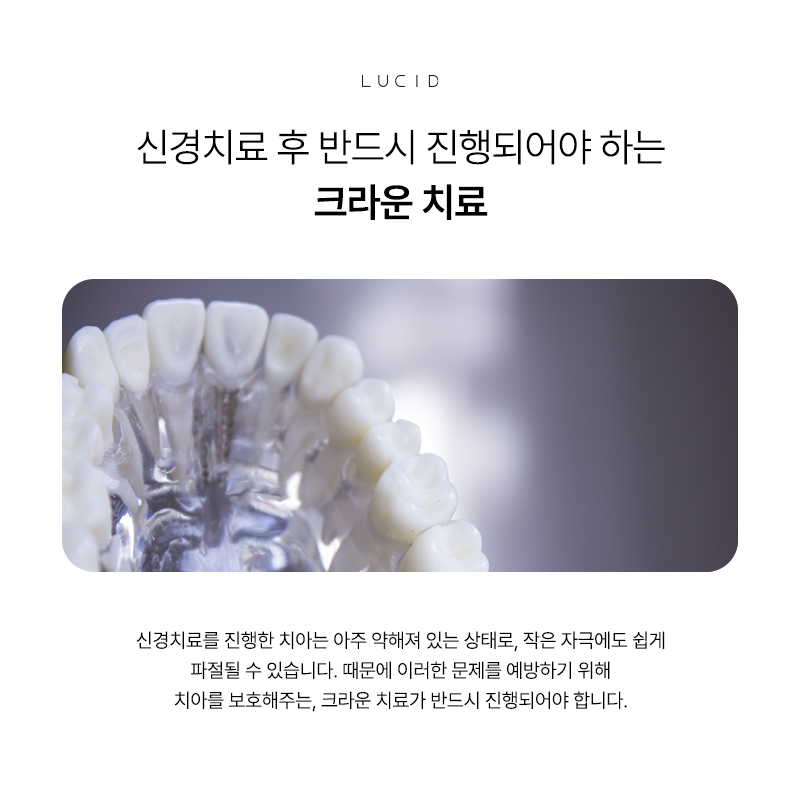
What Happens If a Crown Is Not Placed?
Some people wonder whether it is acceptable to receive only root canal treatment without having a crown placed. However, teeth that have undergone root canal treatment may have a reduced ability to withstand chewing forces compared with before, so protection may be necessary depending on the condition of the tooth.
If the tooth is used for a long time without a crown, the following problems may occur.
-
The tooth may crack due to chewing forces.
-
The remaining tooth structure may be more likely to break.
-
If the fracture becomes extensive, it may become difficult to preserve the natural tooth.
-
Bacteria may enter through gaps, potentially causing inflammation to recur.
Of course, the same prosthetic treatment is not applied to every tooth that has undergone root canal treatment. The treatment plan is determined by considering the amount of tooth structure remaining, the location of the tooth, and the degree of functional stress, among other factors.
Therefore, after root canal treatment is completed, it is a good idea to discuss the prosthetic treatment plan as well.
The Best Way to Keep Your Natural Teeth for a Long Time Is Proper Timing
Root canal treatment is not simply a treatment to eliminate pain; it is an important process for preserving natural teeth for as long as possible.
Once a tooth becomes severely damaged, it is difficult to return it to its original condition. Therefore, if even minor sensitivity or occasional pain continues to recur, it is better to have the current condition checked rather than dismissing it.
At Lucid Dental, we carefully assess the condition of each tooth through oral examinations and radiographic imaging, and strive to provide a thorough explanation of whether treatment is needed and what treatment approach is appropriate.
If you have recently been experiencing recurring tooth pain, please have the condition of your teeth checked through an oral examination and radiographic imaging. Diagnosis and treatment at an appropriate time may help you keep your natural teeth for a long time.