Hello, this is Lucid Dental.
What do people search for first when looking into implants after losing a tooth?
It is probably information about cost, reputable clinics, and pain. Of course, treatment cost is one important factor.
However, an implant is not simply a treatment for filling an empty space. Since it is a process of creating a tooth that you will use for years—or even decades—it is more important to consider how it will be planned and placed than how much the placement costs.
Even when the same implant is used, differences in placement position, angle, and depth can affect not only chewing force but also the burden placed on the surrounding teeth and gums.
For this reason, more people have recently been looking for digital navigation implants, which use 3D CT and digital equipment to plan treatment more precisely rather than relying solely on experience.
Today, we will explain in detail what navigation implants are, who they may be suitable for, and what you should check before cost when choosing an implant treatment at Gangnam Station.
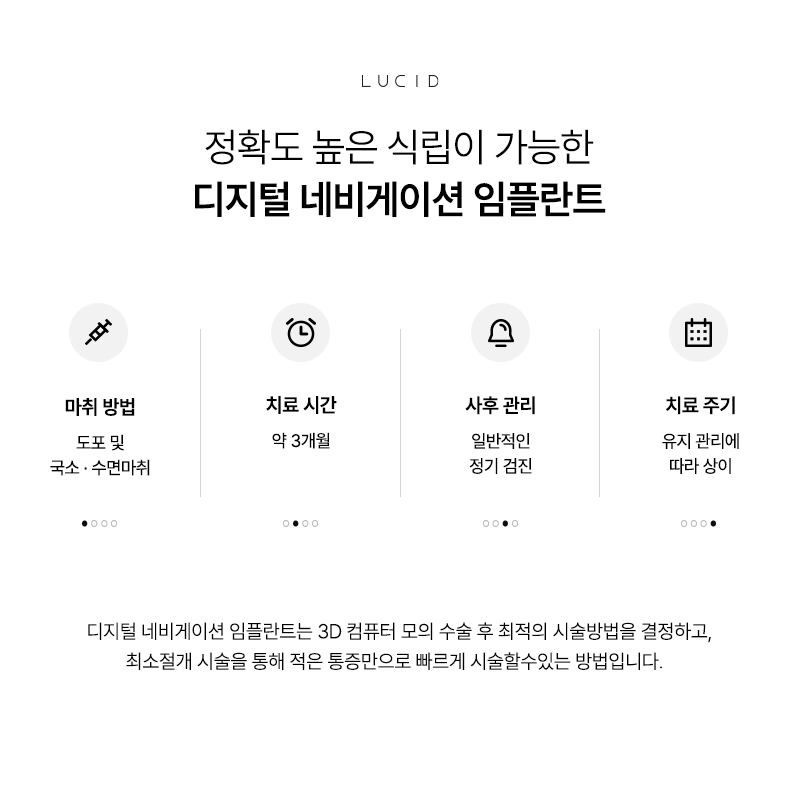
What Are Digital Navigation Implants?
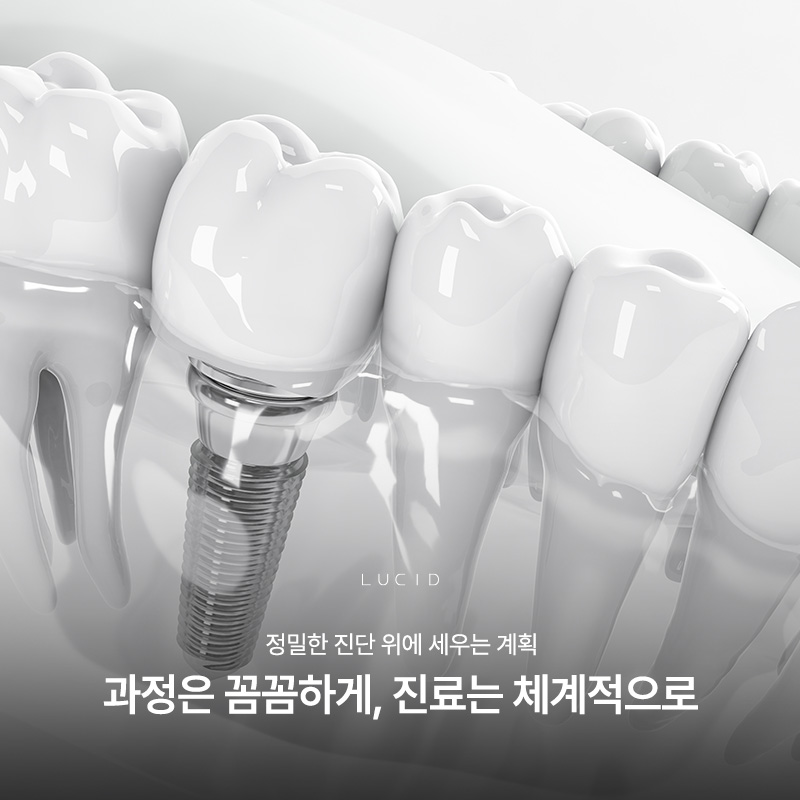
Navigation implant treatment is a digital treatment method in which the implant’s placement position, angle, and depth are analyzed in advance using data obtained through 3D CT and an intraoral scanner. A guide made based on this analysis is then used to place the implant in the planned position.
Simply put, just as a navigation system guides you along the most efficient route to your destination, digital data is used to design the implant placement in advance and carry out the procedure according to that plan.
Because implants are placed inside the jawbone beneath the gums, where they cannot be seen directly, even small differences can affect the outcome. Therefore, accurate diagnosis and planning before placement are more important than simply placing the implant.
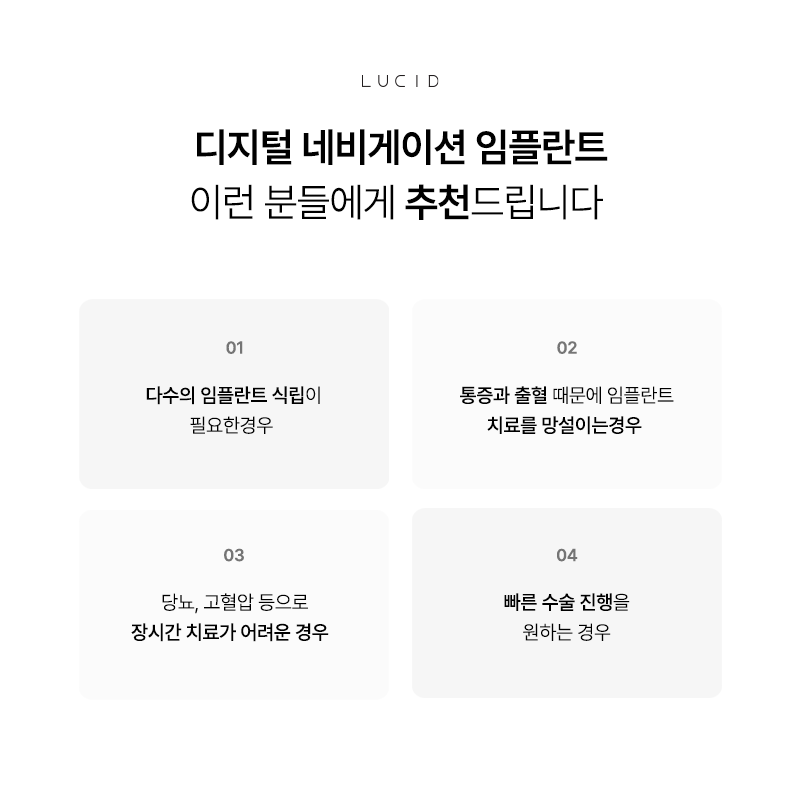
When Navigation Implants May Be Needed
Every patient’s oral condition is different, so not every treatment can be performed in the same way. In particular, more precise planning may be helpful in the following cases:
-
When it has been a long time since the tooth was lost
-
When several teeth need to be restored at the same time
-
When there is insufficient jawbone or its condition needs to be accurately assessed
-
When there is significant concern about making an incision
-
For working people who want to return to their daily routine quickly
-
When an existing implant needs to be replaced
-
When a more cautious plan is needed due to a systemic condition
-
When a more systematic diagnosis is desired
The important thing is not to declare one method universally better, but to establish an implant treatment plan at Gangnam Station that is appropriate for the current condition of your teeth and gums.
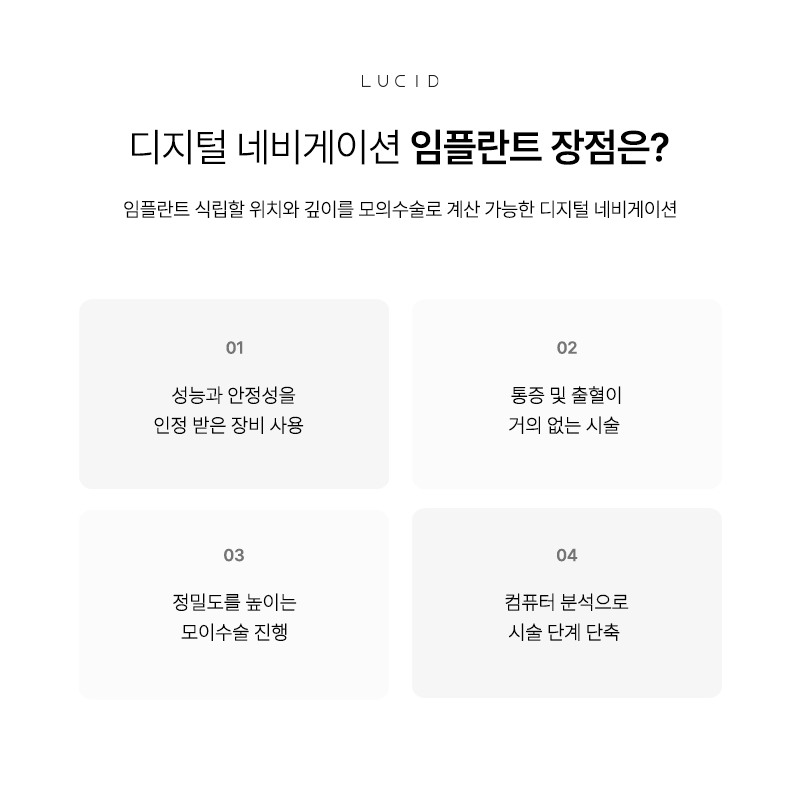
What Are the Advantages of Digital Navigation Implants?
01. Precise Implant Placement Planning
Using 3D CT and an intraoral scanner, the height and thickness of the jawbone, the location of nerves, and the distance from surrounding teeth are analyzed from multiple perspectives before establishing the placement plan.
02. Minimally Invasive Incisions May Be Possible
Depending on the patient’s condition, a minimally invasive approach using a guide may be applied, which may help reduce tissue damage.
03. Reduced Recovery Burden
When the incision area is smaller, swelling or discomfort may be relatively limited, which may help with returning to daily activities.
04. A More Predictable Treatment Plan
Because the placement position is planned in advance through digital simulation, treatment can be carried out in a more systematic manner.
05. Personalized Treatment
The position of the teeth, bite, and condition of the jawbone differ from person to person, so it is important to establish a customized plan that takes each individual’s oral structure into account.
Why Is Precise Diagnosis Important?
The outcome of implant treatment can depend on how accurately the condition was diagnosed before treatment began, rather than only on what happens on the day of surgery.
If the amount of jawbone, the safety of the distance from the nerves, and the direction in which chewing forces are transmitted are not carefully assessed, there may be a possibility of discomfort after treatment.
Lucid Dental near Gangnam Station conducts precise examinations using digital intraoral scanners to assess these aspects in greater detail.
Rather than looking only at the space left by the missing tooth, we also analyze the jawbone, bite, and condition of the surrounding teeth in order to establish a treatment plan suited to each patient.
Because implant treatment is not performed in the same way for everyone, a thorough diagnosis can be considered the beginning of good treatment.
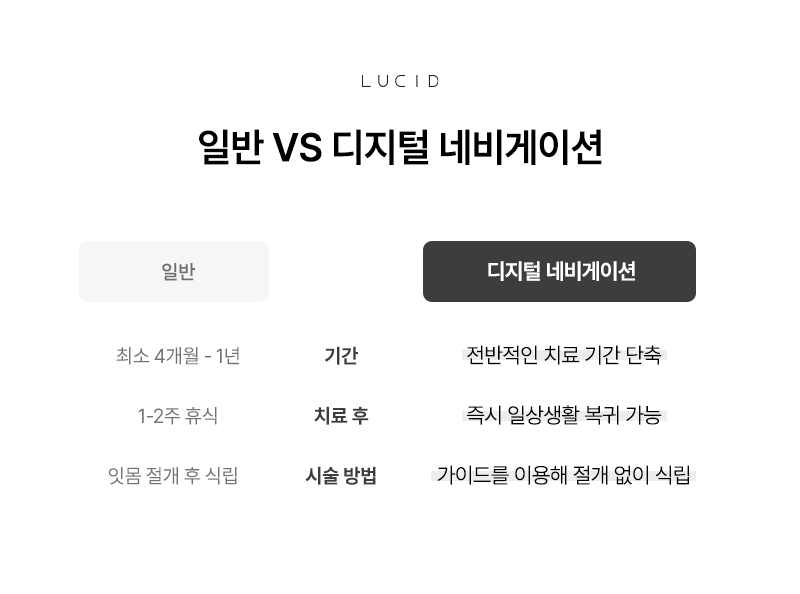
- Treatment methods and recovery periods may vary depending on an individual’s oral condition.
An implant is a tooth that is used for a long time rather than a treatment that ends with a single procedure. Therefore, it is important to carefully assess your current condition and choose a treatment method that suits you.
It Is Also Important to Check Whether Treatment Is Possible for Older Patients
We are often asked, “I am older. Can I still get implants?” In practice, it is more important to comprehensively assess the condition of the jawbone, overall health, medications being taken, and the presence of chronic diseases than to consider age alone.
At Lucid Dental near Gangnam Station, we assess each patient’s current condition through thorough consultations and precise examinations, then explain whether treatment is possible and which plan may be suitable.
Differences in Digital Equipment Should Also Be Checked
If you are considering implants, it is advisable to look beyond cost comparisons and also check what equipment is used for diagnosis.
The diagnostic process may vary depending on whether 3D CT and digital intraoral scanners are used and whether the clinic has a system for simulating the implant placement plan.
At Lucid Dental near Gangnam Station, we use digital equipment to establish treatment plans based on more accurate data and make an effort to proceed with treatment after thorough consultation with each patient.
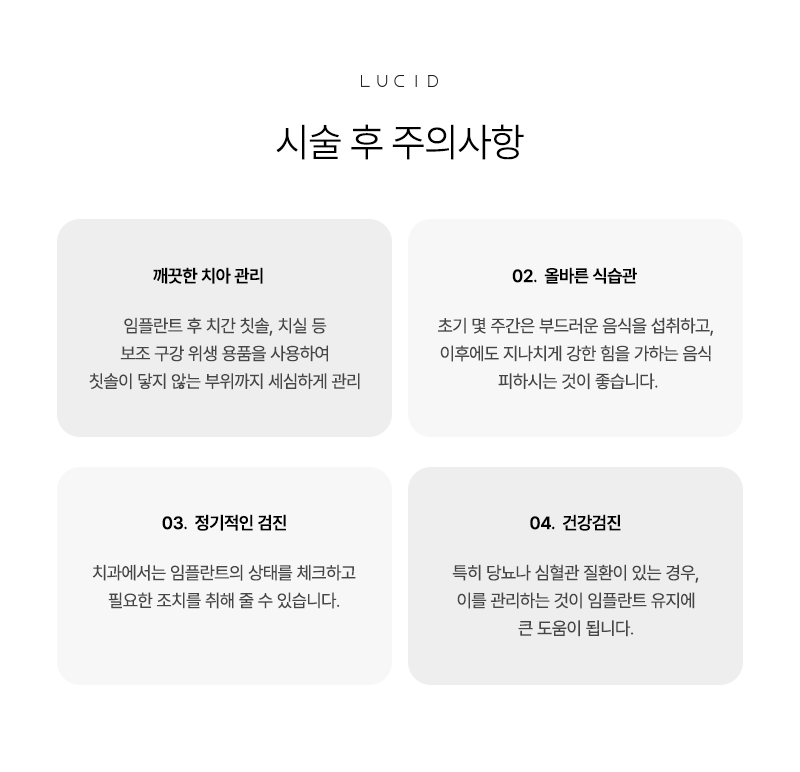
Care After Treatment Is Also Very Important
To use an implant in a healthy condition for a long time, care after treatment is also important.
-
Brush your teeth properly and use dental floss
-
Clean carefully with an interdental brush
-
Have regular checkups and scaling
-
Reduce smoking and excessive alcohol consumption
-
Avoid foods that are too hard during the early period
-
If you experience any unusual symptoms, visit a dental clinic without delay
Like natural teeth, implants require consistent care to remain healthy and functional for a long time.
Q&A
Q. Is navigation implant treatment generally less painful?
A. Individual experiences vary, but when a minimally invasive approach is possible depending on the patient’s condition, reduced tissue damage may result in relatively less discomfort. However, pain and recovery speed may vary depending on the condition of the mouth.
Q. How long does the treatment take?
A. The time varies depending on the number of implants and the level of difficulty, but using a digital treatment plan may help the procedure proceed more efficiently. The exact time required will be explained after a precise examination.
Q. Can I eat immediately after getting an implant?
A. It is advisable to wait until the anesthesia has sufficiently worn off and begin with soft foods. It is also advisable to avoid hot or hard foods for a certain period. Detailed dietary instructions will be provided based on your condition after treatment.
What Matters More Than Cost Is How Long and Comfortably You Can Use the Implant
Implant treatment is not simply a procedure to replace one tooth. It is treatment for a tooth that will be part of your future meals, conversations, and smiles.
For this reason, thorough diagnosis and planning from the beginning can increase the possibility of achieving a satisfactory result. Lucid Dental near Gangnam Station carefully analyzes each patient’s oral condition based on precise diagnosis using digital equipment and works with patients to consider a treatment direction suited to their current condition.
If you are considering implants, rather than comparing only price lists, first consider whether the treatment will allow you to use your teeth healthily for a long time.
Establishing a treatment plan that suits you through thorough consultation and precise examination can be the beginning of satisfactory implant treatment.