Hello, this is Lucid Dental Clinic.
As we age, we come to appreciate the importance of each tooth more deeply. Foods we once ate without any difficulty may eventually become uncomfortable to eat. Many people also begin chewing only on one side or naturally avoiding hard foods.
Losing one tooth does not necessarily make daily life difficult right away. However, as time passes, chewing habits can change and the surrounding teeth and gums may also be affected, so it is important to check your current condition early.
In particular, many older adults wonder whether they really need treatment at their age or whether dentures alone would be sufficient.
However, teeth do more than simply chew food. They are closely connected to pronunciation, facial balance, nutritional intake, and overall quality of life.
If a missing tooth is left untreated for a long time, the surrounding teeth may gradually shift into the empty space, and the opposing teeth may also be affected. For this reason, it is best not to miss the appropriate time for treatment.
Gangnam Station implants are one treatment option for replacing missing teeth, but the purpose is not simply to fill an empty space.
Because the treatment plan should also consider eating comfortably in the future and preserving the remaining natural teeth for as long as possible, thorough consultation and an accurate diagnosis are particularly important.
Today, for those considering Gangnam Station implants, we will look at how the navigation implant treatment that many people have recently been interested in at Lucid Dental Clinic is performed, as well as the key points to know before deciding on treatment.
What Are Dental Implants?
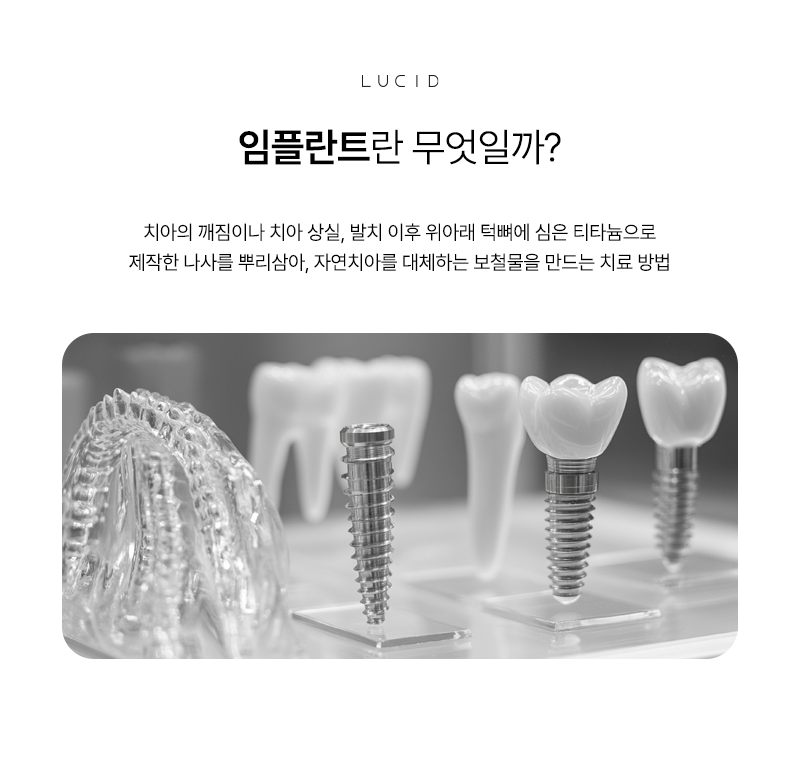
Dental implants are a treatment method that restores the function of natural teeth by placing an artificial tooth root in the jawbone at the site of a missing tooth and connecting a prosthetic restoration above it.
In the past, dentures or bridges were often chosen when a tooth was lost.
Although the appropriate treatment can still vary depending on the condition of the mouth, implants are considered one treatment option for people who want to restore chewing function while preserving the surrounding teeth as much as possible.
However, not all implant treatments are performed in exactly the same way.
Several factors must be considered together, including the location of the missing tooth, whether there is sufficient jawbone, the condition of the periodontal tissues, and whether the patient has any existing systemic conditions.
Older adults, in particular, may have experienced jawbone resorption or may have lost their teeth a long time ago, making an accurate examination even more important.
A thorough examination before treatment is necessary to accurately understand the current condition and establish a more appropriate treatment plan. Depending on the situation, the patient may also be advised about additional treatment, such as bone grafting.
Implant treatment does not end with placing the implant successfully. To ensure more comfortable use, it is also necessary to consider whether chewing forces are excessively concentrated on one side, whether the bite with the surrounding teeth is natural, and whether the prosthetic restoration can function stably.
Ultimately, it is important to remember that implant treatment is not simply a procedure for placing a tooth. It is a treatment that comprehensively considers the current oral condition and future use.
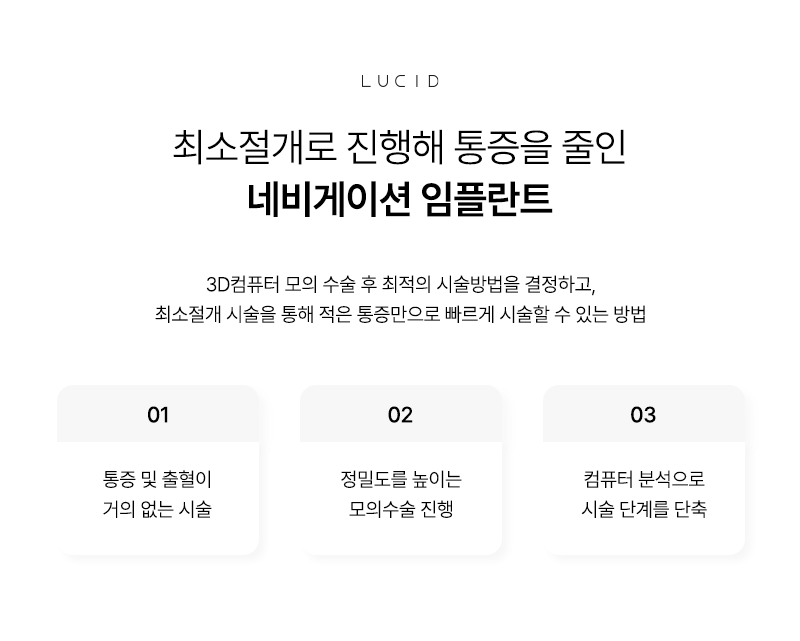
Navigation Implants Performed with Minimal Incision to Reduce Pain
Recently, more people have been asking about navigation implants using digital equipment.
Navigation implants use 3D CT and an oral scan to examine the condition of the teeth, gums, and jawbone in detail. The location of the nerves, the direction of placement, and the depth are analyzed in advance before a treatment plan is established.
In simple terms, the procedure is not performed by relying only on visual examination. Instead, the patient’s individual oral structure is analyzed with a computer, a plan is created, and the procedure is then carried out based on that plan.
This digital diagnostic process can help examine each person’s different oral structure more closely and is used to create a treatment plan focused on the areas that require treatment.
In addition, the procedure is often performed with consideration for making the smallest incision possible, which may help reduce concerns about swelling or discomfort after the procedure. This is another reason many people are interested in it.
Older patients, in particular, often have significant concerns about the recovery process. Therefore, when deciding on treatment, it is important not to focus only on proceeding quickly, but to first thoroughly assess the person’s overall health and oral environment and consult with a dental professional about whether the method is appropriate for them.
At Lucid Dental Clinic, we strive to develop treatment plans based on accurate diagnoses while considering each patient’s dental condition and lifestyle habits.
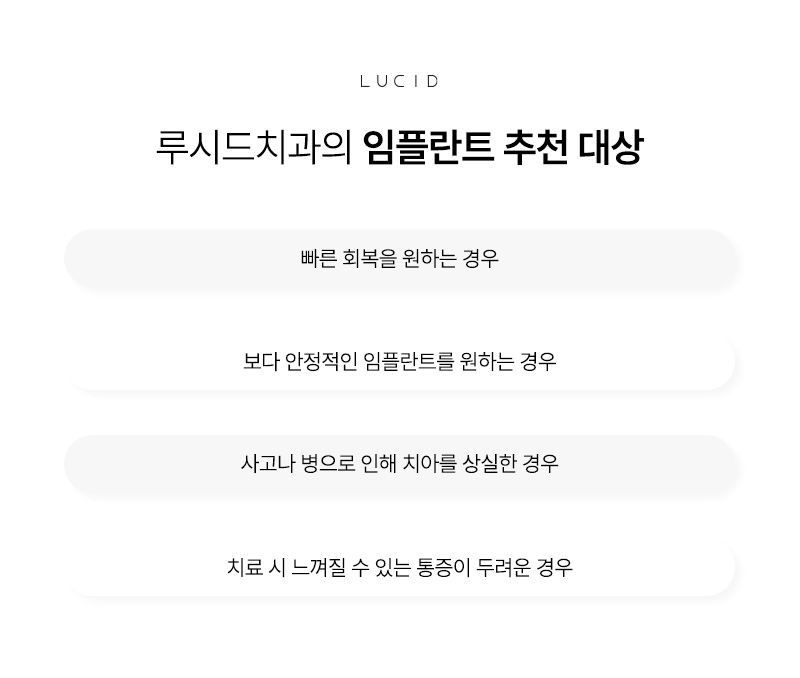
Who May Consider Implant Treatment at Lucid Dental Clinic?
If any of the following apply, we recommend considering a consultation about Gangnam Station implants.
-
People who have difficulty eating after losing a tooth
-
People who find dentures uncomfortable or whose dentures move easily
-
People who have developed a habit of chewing food only on one side
-
People who have been living with a missing tooth for a long time
-
People who want to establish a treatment plan while also examining the condition of their gums
-
People who want to consider both function and a natural appearance
Leaving a missing tooth untreated for a long time does not necessarily cause severe pain.
However, over time, the surrounding teeth may gradually shift into the empty space, or the opposing tooth may move downward, causing changes in the oral environment.
These changes may affect the treatment plan later, so it is important to accurately check the current condition and not miss the appropriate time for treatment.
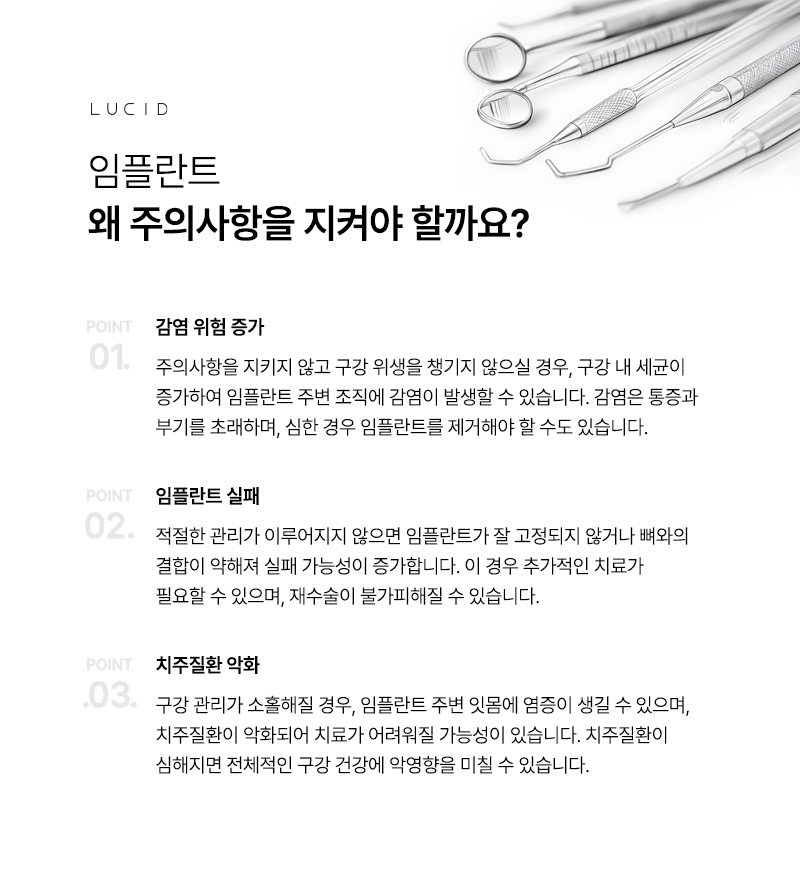
Why Is It Important to Follow Implant Care Instructions?
Many people think that implants require no further care once the procedure is complete.
However, just as natural teeth require consistent care to be used for a long time, post-treatment care is also very important for implants.
Cavities do not develop in the prosthetic restoration itself, but inflammation can occur in the surrounding gums, and inadequate care can lead to various problems. In addition, the length of time an implant can be used may vary depending on lifestyle habits, so it is important to consistently follow the care instructions provided by the dental professional.
Above all, it is worth remembering that care after treatment is just as important as the beginning of treatment.
- Increased Risk of Infection
If you do not follow the precautions or maintain good oral hygiene, bacteria in the mouth may increase and cause infection in the tissues around the implant. Infection can cause pain and swelling, and in severe cases, the implant may need to be removed.
- Implant Failure
If proper care is not provided, the implant may not become securely fixed, or its integration with the bone may be weakened, increasing the possibility of failure. In such cases, additional treatment may be required, and repeat treatment may become unavoidable.
- Worsening Periodontal Disease
If oral care is neglected, inflammation may develop in the gums around the implant, and periodontal disease may worsen, making treatment more difficult. Severe periodontal disease can negatively affect overall oral health.
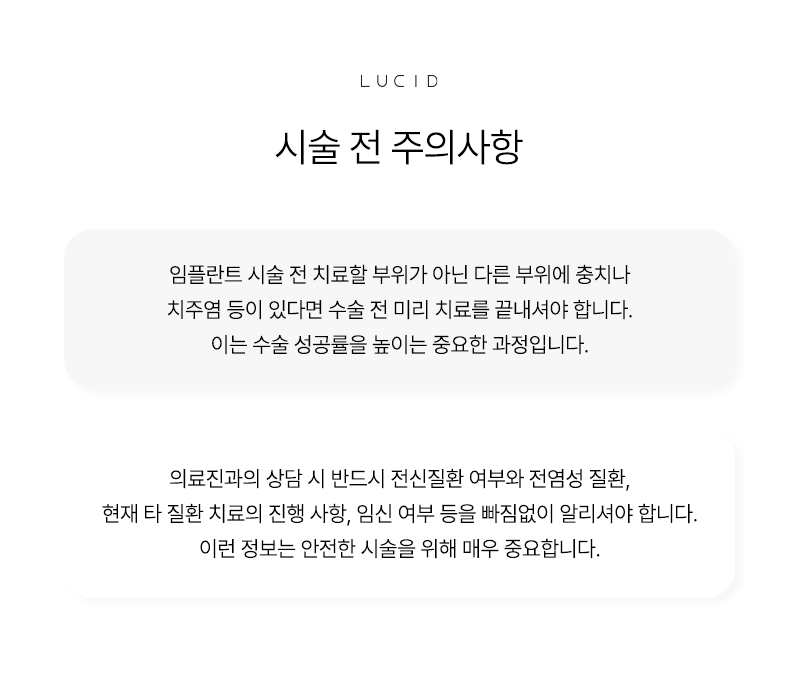
Precautions Before the Procedure
The preparation process before the procedure is also important for more stable Gangnam Station implant treatment.
- Inform the dental professional in advance about any medications you are taking.
If you are currently taking medication such as circulatory medications or anticoagulants, you must inform the dental professional in advance. This is because the treatment plan may vary depending on your health condition.
- Review any systemic conditions.
If you have a chronic condition such as high blood pressure or diabetes, the treatment plan will be established after taking your current health condition into consideration. It is helpful to provide accurate information about your usual medications and health status.
- Smoking cessation and moderation of alcohol are recommended.
Smoking may affect gum healing, and excessive alcohol consumption may place an additional burden on the recovery process. For a smoother recovery, it is advisable to refrain from smoking and limit alcohol consumption for a certain period before and after the procedure.
- Get sufficient rest.
It is advisable to visit the clinic in good condition on the day of the procedure. After treatment, avoid strenuous exercise or excessive activity for a while.
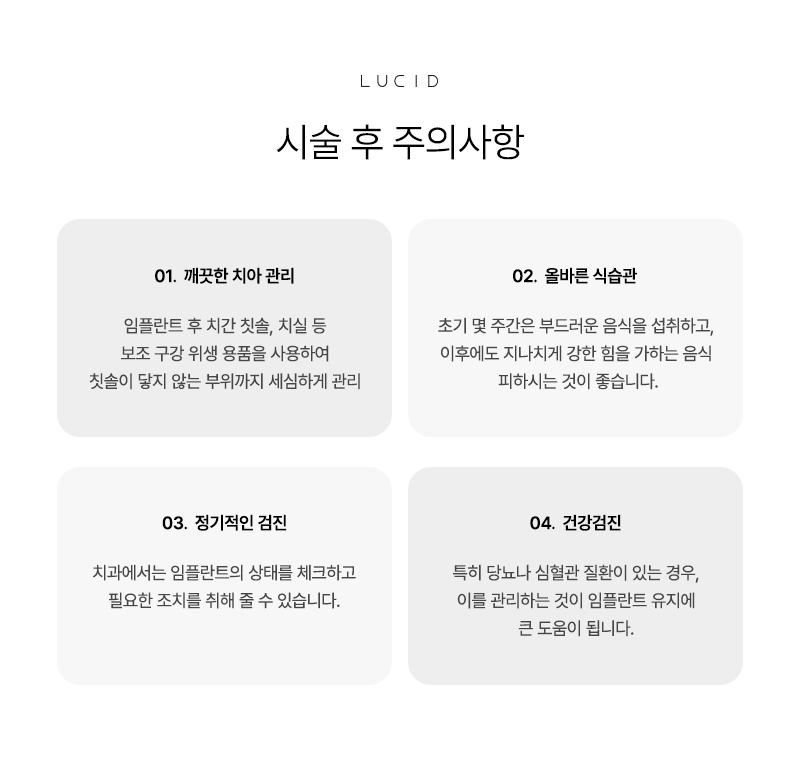
Precautions After the Procedure
- Maintain clean teeth.
Implants, like natural teeth, require consistent care. In addition to brushing, using dental floss and interdental brushes can help clean more thoroughly between the teeth and around the implant. It is best to follow the dental professional’s instructions for proper care.
- Follow appropriate eating habits.
During the early recovery period, it is advisable to eat soft foods rather than foods that are extremely hot or hard. Rather than using only the treated area, eating within a comfortable range according to the dental professional’s instructions may help with recovery.
- Have regular examinations.
It is not advisable to postpone dental examinations simply because you have no discomfort. Regular checkups can help detect even small changes early and make it possible to receive any necessary care at the appropriate time.
- Maintain your health.
Oral health is also closely connected to overall health. It is important to maintain a balanced diet, get sufficient sleep, and follow regular lifestyle habits. If you have a chronic condition such as diabetes or high blood pressure, consistent management is also necessary.
Q&A
Q. How long can implants be used?
A. The length of time an implant can be used may vary depending on an individual’s gum health, lifestyle habits, and oral care. Many people use their implants for a long time when regular examinations and consistent care are maintained. Therefore, it is best to consider post-treatment care an important part of the treatment process.
Q. Is implant treatment possible even if it has been a long time since I lost my tooth?
A. It may be possible, but the condition of the current jawbone must first be examined. The longer a tooth has been missing, the more likely it is that the jawbone has changed, so a treatment plan is established through an accurate examination.
Q. Why do the costs of Gangnam Station implants vary?
A. Costs may vary depending on the materials and equipment used, the detailed diagnostic process, the individual’s oral condition, and whether additional treatment is required. Rather than comparing costs alone, it is advisable to also check whether thorough consultation and diagnosis are provided and how the post-treatment care system is operated.
Q. What should I check when choosing an implant dental clinic?
A. Implant treatment is not completed with a single procedure. It is a process that continues from consultation and detailed diagnosis through treatment planning, the procedure, and post-treatment care. Therefore, it is advisable to consider whether the clinic is equipped with digital diagnostic devices, whether it explains the patient’s condition sufficiently, and whether its post-treatment care system is systematically operated.
At Lucid Dental Clinic, we strive to establish treatment plans based on thorough consultation and accurate diagnosis while considering each patient’s different oral environment and lifestyle habits.
Maintaining your teeth for a long time does not end with simply receiving treatment. It begins with establishing a plan suited to your condition and managing your oral health consistently.
Because teeth do not naturally recover once lost, it is important not to simply endure discomfort, but to accurately check your current condition and consider your future oral health as well.
If you are considering Gangnam Station implants, consult thoroughly to determine the treatment approach that is appropriate for you.