Hello, this is Lucid Dental.
When a tooth is lost, various problems can occur, including reduced chewing function, inaccurate pronunciation, and changes in the alignment of the surrounding teeth.
For these reasons, many people choose dental implants at a Nonhyeon-dong dental clinic as a treatment option to replace natural teeth.
However, implant treatment does not end simply with placing an artificial tooth. It is more important to ensure how stably the implant bonds with the jawbone after placement and to create an environment in which it can continue functioning for a long time.
Even with the same implant treatment, the initial recovery environment and treatment plan may differ depending on the process involved.
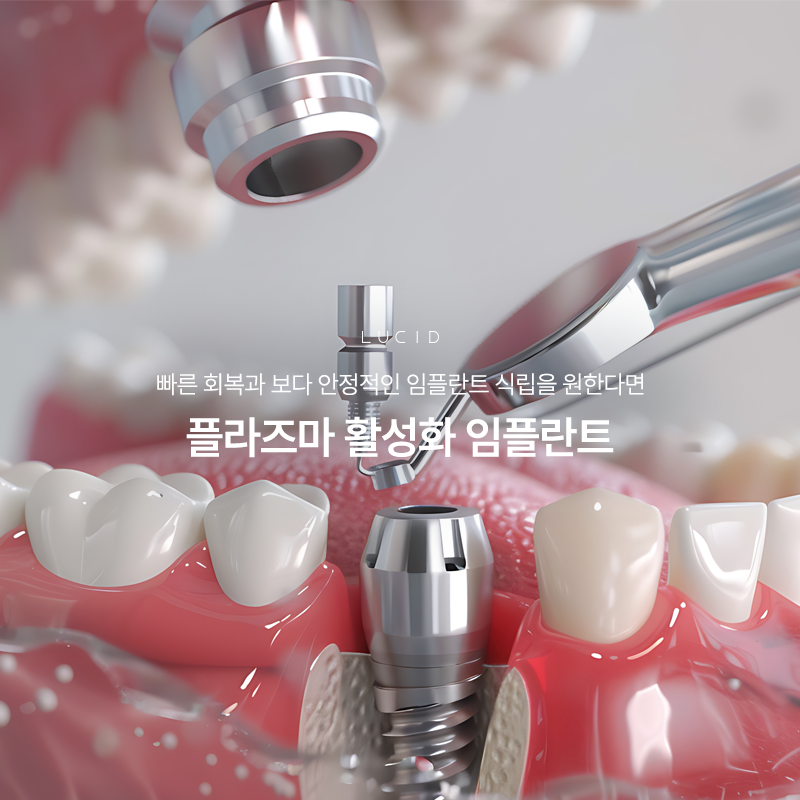
Recently, various technologies have been applied to improve the initial osseointegration environment, and one of them is the plasma-activated implant.
Plasma activation is a process that activates the implant surface immediately before placement, creating an environment in which blood and cells can react more smoothly.
Although it may appear to be a small step, it can help create an initial environment in which the implant can bond stably with the jawbone, which is why many people are interested in it.
Today, we will take a detailed look at what plasma-activated implants are, what features they have, and in which cases they may be considered.
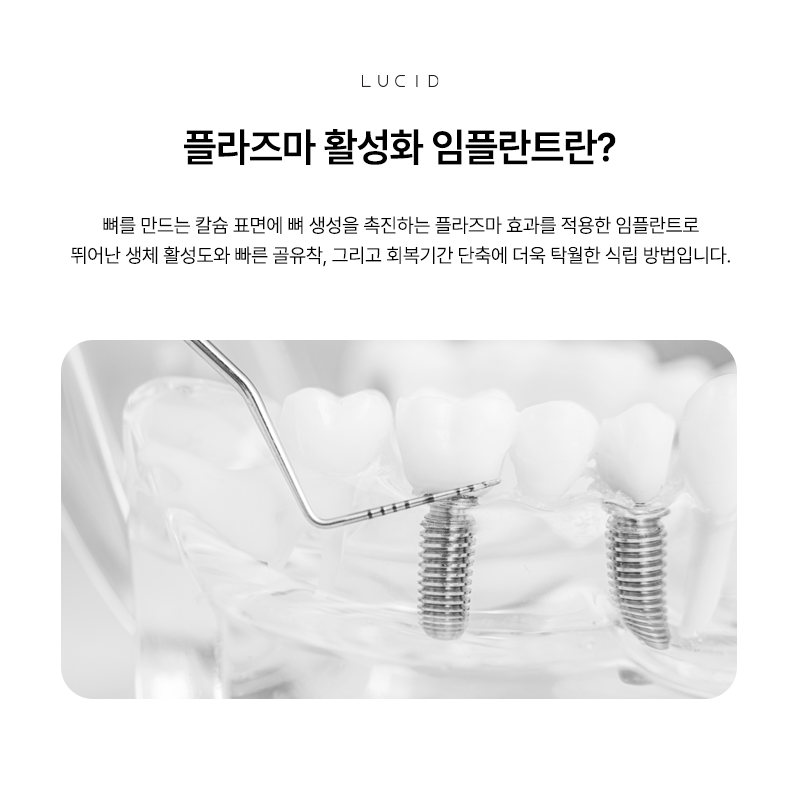
What Are Plasma-Activated Implants?
Plasma-activated implants are a treatment method that involves activating the implant surface using plasma-processing equipment immediately before placement.
After an implant is manufactured, hydrocarbons in the air may become adsorbed onto its surface over time, causing “surface aging.” This change can reduce the surface’s hydrophilicity and may also affect the environment in which cells and proteins attach.
Plasma activation removes organic contaminants from the surface and creates an ultra-hydrophilic state, helping blood spread evenly across the entire implant surface.
The more evenly blood spreads, the more favorable the environment becomes for proteins and cells to react, which may also positively affect the initial osseointegration process.
In simple terms, it can be understood as an additional process of cleaning and activating the surface before placing the implant so that it is ready to meet the jawbone.
Although it is not a highly visible step, this preparation may be an option for patients who place importance on initial stability, and it is being applied as part of a more systematic approach to implant treatment.
At the Nonhyeon-dong dental clinic, we do not simply place teeth. We comprehensively analyze each patient’s oral condition, the amount of jawbone, occlusion, and overall health before establishing a suitable treatment plan.
When necessary, we strive to create a more stable treatment environment by applying a plasma activation system.
Advantages of Plasma Implants
Plasma-activated implants are a method that may help create a more stable treatment environment by activating the implant surface immediately before placement.
Treatment outcomes may vary depending on an individual’s oral condition, but the following features may be expected.
- Creating an Initial Osseointegration Environment
When plasma treatment makes the implant surface ultra-hydrophilic, it creates an environment in which blood and proteins can react more smoothly. This may help with the initial osseointegration process.
- Improving Biocompatibility
It can create an environment in which cells attach stably, potentially playing a positive role in the natural bonding of the jawbone and implant.
- Helping Improve Initial Stability
This method may be applied to patients for whom initial fixation after placement is important, allowing them to expect a more stable recovery environment.
- Enabling Customized Implant Treatment
Because whether to apply it is determined after sufficiently considering the patient’s gum condition and overall health, it can help establish a treatment plan suited to the individual’s condition.
Key Points
Plasma-activated implants are not simply a matter of using new equipment. Rather, the process may help create an environment in which the implant can bond stably with the jawbone.
Many people are interested in this process because the small difference of activating the surface before treatment may have a positive effect on the initial healing process.
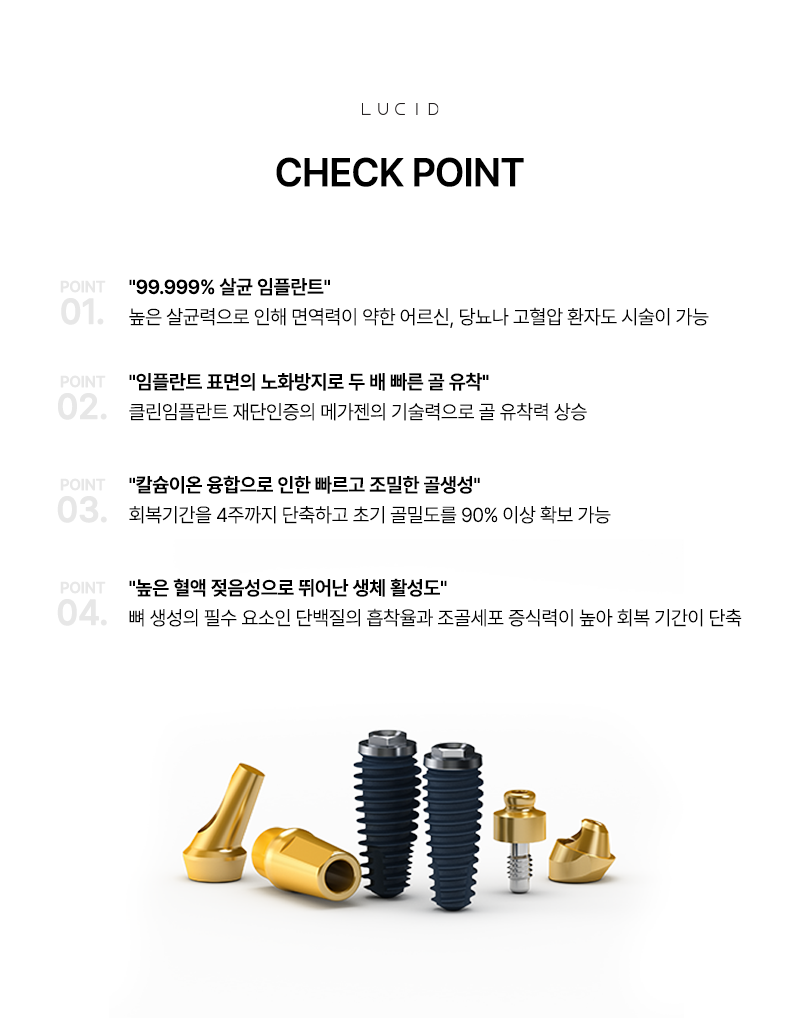
99.999% Sterilized Implants
Plasma treatment removes organic contaminants that may remain on the implant surface and activates it in a clean state. Cleaning the surface immediately before placement may help create a more stable treatment environment.
Twice-Faster Osseointegration by Preventing Implant Surface Aging
Over time, hydrocarbons in the air may become adsorbed onto the implant surface, causing surface aging that reduces hydrophilicity. Plasma activation reactivates this surface, creating an environment in which blood and cells can respond effectively and may help with the osseointegration process.
Fast, Dense Bone Formation Through Calcium-Ion Integration
The activated surface may help create an environment in which calcium ions and cells can react more smoothly. This may have a positive effect on the initial process of stable jawbone formation.
Excellent Bioactivity Through High Blood Wettability
Implants treated with plasma form an ultra-hydrophilic surface, helping blood spread evenly across the entire surface. The more evenly blood spreads, the more favorable the environment becomes for cells and proteins to attach stably, which may also help during the initial healing process.
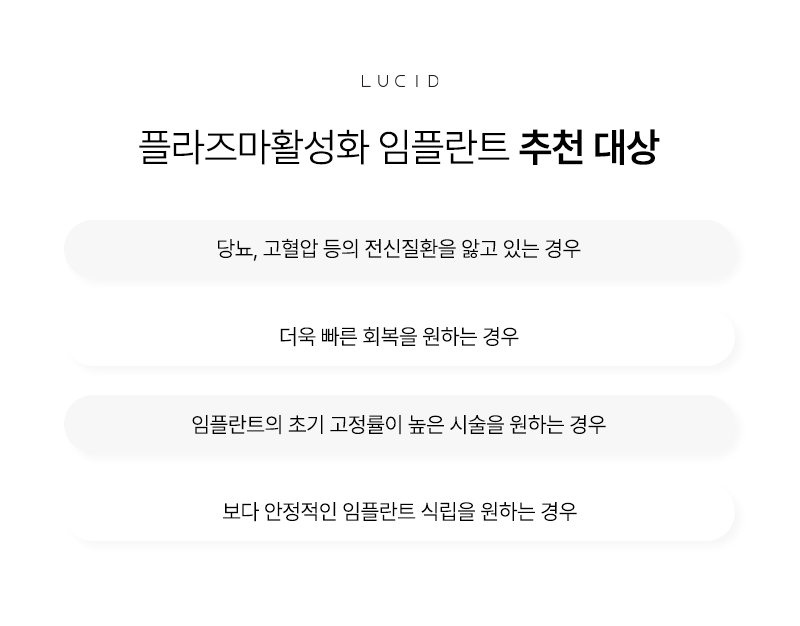
Who May Consider Plasma-Activated Implants?
Plasma-activated implants are not applied identically to every patient. Whether they are appropriate is determined as needed after carefully considering the patient’s oral condition and overall health. If any of the following apply, the treatment may be considered through consultation with a dental professional.
- If you have a systemic condition such as diabetes or high blood pressure
When a systemic condition is present, more thorough planning and management may be required than with standard implant treatment. It is important to check your current health condition carefully before proceeding with treatment, and plasma activation may be used as one method for creating a more stable treatment environment.
- If you want a faster recovery
The process of returning to daily life after placement varies from person to person, but those who consider the initial healing environment important may consider the plasma activation process.
- If you want a procedure with a high initial fixation rate for dental implants at a Nonhyeon-dong dental clinic
With implants, the period during which initial osseointegration takes place is very important, even more so than the moment immediately after placement. If you want treatment that takes initial stability into account, it is advisable to consult with a dental professional and confirm whether this process is appropriate.
- If you want more stable implant placement
Because implants are intended for long-term use, this treatment may be suitable for people who want not only precise diagnosis and a thorough treatment process but also careful preparation before placement.
- If you want customized treatment that sufficiently considers the condition of your jawbone
The amount and density of jawbone, as well as oral structure, differ from patient to patient. Therefore, if you prefer treatment based on an analysis of your individual condition rather than a uniform approach, it is advisable to consult with a dental professional and confirm whether this process is appropriate.
- If you want more stable implant placement
Because implants are intended for long-term use, this treatment may be suitable for people who want not only precise diagnosis and a thorough treatment process but also careful preparation before placement.
- If you want customized treatment that sufficiently considers the condition of your jawbone
The amount and density of jawbone, as well as oral structure, differ from patient to patient. Therefore, rather than using a uniform approach, it is important to analyze the individual’s condition and establish a treatment plan suited to it.
- If you are planning an implant intended for long-term use
Because implants are a treatment intended to be used for a long time once placed, it is important to proceed systematically from the initial stages. Carefully managing every small step may also help with long-term maintenance.
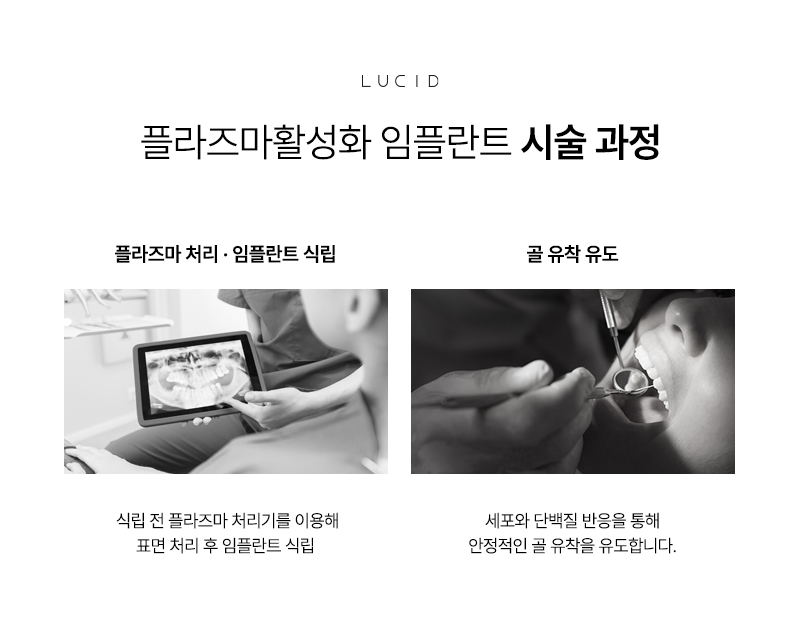
Treatment Process
Plasma-activated implants at the Nonhyeon-dong dental clinic involve adding a surface-activation process to the standard implant placement procedure.
Although the visible change is not significant, activating the implant surface once more before placement may help create a more stable treatment environment.
- Plasma Treatment
Once the detailed examination and treatment plan have been completed, the implant surface is activated using a plasma processor immediately before placement. This process removes organic contaminants from the surface and creates an ultra-hydrophilic state, establishing an environment in which blood and cells can react smoothly.
- Implant Placement
The implant, after the activation process is complete, is placed in the planned position. At this stage, it is important to place it in a stable position by comprehensively considering the condition of the jawbone, occlusion, and balance with the surrounding teeth. Even when high-quality materials and equipment are used, satisfactory results can be expected only when they are supported by accurate diagnosis and a precise placement plan.
- Promoting Osseointegration
Once placement is complete, the implant at the Nonhyeon-dong dental clinic undergoes osseointegration as it bonds with the jawbone. The implant, made ultra-hydrophilic through plasma activation, creates an environment in which blood, cells, and proteins can react more smoothly, which may help with initial osseointegration.
After implant treatment at Lucid Dental, it is important to have regular checkups and practice proper oral care according to the dental professional’s instructions. When these forms of care are carried out together, they may help support more stable long-term maintenance.
Why This Small Step Matters
The plasma activation process takes only a few minutes and is relatively brief, but it is meaningful because it helps create an environment in which the implant can bond stably with the jawbone. Implant treatment is not simply the process of placing a tooth; it is a process designed to replace the function of a natural tooth for a long time.
For this reason, it is important to proceed precisely from the preparation stage before placement, and even small differences may affect long-term maintenance. In addition to plasma activation, successful implant outcomes require all processes—including precise diagnosis, jawbone analysis using 3D CT, accurate placement, occlusal design, and thorough follow-up care—to work together systematically.
At Lucid Dental, we do not simply place implants. We comprehensively consider each patient’s current oral condition, lifestyle, and overall health to establish an individualized treatment plan.
When necessary, we strive to create a more stable treatment environment by applying a plasma activation system.
Implants are not a treatment that ends with a single procedure; they are an important treatment that will accompany your meals, conversations, and daily life in the future.
Rather than comparing only costs or treatment periods, it is important to also check what diagnostic process the treatment involves, whether a system for initial osseointegration is in place, and whether follow-up care is provided systematically.
Plasma-activated implants are a method that may help create a more stable treatment environment by activating the implant surface before placement. However, they are not applied identically to every patient, so establishing a treatment plan suited to your oral condition through consultation and a detailed examination should come first.
At the Nonhyeon-dong dental clinic, we provide customized implant treatment by comprehensively analyzing each patient’s jawbone condition, tooth alignment, occlusion, and overall health. Based on careful care that does not overlook even small steps, we strive to provide treatment that considers both functional recovery and natural aesthetics.
The longer tooth loss is left untreated, the greater the possibility that additional problems, such as movement of the surrounding teeth or jawbone resorption, may occur. If discomfort persists, rather than postponing care, please have your current oral condition accurately evaluated and consult sufficiently with a dental professional.
Implants that can be used comfortably for a long time begin with accurate diagnosis and a thorough treatment process. Lucid Dental considers each patient’s oral health our top priority and will always do our best to provide more stable treatment.