Hello, this is Lucid Dental Clinic.
More and more people are looking into cosmetic treatments such as veneers or teeth whitening because they are concerned about the shape or color of their teeth.
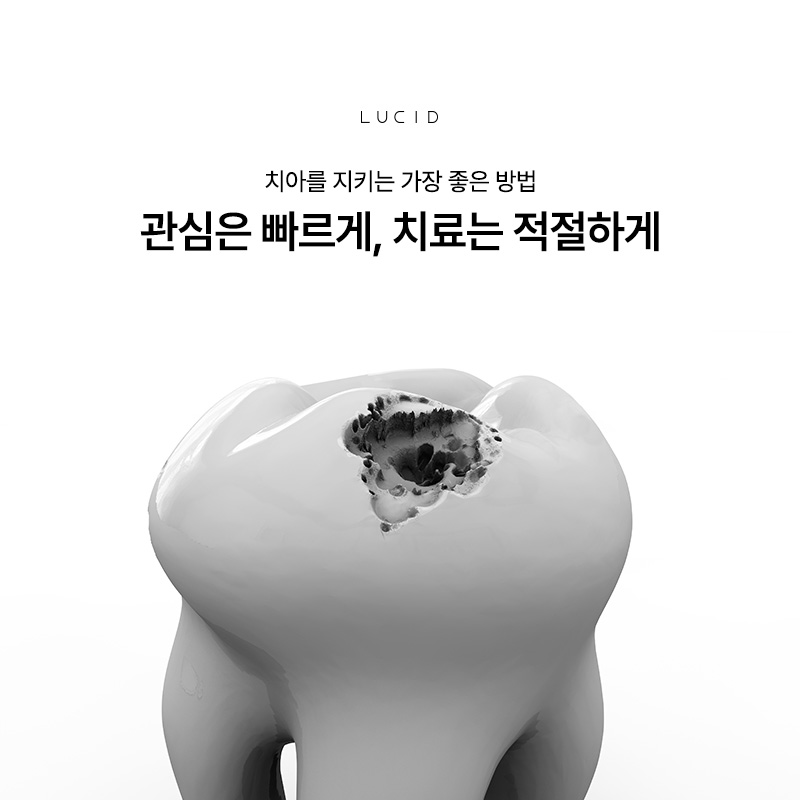
However, the first thing to check when creating a beautiful smile is not the shape of the teeth, but their health.
Even if there does not appear to be a major problem on the surface, it may be difficult to proceed directly with the desired cosmetic treatment if a cavity is developing inside a tooth.
This is because the longer treatment is delayed, the wider the area of damage can become, and in some cases, the treatment plan itself may need to change.
In particular, early-stage cavities often cause no noticeable pain, making them difficult to detect on your own. While you leave them untreated thinking that everything must be fine because there is no pain, the cavity may gradually deepen and eventually lead to a situation requiring more extensive treatment.
Healthy teeth are the starting point for cosmetic treatment and an important foundation for maintaining its results over time.
Today, we will take a detailed look at why cavities should be treated early, how leaving a cavity untreated can affect cosmetic treatment, and how Lucid Dental Clinic diagnoses and treats cavities.
What Are Cavities?
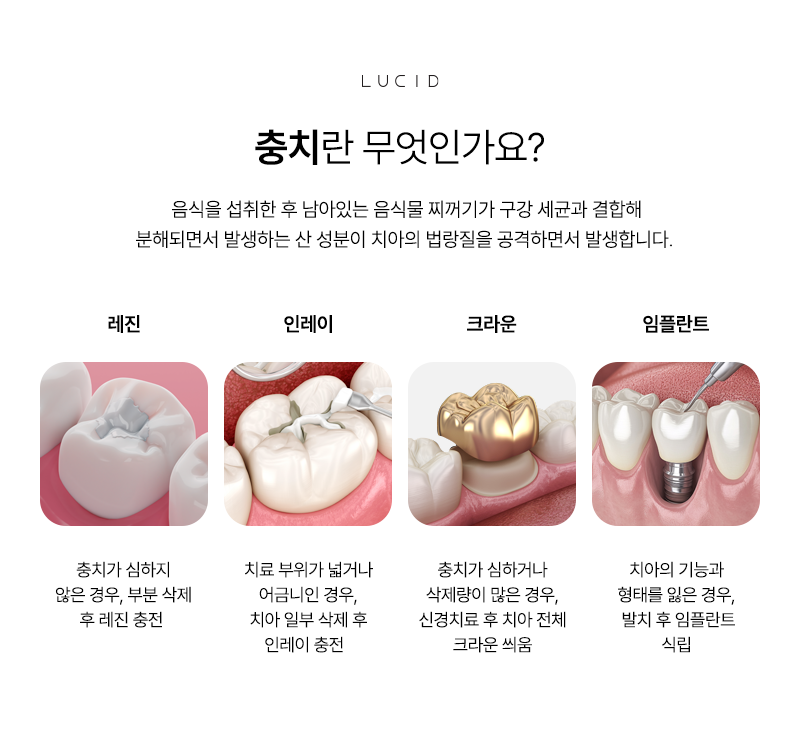
Cavities develop when food residue left on the surface of the teeth combines with bacteria to produce acid, which gradually dissolves the teeth.
At first, only the enamel, the outermost layer of the tooth, is damaged, so there is often no noticeable pain.
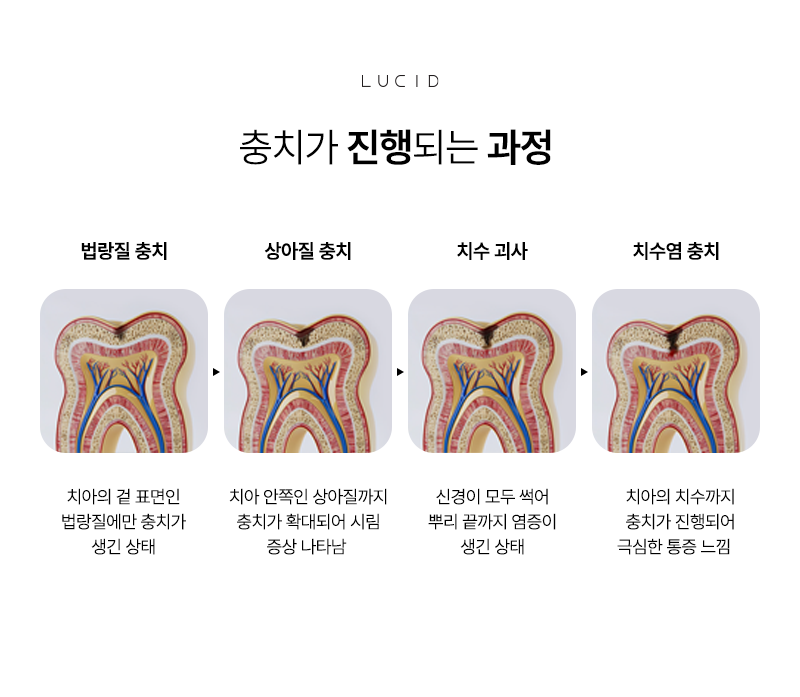
However, over time, a cavity gradually progresses into the dentin and pulp. In the early stages, it may be fully restored with a small resin filling, but if left untreated, an inlay or crown may be necessary, and in severe cases, root canal treatment may be required.
Many people think of a cavity simply as a tooth that is decaying, but more precisely, it is a condition in which tooth tissue is continuously damaged by bacteria. Since cavities rarely recover naturally, early detection and treatment at a Gangnam Station dental clinic are especially important.
Cavities can also occur in areas that are difficult to see with the naked eye, such as between the teeth, rather than only on visible surfaces. Therefore, even without symptoms, regular checkups are the best way to identify problems early and maintain healthy teeth for a long time.
Why Is It Important to Treat Cavities Early?
Cavities are a condition in which teeth gradually dissolve due to acid produced when bacteria in the mouth break down the sugars in food.
At first, only the enamel, the outermost layer of the tooth, is damaged, so there is little or no pain. As a result, many people think that everything is probably fine and put off treatment at a Gangnam Station dental clinic.
However, cavities do not heal naturally. As time passes, they progress into the dentin and pulp (nerve), and the area requiring treatment gradually expands. A tooth that could have been treated with a simple resin filling in the early stages may later require an inlay or crown, and in severe cases, root canal treatment may also be necessary.
In other words, a cavity is not a condition that improves with time. The earlier it is detected and treated, the more of the tooth can be preserved.
What Makes Lucid Dental Clinic’s Cavity Treatment Different?
Cavity treatment at a Gangnam Station dental clinic is not simply a matter of removing the decayed portion.
It is most important to accurately determine how far the damage has progressed and treat only the areas that require treatment while preserving as much healthy tooth structure as possible.
At Lucid Dental Clinic, we carefully examine each patient’s dental condition before developing a treatment plan. We do not look only at the size of the cavity; we also check for cracks, the condition of existing restorations, the bite, and the health of the teeth and gums before determining the treatment approach.
We do not automatically use the same treatment simply because a cavity is small. Instead, we select an appropriate treatment method by considering the amount of healthy tissue remaining in each tooth and the forces placed on it during chewing.
After treatment, we also consider both natural shape and function, and place importance on finishing each case carefully so that food does not easily become trapped and the area is easy to maintain.
This is because even a small issue in a tooth can affect the tooth’s longevity over time.

If You Have These Symptoms, Consider the Possibility of a Cavity
Cavities do not always begin with severe pain. If any of the following symptoms occur repeatedly, it is a good idea to have an examination at a Gangnam Station dental clinic.
-
Your teeth feel sensitive when you eat cold or sweet foods.
-
Food frequently becomes trapped between particular teeth.
-
A specific area continues to feel uncomfortable when you brush your teeth.
-
There is a black or brown discoloration on the surface of a tooth.
-
You feel something catch when using dental floss.
-
You feel a brief sharp sensation when chewing food.
-
Your bad breath seems to be getting consistently worse.
If these symptoms appear, it is a good idea to undergo an accurate examination, as cracks in the teeth or gum disease may also be progressing along with a cavity.
Why Even Small Cavities Should Not Be Delayed
A cavity is not a condition that time will resolve. Once tooth tissue is damaged, it does not naturally return to its original state, so the area of damage may gradually expand over time.
In particular, cavities that develop between teeth are often difficult to see from the outside. Because they are hard to identify visually, many people remain unaware of them until discomfort develops.
Cavities detected early can often be treated relatively simply, but if treatment is delayed, the number of visits, cost, and maintenance period may all change. Ultimately, receiving treatment a little earlier can reduce the time-related burden and help maintain the tooth more reliably.

Precautions After Cavity Treatment
Treatment and care do not end simply because cavity treatment at a Gangnam Station dental clinic is complete.
How you care for the treated area immediately after treatment can affect how quickly it adapts and how it feels to use. Remembering a few points in daily life can help you use the treated tooth more comfortably.
- Follow the dental clinic’s instructions regarding eating after treatment.
The amount of time before you can eat may vary depending on the material used for the cavity treatment. In general, resin can be used immediately after treatment, but it is best to avoid very hard or chewy foods for a while until the treated area has fully adapted. If you have received restorative treatment such as an inlay, it is best to begin eating after the time specified by the dental clinic.
- Be careful not to bite your cheek or tongue before the anesthesia wears off.
With local anesthesia, the sensation in the lips, tongue, and inside of the cheek may become dull. Eating at this time can result in accidentally biting the mucous membrane, so it is safer to eat only after the anesthesia has worn off sufficiently. Particular care is needed for young children.
- Temporary sensitivity may occur after treatment.
During the process of removing a cavity, the tooth may be temporarily irritated and feel sensitive to cold or hot foods. In most cases, this gradually improves over time, but if the pain becomes severe or symptoms continue for several days, it is a good idea to visit a dental clinic and have the condition checked.
- Do not tolerate it if the tooth feels too high when you bite.
The bite is checked after cavity treatment, but it can sometimes be difficult to assess accurately while under anesthesia. If the treated tooth touches first or discomfort continues when chewing, it can often be improved with a simple bite adjustment. Do not leave it untreated; visit a dental clinic instead.
- It is important to maintain your usual care routine.
A treated tooth can develop another cavity if care is inadequate. The treated area does not require special care, but consistently practicing proper toothbrushing, flossing, and regular dental checkups can help reduce the risk of recurrence.
Lifestyle Habits for Preventing Cavities
Treatment at a Gangnam Station dental clinic is important, but the likelihood of cavities can also be reduced through daily care habits. Rather than relying on special methods, it is helpful to consistently practice small habits in everyday life.
- Do not put off brushing after meals whenever possible.
When you eat, bacteria in the mouth use sugars to produce acid. The longer this acid remains on the surface of the teeth, the more likely cavities are to develop, so it is best to brush as soon as possible after eating.
- Use dental floss and an interdental brush together.
It is difficult to clean between the teeth thoroughly with a toothbrush alone. Since cavities often begin between the teeth, it is a good idea to develop the habit of using dental floss or an interdental brush about once a day.
- Reduce the habit of frequently eating sweet foods.
Rather than eating a large amount at once, frequently consuming candy, gummies, or sweet drinks over an extended period may increase the risk of cavities. Simply reducing the number of snacks can reduce the amount of time your teeth are exposed to acid.
- Take thorough care of your mouth before bed.
Saliva production decreases while you sleep. Saliva helps wash away bacteria in the mouth and neutralize acid, so if you do not brush thoroughly before bed, cavities may be more likely to progress.
- Check your dental condition regularly.
Even if you do not usually experience any particular discomfort, it is a good idea to visit a dental clinic at regular intervals to check the condition of your teeth and gums. This can also help identify unexpected problems by checking for cavities in areas that are difficult to see with the naked eye.
Cavities often progress not because they suddenly become severe, but because small changes gradually accumulate. Therefore, even if you do not have significant discomfort right now, accurately checking your current dental condition can help determine the appropriate treatment approach going forward.
Lucid Dental Clinic develops treatment plans by considering not only the area where a cavity has developed, but also the overall balance of the teeth, the bite, and any treatment that may be needed in the future. We provide careful diagnosis and care not only to treat cavities, but also to help maintain a healthy oral environment.
If you have symptoms that make you suspect a cavity or are planning cosmetic treatment in the future, have your current dental condition checked first. Beginning treatment at the appropriate time can be the first step toward maintaining your natural teeth for a long time and achieving satisfactory treatment results.