Hello, this is Lucid Dental.
When people hear that they need to have a wisdom tooth removed, they usually first wonder whether it really needs to be extracted if it does not hurt now, or whether they can simply continue monitoring it. In fact, wisdom teeth are often thought of as teeth that only need treatment when discomfort develops, like other teeth. However, with wisdom teeth, the timing of treatment can affect the outcome.
Many people visit the dentist only after their wisdom tooth suddenly becomes swollen or causes severe pain. By this point, inflammation may already have progressed in the gums, and in some cases, the surrounding teeth may also have been affected.
On the other hand, if you check the position and direction of the wisdom tooth in advance, before any particular symptoms appear, and plan the appropriate timing, you can schedule treatment with more flexibility and reduce the chance of sudden disruption to your daily life.
This does not mean that every wisdom tooth should be removed as soon as possible. It is most important to comprehensively assess the tooth’s shape and position, its relationship with the surrounding teeth, and your current oral condition before deciding whether wisdom tooth extraction in Gangnam is necessary.
Today, we will take a detailed look at when it is best to have a wisdom tooth removed, in which cases it is better not to postpone treatment, and what should be considered when deciding on the timing of extraction.
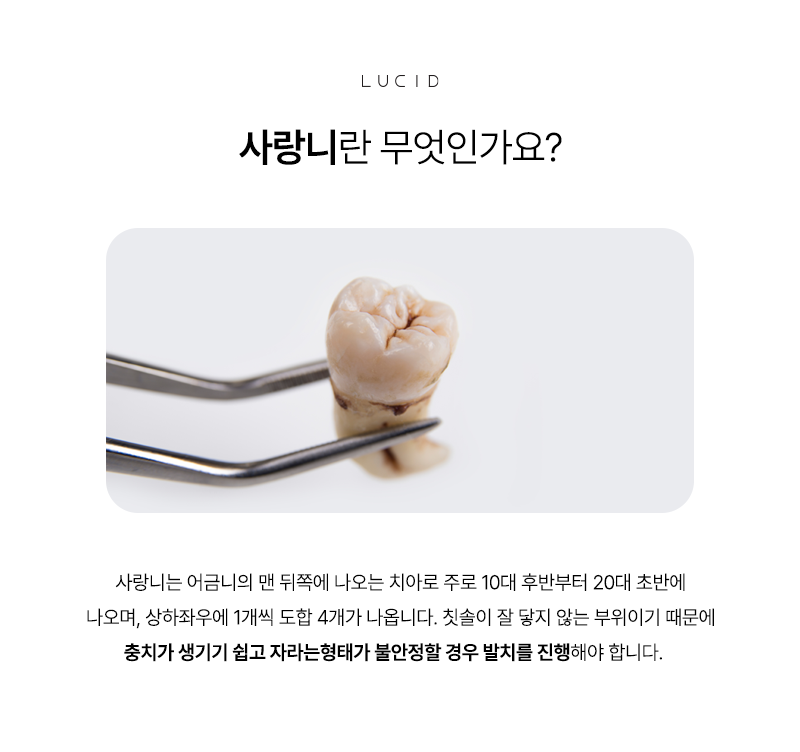
Why It Is Better to Plan Ahead Rather Than Wait Until a Wisdom Tooth Hurts
Most dental treatment in Gangnam begins after symptoms appear, but wisdom teeth sometimes require a slightly different approach.
When inflammation develops in the gums around a wisdom tooth, eating may become difficult, and even opening your mouth can be uncomfortable. In severe cases, facial swelling or pain strong enough to affect daily life may occur.
When symptoms have become this severe, treatment to relieve the pain may be needed first, which can sometimes make it impossible to proceed with extraction immediately.
Conversely, even if you do not have any particular symptoms yet, checking the position of the wisdom tooth in advance and planning extraction at the appropriate time can allow you to arrange your schedule more comfortably.
Another significant advantage is that you can choose an extraction date that does not overlap with important events such as exam periods, major work deadlines, travel plans, job interviews, or weddings.
In particular, office workers may suddenly need to take time off when their gums swell or pain develops. Students may find it harder to concentrate if symptoms occur during exams, and if wisdom tooth pain suddenly begins before a long trip, the trip itself may become uncomfortable.
For these reasons, rather than seeking urgent treatment after pain develops, planning the timing of treatment around your lifestyle can help reduce psychological stress and inconvenience in daily life.
Wisdom Teeth Are Not Teeth That Time Will Fix
Many people with wisdom teeth tend to think, “It will probably be fine if I wait a little longer.”
This is partly because swelling and pain sometimes decrease naturally after lasting for a few days.
However, a reduction in pain does not necessarily mean that the problem has been resolved. Inflammation around a wisdom tooth may temporarily subside and then recur when you are tired or your resistance is lowered.
In some cases, discomfort that initially occurred once every few months begins to recur at shorter intervals, and repeated inflammation can continuously irritate the gum tissue.
In addition, if the structure causes food to repeatedly become trapped between the wisdom tooth and the adjacent molar, a hard-to-clean blind spot can develop even with diligent brushing. The longer this continues, the more likely it is to affect not only the wisdom tooth but also the tooth directly in front of it. Therefore, rather than feeling reassured simply because the pain has disappeared, it is important to accurately check your current condition.
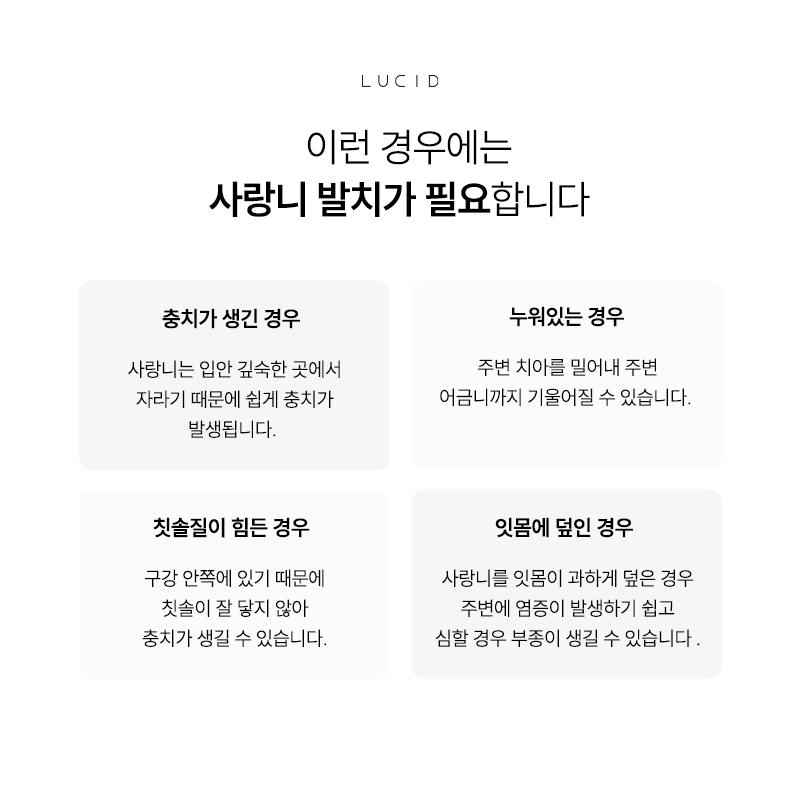
Consider Having an Examination in Advance During These Periods
There are times when it can be helpful to have your wisdom teeth examined even if you do not have any particular symptoms.
Examples include after graduating from high school, before entering university, before beginning preparations for employment, or before enlisting in the military—situations in which it may become difficult to arrange a long-term treatment schedule in the future.
If you are planning an extended stay abroad or are an office worker with an important project ahead, it is also a good idea to check the condition of your wisdom teeth in advance.
This may help prevent situations in which sudden pain requires emergency treatment locally or forces you to change an important schedule.
Couples preparing for marriage should also consider having an examination well in advance. If wisdom tooth pain occurs just before a wedding photo shoot or the wedding ceremony, swelling or discomfort may affect the schedule.
If you are planning a pregnancy, checking your oral condition beforehand is another option for women.
During pregnancy, the timing of treatment and the medications that can be used must be considered together. If treatment is needed, consulting a dentist in advance may be helpful.
In this way, the timing of wisdom tooth extraction should not be determined by age alone. It is advisable to consider your future plans and overall health as well.
Do Not Overlook the Small Signals from Your Wisdom Teeth
Wisdom teeth more often send repeated, minor signs of discomfort than cause severe pain from the beginning.
For example, your gums may feel slightly uncomfortable only when chewing on one side, or you may continue to feel that your mouth is not clean even after brushing. If you feel that your breath has become worse than usual or notice frequent bleeding in the same area, this may also be related to the environment around the wisdom tooth.
Repeated injuries caused by the gum behind the wisdom tooth being bitten, or food repeatedly becoming trapped in a specific area whenever you eat, may also be symptoms related to the position of the wisdom tooth.
Because these changes may not cause major inconvenience in daily life, many people dismiss them. However, if a recurring pattern develops over time, it is a good idea to have an accurate examination.
In particular, the symptom of feeling fine occasionally and then becoming uncomfortable again is one of the concerns frequently mentioned during wisdom tooth consultations.
With wisdom teeth, repeated minor signals can sometimes be more important than a single episode of pain. If changes that differ from your usual condition continue, it may be helpful to have your current condition checked at Lucid Dental.
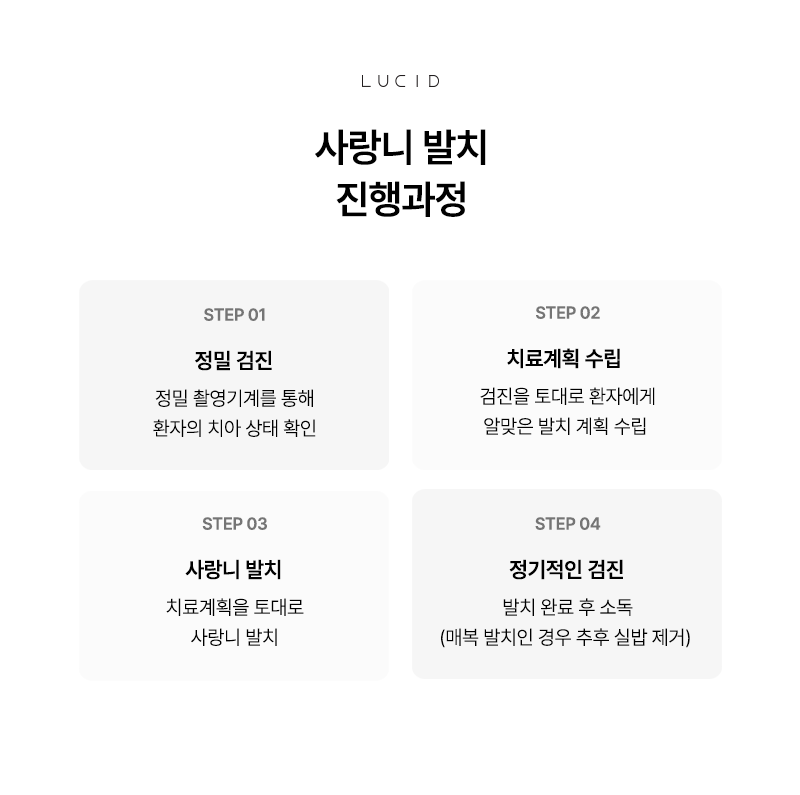
Accurate Diagnosis Comes Before Speed When Removing a Wisdom Tooth
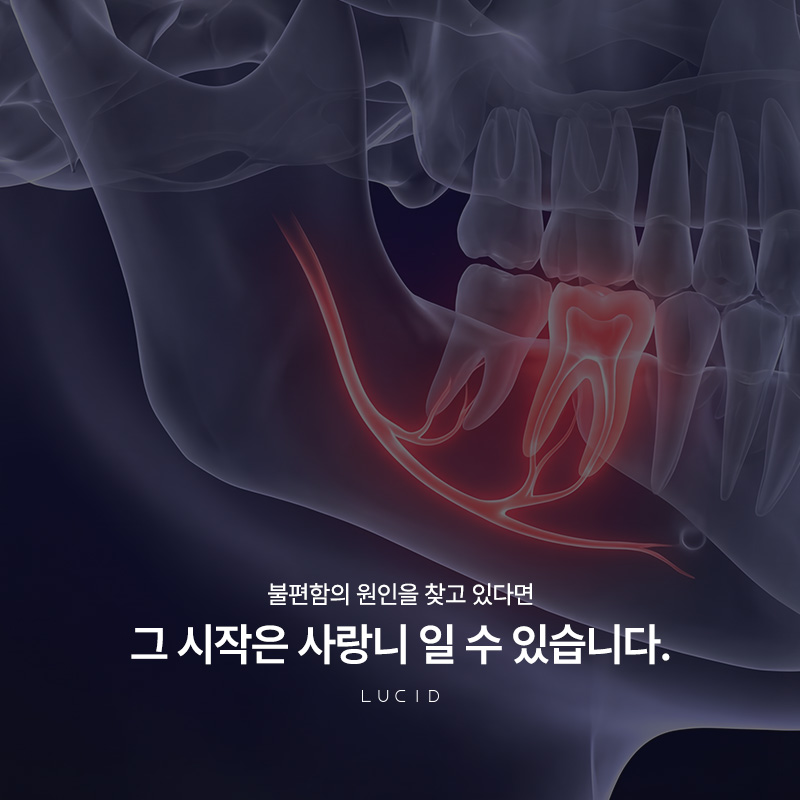
Wisdom teeth do not all have the same shape. Some emerge normally through the gums, while others are only partially visible, and some are completely embedded in the jawbone. The direction in which the tooth is tilted, the number of roots, and the distance from the nerves in the lower jaw also vary from person to person. Therefore, even when the procedure is wisdom tooth extraction in Gangnam, the necessary treatment process may differ.
For these reasons, wisdom tooth extraction should not be viewed simply as the process of removing a tooth. It is important to first accurately assess the current condition. Since some areas are difficult to evaluate based only on what is visible, panoramic imaging and, when necessary, 3D CT can help examine the wisdom tooth’s position and the surrounding structures together.
This is particularly helpful for checking the relationship between the wisdom tooth roots and the nerves in the lower jaw, the distance from the adjacent tooth, and the degree of impaction, allowing a treatment plan suited to the current condition to be established.
Be Sure to Discuss Any Concerns You Have Before Wisdom Tooth Extraction
When we listen to people who visit us for a consultation about wisdom tooth extraction in Gangnam, many are more concerned about what happens after the extraction than about having the tooth removed itself.
How much swelling will there be? Will I be able to go to work the next day? When can I exercise again? What should I eat? Since everyone’s living situation is different, the guidance needed can also vary even for the same type of wisdom tooth.
If you have an important event coming up, it is advisable to coordinate the extraction timing while taking the recovery period into account. If you have several wisdom teeth, whether to remove them all at once or in stages should also be decided by considering your oral condition and lifestyle together.
Resolving your questions in advance through a thorough consultation can also help reduce anxiety when beginning treatment.
Lucid Dental Provides Treatment Plans After Thoroughly Assessing Your Current Oral Condition
Because the difficulty of wisdom tooth extraction in Gangnam varies from person to person, it is important to first assess your current condition rather than take a uniform approach.
At Lucid Dental, we examine your oral condition after your visit and, when necessary, use imaging tests to comprehensively assess the wisdom tooth’s position and direction, its relationship with the surrounding teeth, and other factors before explaining your treatment plan.
Rather than automatically recommending extraction, we provide a thorough consultation to explain whether the tooth can be monitored in its current condition or whether extraction is necessary, allowing you to decide on the treatment approach.
Although the extraction itself is important, post-extraction care can also affect the recovery process. We therefore provide guidance on precautions and care methods as well.
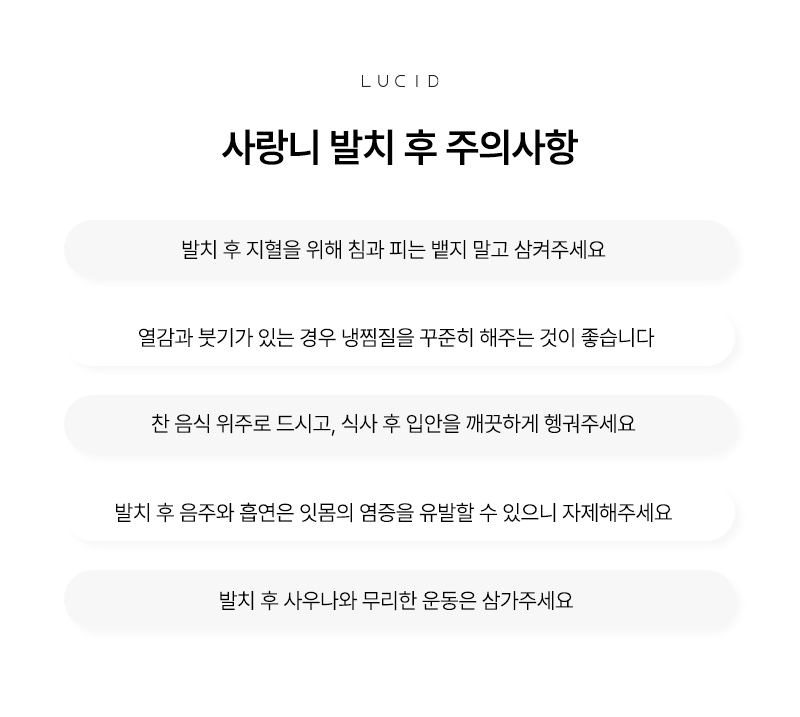
Post-Extraction Care Is Also an Important Part of Recovery
Having a wisdom tooth removed does not mean that all treatment is finished.
It is also important to carefully follow the precautions provided so that the extraction site can recover properly.
Immediately after extraction, you should bite down on the gauze for the recommended amount of time to help control bleeding. On the day of the extraction, avoid repeatedly spitting or using a straw.
Smoking and alcohol should also be avoided for a certain period because they may delay recovery or irritate the extraction site. Eating foods that are less irritating rather than hot foods may be helpful.
Strenuous exercise can also increase blood flow and affect swelling or bleeding, so it is advisable to return to your daily activities gradually while considering your recovery.
If you have questions or unusual symptoms persist, it is advisable to consult the dental clinic where you received treatment rather than making your own judgment.
Even when wisdom teeth are located in the same area, their shape and direction and their relationship with the surrounding tissues vary from person to person. Therefore, the timing of treatment is also difficult to determine uniformly.
The important thing is not to wait until the pain becomes severe, but to accurately check the current condition of your wisdom tooth.
If you are wondering whether wisdom tooth extraction in Gangnam is necessary or whether you can continue monitoring the tooth for a while longer, visit Lucid Dental to have your current oral condition assessed and discuss a treatment plan suited to your individual situation.
Wisdom Tooth Q&A
Q. If my wisdom tooth does not hurt at all, do I still need an examination?
A. Even without symptoms, a wisdom tooth may be difficult to manage depending on its position. It may be helpful to check its current condition during a regular examination.
Q. Do all upper and lower wisdom teeth need to be removed?
A. This may vary depending on the position and condition of the wisdom teeth. They do not necessarily need to be removed at the same time. A treatment plan is established after assessing your current oral condition.
Q. Can I eat immediately after wisdom tooth extraction?
A. Once bleeding has been controlled to some extent, it is advisable to start with soft, non-irritating foods. For detailed precautions, follow the instructions provided after the extraction.
Q. If my wisdom tooth is lying sideways, does it have to be removed?
A. The decision is not based on the tooth’s direction alone. The surrounding teeth and gums and whether they are being affected are assessed comprehensively before deciding whether extraction is necessary.
Q. Is it possible to have only a wisdom tooth consultation?
A. Yes. After checking the position and condition of the wisdom tooth, you can receive guidance through a consultation on whether extraction is currently necessary or whether the tooth can be monitored.